


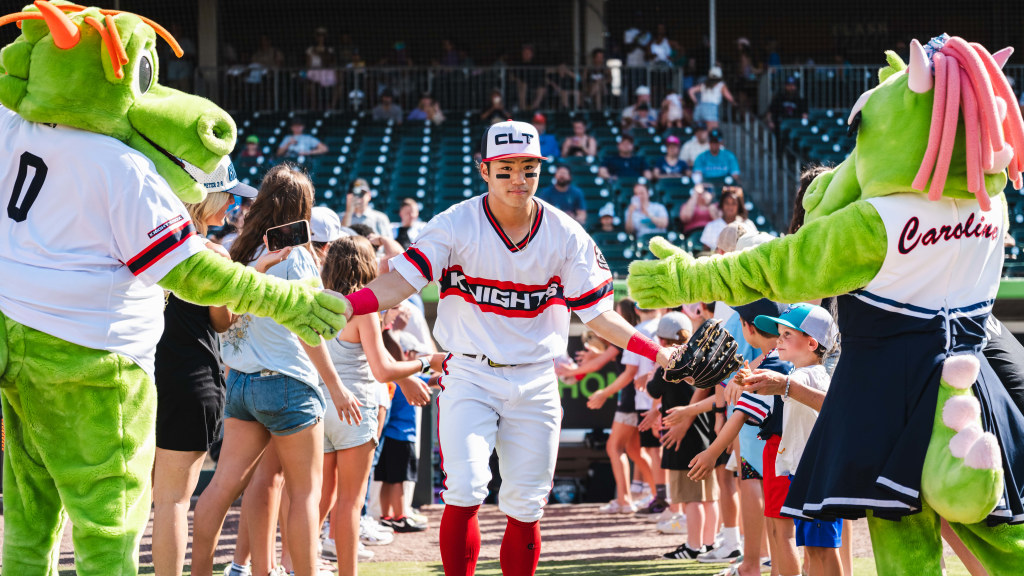
Long before he crossed an ocean in pursuit of passion, Rikuu Nishida thought his journey with the game had already come to an end.
Growing up in Osaka, Japan, he faced a question that is unimaginable for a young athlete.
Could he stop playing?
Looking back now, Nishida realizes the weight of that conversation shaped him far more than the baseball player he would become. It became the inspiration to discover the meaning of his life: helping others carry the weight of their own dreams, one life at a time.
For many children in Japan, playing baseball requires more than showing up to the field with a glove in hand.
It requires the commitment of an entire family, one that stretches beyond moral support. Practices can stretch across weekends and holidays. At the same time, parents arrive before sunrise to prepare fields, maintain equipment, support coaches and ensure everything is ready long before the first pitch is thrown.
The culture values discipline, responsibility and selflessness, making baseball a shared familial commitment rather than an individual pursuit. For many, the weight of the game extends far beyond the player wearing the uniform.
A reality that was no stranger to Nishida.
Like countless players across Japan, baseball became a family commitment long before it became his own. His parents balanced the responsibilities that came with youth baseball while simultaneously running their own business, doing everything they could to make sure their son had the opportunity to pursue the game he loved.
“My parents had to do everything,” he reflected. “They had to attend every practice.”
As their business demanded more of their time, keeping up with the demands of the game became increasingly difficult. Unable to meet the expectations surrounding youth baseball, they asked Nishida if he would consider stepping away from the game.
So he did.
For many young athletes, hanging up the cleats could have been the end of the story.
Instead, for him, it became the beginning.
Around the age of 15, Nishida returned to the sport with a renewed perspective, eventually earning the opportunity to continue both his education and playing career in the United States. He first attended junior college (JUCO) Mt. Hood Community College before transferring to the University of Oregon, where his speed and versatility caught the attention of professional scouts.
In 2023, Nishida was selected as the 15th pick in the 11th round of the MLB Draft by the Chicago White Sox.
Since then, his path has taken him through every level of the organization’s minor league system, ultimately landing in Charlotte before making his Major League debut with Chicago on May 25, 2026.
From the outside, the journey looks like one written by perseverance and passion.
Nishida remembers something else, typically overlooked in the bylines.
The challenge was not simply adjusting to a new baseball culture. It was learning how to navigate an entirely unfamiliar life.
Every conversation was laced with a different language. Professors had different teaching standards. Coaches had different principles. Visa requirements, academic expectations and everyday responsibilities suddenly became his to manage solely on his own, thousands of miles away from home.
Those experiences stayed with him long after he adjusted. More importantly, they changed the way he reflected on his purpose.
Because while baseball had brought him to America, it could not solve all of the changes that came packaged with being there.
The transition stretched far beyond learning a new style of play. It meant adapting to a different education system, navigating visa requirements, commuting in an unfamiliar language and building a life without the support system he had always known back home.
For many student-athletes, those challenges happen quietly.
They are not ones that appear in a box score or stat sheet, yet they often determine whether a student feels confident enough to stay, succeed and continue chasing the opportunities that carried them away from the familiar in the first place.
Nishida understands those quiet moments because he lived them.
“I feel like I get so many…like as an accident, so many trouble when I got here,” he said. “I feel alone too, like when I was in JUCO, so I wanna help like those kids.”
Years later, those experiences became the foundation for One-Hanne.
Founded in 2023, the organization was built from everything Nishida wished he had when he first arrived in the United States. It was not created to send more athletes overseas or to influence young players into picking up their lives to pursue baseball in America as the only path to success.
Instead, One-Hanne was founded on a different intention: that every athlete deserves honest information and meaningful support to make the best decision for their future.
“We exist to deliver essential information so each player can make the right choice of their own will,” the organization’s mission states. Rather than promoting study abroad as the ultimate goal, One-Hanne is committed to presenting both the opportunities and realities of pursuing baseball in the United States, including the hardships that often go unspoken.
That philosophy comes directly from Nishida’s own journey.
After leaving Japan, he quickly learned that adapting to life in America required far more than simply playing the sport he loved. There were classrooms to navigate, professors to communicate with, and a culture unlike anything he had experienced before.
Those experiences shaped the way he envisioned the culture behind One-Hanne.
While many might assume the company focuses on player development, Nishida was quick to explain otherwise.
“Nothing in my company is baseball,” he said. “It’s grades, visas, how to communicate with coaches or professors.”
Instead, One-Hanne supports Japanese students who have already decided to pursue study in the United States, helping them navigate the challenges that exist beyond the ballpark. Whether it be understanding academic expectations, maintaining grade eligibility, communicating confidently with professors and coaches or managing the complexities of immigration paperwork, the organization strives to become the support system Nishida once sought for himself. Rather than recruiting athletes to leave Japan, One-Hanne intentionally works with a limited number of students each year who have already committed to that journey, believing individualized guidance creates a greater long-term impact.
The organization’s mission extends well beyond higher education.
Back home in Japan, Nishida has transformed his passion into opportunities for the next generation through the One-Hanne Cup. This free youth baseball tournament has grown into one of the largest in the Hirakata area. The tournament is built on the belief that a child’s opportunity to play should never be determined by financial circumstances or the familial environment they grow up in.
For Nishida, that mission is deeply personal.
As a child, he watched his own parents struggle to balance the responsibilities required by youth baseball. Today, through free tournaments supported by local businesses and community organizations, he hopes more children can experience the game without those same barriers, allowing them to simply enjoy baseball for what it is.
Looking toward the future, One-Hanne wishes to continue to expand its reach through showcase events designed to expose Japanese athletes to collegiate and professional opportunities. Inspired by the showcase that helped launch Nishida’s own path to the United States, the events introduce players to the recruiting process while providing evaluations and resources that mirror the American collegiate system.
But Nishida’s vision has never been limited to baseball.
“I want to help baseball players, cheerleaders…everybody,” Nishida said.
That belief has led the organization to create opportunities beyond the diamond, including short-term international programs that allow participants to experience studying English, living abroad and training alongside American cheerleading programs. By introducing students to new cultures and educational experiences, Nishida hopes to broaden their perspective while giving them the confidence to pursue opportunities they may have never considered before.
The organization has also partnered with Five Tool Baseball to host showcase events in Japan that connect athletes with collegiate and professional opportunities while introducing recruiting practices commonly used in the United States. Players receive evaluations, performance testing and video resources that help them communicate their abilities to college coaches and recruiters for worldwide recognition.
Complementing those opportunities is AIK Japan, a sports performance initiative focused on helping athletes maximize their speed and movement through scientific training and individualized feedback. As an AIK Japan franchise, One-Hanne provides Japanese athletes with access to overseas coaching methods and player development resources that may not otherwise be available.
All of these efforts show more than what they provide; they prove that for Nishida, success was never defined solely by how far baseball could take him.
It was defined by what the game taught him along the way.
That opportunities can change a life. That honest guidance matters just as much, if not more than stripped talent. And that sometimes, the smallest gestures- a conversation, a mentor or someone willing to help navigate an unfamiliar path- can leave the greatest impact.
Those lessons have become the heart of One-Hanne.
“I feel like One-Hanne means one percent, the 1% for their life…I wanna [be the] one percent for each person's life. That's why I call [it] One-Hanne.
Whether it is helping a student navigate an unfamiliar culture, creating free opportunities for children through tournaments, introducing athletes to new possibilities through showcase events or expanding individual athletic development through AIK Japan, every initiative traces back to the same purpose: being the support he once needed himself.
Looking back, it almost feels destined.
The boy who once stepped away from baseball because the weight had become too much spends his life making sure it weighs a little less for someone else.
In the end, the accomplishment Nishida is proudest of is not measured by hearing his name called by the Chicago White Sox in the 2023 MLB Draft, not by working his way up the Minor League Baseball system to his recent MLB debut.
It is measured by the lives that are a little lighter simply because he was part of them.
For one moment.
For one opportunity.
For one conversation.
For one percent.