


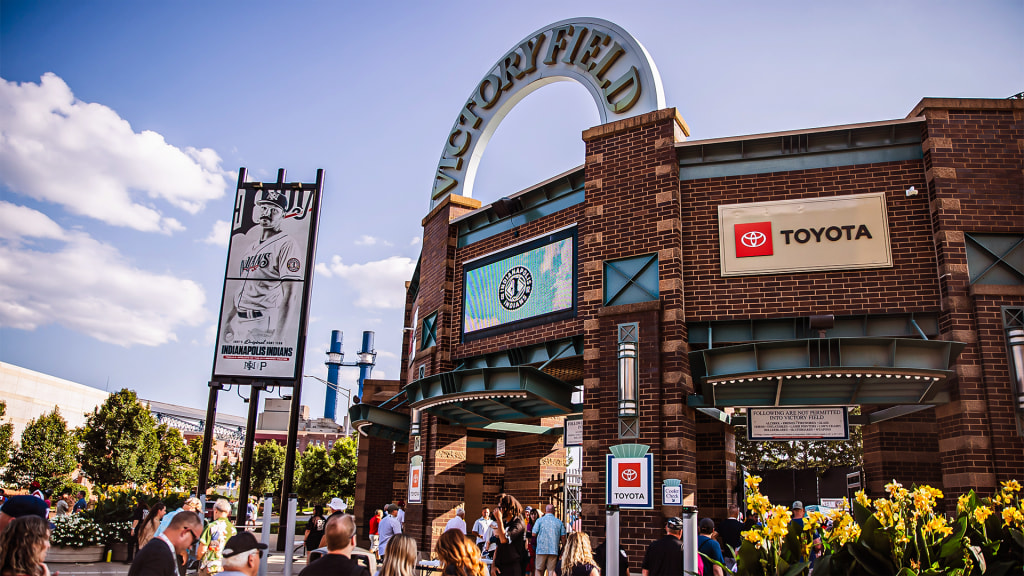
The Indianapolis Indians came up marginally short of a postseason bid in 2026. The 124th year in franchise history ended with a 75-75 record after starting out the year 0-6 and found itself as low as 18th place in the first half. Putting themselves in position for a postseason bid, Indy went on a September push and found itself in first place in the second half standings 48 hours from the finish line. A couple of one-run losses in Gwinnett to end the regular season were gut punches that decided their fate.
The aforementioned gap at the close of business on Sept. 20 was 1.5 games behind Rochester for a trip to the postseason, finishing just 1.0 back in the standings but not owning the tiebreaker. This was a team that battled in manager Eric Patterson’s first year at the helm – his first managerial experience in professional baseball. The longest winning streak for the team was six games, but so was the longest losing streak. Seven walk-off wins and seven walk-off defeats happened. Indy played five doubleheaders and split them all. The Indianapolis .500.
From fighting to scale the bottom of the International League ladder to dueling for the final playoff spot at the top, the team turned a 31-44 first half into a 44-31 second act…now that’s a journey.
In actuality, it was a thrill ride that did not stop until the final weekend. The team that started the season 0-6 and struggled to 18th place in the first half – so close to the cellar you could hear the water heater working – went 6-0 in one stirring September push and was in first place in the second half standings 48 hours from the finish line. True, the Indians ended up missing their first playoff spot in nine years with a couple of gut wrenching one-run losses in Gwinnett in the final three games. The gap at the close of business on Sept. 20 was one game. One. But from fighting to stay off the bottom of the International League to fighting for a place at the top, turning a 31-44 first half into a 44-31 second act… now that’s a journey.
And there was more.
The summer included Ronny Simon becoming Indy’s first batting champion in 37 years, and it wasn’t close. He finished with a .334 batting average; next best in the International League was back in the dust at .302. Simon batted in 115 Indianapolis games and had at least one hit in 92 of them, all that coming off shoulder surgery.
“To come back and be ready, it’s amazing,” he said at the end. “It’s amazing to me.”
It included Beau Burrows leading the league in saves with 14. In a 16-game tour de force from July 10-Aug. 26, his ERA was a tiny 0.87 with 23 strikeouts in 20.2 innings, converting all nine save opportunities and allowing no runs in 14 of the 16 appearances.
It included an astonishing late offensive splash by Nick Cimillo, who had 63 RBI for the season – 13 of them coming in four days during the last frenzied week of the season that led to IL Player of the Week honors.
It included Enmanuel Valdez with a team-high 18 home runs and 76 RBI. The Indians were away from home on July 4 – a rarity – but Valdez supplied the fireworks with three homers that day across a resumed game and the nightcap. Valdez, Cimillo and Jack Brannigan each had multiple grand slams for the season. Only eight Indianapolis hitters have done that in the Victory Field era, and three came in 2026.
The pitching staff tied for the fifth best earned run average in the league and was second with 11 shutouts, the most for the franchise in eight years. The pitchers maintained a steady breeze from swings and misses, striking out at least 10 batters in 53 games. By getting at least 12 punchouts in 13 home games, they fed the masses because of a local promotion. Free Chick-fil-A nuggets for everyone!
So, it was a saga of many faces. By the season-closing 9-6 victory at Gwinnett, 35 different Indians had gone to the plate in 2026 and 36 had pitched. Eight had traveled from Indianapolis to one of the dream destinations of their lives – making their Major League debut for Pittsburgh. The biggest to-do came early, when super prospect Konnor Griffin headed off for PNC Park at the age of 19, the first teenager to make his MLB debut as a position player since superstar Juan Soto in 2019. Griffin’s spring stay with the Indians was short but glowing, hitting .438 in five games. He doubled in a run in his first Major League at-bat with the Pirates. “Ultimately,” as Indians President and CEO Randy Lewandowski said, “we’re here to put guys in the big leagues.”
While some faces went out, others came in. Mitch Jebb came from Double-A, starting his Indy season in a big way with a .424 average in the first eight games, getting hurt, then returning to homer on his first at-bat three months later. Cameron Barstad hit a three-run homer in his Triple-A debut. Brannigan appeared for six different teams in the Pirates system in 2026. Tyler Callihan’s season included a stint in Pittsburgh, where he drove a Shohei Ohtani pitch into the Allegheny River for his first major league home run. Robert Hassell III arrived from the Washington Nationals system and won the last home game of the season with a walk-off hit. Joshua Palacios joined the cause – he had go-ahead hits in the 10th inning in two August wins at Nashville – after starting the season in an independent league with the Staten Island Ferry Hawks. Duce Gourson made immediate contributions after landing from Altoona, driving in the last two runs and hitting the final homer of the season in the ninth inning to help beat Gwinnett on Sept. 20, like a final bow on a riveting month.
New faces, old faces. And at the center of it all was Simon, sending line drives into the outfield gap again and again and again. He wasn’t around at the end of the season, having been called up by the Pirates, but nobody was getting close to that .334 batting average mark. Nick Solak missed giving the Indians a batting championship by one hit in 2025. Simon made sure that would not happen again.
“I just try to be simple,” Simon said. “I don’t try to be a superhero. I don’t try to be a star; I don’t try to be anything. I try to enjoy it.”
So, the Indians’ brass noticed.
Manager Eric Patterson: “Ronny’s a worker. We saw it last year when he first came over. He loves to play the game, he loves to work, he works on his defense, he works on his baserunning, he works on his hitting. Just to see the joy that he plays the game with and the passion he has for working. Ronny enjoys the process. For me that’s one thing that has stuck out.”
Lewandowski: “He plays with such passion and joy. That’s been so fun to watch. He’s always smiling and that’s over six months. That’s hard to do but he always seems to be doing it.”
All in all, then, quite the summer for the Indianapolis Indians. But remember how it started?
In the beginning, there was the Big Thud.
Seven batters into the season opener, they were already down 3-0 to St. Paul. They would lose that game, and the next, and the next four after that. The first 0-6 start in the 30-year Victory Field era, by a combined score of 35-20. You couldn’t blame the gloves. The Indians did not have a single error in any of them. But defeat kept coming anyway, while on the bench was a man working the first managing job of his life. Talk about your quick honeymoon. Patterson tried not to lose sleep.
“Obviously it’s not ideal,” he would say later. “You always want to start off on a good note, but I’ve been in the game long enough to know it’s a small snapshot of what’s going on. Every team kind of goes through it at some point in the season. We just happened to go through it in those first games.
“To our guys’ credit, to our staff’s credit, everyone stayed the course, there wasn’t any panic.”
It was hard to imagine back then the rally that would come. The Indians dropped their first four series in 2026, but starting in mid-June, they lost just one of the last 15, winning seven and splitting seven. “When you’re in the middle of it you don’t really realize it,” Patterson said. “It’s the mindset every day, just go 1-0, tackle what’s in front of us. I’m a firm believer that if you go out and put in the work and you play the game the right way, you’ll be rewarded.”
So, it came to pass.
“I wouldn’t classify it even as a season. I would say it’s a year,” Lewandowski said. “To roll out a brand refresh, to celebrate the 30th anniversary of our ballpark, to be in a pennant race, to sponsor the State Fair, to do lots of things we normally don’t do, it’s been a great year and a good season.”
“We’re still going to finish in the top two in overall attendance, when you’re doing that within your industry, you’re doing something right, and we continue to do that.”
What happened in the second half renaissance? Lewandowski pointed to stronger pitching, plus a steady hand and cool head in the dugout.
“Pitching is always the name of the game. You ride or die with pitching in most cases and that’s been true for us in the second half.”
“We’ve had a lot of new faces, but I think the steady hand of Eric Patterson says a lot too for his first year of managing. To not have the first half we wanted to have, wins and losses wise, but to stay the course and to stay positive…he’s a very positive guy and has been very good in the clubhouse.”
Patterson mentioned the nature of baseball and its swaying fortunes.
“You look at our first half record, I don’t really think it tells the story. A lot of those games lost early on, we had opportunities to tie and win games late, but it always seemed like we were a pitch away or a hit away or making a play away from those outcomes being different. That’s the thing we talked about in the first half. I just think in the second half we caught a few more breaks. We got that big hit or we made that play or we made that pitch. As you gain momentum in this game it kind of carries over.”
So let the 2026 memories roll.
In April there was thunder. Esmerlyn Valdez’ 457-foot homer to center came in a losing cause vs. Louisville. The 7-5 win against St. Paul included Rafael Flores Jr.’s 466-foot home run off the light pole in left center, tied for the longest at Victory Field since tracking started – not long after Cimillo sent one out 440 feet. Two home runs from Jebb, up from Altoona, were his first long balls in 656 days.
There was also fire from the mound. On April 7 and 8 at Victory Field against Louisville, the Indians had just one hit in an 8-0 loss but struck out 14 batters the next day in a 5-0 win. That was the first of three times this season Indianapolis followed a shutout defeat with a shutout victory. Three nights later, the Indians pitchers struck out 16 Louisville batters, but lost 8-5. A lot of strikeouts that night…30 combined for both teams.
May brought a 9-5 win at Memphis that featured Davis Wendzel and Alika Williams homering back-to-back in the ninth inning, the first time that had happened in more than a year. A Flores single gave the Indians their first walk-off win of the year, on May 7, in what was also the first extra-inning finish 36 games into the season. They won another walk-off the next night.
Fate was fickle to the Indians hitters in May. They homered five times to beat Louisville 10-8 one game – three of the shots from The Password (Jhostynxon Garcia) to match a franchise record. The next day they struck out 18 times in a 6-5 loss.
There was also the odd pitching-heavy series with Omaha, when the Indians scored only 12 runs in six games and were shut out twice but managed a 3-3 split. In one of those games, a 2-1 Indy victory, Tyler Callihan’s sixth-inning triple for Indianapolis was the first hit by either team. José Urquidy and Burrows took a no-hitter into the eighth. Somehow it was fitting the Indians won in the ninth on a sacrifice fly.
June finished off the first half struggles. The Indians led 4-3 in the ninth inning against Columbus but lost 9-4 in the 10th. They had been 21-0 when leading after eight innings. They were beaten in 12 innings the next day. They led Iowa 6-3 but gave up 10 unanswered runs. They lost 6-5 in 10 innings at Iowa, their third extra-inning defeat in four games.
The first half ended June 21 with a 31-44 record, 16 games behind league leader Memphis. The Indians were 1-38 when trailing after seven innings, 0-31 when behind after eight, 2-5 in walk-offs, 3-5 in extra innings, 12-19 in comeback games.
But the second half meant a second wind, and a break in the clouds. Before June was over, the Indians had won an exhilarating 4-3 game against Scranton/Wilkes-Barre with three runs in the ninth to snap a 0-34 record when trailing after eight. The walk-off was literal; the deciding run came home on a walk. On June 30, they blew a 5-0 lead at Omaha but won 12-5.
Something was brewing. Suddenly, the late-inning karma began breaking Indy’s way.
In July there was the 4-2 win at Omaha on Cimillo’s three-run homer in the eighth inning…the two wins on July 4 that included Enmanuel Valdez and Brannigan grand slams in a 17-4 thrashing, only the third game in the Victory Field era with slams from two hitters the same game…the 9-3 robbery spree of a win over Toledo when the Indians stole eight bases without being caught – their most steals in a game since 2009…the 6-5 win over Toledo when Indianapolis blew a 5-3 lead in the ninth but walked off a victory on a wild pitch, something that had not happened in 13 years.
They lost 4-3 to Toledo on July 11, raining a bit on the 30th anniversary of Victory Field’s opening, but began a six-game winning streak the next day when Connor Wietgrefe gave up one hit in 8.0 scoreless innings and did not walk a batter. That was the most innings in an outing by an Indianapolis pitcher in nearly five years. Next came a three-game roll over Columbus after the All-Star break that was the first sweep of the Clippers in eight years. The pitchers gave up only 11 runs in that six-game streak.
Even the losses came with big bangs. The Indians dropped a 9-8 decision to Lehigh Valley but not before scoring seven runs in the ninth to roar back from a 9-1 hole. The five extra-base hits matched the most in the ninth inning in 21 years.
The July record was 16-8. August brought more of the same.
The Iowa series at Victory Field early in the month was a medley of a surging team finding different ways to win. The Indians exploded for victories of 14-1 and 16-3, sending 13 batters to the plate to score nine runs in the eighth inning of the latter. The day after that, four pitchers combined for a one-hitter in a 2-0 win – the first time in the Victory Field era that Indianapolis had thrown three one-hitters in a single season.
When the Indians held off Nashville 4-3 and 3-2 on consecutive nights, with Michael Darrell-Hicks closing the latter after the Sounds loaded the bases with nobody out in the 10th inning, look where they were. First place. By August 27, with four wins in a row, they seemed at home there.
A six-game losing streak stalled the momentum but then Wietgrefe led a 6-0 shutout of Toledo. Two days later, they scored five runs in the ninth to beat Toledo 8-5. A bona fide pennant race. Triple-A baseball has other fish to fry – namely producing talent for the next level – but winning has its charm, too.
“It’s always fun no matter what level you’re at,” Patterson said in the final weeks. “I think sometimes in player development as an industry, it gets lost. Yes, we want to prepare our guys to impact the big league club, but also at the end of the day you play to win the games, so I think it’s our job as the coaching staff to balance that part of it. But for the players every day should be about going out there to compete and win baseball games.”
Added Lewandowski, “It energizes everybody. It just makes it better to come to the ballpark when you’re in a pennant race. We’re able to do lots of things but baseball is still the core of what we do and when you’re winning, it’s fun.”
It was especially fun on Sept. 17 when the Indians crushed Gwinnett 15-0 for their sixth win in a row. All manners of offensive accomplishment were stacked in that football score – the margin of victory tied for the third-largest on the road in the Victory Field era and was the second-largest margin of victory in a shutout in the same span. The 17 hits matched their season high. A seven-run sixth inning marked the ninth time they had scored seven-plus runs in a single frame this season, another high for the Victory Field age. Most importantly, the rout had the Indians on the brink of a second-half pennant. All that was needed was a final good weekend.
Alas, not to be. A 7-5 lead in the ninth inning got away the next night and they lost 8-7 in 10 innings. Until that moment, they had been 54-1 this season when taking a lead into the ninth. The next day brought a 2-1 loss, and the end of the second half title hopes. A team that had been so strong in one-run decisions with a 21-13 record had run out of magic.
But still. What a ride.
“The biggest takeaway for me this year no matter how it shakes out is just the resilience of the ballclub,” Patterson said. “We’ve had a ton of transactions this year, a lot of guys moving up and down, it’s the same with every organization at this level. But to see the continued fight and resilience with this club, that’s something I’ll look back on and remember fondly and be proud of.”
Middling? Average? Far from it.