

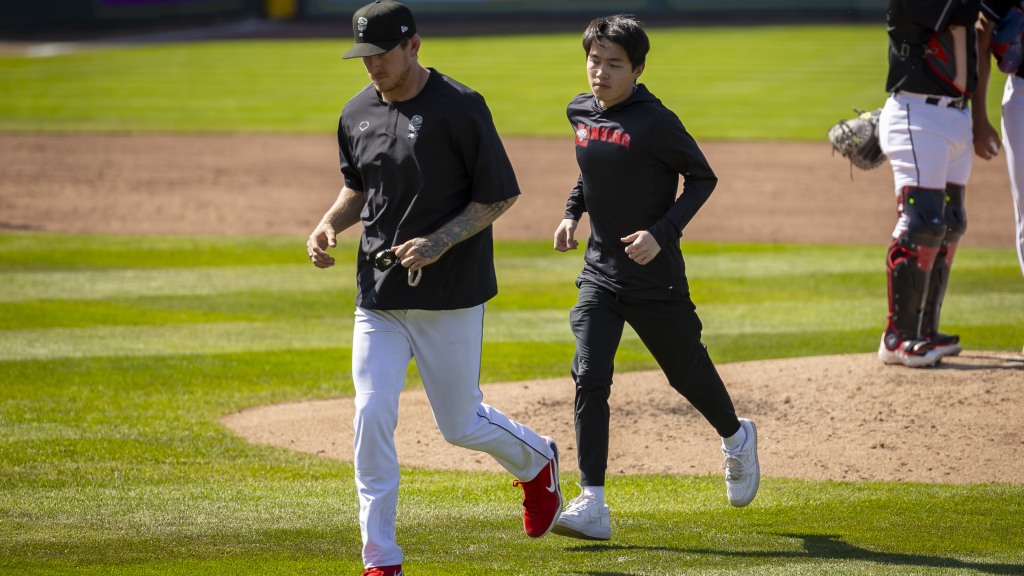
*Series Introduction: Players and coaches often take the spotlight when it comes to baseball media and fans. But there are so many other people that contribute to a baseball team that may not get as much recognition as they deserve.*
This series is designed to highlight a few of the supporting members within the Lansing Lugnuts organization, showcasing who they are and bringing to light what they do for the team.
Interpreting wasn’t something Andy Weng planned to do after earning his masters in sport management from the University of San Francisco. But the native of Taiwan needed to find a job that would sponsor a visa to allow him to work stateside for an extended period of time.
“It's not easy for international students (to find a job that will sponsor), especially if you wanna get into sport,” Weng said. “So for me, I was just trying to stay as long as I could after I graduate. … I wasn't thinking interpreter, but this is kind of the only option I had at the time.”
Now Weng is in his second year serving as an interpreter within the Athletics’ organization, currently working with the High-A Lansing Lugnuts. Weng has spent his time with the A’s working with Tzu-Chen Sha, a pitcher from Taiwan.
And not only does this job allow Weng to stay in America, but for someone with aspirations to someday get into a more sports-management centered career, this job also represents Weng with an opportunity.
“This is my best shot (at finding a U.S. job in sports). … It's (the job is) like a dream to me 'cause it's the A's, it's one of the 30 teams in the MLB, and I get to really get my feet wet and be on the field, be with the team the entire season,” Weng said. “So yeah, I enjoy it a lot, and to be honest, I can't think of a better outcome than this.”
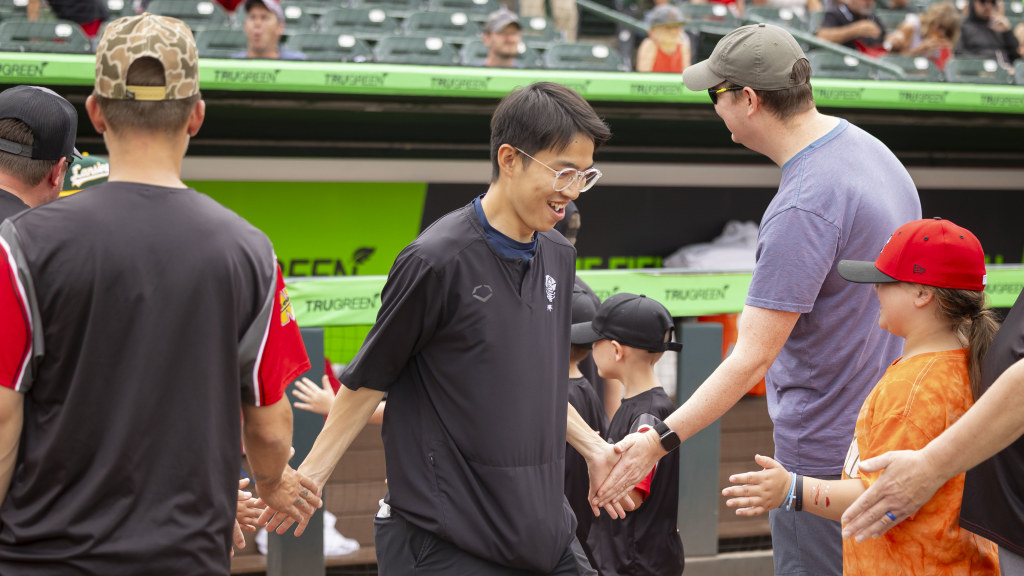
A Dream Come True
Weng said his love of sports led him to settle on the dream to work within his favorite; baseball. And the decision meant he needed to leave Taiwan.
“(Be)cause I'm doing sport, you have to come to the US,” Weng said. “If you're focusing on soccer, maybe Europe, but since I'm a baseball guy, I was like, “‘Dude, I gotta come to the U.S.’"
Weng said a posting on Indeed along with connections he made while going to school in San Francisco led him to the job as an interpreter for the A’s after college. Weng said the memory of his first time at the A’s complex in the Arizona Complex League is a moment he will never forget.
“When I walked into my locker at the complex, you see your name tag, it's so unreal,” Weng said. “It's just something you would never imagine. Like, I got from just a normal college student in Taiwan all the way to here. Just watching all the clothes they gave me, like the A's clothes and with my name’s… on the back of it, it's just unreal.”
Working with Sha
Weng’s only interpreting assignment with the A’s thus far has been with Sha. The duo paired up for the first time last season when Sha was playing for the Low-A Stockton Ports.
“This is pretty fun for me because Sha is the kind of guy, you know, maybe he's not a big name here, but he's definitely a big name in Taiwan 'cause we don't have that many players that get to play in the US, and he's one of them,” Weng said. “First time I met him, I was pretty nervous, to be honest, 'cause I don't know who he is as a person. Like, is he a good guy? Is the connection between me and him gonna work out? All that.”
Since that first meeting, the two have journeyed back and forth between Stockton and Lansing over the past two seasons.
“Pretty soon I found out he's a really nice guy,” Weng said. “He's basically just one of the guys I would met in college and become friends (with). … I'm really glad to have him as my player.”
The aspect of friendship is Weng’s focus on the job.
“I feel like if I treat him just like a colleague or just thinking, ‘Oh, this is just working,’ it's gonna be tremendous (in a bad way) for me,” Weng said. “It's gonna be painful for me to work throughout the season, 'cause the season's so long. So for (an) interpreter, I think the best way to get through it is to, you really have to have a good relationship with your player.”
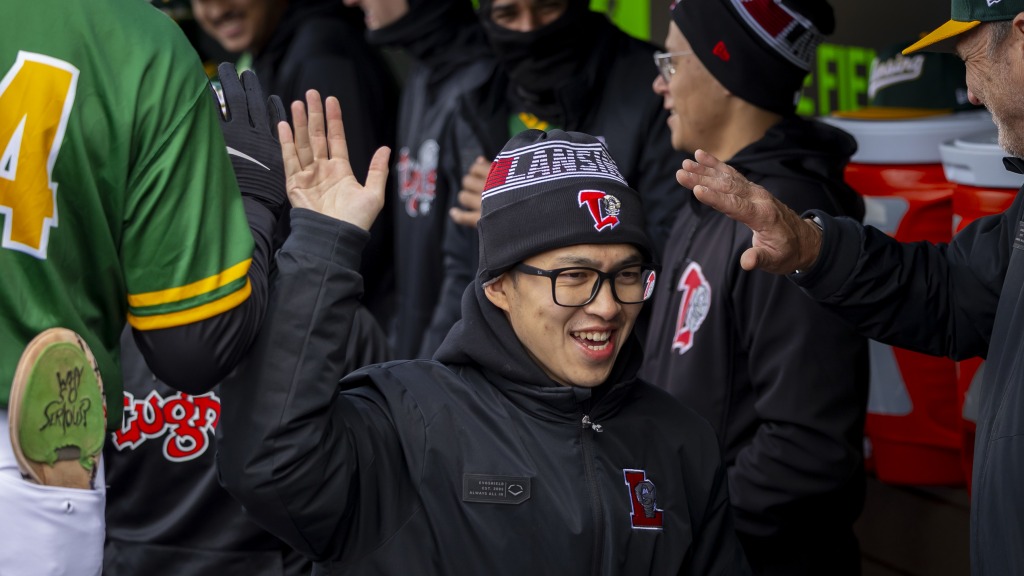
Life as an Interpreter
Weng’s most obvious duty as interpreter is to handle the communication between Sha and the rest of the team, whether that be staff members or players. For instance, when Sha is pitching, mound visits during the game look different than usual, as Weng goes out with the pitching coach and the catcher to talk to the pitcher.
Beyond baseball, Weng helps Sha with things like working with the bank, arranging travel plans and even just eating out.
“For a person that don't speak English that well and is just here only for work, it's hard for him to blend into either the team or just like living here,” Weng said. “He'll have so many things that I have to take care of.”
“It's a massive impact, obviously, to be able to have me (Weng) here, let him (Sha) blend into the team more and to the entire American culture more,” Sha said, translated by Weng.
For Weng, it’s about finding a balance between helping Sha with what he needs and letting the pitcher figure things out for himself.
“Every once in a while I’ll let him know like, ‘I'll do this for you, but you have to understand you're not gonna have me for your entire career,’” Weng said.
For Sha, Weng’s impact goes beyond the act of translating.
“To have a person that speak your language on the team, and the one and only person actually, really helps a lot, especially when he's facing his lows like this year,” Sha said through Weng’s translation. “To be able to have Andy besides him really helps him mentally.”
Weng said his motivation on the job comes from wanting to take care of things for Sha so the player can focus on baseball and perform well. And Weng said that when Sha has success, the interpreter feels a sense of accomplishment, even though he isn’t the one playing the game.
But while the job comes with its highs, it isn’t without its difficulties. Weng said one of the hardest things for him is handling communication between the coaching staff and Sha when the two parties are not on the same page.
“It's pretty easy to have, like, he's (Sha) thinking something, but the coaches think otherwise,” Weng said. “So to have the two different thoughts, trying to balance all that, that all has to go through me. … And all the emotions has to come through me. And sometimes I'll just sink in that negative emotions too.”
Looking into the Future
Weng’s contract with the A’s is on a year-to-year basis, and the interpreter said he wants to do this for maybe one or two more years.
When he moves on from the Lunguts and looks back on his time with the team, Weng hopes to have made an impact.
“I would say I was just trying to set the tone of what is a good example (of what) a good interpreter should be,” Weng said. “That's what I'm hoping to be.”
Looking into the future, Weng said he doesn’t think he would be able to find another job that would sponsor his visa and allow him to stay and work in the United States, so if he’s not continuing as an interpreter, he would probably go back to Taiwan and find work. However, Weng said he would ideally like to stay in the U.S.
Dreaming past the visa restrictions he faces, Weng said he would love to someday become an agent specifically for Taiwanese players that come to the U.S. or maybe a scout working in the Pacific Rim. And this current job as an interpreter may help him get there.
“My foot is in the door,” Weng said about his future in sports management. “You can meet more people and get more connections. … Hopefully I can meet someone that's gonna help me in the future. You never know.”