

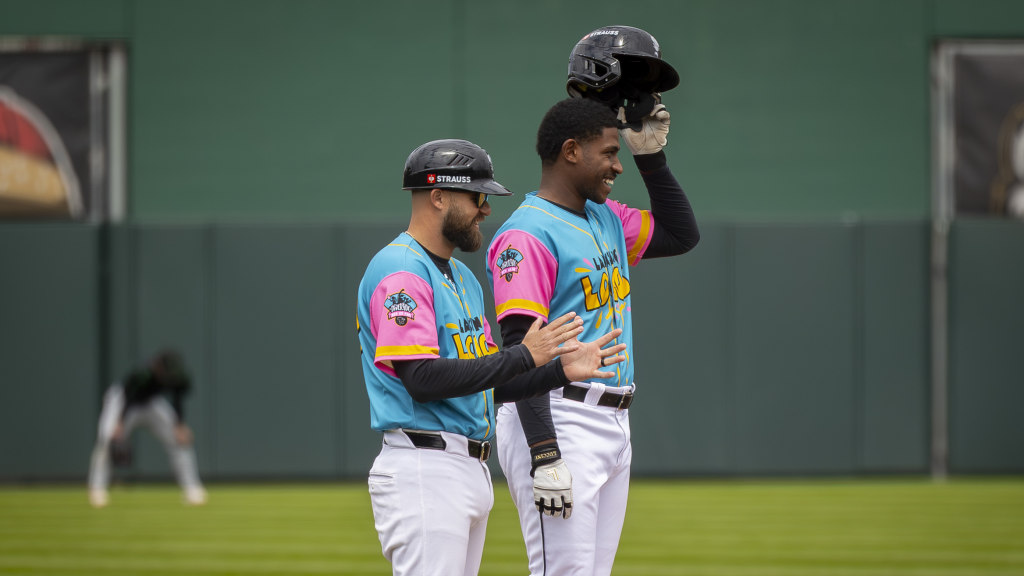
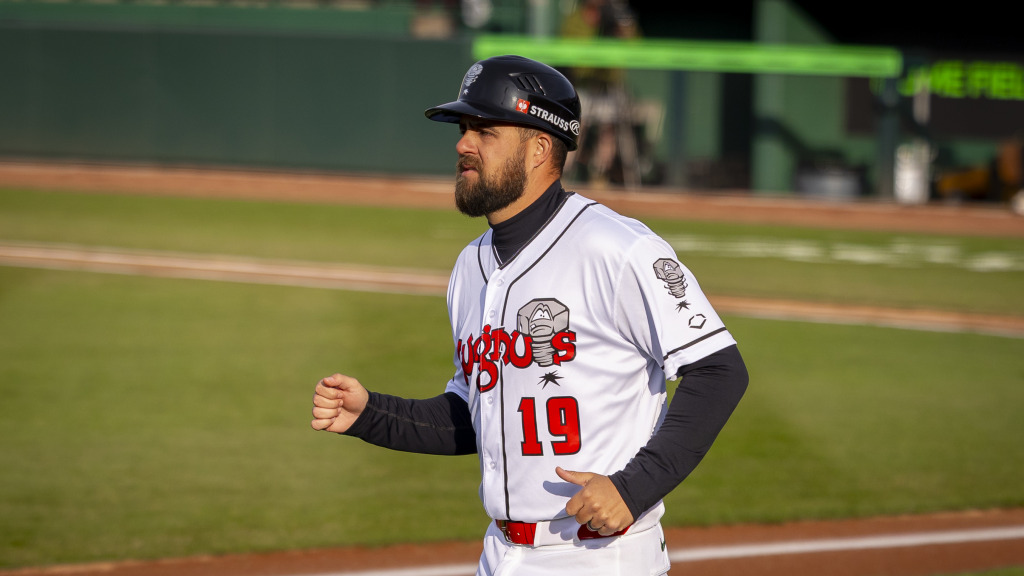
Throughout the 2026 season, Lansing Lugnuts manager Javier Godard kept a list of all the players that had been promoted from his team to the next level of the minor league system. For Godard, keeping a count is tradition.
“I've always done that just to remember the guys, and as other people come in and talk about movements and stuff, it's just good for me to kind of have an idea the guys that we had at the beginning of the year, the guys that moved up and stuff like that,” Godard said. “So I've always done it since I started managing. I think it's pretty cool."
By the end of the campaign, which wrapped up on Sept. 6, the list had 19 names on it, a number Godard said is high compared to his previous two seasons as manager of the Single-A Stockton Ports.
“Our job is to get guys ready and get them to the next level and hopefully get to (the) big leagues and make an impact there,” Godard said.
Climbing the Ladder
Of the players on Godard’s list, six climbed to the Triple-A level and are listed on the Las Vegas Aviators’ roster: pitchers Ryan Magdic, Jake Garland and Jackson Finley along with position players Devin Taylor, Davis Diaz and Justin Riemer.
12 players reached the Double-A level, playing for the Midland Rockhounds: pitchers Nathan Dettmer, Jay Dill, Steven Echavarria, Ben Hansen, Blaze Pontes and Zane Taylor in addition to position players Logan Sauve, Bobby Boser, Ali Camarillo, Jared Sprague-Lott, Pedro Pineda and Casey Yamauchi. Two other 2026 Lugnuts who were not on Godard’s list also made it to Midland; C.J. Pittaro was promoted on Wednesday after the Lugnuts’ season had ended, and Nate Nankil played with the Nuts at the beginning of the season and was eventually promoted directly to Double-A from Single-A.
Rounding out Godard’s list, Kyle Robinson finds himself at the Double-A level, though not with the Athletics’ organization. After pitching in six games with the Lugnuts to open the season, Robinson was traded to the Pittsburgh Pirates organization before getting dealt at the trade deadline to the Los Angeles Angels. Robinson is currently playing at the Double-A level with the Rocket City Trash Pandas.
The coaching staff had no shortage of players that stood out to them among the group of guys who were promoted this season. Magdic was one of the highlights from both Godard and pitching coach Levi Kelly. Magdic began the year in the Lugnuts’ bullpen before taking a role in the starting rotation in the middle of May. The Canadian southpaw pitched in 15 games for Lansing, including five starts, and compiled a 3.22 ERA with 40 strikeouts compared to five walks before earning a promotion to Double-A.
After six games (22 innings) with the Midland Rockhounds (one start, 2.86 ERA, 22 strikeouts, four walks), Magdic was boosted to Triple-A on July 22 where he has started nine games (45 ⅔ innings) and posted a 5.91 ERA (31 strikeouts, six walks).
“A guy that started in the bullpen and now is starting in Triple-A, that's a massive jump,” Kelly said.
Garland also received recognition from Godard and Kelly for making his way to Triple-A this season after spending the majority of the last four years in Lansing, including the start of 2026. Kelly highlighted the pitcher’s mindset when describing what it is like developing players who are repeating levels.
“He came in with a really good mindset,” Kelly said. “Wasn't bitter about being sent here at all, and then got out of here right away.”
The hitting coaches, Ron Witmeyer and Luis Báez, along with Godard emphasized Diaz and Devin Taylor. Diaz, the Athletics’ No. 19 prospect (MLB Pipeline), played 29 games for the Lugnuts to begin the season, slashing .302/.417/.491 and earning Midwest Player of the Week for the week of April 7-12 by hitting .611/.696/.833, going 11-for-18 with four doubles, four RBIs, nine runs scored, a hit-by-pitch, four walks and 15 total bases over five games in the second series of the season. Diaz was promoted to Double-A on May 12 and is now playing with Triple-A Las Vegas.
Taylor, the Athletics’ No. 7 prospect (MLB Pipeline), has been scorching over all three levels he has played in this season. Beginning the campaign in Lansing, the product of the University of Indiana hit .292/.425/.436 over 57 games with the Nuts before earning a promotion on June 9. In Double-A, Taylor improved to .323/.409/.534 and was moved to Triple-A on Sept. 1. In nine games with the Aviators, Taylor is batting .351/.415/.541, highlighted by his second game with the team in which he hit 4-for-6 with seven RBIs, three runs scored, a grand slam and a solo home run.
“I think that Devin was advanced a little bit with his approach at the plate and kinda has an idea what he wants to do, doesn't panic when he's up there as a hitter,” Witmeyer said. “And I think what we saw of him here at the beginning, he was just trying to figure out what pro ball was all about, and once he started to roll, he's continued that at the higher levels, for sure.”
Details of Development
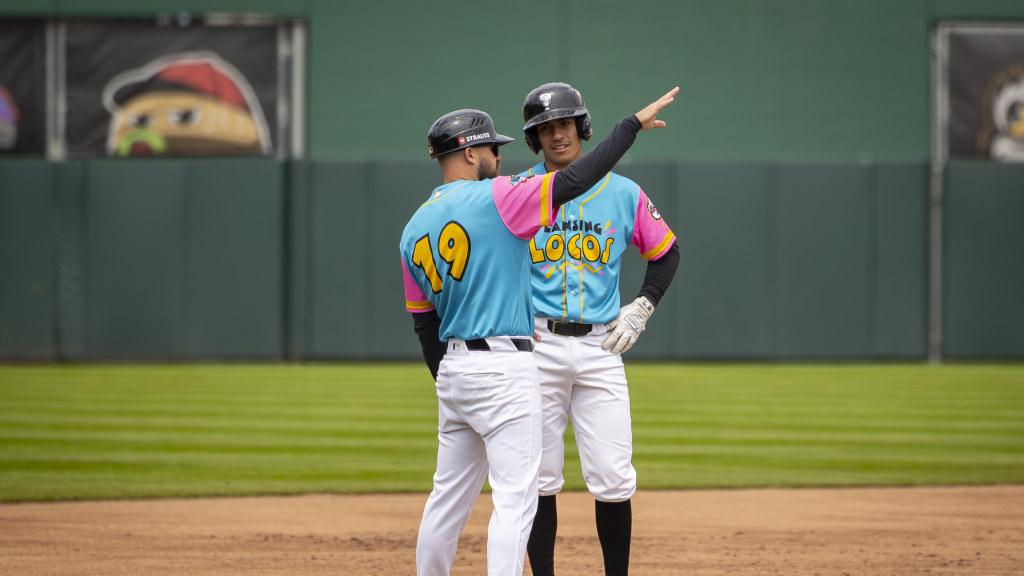
Godard credited injuries to players at the Major League level as a reason for the higher rate in promotions this season as the Athletics shuffled players around the system to fill roster spots.
“It's good just to have people ready to go to the next level,” Godard said. “Anything happens, they're ready (to) go. It's just different that if something happens at the big league level, that's why we have a minor league system, right? But it would be different if we have some injuries at the big league level and nobody's ready here. … Our job is to get these guys ready, and they were at the time that they got opportunity to go up.”
Kelly pointed out the way this coaching staff allows their guys to play the game as a reason for why the number of promotions this season was so high.
“When I took this job as a coach, that was one of my goals is just to get guys playing like they're playing in the backyard,” Kelly said. “And I think the environment we've created here has allowed guys to do that and kind of be themselves on the field, and you've seen the results, and the promotions speak for themselves.”
So what actually gets a player promoted from High-A? Godard said that it is a big jump from High-A to Double-A and that players who want to make the climb need to perform well and know how to play the game.
“I think for the guys who recognize how to play the game and how to do the small things and what does make a team win, all that kind of stuff, you gotta learn it here,” Godard said. “If you don't learn that here, you won't be move up.”
Godard said that development at this level is about teaching and that studying the game is how players become better. Godard explained that the teaching doesn’t solely happen on the field, but also comes in the form of discussing and watching the game.
“I think you learn more when you're not really playing the game,” Godard said. “When you're playing the game, you gotta react and you gotta anticipate and stuff. But when you're watching the game, whether it's TV or on the bench that day, whatever, a play that you're not involved with, you learn a lot from that.”
For pitchers specifically, Kelly said getting promoted comes down to consistent performance.
“Low-A is the level of finding out who they are, and then once they get here, it's just how many consistent outings can he put together?” Kelly said. “ And then I think once you see that consistent performance, on the bright side, you don't see guys here for too much longer after that.”
According to Kelly, the process of developing pitchers in Lansing is different for each player due to a range of development stages; a pitcher must first have their mechanics figured out before the focus can shift to things like pitchability and sequencing.
To get promoted as a hitter, Witmeyer said that it’s a case-by-case basis, that it depends on a player’s strengths and weaknesses, if they can control the strike zone and how they make adjustments.
“I don't think that there's one set thing that they're looking for,” Witmeyer said. “Just depends on the player and when they think that they're ready to not be set up for failure, that they're ready to succeed at the next level.”
Whitmeyer said that a lot of the development at the High-A level for hitters comes down to being able to control the strike zone.
“To me, that's the biggest thing for guys at this level is learning that they do need to be patient, they need to be aggressive, but it needs to be controlled aggression, and early in counts that they need to get a pitch that they really wanna hit and not settle for something early on,” Witmeyer said.
‘That's the best part about what we do here’
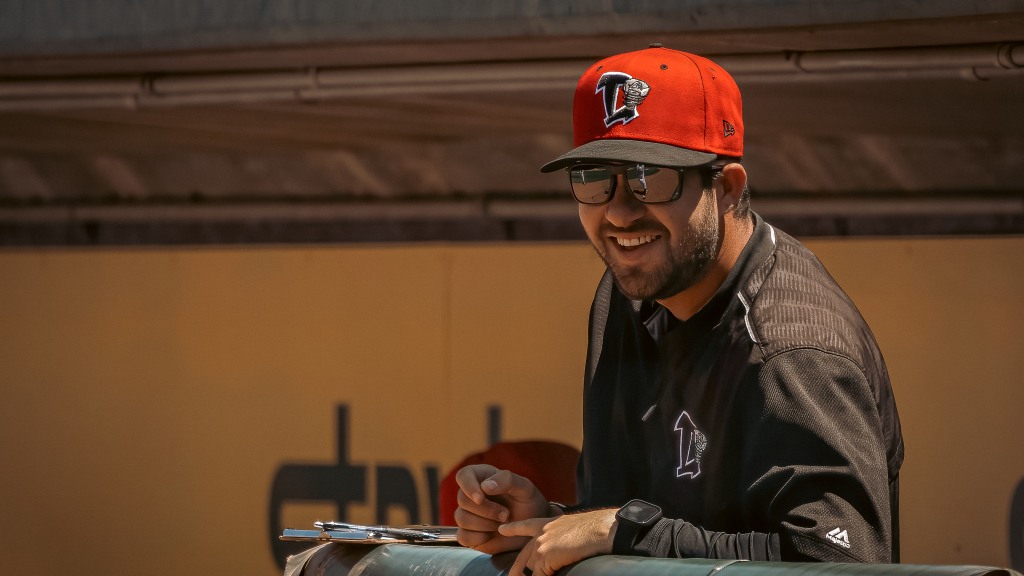
When talking to Godard about promotions, it’s obvious just how much it means for him to see his players move up.
“There is no better news just to give a guy that, ‘Hey, you're moved to a higher level,’ because you can see the joy in their eyes. … That's the best part about what we do here. … It's awesome to watch and just to be part of,” Godard said.
As a former minor league player, Godard said that watching his players get promoted is extra special for him because he’s been in their shoes. And when they reach the big leagues, Godard said he couldn’t be more happy for them.
“I love this game because I get to help these guys achieve their dream. Even though I didn't make it to the big leagues, that doesn't mean I cannot help these guys to achieve their dreams, and that's why I'm here. That's why I love this game.”
Báez observed that seeing players get promoted is a happy occasion, even if it sometimes hurts the team. Witmeyer’s sentiment was the same.
“That's what we're here for is to try to help guys get to where they wanna be,” Witmeyer said. “Nobody wants to spend their career here in Lansing. So when they have those opportunities, it's always, other than the fact that it weakens our team usually, it's always good. You can't be anything but happy for them.
“And I think even as rewarding as when they move up is when you see when they do well when they move up. And I think most of the guys that we've had this year, as they progressed, they've done well at Double-A, and even some at the Triple-A level.”
“When those guys get moved up, sometimes it's a little sad,” Kelly said. “You get close with these guys, and… you don't know when you're gonna see them again. But at the end of the day, you're just super happy for those guys. They're here to get to the big leagues, not to pitch for me. So them taking that step to reach their goal is huge and brings me a lot of joy.”
But just because players leave the team doesn’t mean the connection with the staff is lost.
“They might be in a different affiliate level, but they're still in the organization, and they're still part of us, and I'm still their coach. … We always keep in touch with them because they are a part of our family, part of our organization, and we're still here for them to help them in any way,” Godard said.