


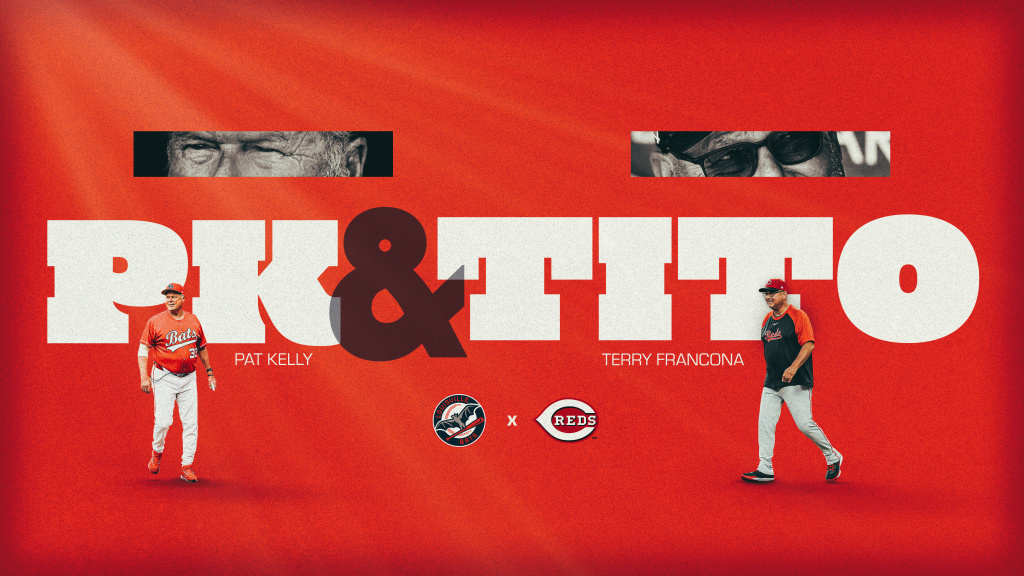
After decades in professional baseball, Pat Kelly and Terry Francona still talk about the game. But these days, their conversations sometimes include compression socks, too.
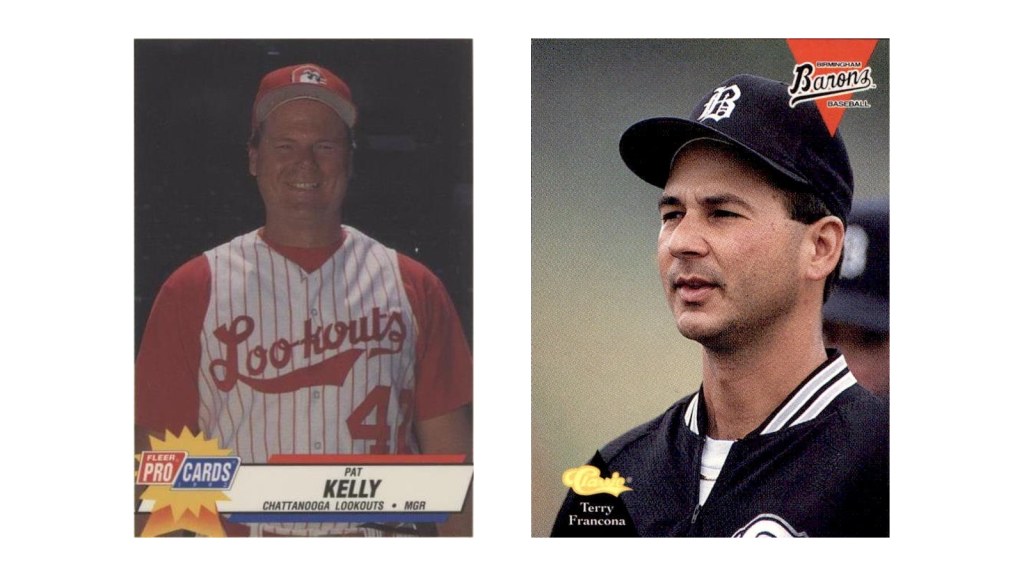
Francona and Kelly first managed against each other in the Double-A Southern League in 1994, when Francona was at the helm for the Birmingham Barons and Kelly led the Chattanooga Lookouts. Thirty-two years later, they are still managing and now working together in the Cincinnati Reds organization, with Francona at the Major League level and Kelly in his eighth season with the Triple-A Louisville Bats.
A lot has changed since their days busing around the South. Francona, a former Louisville Redbirds player in 1990, has won two World Series titles and more than 2,000 games as a Major League manager, while Kelly is currently the seventh-winningest manager in Minor League history with more than 2,000 wins of his own. But through all the years, stops, and games in between, their friendship has remained.
Kelly has fond memories of that 1994 season. With Francona managing a squad that included basketball legend Michael Jordan, Kelly recalled a normal crowd when Chattanooga opened the season at Birmingham without Jordan. By the next day, Jordan was making his Barons debut and everything had changed.
“We pulled into the stadium and there were 25 TV trucks and satellites and all kinds of things,” Kelly said. “We played them a lot, so I got to know Tito very well back then. Then obviously I followed his career through the years, and then when he was over with Cleveland, we’d always run into each other in spring training.”
Neither could have envisioned at the time that they would still be managing more than three decades later. Francona didn’t even expect his career to take him to the top of the game.
“I never pictured myself being a Major League manager,” Francona said. “I just wanted to be in the game. I loved what I was doing.”
Kelly wasn’t sure he would still be doing it either. But even as he approaches 71 years old, his enjoyment of coming to the ballpark every day hasn’t gone away.
“I didn’t envision myself doing it, but I didn’t realize I’d be enjoying it this much at this age,” Kelly said.
That everlasting passion for the game is something the players around both managers have noticed.
“There’s a reason they’re still in the game,” Blake Dunn said. “They’re respected. Both are respected to the highest degree in the baseball world, and that’s why they’re both still managing.”
Dunn is one of many who have played for both managers over the past two seasons, giving him a first-hand look at the similarities and differences between the two. Their experience is the most obvious.
“They’ve been around the game for so long,” Dunn said. “They’ve seen so much good and bad. Just having those types of experiences and that level of management in your corner and in your dugout is something that helps teams a ton.”
“They just have so much experience, so situations don’t faze them,” Tejay Antone said. “They’re very consistent with how they manage and how they go about trying to win a ballgame.”
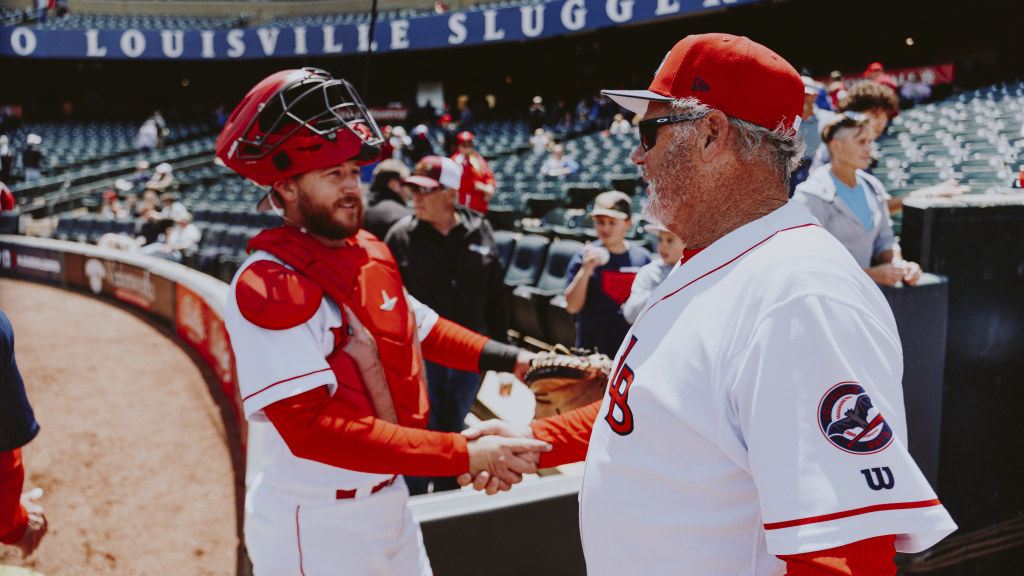
That experience also shows in how the pair connect with their players. They have been described as intense when they need to be, but also capable of knowing when a clubhouse needs something different.
“They obviously care. They want to win, but they know how to make you laugh,” Dunn said. “They know how to lighten the mood when needed. They can read the room and push guys when they need to be pushed and also be there for guys when they need to be as well.”
At the center of both managers’ approach is communication.
“They’re very similar in the sense of their communication style,” TJ Friedl said. “They’re very transparent in terms of what they expect out of you and what the expectations are. They have the open-door policy. If you ever have any questions or need to know anything, you can always go ask them.”
“They cut you straight, but they also like to have a good time,” reliever Sam Moll said. “Having relationships with their players, and then instilling the trust in the player that they have your back, I think, is the big thing. It’s easy to play for a manager like that.”
That trust also gives players room to be themselves, something neither manager has lost sight of despite the evolution of the game and its players over the past few decades.
“They’re honestly just both very [much about] letting the guys be themselves and making sure that they’re being the best versions of themselves and being the best teams they can be,” Chase Petty said. “They’re both leaders in the clubhouse, just by the way that they present themselves and the way that they carry themselves.”
“I think they’re both matter-of-fact type people, and they also crack jokes a lot,” Will Benson said.
These similarities are now even more important with the two working in the same organization for the first time. With players regularly moving between Cincinnati and Louisville, Francona trusts Kelly to handle the Triple-A job that always comes with a unique set of challenges.
“It’s a very tough job, because everybody there has got a story,” Francona said. “Somebody’s either coming or going, and he handles that part of it really, really well.”
For Kelly, this relationship with Francona is a little more direct than some of his previous stops. He recalled rarely speaking with other Major League managers while managing at Triple-A earlier in his career, as much of the communication went through the front office.
“Here, Tito told me in spring training about certain guys that they were going to send to us, and then we talked through the year about who could possibly help them and what their strengths and weaknesses are,” Kelly said. “Hopefully we can send some guys to help their club.”
Their history together only adds to the connection between the two.
“I definitely think that helps,” Kelly said. “He’s familiar with me, and he knows that I’m here to serve their club. That’s what my job is, and I enjoy what I do. I think just being able to know that I can pick up the phone and contact him at any time if something’s going on.”
“If I’ve got something on my mind, I throw him a text,” Francona said. “I know when he gets it, he’ll answer. We get so caught up in what we’re doing, and so does he. I trust his judgment.”
Away from the day-to-day roster moves and player discussion, the relationship has also remained personal. Kelly joked that the subjects they talk about have changed a bit over the years.
“As we’ve gotten older, instead of talking baseball, we talk about compression socks and things like that,” Kelly said.
Francona laughed when he heard about Kelly’s description of their conversations.
“Unfortunately, we have a lot of the same issues,” Francona said. “We’re both not exactly the picture of health. We’re not on the Men’s Health magazine cover.”
The jokes are a part of a friendship that has lasted more than three decades in professional baseball. Francona has watched Kelly continue to manage, develop players and handle the constant movement that comes with Triple-A baseball.
“He’s a good baseball man. He’s also a good man, and we’re lucky to have him at that level,” Francona said. “In this day and age, I don’t know if it’s easy to find that experience anymore, and he certainly has that.”
Kelly sees something similar in Francona. Long before reversing curses and winning World Series titles, Kelly said Francona already had the personality and ability to connect with players that would eventually define his career.
“You knew he had that presence,” Kelly said. “You could just see the relationships that he has with his players, and I think that’s what management, especially nowadays, is all about. He makes everybody feel at home and feel comfortable.”
In 2026, the pair are still doing the same job they were doing when their paths first crossed in the Southern League in 1994, only now they are doing it together for the Reds organization.
Asked if there was anything else to add about Kelly, Francona didn’t need many words to sum it up perfectly.
“I love him,” Francona said. “Just love him.”