


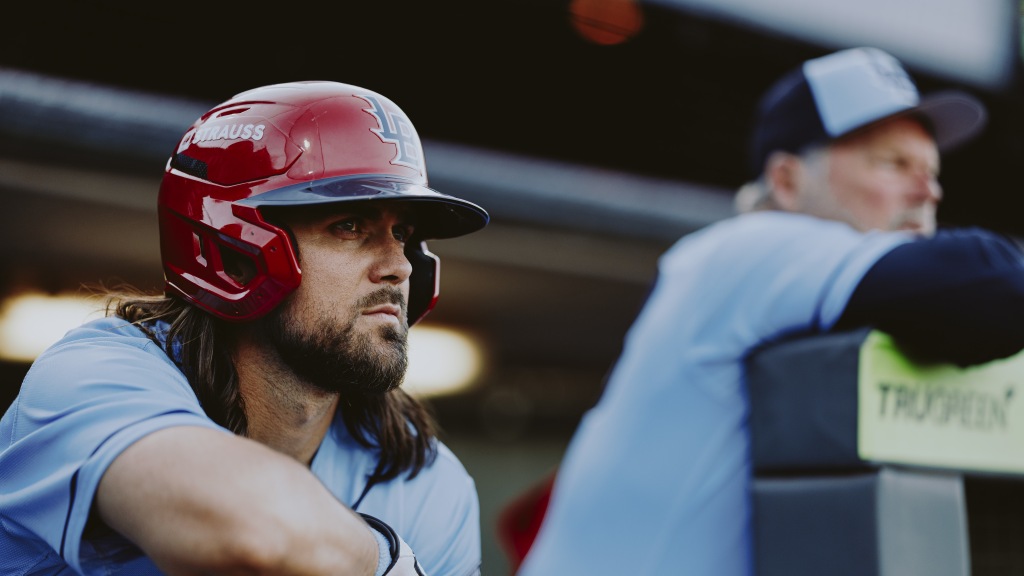
Michael Chavis has spent more than a decade pursuing and continuing a major league career. The journey has taken him from team to team, city to city, and most recently, continent to continent.
A former first-round pick of the Boston Red Sox in 2014, he has grown up in baseball.
Last season, after a stint in the organization of the reigning World Series champion Los Angeles Dodgers, Chavis found himself at an impasse. He was once again a free agent in search of a new home. The previous four years had seen him come and go with six MLB teams, most of his work being done in the minor leagues.
It was time to try something different. He decided to move across the Pacific Ocean to play in Japan for the Chunichi Dragons.
A native of Georgia, Chavis found himself a long way from home, to say the least, but the change of scenery would allow him to refine his game for future opportunities in the big leagues. What awaited him was a world unlike any he had known before.
"It was bizarre, man," Chavis said with a laugh. "It was a really cool experience."
The decision ultimately allowed him to return to affiliated baseball with the Cincinnati Reds organization this past offseason, and into a highly productive stretch with the Louisville Bats in 2026. His journey has been anything but conventional, yet each stop has reinforced what matters most.
"I used to care way too much," Chavis said. "I put a lot of my self-worth into baseball, and that was something that weighed really heavy on me. It would make things really difficult."
Then, a little less than two years ago, he became a girl dad. At first, the thought of change was intimidating, but with time it altered Chavis’ life in ways he never before envisioned.
“Everybody says you're going to change, it's going to change,” he exclaimed, building excitement with each word.
“I think a lot of times, as humans, especially as men, we see change, and that kind of makes us uncomfortable, because change is uncertain, and you don't really know what to expect. And going into being a father, I didn't know what to expect, but the change that happened is the best thing that ever happened to me in my entire life.”
Chavis paused before correcting himself. “The second best thing: finding Jesus was number one.”
It was a shift in perspective that evolved with time, well before Chavis ever packed his bags for Japan; but the adjustment to life overseas had to begin instantly. Since beginning his professional career in 2014, he has developed a meticulous pregame routine centered around the batting cage. In Japan, those familiar rhythms disappeared.
“I didn't know that they don't really use batting cages,” Chavis said. “So I was going over there trying to do a lot of my prep work, and I just wasn't able to do that.”
Everything felt different, from the playing style to the pace of games and the atmosphere. Even everyday life presented challenges.
"There were just a lot of smiles and 'I'm sorrys,'" Chavis joked, referring to the language barrier.
Fortunately, he wasn't alone.
His wife and daughter joined him overseas, providing a sense of comfort thousands of miles from home. Still, another challenge he hadn't anticipated: Japanese games routinely stretched beyond four hours. Add in the lengthy commute home, and family time became increasingly scarce. By the time he walked through the door, his daughter was often already asleep.
"We were playing a seven o'clock game, and not finishing until 11," Chavis said. "Then it was about a 40-minute drive home. It got to the point where I'd wake up, go to the field, come home, go to bed, wake up and go to the field. My family was with me, but I wasn't really spending much time with them, and that was really difficult for me."
For someone who describes himself as "a relationship guy," the emotional toll outweighed any cultural adjustment.
"I really value my relationships," Chavis said. "Obviously with my daughter and my family, but also with my teammates."
Those relationships continue to define his approach in Louisville. And now, in his 13th professional season, Chavis embraces the role of veteran without trying to force it.
"I guess technically I would qualify as a veteran," he said, pushing back on the notion slightly. "I’m taking care of my business, but I’m always trying to help people along the way."
That mindset stems from something deeper than experience.
"I want my friends to succeed," Chavis shared. "I want my teammates to succeed. We spend more time with these guys in this clubhouse than we do with our family. This (team) becomes your family."
The same philosophy extends to how he approaches winning. Early in his professional career, Chavis remembers hearing that player development took priority over wins in the minor leagues. At first, it made sense, but as he got a taste for competition in the big leagues, the message began to lack resonance. Over time, he discovered something more valuable.
"When I go out there and play for myself, it doesn’t really work out well," Chavis began to reflect, as only a veteran could. "I’ve learned that when I’m trying to play for the team, I perform better and have more fun along the way."
The right-handed slugger's impact on the Bats this season was never more evident than on the evening of July 8. It was “Nothing Night” at Louisville Slugger Field, and the game was deadlocked at eight with one out in the bottom of the ninth.
Stepping to the plate as a pinch hitter with the bases loaded, Chavis could deliver the winning swing. He quickly found himself down 0-2 in the count, but soon after deposited a hanging breaking ball into the left field berm to walk the game off with a grand slam.
Chavis’ current mark of 19 home runs is tied for second best on a Bats team that possesses no shortage of power. His 59 RBI rank second behind only teammate Hector Rodriguez. The impact that Chavis has had on a talented Louisville club is not lost on manager Pat Kelly.
“The experience is great to have. He’s got some years in the big leagues, and being able to come off the bench,” Kelly said, then shifting to Chavis’ seminal moment. “All we needed was a fly ball, but he ended up giving us a grand slam.”
So, after all the sacrifice, would Chavis consider this a resurgent year?
“I hope so,” he remarked. "I haven’t been in the big leagues since 2023. My biggest goal this year is to take a picture in a big league uniform with my daughter."
At nearly two years old, she's too young to have seen her father play in the majors. Chavis laughs when he thinks about it.
"She's going to grow up and not even believe that I played baseball," he said. "I kind of have to get back so I can show her, 'Hey, you were here. You saw it.' “Even if it’s just a day. I would like to get that experience with her."
That goal brought him back stateside, joining the Cincinnati Reds organization this past offseason on a free agent deal.
"There were a couple other teams that had interest," Chavis said. "Coming back from Japan, I wasn't really sure how things were going to play out. When I looked at the depth chart and what they needed, I felt like I'd fit in well. They told me there would be an opportunity if I took care of business. An opportunity to play in the big leagues.”
As pages on the calendar continue to turn, Chavis is still waiting on the call. If and when it comes, it won’t be his first, and possibly not his last. It will, however, be accompanied by an entirely new set of emotions.
Until then, his daughter remains a pivotal part of every Bats home game. She believes her dad looks like Maui from Disney's “Moana”, inspiring both his walk-up song and the now-familiar "hook" celebration after each of his home runs.
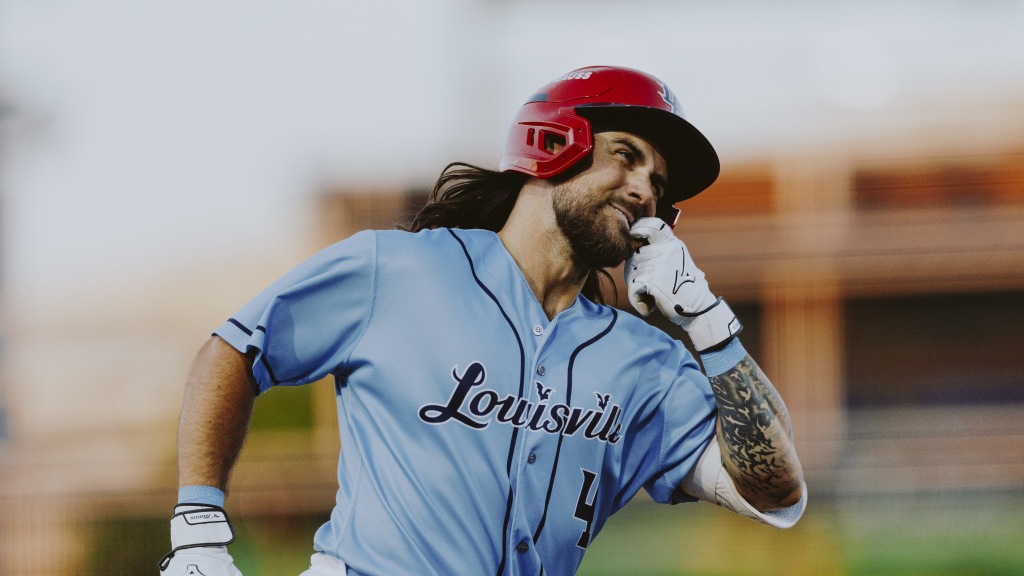
"When my walk-up song comes on, I usually look back, and she's sitting there clapping and cheering," Chavis said. "It brings me peace in the moment. It makes me feel like they're with me. If it helps get hits, and it makes me feel comfortable in the box, absolutely."
Chavis has found that discovering an identity beyond baseball hasn't lessened his desire to return to the major leagues; it strengthened it. He wants another opportunity in a big league uniform, and hopes the Reds will come calling soon enough.
At the center of his identity, however, has always been his family. Every spring, before he leaves for camp, his mother asks him the same question: Does he still love it?
"She doesn’t let me leave until she checks on me," Chavis said. "Whenever you stop loving it, this game gets tough."
Over a decade into his professional career, a trip across the world, and countless highs and lows, his answer remains the same.
"Absolutely."