


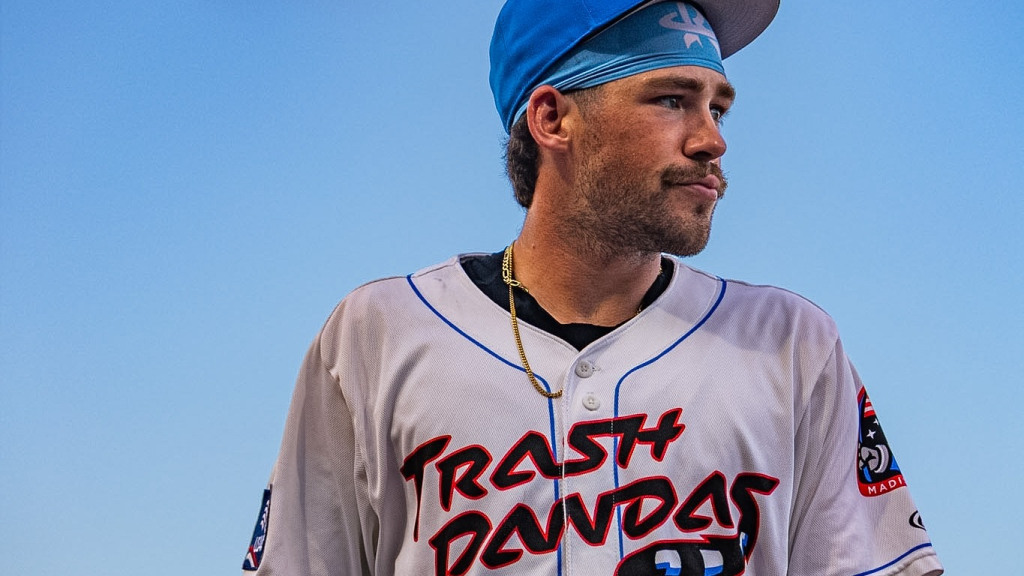
Mac McCroskey has never needed much convincing about what he can do with a glove.
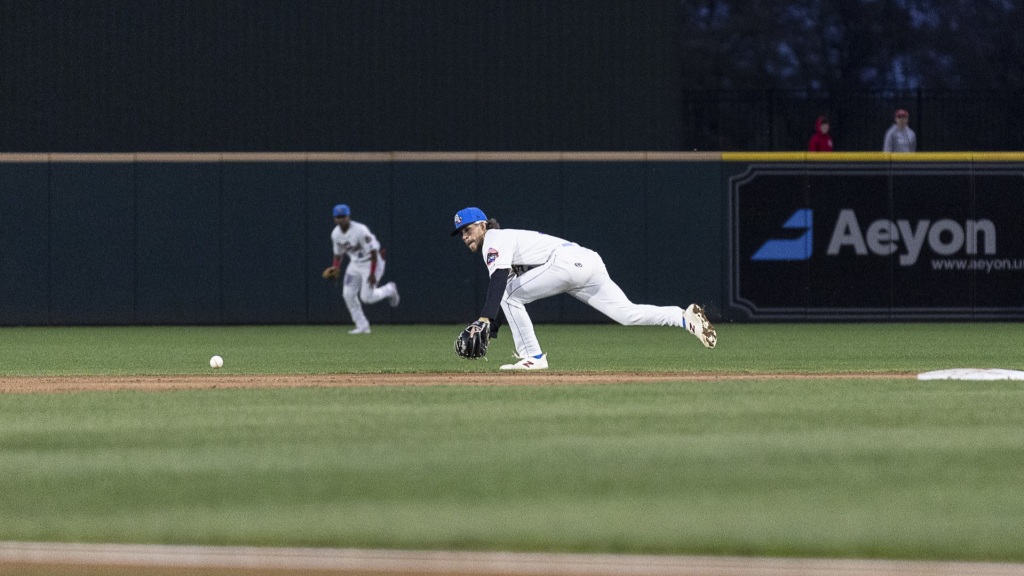
Defense has always come naturally to the Rocket City Trash Pandas infielder. The instincts, quick hands and internal clock that carried him through a memorable College World Series run at Oral Roberts have followed him into professional baseball. He has made difficult plays appear routine, produced numerous defensive highlights, making it onto ESPN’s SportsCenter Top 10, and established himself as one of the most dependable infielders to wear a Trash Pandas uniform.
The more difficult part of McCroskey’s journey has been learning to trust everything else.
“I got drafted because I could play defense, but I also can hit,” McCroskey said. “Just believing in that, going out there and trusting my swing, trusting the work that I’m putting in the cages and just kind of letting the game happen.”
Four seasons into his time with Rocket City, that confidence has become easier to see.
McCroskey has been more comfortable at the plate, more consistent in his preparation and increasingly willing to accept the inevitable failures that come with professional baseball. After spending stretches of previous seasons moving around the infield and playing maybe four or five times per week, he found an opportunity to play regularly in 2026, which helped him establish a rhythm.
His approach was simple: remain the same person regardless of whether his name appeared in the lineup.
“I think just keeping a good mindset, keeping good vibes no matter what,” McCroskey said. “It’s easy to get down whenever you’re not playing as much as you’d like. Showing up every day and trying to be the same guy helped me get into a groove. Obviously, playing every day helps, too.”
That answer explains much of what has allowed McCroskey to endure one of the most unusual introductions to professional baseball imaginable.
The Angels selected him in the 20th round of the 2023 MLB Draft after a historic season at Oral Roberts. The Golden Eagles won 52 games, captured the Summit League championship and became one of the defining stories of the college baseball season by reaching the College World Series in Omaha.
McCroskey was at the center of the run. He earned All-Summit League honors and helped Oral Roberts reach college baseball’s biggest stage for the first time since 1978.
There was little time to process it all.
McCroskey went from competing in Omaha to signing with the Angels and reporting directly to Double-A Rocket City, skipping the lower levels of the organization. One day, he was a college shortstop surrounded by teammates with whom he had built years of familiarity. Soon after, he was facing advanced professional pitching in one of Minor League Baseball’s most challenging environments.
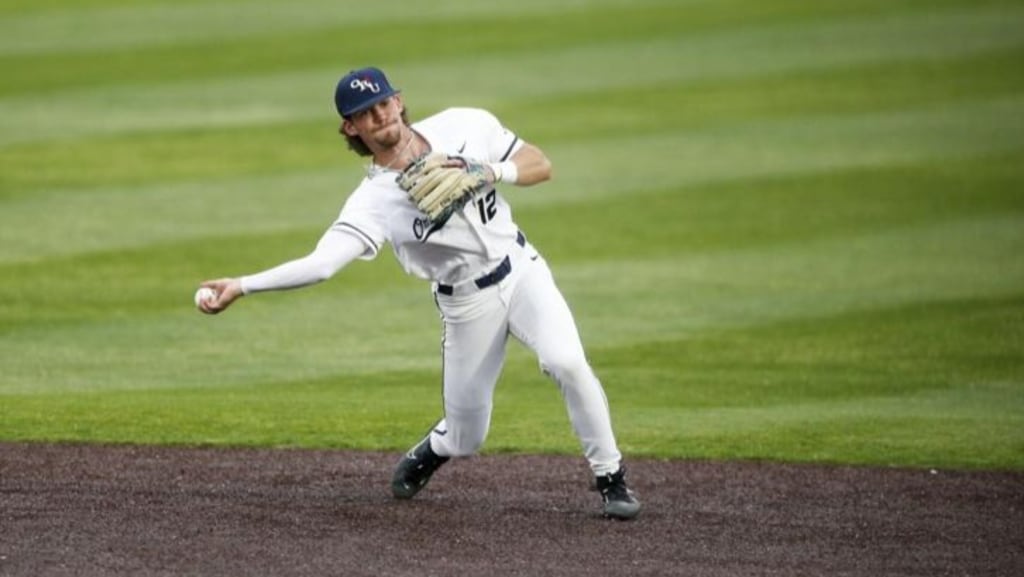
When McCroskey looks back at the player who first arrived at Toyota Field, the physical changes are apparent. He is stronger and has learned how to better maintain his weight throughout the grind of a full season. The largest difference, however, has taken place internally.
“I think I’ve grown into my body a little more, and I think I’ve grown mentally as well,” he said. “That’s probably the biggest change. I went from not failing a ton in college to—you fail a lot, especially here at this level. This league is a tough league. Just learning how to accept failure and be OK with it, I think it’s gotten better each and every year.”
McCroskey’s development has not come from ignoring failure. It has come from redefining it.
A hard-hit ball caught by a defender is not necessarily a poor at-bat. Moving a runner, drawing a walk, stealing a base or making a run-saving play can have as much value to a winning team as a hit appearing beside a player’s name in the box score.
Trash Pandas hitting coach Tony Jaramillo has helped reinforce that perspective through daily routines and an emphasis on constructive internal dialogue.
“Tony is big on positive self-talk,” McCroskey said. “It’s trusting that you’re doing the work every single day in your routine. If you’re doing your routine the right way every day, and you go and take good swings at good pitches in the game, then that’s a win. It’s not how many hits you get.”
The process has helped McCroskey become less consumed by nightly results and more focused on contributing to the larger purpose of the team.
“Did you get a runner over? Did you have a quality at-bat? Did you walk? Did you get on base, steal a base or make a defensive play to save a run?” he said. “I feel like it goes throughout the whole team. We’re playing more as a team instead of it being individual.”
The results are evident in more than his offensive production.
McCroskey has become a veteran presence on a roster that includes players experiencing Double-A for the first time. He is now one of the players younger infielders approach with questions about positioning, footwork or how to handle an unfamiliar play.
He does not pretend to have mastered the game. Even after four seasons in Rocket City, McCroskey continues asking questions and studying the players around him.
“You’re always learning something different in this game,” he said. “You see something different every day. It’s always good to be able to help other people learn, too.”
His willingness to learn has extended to watching players with major league experience pass through the Rocket City clubhouse. Wade Meckler, Matthew Lugo and Gustavo Campero were among those who demonstrated how a major leaguer prepares and handles the disappointment of being back in the minors.
None arrived carrying resentment or acting as though Double-A work was beneath them.
“They came in here and got to work every single day,” McCroskey said. “They set a good example for all of us younger guys and showed how to go about our work every day.”
That example has helped shape a clubhouse McCroskey describes as the closest he has experienced in professional baseball. Players such as Tucker Flint and Luke Murphy have spent multiple seasons alongside him, while newcomers have quickly blended into the group.
The result has been an environment in which players enjoy arriving at the ballpark, an important quality during a season built around six-game series, overnight travel and inevitable stretches of frustration.
“Whenever you enjoy coming to the field every day, it’s a lot easier to play well and loosen up,” McCroskey said. “Everybody’s having a good time and excited to be around each other. Everybody wants to win.”
Manager Joe Kruzel has encouraged that freedom while ensuring it never becomes carelessness.
“He lets us come out and play free and kind of be ourselves,” McCroskey said. “He doesn’t let much slide, but he lets you go out and play. If he needs to step in and let you know about something, he definitely will.”
For McCroskey, playing freely has also meant returning to the position that first made him feel at home.
After spending much of his first three professional seasons at second and third base, McCroskey has received a more consistent opportunity to play shortstop in 2026.
The move brought him back to the position he played throughout his college career and reunited him with the part of baseball he has always enjoyed most.
“This is the first year I’ve played shortstop consistently since I’ve been in pro ball,” McCroskey said. “Getting back over there, where I was all through college, has made me feel more comfortable. I always enjoy playing shortstop, so it’s fun being back over there. I definitely feel like I’m playing a lot looser than I have the past couple of years.”
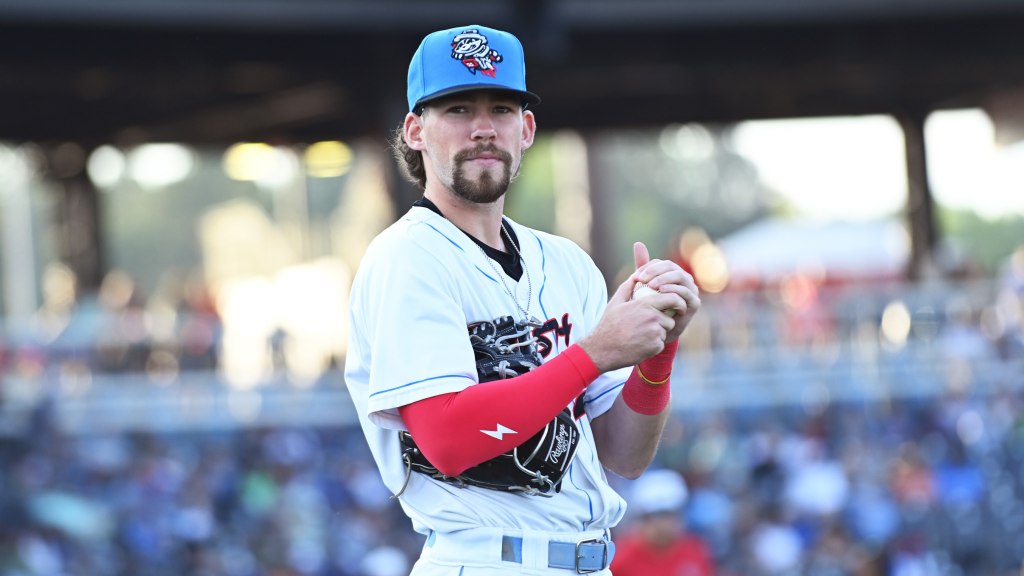
His defense has provided some of the most memorable moments of his professional career.
McCroskey has ranged across the infield to take away hits, completed throws from difficult angles and displayed the type of anticipation that cannot be fully measured by a box score. One of those plays landed on SportsCenter’s Top 10, giving a national audience a glimpse of what Rocket City fans have watched for years.
There are occasions when even McCroskey is surprised by the plays he completes.
“Sometimes I don’t know how I did it, but I did,” he said. “I think it just goes into the work I put in every day. Defense has always been my thing. I enjoy getting out there, trying to learn new stuff, looking at videos and doing anything I can to get a little better because you can always get better.”
Yet one of the defining moments of McCroskey’s Rocket City career came with a bat in his hands.
During the 2025 Rickwood Classic at historic Rickwood Field, the Trash Pandas and Birmingham Barons played in one of baseball’s oldest venues. The game was part of a week celebrating the history of the Negro Leagues and the legacy of Willie Mays, who began his professional career at Rickwood with the Birmingham Black Barons.
McCroskey delivered the game-winning RBI, helping Rocket City earn a victory on a day that carried significance far beyond the standings.
It was the type of moment that connected his emerging offensive confidence with the defensive reputation that had long defined him.
That balance is what McCroskey continues pursuing. He does not need to become a completely different hitter. He wants to be strong enough, disciplined enough and confident enough to allow the hitter who has always existed to emerge consistently.
A major part of that process began during the offseason.
McCroskey focused on adding strength and arrived better equipped to withstand the physical demands of a full schedule. More importantly, he and Jaramillo developed a repeatable daily routine that removed some of the uncertainty from his preparation.
“A big thing this offseason was getting in the gym and putting on some weight,” McCroskey said. “I’ve been able to maintain it this year more than I have the last couple years. That’s definitely helped. Then, getting with Tony and building a set routine that I know I can go in and do every day—if I do that routine, I know I’ll be OK at the plate.”
The increased confidence has translated into better at-bats, more walks and harder contact. It has also allowed McCroskey to contribute regardless of where he appears in the lineup.
Four seasons with one Minor League Baseball club is unusual. Promotions, trades, injuries and roster turnover continually reshape teams. McCroskey has watched dozens of teammates arrive and depart while Rocket City has remained the central location of his professional career.
No player wants to become too comfortable at a minor league level. The ultimate goal is always to advance. Still, McCroskey has embraced the relationships built during his time in North Alabama rather than viewing them as reminders that he has not yet moved on.
“Everybody wants to move up, but if this is the place I’m going to be, then I love coming here every year,” he said. “It’s been a fun four years. It’s been awesome getting to know some of the fans and building those relationships. They always have awesome crowds and really support us, so we want to win for them.”
His connection to Rocket City extends beyond Toyota Field.
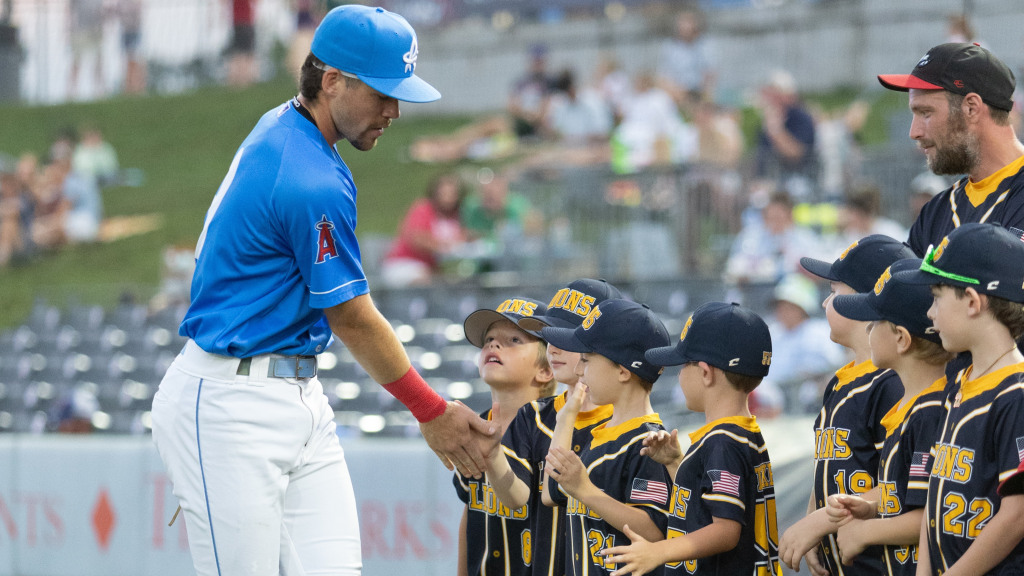
McCroskey has participated in youth camps, Real Life Fridays and other community appearances that allow players to interact directly with children throughout the region. He understands that those events are more than obligations on a schedule. For young players, meeting a professional athlete can make a distant dream feel reachable.
“That’s how you keep your brand going—going out and doing stuff in the community,” McCroskey said. “It’s an awesome way to get out there, but it’s also a good way to grow the next generation coming up playing baseball. If they can learn from guys doing it at the level they want to do it at, what more can you ask for?”
The support he provides others mirrors what he has received from his own family.
McCroskey credits his parents and two younger sisters with remaining beside him through each level of his journey. They were there during his rise at Oral Roberts, the emotional run to Omaha and the sudden transition into professional baseball. They have also supported him through the quieter and more difficult periods when progress was less obvious.
“My parents are awesome,” McCroskey said. “My dad has always pushed me, and he’s always been there. He and my mom are my biggest supporters. They believe in me more than I believe in myself probably. My sisters are the same way. They’re always there for me.”
Their belief matters because professional baseball provides countless opportunities for doubt. There are moments when any player might wonder how long to continue.
McCroskey’s answer remains rooted in what he knows he can do—and in the growing belief that the rest of his game is catching up.
“I know that I can play defense in the big leagues,” he said. “I truly believe that, and I think I can hit in the big leagues, too. We’ve just got to pair it together. I know I can go and defend. I believe when the bat comes around, I’ll get my opportunity to do it.”
McCroskey does not say “if.”
He says “when.”
McCroskey has imagined the moment when the work finally carries him beyond the minor leagues. He has pictured stepping into a major league stadium, seeing his family in the stands and knowing that everyone who supported him through Oral Roberts, Omaha and four seasons in Rocket City is watching.
“Everybody does,” McCroskey said of visualizing his debut. “It would be awesome having a ton of family there and friends watching—everybody who has supported me throughout my career. Knowing all those people are going to be there rooting for me, that’s the dream come true.”
For now, McCroskey continues arriving at Toyota Field with the same routine, the same dependable glove and a deeper belief in the player carrying it.
The dream remains unfinished.
So does his development.
And after four years spent proving what he can do defensively, McCroskey is increasingly convinced the baseball world is beginning to see the rest.