


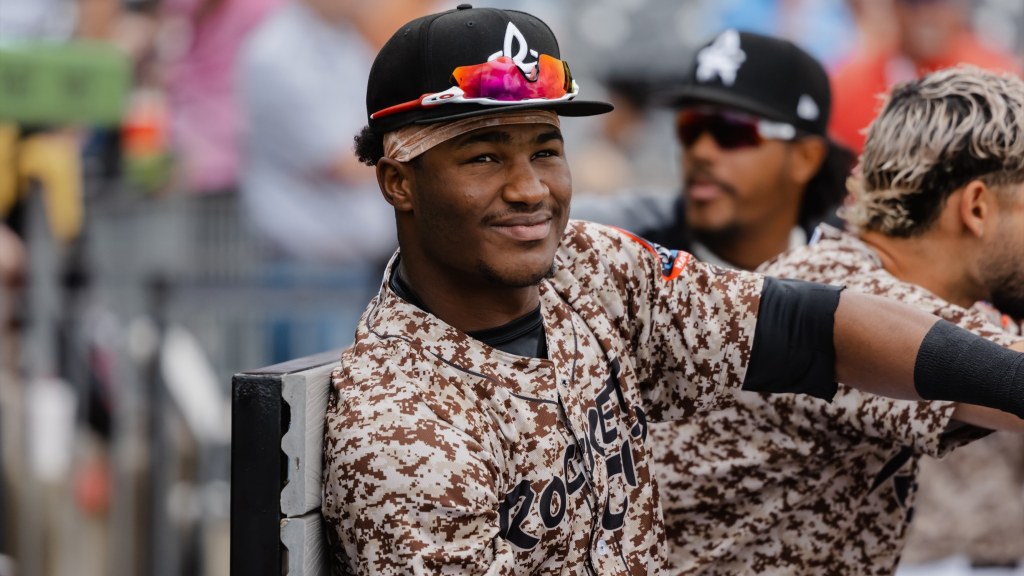
When the Rocket City Trash Pandas opened the 2026 season, Raudi Rodriguez arrived as one of the most intriguing young players in the Southern League.
The outfielder entered the year ranked as the Angels’ No. 22 prospect by Baseball America and No. 18 by MLB Pipeline after a breakout 2025 season that launched him onto the national radar. He dominated at Low-A Inland Empire, batting .281 with 49 extra-base hits and an .842 OPS across 125 games, while leading Single-A in runs scored (90), RBIs (83), triples (14), and total bases (226). He collected five Player of the Week honors, two Player of the Month awards, and was named the Angels’ Kenny Myers Memorial Minor League Player of the Year.
Then came the Arizona Fall League, where Rodriguez somehow got even hotter, batting .433 while earning AFL All-Star honors and taking home Fall Stars Game MVP recognition.
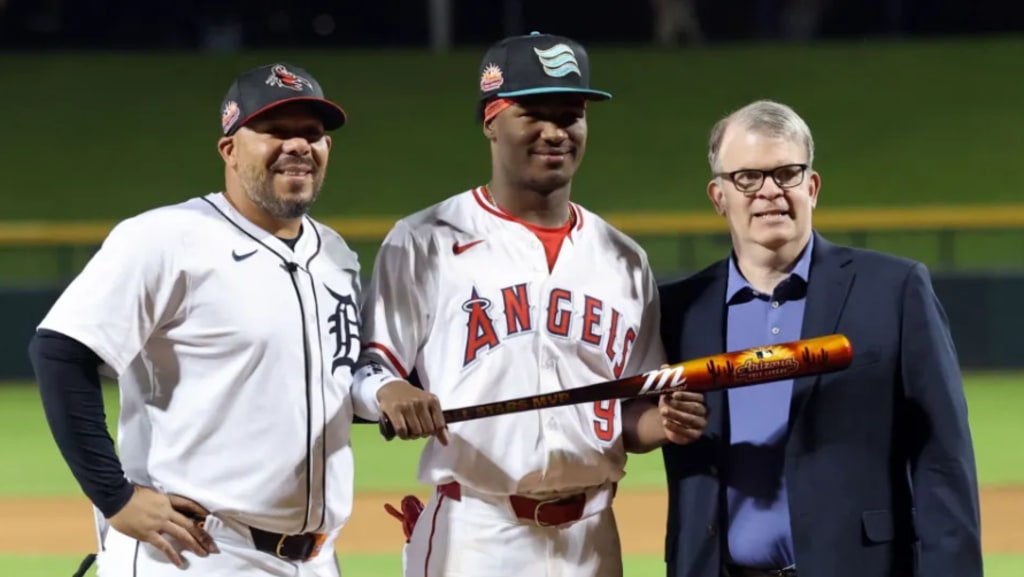
And yet, sitting inside the Rocket City clubhouse, Rodriguez still sounds more focused on effort than accolades.
“My mindset was play hard every day, and do what I do,” Rodriguez said. “Focus and play hard… and be me.”
That mentality has carried over to the 2026 season with the Trash Pandas.
Coming off a recent road trip where he hit .341 with five doubles, a triple, two home runs, six RBIs, eight walks, 15 runs scored, and five stolen bases, Rodriguez has become one of the most dynamic players in Double-A baseball. Through his first 36 games, he is the only Double-A player with 35+ runs scored, 30+ walks, 15+ stolen bases, a .300 batting average, and a .400+ on-base percentage.
To Trash Pandas hitting coach Tony Jaramillo, the tools are obvious. But the growth behind them is what stands out most.
Jaramillo begins his first season with the Trash Pandas in 2026 and his second year in the Angels organization after serving as the hitting coach for Single-A Inland Empire in 2025, where he worked directly with Rodriguez during his breakout campaign. Prior to joining the Angels organization, Jaramillo spent 11 seasons in the Cincinnati Reds organization, including three years on the Major League coaching staff after being named the Reds’ assistant hitting coach on October 22, 2015.
“Raudi’s a special talent, in my opinion,” Jaramillo said. “He’s got some bat speed that you don’t see in most individuals. Also in the outfield… he’s fast, but in the game, he’s faster. Kind of compare him to like a gazelle.”
The numbers tell part of the story. Jaramillo remembers where Raudi started. Those first two years in the Arizona Complex League were quite uneventful for Rodriguez.
“Last year, he wasn’t even in the starting lineup on Opening Day,” Jaramillo said. “And then when he was in the lineup, he was hitting eighth or ninth. So credit to Raudi for the work he put in to become a starter and be where he’s at today.”
The story is eerily reminiscent of Trash Pandas catcher/outfielder Gustavo Campero. In 2022, Campero appeared in just six games for Rocket City while spending most of the season serving as the club’s bullpen catcher. He wanted to quite. Two years later, he was in the Major Leagues.
For Rodriguez, the path to this point started far from professional baseball.
Born in the Dominican Republic, Rodriguez grew up around baseball and spent years developing in academies before eventually moving to the United States in 2020.
“When I was younger, I liked to play baseball,” Rodriguez said. “I was in the academy in the Dominican Republic. I played there for like five years.”
The move to the United States came in search of greater opportunity. Rodriguez eventually landed at Georgia Premier Academy, where his game started to take shape against stronger competition and in front of professional scouts. He lived in New England for two years before heading to Statesboro, Georgia. He became the program’s first hitter to be drafted.
“I learned a lot from my teammates and my coaches,” Rodriguez said. “I go there and play baseball.”
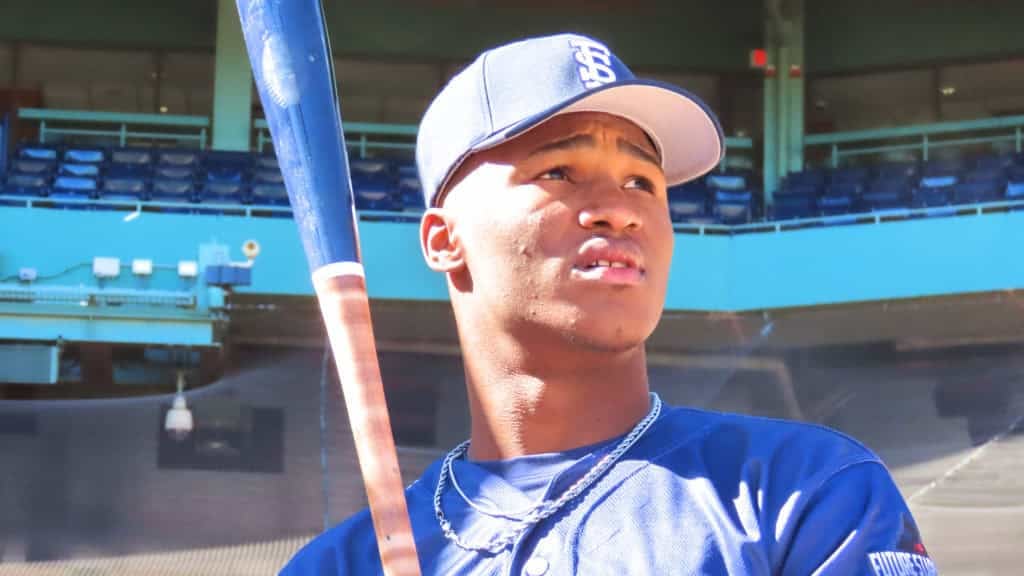
The Angels selected Rodriguez in the 19th round of the 2023 MLB Draft, but even before draft day, he had a feeling the organization liked him.
Rodriguez remembered Angels scout Chris McAlpin consistently showing up to games and delivering the same message.
“He said, ‘We want you,’” Rodriguez recalled. “Every game they come and say, ‘Hey, we want you.”
When asked what scouts liked most about his game, Rodriguez gave a simple answer.
“They say, ‘I like how you play because you play hard every day.’”
That edge still defines him.
Whether he’s taking an extra base, working a walk, tracking down a ball in the gap, or stealing second, Rodriguez plays with a pace that immediately jumps out. It is part athleticism and part relentlessness.
Jaramillo believes the growth in Rodriguez’s offensive approach is what unlocked the rest of the tools.
“One thing that I preach… if you don’t stay square to the plate, you’ll never be able to hit,” Jaramillo said. “That’s what Raudi’s been working on since last year, and honestly, that’s what made him who he is. The ability to spit on sliders away and force the pitcher into the heart of the zone is the key to hitting.”
That improvement shows up in Rodriguez’s plate discipline as much as his batting average.
Many young hitters arrive in Double-A trying to hit their way onto prospect lists. Rodriguez has done it by controlling at-bats. His walk totals continue to climb, and his on-base percentage has remained among the best in the Southern League.
“I’m not focusing on swinging the bat at every pitch,” Rodriguez said. “I make the zone small and look for my pitch. If he doesn’t throw me, I don’t want to swing at it.”
Jaramillo sees those swing decisions as the separator.
“At the major league level, the biggest thing is swing decisions,” he said. “His ability to recognize the importance of staying square to the plate, getting in good hitters’ counts… he picked up on it quick, and it’s paid off for him.”
The power surge surprised even Rodriguez himself.
Last season, he launched 14 home runs while piling up extra-base hits across the California League. Asked what surprised him most about the year, Rodriguez smiled.
“The home runs,” he admitted.
He called it “sneaky power,” but opposing pitchers are starting to learn otherwise.
And while the power has developed, Rodriguez still takes equal pride in his speed game. He stole nearly 40 bases in 2025 and continues to create havoc once he reaches base.
“I like to run,” Rodriguez said. “Whenever you see me play, I like to run, steal bases.”
That combination of speed, power, and improving plate discipline has turned Rodriguez into one of the Angels organization’s fastest risers.
He also impressed during the 2026 Major League Spring Training, batting .350 with an .835 OPS as a non-roster invitee while sharing a clubhouse with established major leaguers.
“That’s a great experience, and I learned a lot from the big league staff,” Rodriguez said.
One moment especially stood out.
Asked if he had a chance to talk to Mike Trout, he said.
“Yeah,” he said with a grin. “I even got him to sign a baseball card for me.”
Inside the Rocket City clubhouse, Rodriguez continues learning from older players who already have major league experience.
Jaramillo said the environment around the cage has accelerated the development of the entire group.
“One thing I tell all the hitters is to make sure they pay attention to the guys that have been in the major leagues,” Jaramillo said. “See how they work, see how they go about their business. They’re definitely rubbing off on each other.”
Rodriguez has also leaned heavily on teammates who came up through the system alongside him, especially fellow prospect Harold Coll.
“We push each other,” Rodriguez said. “I push him, he pushes me. We played together and came together.”
The influences on Rodriguez’s game stretch back long before professional baseball. Growing up, he gravitated toward stars who played with visible energy and intensity.
His favorite players? Fernando Tatís Jr. and Ronald Acuña Jr.
“Because I like how they play,” Rodriguez said. “They play hard every day.”
That same style now defines Rodriguez’s own game.
Jaramillo said Rodriguez has learned to channel that energy with maturity as he has climbed the ladder.
“They only know one way to play and that’s to play the game hard,” Jaramillo said. “Which can work for you and can also work against you. He’s learned to be able to play hard, but also play with a slow heartbeat.”
Even with the prospect rankings and production, Rodriguez remains grounded by family. His mother and siblings live in Boston, where the family settled after moving from the Dominican Republic.
“We’re close,” Rodriguez said. “We live together.”
He is the only family member currently playing sports, although baseball has always been around him.
That background, paired with his humility, is part of why Jaramillo believes Rodriguez’s ceiling remains so high.
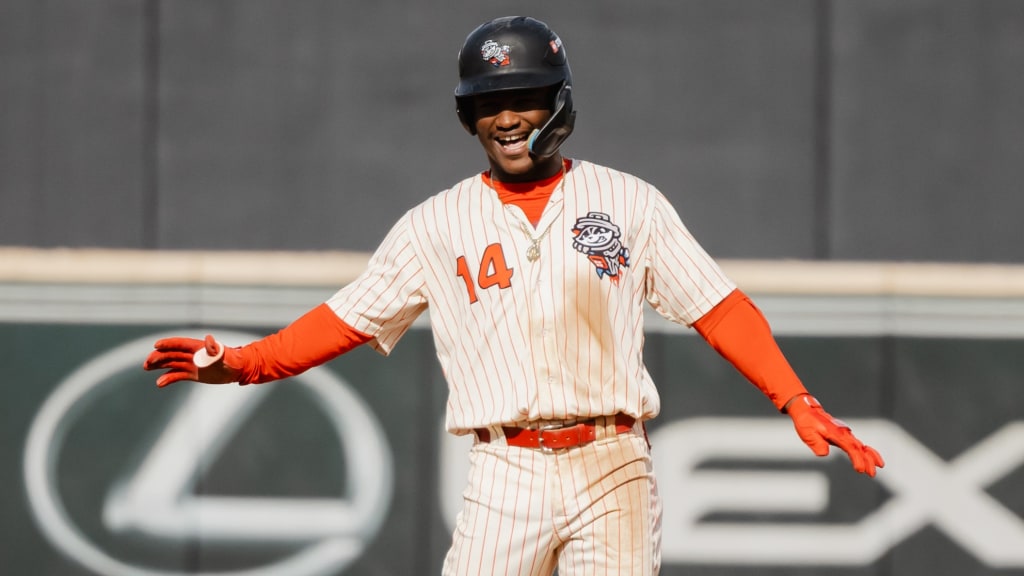
“In my opinion, he’s a superstar in the making,” Jaramillo said. “He has all the attributes to be a superstar. It’s just being able to slow the game down and understand what pitchers are trying to do to you.”
Jaramillo paused for a moment before continuing.
“I said it in our organizational meetings… he’s a superstar in the making as long as he stays on the right track. He’s a very humble kid, and he’s willing to learn.”
That willingness to learn may be the biggest reason Rodriguez’s rise feels sustainable.
For all the bat speed, athleticism, stolen bases, and production, the common theme from both Rodriguez and his coaches is openness — the ability to absorb instruction while still staying true to the player he already is.
When Rodriguez was asked to describe himself, his answer eventually circled back to the same phrase that has followed him from the Dominican Republic to Georgia Premier Academy to Rocket City.
“Good teammate,” he said. “And play hard.”