


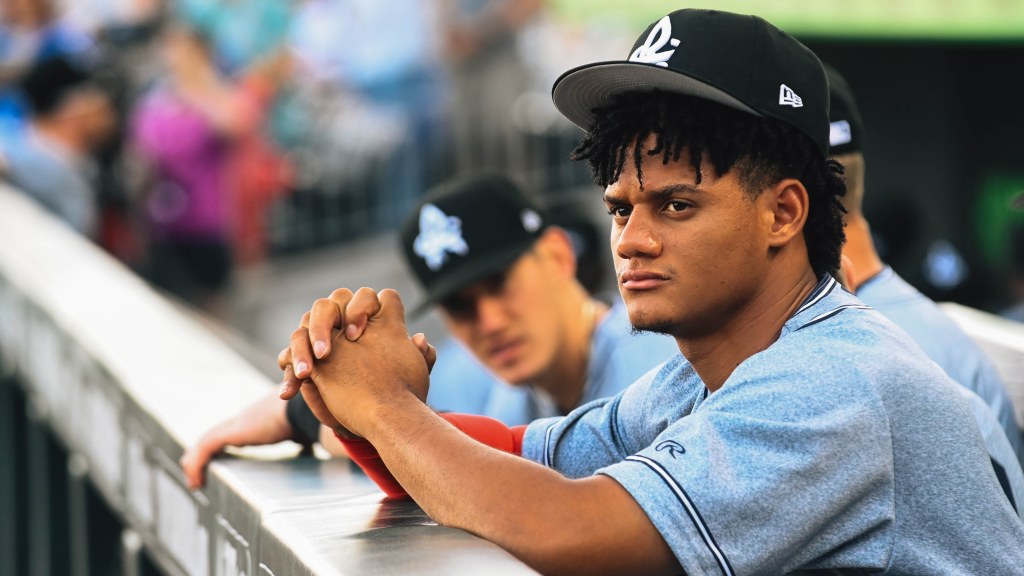
Four years ago, Joel Hurtado was an overlooked 21-year-old pitcher signing his first professional contract with the Los Angeles Angels for just $10,000. Today, the Rocket City Trash Pandas right-hander is one of the top pitchers in Double-A baseball and knocking on the door of the Major Leagues.
Through his first 12 starts of the 2026 season, Hurtado ranks second in the Southern League with a 2.87 ERA while helping anchor one of the league's best pitching staffs. His ability to keep hitters from squaring up the baseball has become one of his defining traits. Hurtado's 73 ground-ball outs rank second in the Southern League and fourth among all Double-A pitchers. Since April 29, he has been even better, posting a 1.59 ERA over his last eight starts, the best mark in the Southern League and second-best in Double-A.
The numbers tell the story of a pitcher thriving on the mound. The journey that brought him to this point is far less conventional.
Unlike many professional pitchers from the Dominican Republic, Hurtado was not identified as a teenage phenom. He did not sign a life-changing contract at 16 or 17 years old. He was not a highly touted international prospect with years of pitching instruction before entering professional baseball.
In fact, Hurtado was not pitching at all.
Growing up in the Dominican Republic, baseball was a constant presence in his life. Like countless children across the island, he was introduced to the game by family.
"My uncle took me to play baseball when I was young, around nine or ten years old," Hurtado said through translator Alberto Rios. "That's where it all started."
Those early days were filled with the same dreams shared by many Dominican youngsters. Baseball offered competition, opportunity, and the possibility of a brighter future. But even as the game became a major part of his life, the people closest to him remained his greatest source of motivation.
"My mom and my brothers have always been there for me," Hurtado said. "We're always communicating, whether things are going well or not. They give me strength every day."
The close relationship with his family remains one of the foundations of his success. Through the challenges of professional baseball, the long bus rides, and the thousands of miles separating him from home, those conversations continue to provide perspective.
Like many young Dominican players, Hurtado idolized Major League stars from his home country. Hall of Famer Pedro Martinez and current Dominican ace Sandy Alcántara were among the pitchers he watched and admired growing up. Their success provided inspiration, but at the time, Hurtado's path looked very different.
As a teenager, he was not viewed as a pitching prospect.
He primarily played third base.
Then, around age 17, his baseball journey took an unexpected turn.
Instead of continuing down the traditional baseball path, Hurtado stepped away from the game and began playing softball.
. In the Dominican Republic, men's softball is played with the same passion and intensity that fuels the country's baseball culture, providing Hurtado with a highly competitive environment.
For many aspiring professional players, that decision might have represented the end of a dream. For Hurtado, it unexpectedly became the beginning of a new one.
While playing softball in the outfield, one of his coaches noticed something special.
His arm.
"He played third base growing up, and then around 17 years old he left baseball and started playing softball," Rios said. "One of his coaches noticed he had a really good arm."
The observation changed everything.
The coach encouraged Hurtado to consider pitching, and he began training for the position around age 19. By then, he was already years behind many of the prospects he would eventually compete against professionally. Yet he never viewed his unconventional path as a disadvantage.
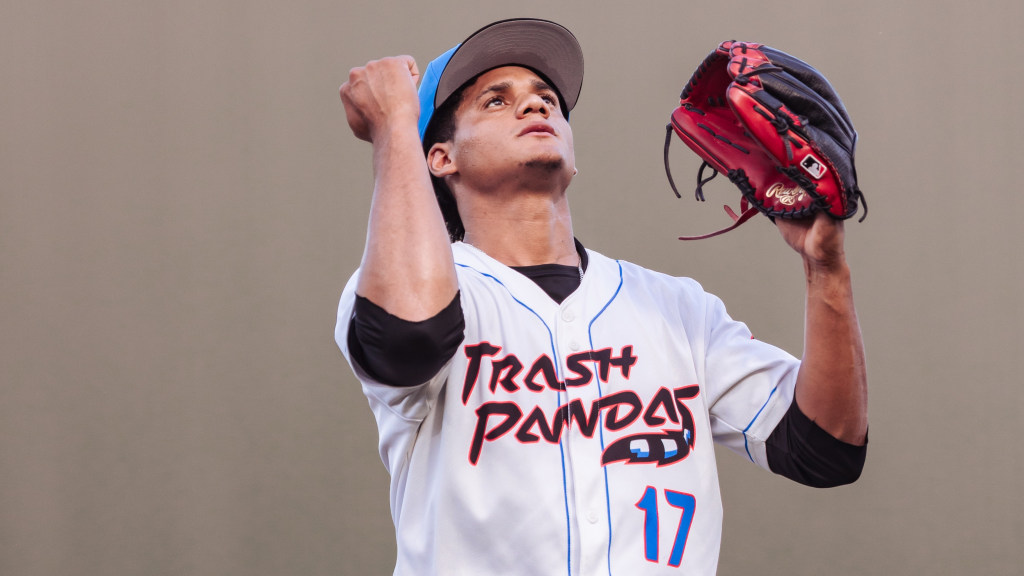
Instead, he focused on improving.
That willingness to embrace the process would become a defining characteristic throughout his career.
When Angels scouts discovered Hurtado late in the 2022 international signing period, they saw a raw but intriguing athlete with an electric arm and significant upside. While several organizations showed interest, including the Yankees, Red Sox, Rays, and even clubs in Japan, the Angels offered him an opportunity.
The signing bonus was modest by professional baseball standards.
Just $10,000.
Hurtado knew he had started late. He understood he had work to do. What mattered was getting a chance to prove himself.
"I knew I was going to work my tail off," Hurtado said.
That mindset quickly became apparent to those around him.
"He's a very intriguing young man," Trash Pandas manager Joe Kruzel said. "As you've watched him over the years, he's really learned a great work ethic."
Kruzel has seen firsthand how Hurtado has developed since arriving in the Angels organization. While the physical tools stand out, it is the consistency of his preparation that often draws the most praise.
"If you tell him to do something, or ask him to do something, you know it's going to get done," Kruzel said. "He takes a lot of initiative on his own to take care of himself, to allow himself to be ready to pitch every five days."
Professional baseball is filled with talented players. The difference between reaching the Major Leagues and falling short often comes down to the details.
For Hurtado, the details matter.
"He's always making sure that, whether it's eating right or getting his rest or doing his recovery in between starts, whatever you've asked him to do," Kruzel said. "He studies the opposing team, knows what his strengths are, and uses his strengths more than anything."
When Hurtado first entered professional baseball, pitching was still relatively new to him. Unlike many prospects who had spent years refining mechanics and developing secondary pitches, he was learning the craft while facing professional competition.
The transition was not always easy. Hurtado didn’t even know the difference between the wind-up and the stretch.
"When he first got into professional baseball, pitching was uncomfortable," Rios said. "He really enjoyed playing third base."
Fortunately, Hurtado found mentors who helped accelerate his development.
He credits coaches, including Jose Marte, Enrique Gonzalez, the pitching coach for the Dominican Summer League Angels, and longtime Angels pitching instructor Elmer Dessens, for helping him learn both the technical and mental aspects of pitching.
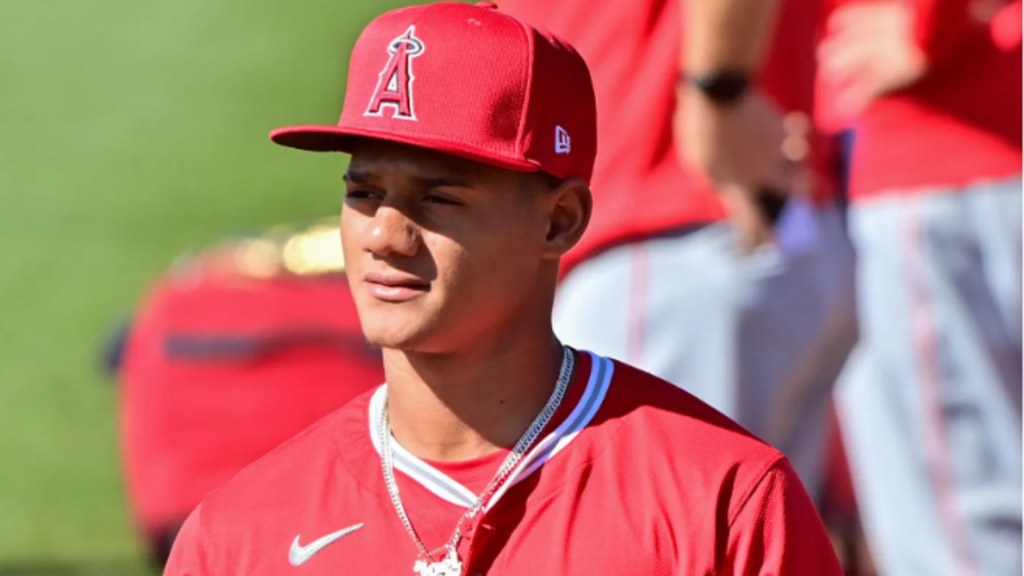
The lessons extended beyond mechanics.
They taught him the value of preparation.
More specifically, they taught him the importance of routine.
It is a word that comes up repeatedly when speaking with Hurtado.
Ask him about his breakout season.
Routine.
Ask him about handling adversity.
Routine.
Ask him how he manages the excitement of being close to the Major Leagues.
Routine.
That consistency has become the backbone of his career.
"You've got to give a lot of credit to the pitching coaches that he's had in the past," Kruzel said. "Dom Chiti, Darren Everts, Elmer Dessens, Michael Wuertz. Those guys have done it. And you've got to give a lot of credit to Tim (Leveque) and Doug (Henry) here, who have maintained it."
The routine is not merely a concept.
It is visible every day.
"You'll see him days after he pitches, he's out running the stadium steps because he really feels like that's a big part of what's helped him," Kruzel said.
The work continues long after the games end.
"After games or the next day, he's in there doing what he needs to do in the weight room," Kruzel added.
For Hurtado, preparation for a start begins almost immediately after the previous one ends.
"A lot of times it's the four days prior to a start that he's creating that routine," Kruzel said. "Whether he's throwing his side, or he's got stuff in the weight room to do, or it's his conditioning, whatever it may be, you know that work's going to get done, and it's going to get done with intent."
That final phrase stands out.
With intent.
"It's not just a go-through-the-motions type piece," Kruzel said. "He's not built like that."
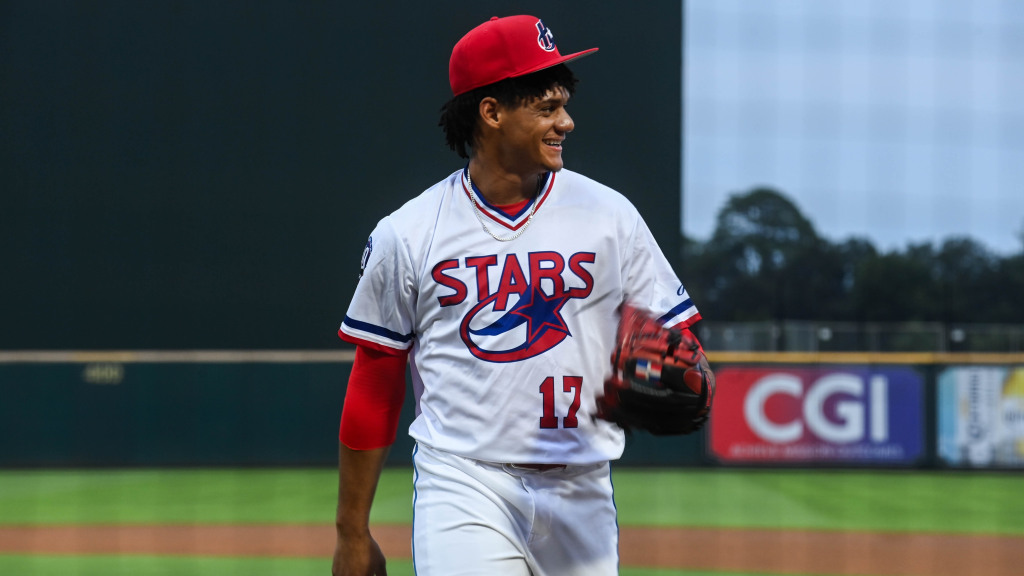
First-year Trash Pandas pitching coach Tim Leveque arrived in Rocket City this season without years of history with Hurtado. Yet it did not take long for him to understand why the right-hander continues to improve.
"He's very even-keeled," Leveque said. "He has his routine with what he wants to do every day. And he's been very consistent with what he's trying to do."
Leveque came into the season with a fresh perspective.
"It's my first year here, right?" Leveque said. "So it's like I had a clean slate come in here and just got to know him."
What stood out most was not velocity or statistics.
It was consistency.
"I just know that he's stayed consistent, stayed on the path to improve with what he's got to do," Leveque said. "That's what I've seen, and that's what I've focused on the most."
The work has translated into results.
In 2024, Hurtado emerged as one of the best pitchers in the Northwest League. He led the circuit in strikeouts (134), games started (26), and innings pitched (138.2). He also tied for the league lead in wins while ranking near the top in ERA, batting average against, and WHIP.
The following season, he arrived in Rocket City and immediately established himself as one of the most dependable starters on the staff.
In 2025, Hurtado went 5-6 with a 2.70 ERA across 18 starts for the Trash Pandas. He allowed three runs or fewer in 16 of those outings and held right-handed hitters to a .210 batting average. Before being shut down temporarily for workload management in June, he ranked among the Southern League leaders in starts, innings pitched, ERA, WHIP, wins, and ground-ball outs.
When he returned in August, he was even better.
Over his final five starts, Hurtado posted a 0.64 ERA before earning a promotion to Triple-A Salt Lake to close the season.
The success carried over into 2026.
After posting a 5.66 ERA through his first five starts, Hurtado found another level.
Beginning April 29 against Knoxville, he started one of the most dominant stretches of his professional career. He tossed six scoreless innings in Rocket City's first shutout victory of the season. On May 10 in Pensacola, he threw six no-hit innings while allowing only one unearned run. Less than a week later in Birmingham, he struck out a season-high eight batters while allowing just one run across six innings.
He finished May with a 1.33 ERA over 27 innings and has continued to dominate since.
The key has been a devastating sinker-slider combination.
Hurtado's sinker routinely sits between 94 and 97 mph and can touch 99. The pitch features heavy arm-side run and sink, generating weak contact and an abundance of ground balls. His mid-to-upper-80s slider has become his primary put-away pitch and one of the best swing-and-miss offerings in the Southern League.
The combination has made him one of the most difficult pitchers in Double-A to square up.
Yet for all the attention paid to his stuff, those around him point elsewhere when discussing his success.
"The thing you really like about him is that he takes the ball every fifth day and you're going to get a consistent outing from him," Kruzel said.
The manager believes that consistency comes from both preparation and competitiveness.
"He's got a little bulldog in him," Kruzel said. "When he gets on the mound, he's really competitive."
At the same time, Kruzel says Hurtado's impact extends beyond the mound.
"Guys love him. He's always got a smile on his face. He's a really good teammate," Kruzel said.
Leveque agrees.
"He's a good person. He supports his teammates," Leveque said. "He wants to give the team a chance to win every time he pitches."
For a player who arrived in professional baseball with limited pitching experience and little fanfare, those qualities have earned enormous respect inside the clubhouse.
"He's been a pleasure to work with," Leveque said. "His teammates like him. Everyone enjoys being around him."
As Hurtado continues moving closer to the Major Leagues, Leveque takes pride in seeing his success.
"To see him have success with how good of a guy he is is also awesome to see," Leveque said.
Perhaps the most telling evaluation of Hurtado comes from Kruzel.
"He's not a thrower. He's a pitcher," Kruzel said.
The distinction matters.
Kruzel points to the little things that often go unnoticed—fielding his position, controlling the running game, anticipating situations, and understanding hitters.
"He's got some savvy and some court awareness to him when he's out on the mound," Kruzel said.
Those qualities have helped transform a former third baseman and softball player into one of the Southern League's top pitchers.
"He's really done a tremendous job every year just being himself and improving," Kruzel said.
Today, the Major Leagues are no longer a distant dream for Hurtado. They are within reach.
Of course, he thinks about them.
Any player would.
But he refuses to let those thoughts distract him from the process that got him here.
"He knows he's capable," Rios said. "But his routine is what keeps him focused every day."
In many ways, that word perfectly captures the story.
The routine that began when he first started learning how to pitch.
The routine that carried him from the Dominican Republic to Inland Empire, Tri-City, Rocket City, and Salt Lake.
The routine that transformed a late-blooming $10,000 signing into one of the best pitchers in Double-A baseball.
When asked what advice he would give to others pursuing their dreams, Hurtado did not mention radar guns, statistics, or prospect rankings.
Instead, he pointed to faith and discipline.
"God has been with me throughout the whole process," Hurtado said. "And having a routine can take you places you never thought you could go."
For Joel Hurtado, that routine has already taken him farther than almost anyone imagined. And if his journey has proven anything, it would be unwise to bet against where it might take him next.