

The baseball calendar has it's own language. You know the quasi-holiday and seasonal markers by now: Pitchers and Catchers, Opening Day, the All-Star Break, the Trade Deadline, September call-ups, etc. They're engrained into the enthusiast's mind as much as the Gregorian calendar is for everyone. Now that we've entered the thick of August in the 2026 season, the most infamous part of any baseball season has arrived: the Dog Days of Summer.
If you think it's tough sitting in the heat watching a Springfield Cardinals game, trying playing in it. As global temperatures continue to rise and once-in-a-lifetime events become more frequent, the baseball world has been forced to deal with a changing world. According to the National Oceanic and Atmospheric Administration, July 2026 once again marked the warmest month on record for the contiguous United States. Monthly heat record tracking in the United States began in 1895.

Summer in the midwest and across the south is no joke here in the US, and it's nothing locals aren't familiar with. But as players and staff, whom are from all over the world, deal with these kinds of temperatures and conditions potentially for the first time, preparation and recovery are imperative not only to perform at peak levels, but to stay healthy through it all.
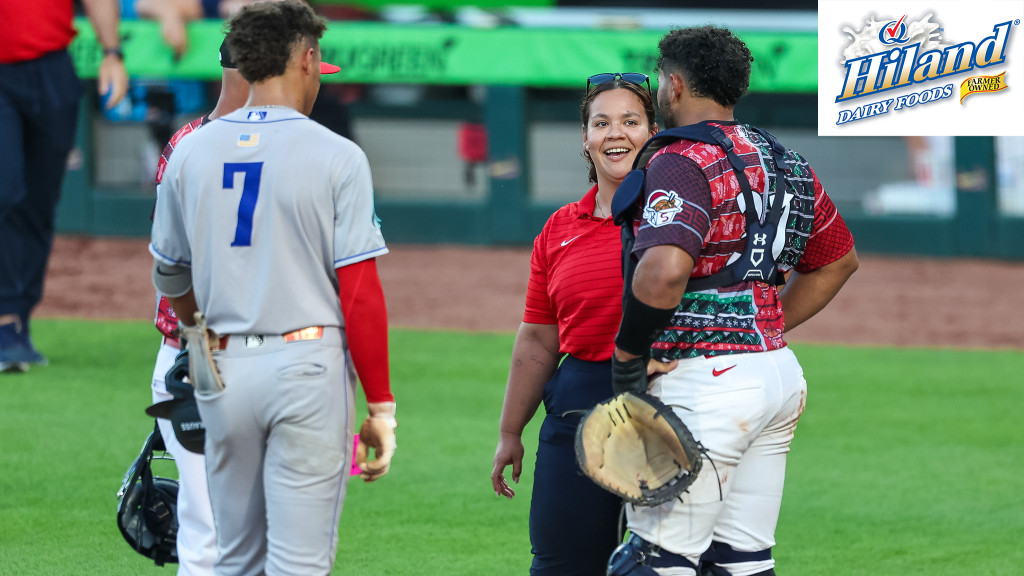
"The nutrition for them is really, really important," Springfield Cardinals athletic trainer Kiomy Martinez-Ortiz explained. "Even if you're hydrated but you don't have all the sugars and salts, you're not going to be able to function."
Martinez-Ortiz has worked for the organization since 2019 and is in the midst of her first midwest summer heat wave. There's a concerted effort to provide the Springfield Cardinals with proper nutrition and hydration required to last through the Dog Days. Various hydration drinks, dissolvable packets and everything in-between litter the Cardinals cafeteria. Every flavor available for anyone at any time like a well-stocked supermarket. With her experience in the lower levels of the Cardinals system, she's seen a lot in the last seven years.

I asked her how many players she thought were playing at 100% health by the time we reach August. Her answer? "None," she laughed. The combination of months of daily activity and rising temperatures push these athlete's bodies to the absolute limit. From early February through September, players get very few days off from physical activity, let alone the non-required time outside of the "baseball season."
"People need to understand that they're humans. Our bodies were not made for baseball," she says. These days, the "off-season" doesn't truly exist outside of a few weeks at the end of the regular season/postseason.
Martinez-Ortiz tracks everything a player physically goes through during the season. The St. Louis Cardinals have their own system of tracking player treatment and ailments. All of Major League Baseball has a set standard for all clubs, but St. Louis has developed their own system and basically their own language to keep tabs on player health and wellness.
Every time a player receives any sort of treatment, be it for something as major as a strain or break, or as minor as a cut or bruise, it all gets logged into an internal online database. According to Martinez-Ortiz, the organization is always watching and keeping their eyes on this data to monitor abnormalities among players. It's a constant channel of communication from the organization to the affiliates if anything pops up.
This time of year, reports become more frequent, and not just for the baseball of it all. As wear and tear from on field work compounds, so too does it from off the field. Martinez-Ortiz explained that long bus trips, like those to and from San Antonio, Texas, which lasts about 13 hours, has a direct correlation to low back, hip and hamstring pain. Those types of ailments, combined with those that are normal, result in more contrast baths (hot and cold) and usage of compression boots to help players recover as quickly as possible. The number of player visits to the trainer's office and the amount of injury list transactions rise as the season grows longer.
When this part of the season comes around, athletic trainers around baseball are at their busiest: curing aches and pains, developing recovery programs for short term and long term ailments, working with players to find what's best for their body in these climates and even lending a listening ear when the long toll of the season inevitably takes a grip of the mind. It's not just running out to the field when something major happens, an athletic trainers day has already been filled with important work.
Players at the Double-A level are reaching a critical stage in their careers. Long gone are the days of being a kid who just runs out there to play around on grass and dirt. By this point, ballplayers are fully entrenched with the reality that Major League Baseball is not inconceivably far away, but a real, attainable dream within reach. Not only are they honing their craft on the field, but their preparation before and recovery after war is a huge part of their careers.
And while the Dog Days come and go, it's imperative that players chug through the sludge and come out better for it on the other side. Maybe the Dog Days aren't just something to dread, but a test of resilience: an endgame boss in a gauntlet of tests to prove your worth. Young men enter the arena, but exit bruised and tattered as a man, maybe even a warrior. For what you lose in the battle of the Dog Days, you gain in the eventual hunt for October.