
Benjamin Hill travels the nation collecting stories about what makes Minor League Baseball unique. This excerpt from the Baseball Traveler newsletter, presented by Circle K, is a mere taste of the smorgasbord of delights he offers every week. Read the full newsletter here, and subscribe to his newsletter here.
For every action there is an equal and opposite reaction. It follows, then, that for every new Minor League stadium, there is a stadium that is no longer in use.
Over the past 15 seasons I have visited dozens of ballparks that are no longer part of the professional baseball landscape, and some that no longer exist at all. Before we lose ourselves in everything new that the 2026 campaign will bring, let's take a moment to remember some former Minor League ballparks. The six listed below, and of course many others, will live forever in our hearts.
Adelanto Stadium
Adelanto, Calif.
Home of the High Desert Mavericks, 1991-2016
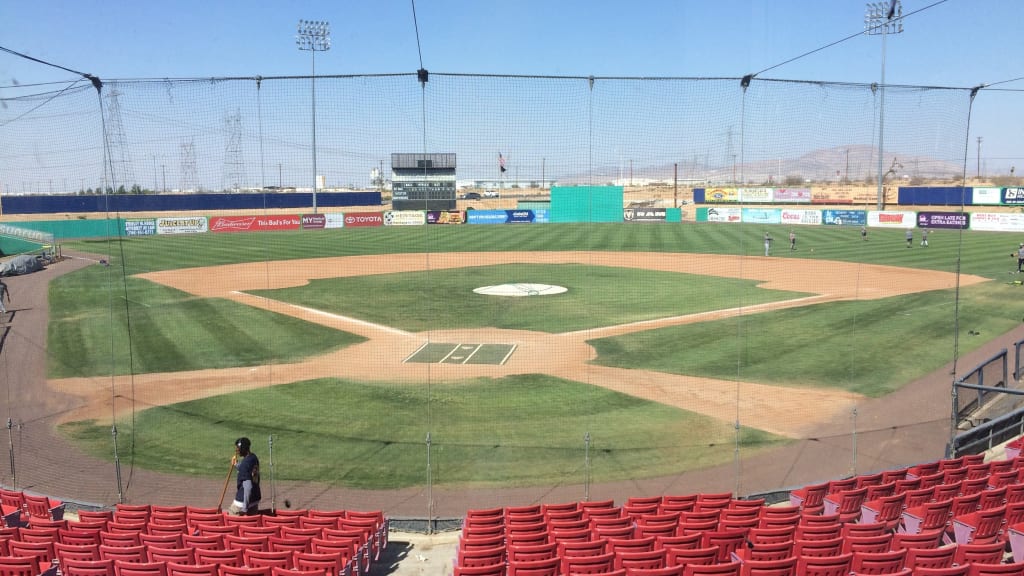
Adelanto Stadium, originally known as Maverick Stadium, was hailed as Minor League Baseball's crown jewel when it opened in 1991. Two decades later it had lost its luster, in part due to an economic downturn in the High Desert area that caused attendance and upkeep to decline. High elevation, fierce winds and an arid climate resulted in plenty of high-scoring games, most notably exemplified by the Mavericks’ 30-8 victory over the Lancaster JetHawks in 2013. The desert setting sometimes made it feel like a ballpark in the middle of nowhere, but for a certain type of baseball fan this only added to its appeal.
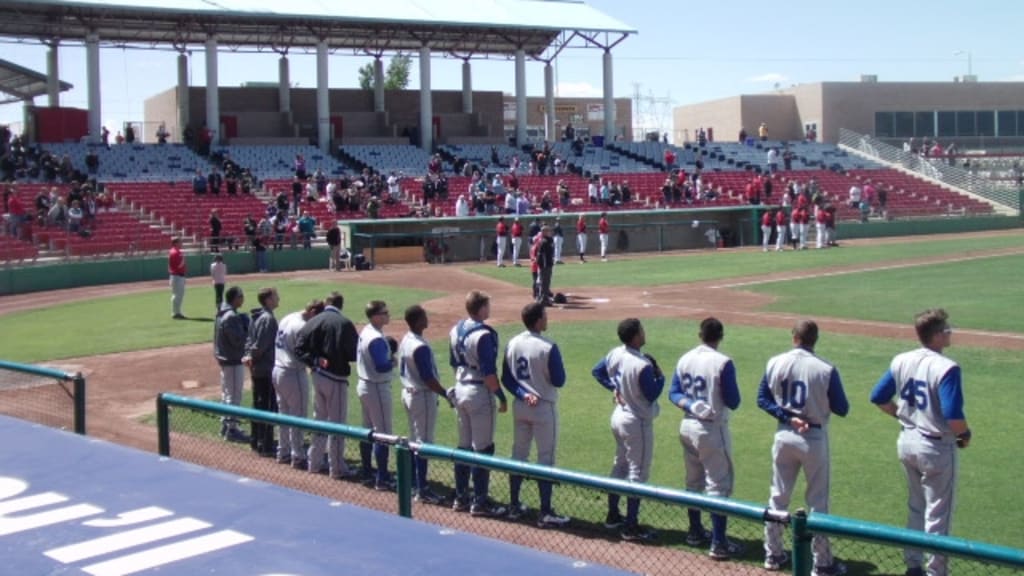
Postscript: The Mavericks, along with their California League brethren the Bakersfield Blaze, played their final seasons in 2016 and were replaced by two teams in the Carolina League (more on that later). Adelanto Stadium currently serves as the home of a soccer team, High Desert Elite FC.
Greer Stadium
Nashville, Tenn.
Home of the Nashville Sounds, 1978-2014
In 1862, the occupying Union Army constructed Fort Negley south of Nashville’s city center. One-hundred-sixteen years later the grounds of Fort Negley became home to a different sort of impressive fortification, Greer Stadium. In its later years the ballpark exuded a funky charm, with its ramshackle concourse, faded blue seats, and a backdrop of riotously colored outfield billboards. Towering above it all was the ballpark’s legendary guitar-shaped scoreboard, ringed in red and topped with the Sounds' musical note baseball logo.
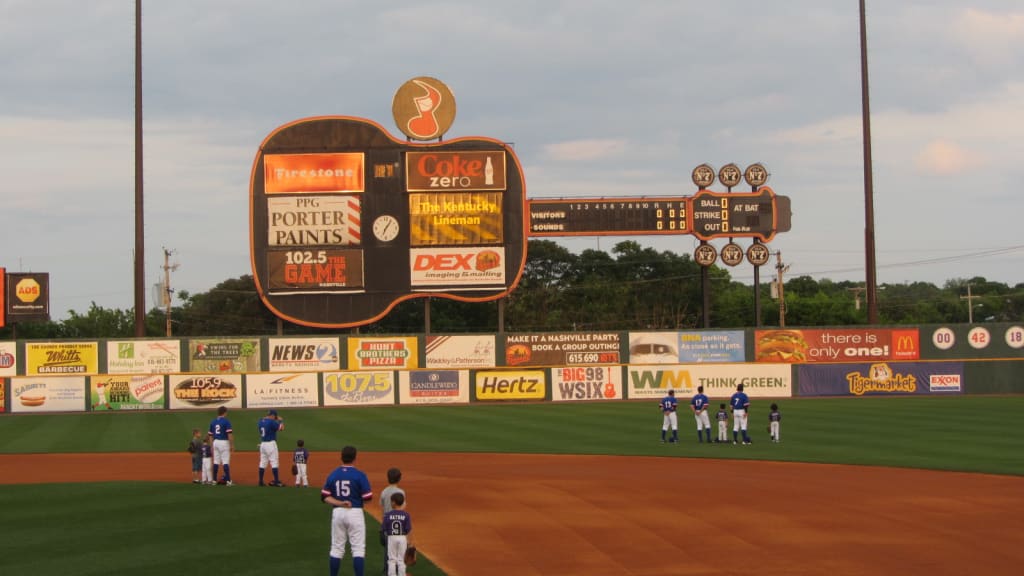
Postscript: The Sounds moved into First Horizon Park in 2015, built on the site of where the city's first Minor League ballpark, Sulphur Dell, once stood. Greer Stadium was demolished in 2019, but you can still visit Fort Negley.
Jim Perry Stadium
Buies Creek, N.C.
Home of the Buies Creek Astros, 2017-18
Two teams were added to the Carolina League in 2017, and one of them was a Houston affiliate slated to play in a new ballpark in Fayetteville, N.C. (today's Woodpeckers). That ballpark was still a long way from being ready, however, resulting in the brief reign of the 21st century's most obscure Minor League Baseball team: the Buies Creek Astros.
The "town" of Buies Creek is essentially the campus of Campbell University, and Jim Perry Stadium is the university's baseball stadium. Seeing a Minor League game there, amid a campus largely deserted for the summer, was a surreal experience. It was a scene for the purists. Small crowds. No between-inning contests. Very little extemporaneous noise. Just baseball.
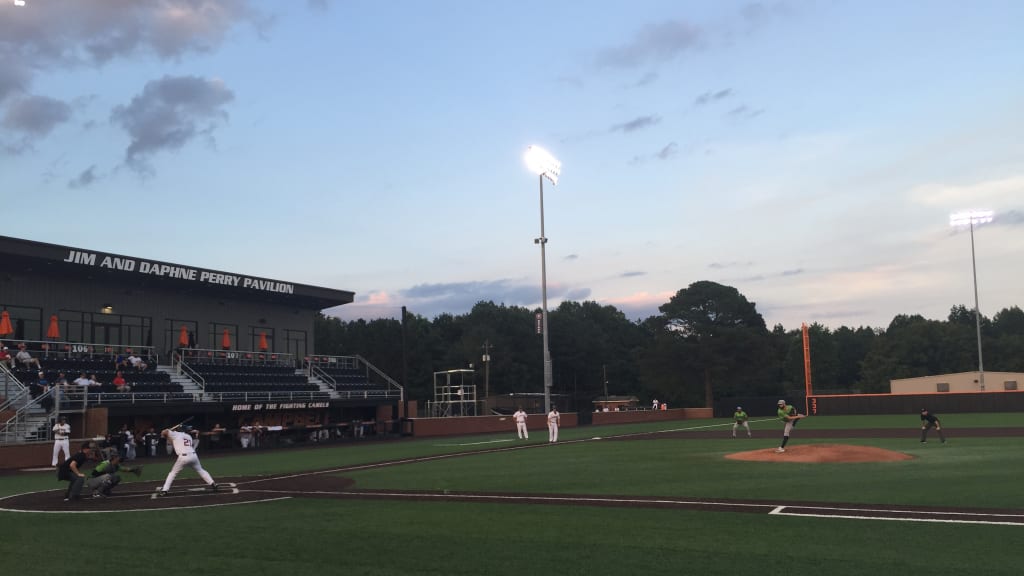
Postscript: After two seasons in Buies Creek, the Astros moved to Fayetteville as planned and became the Woodpeckers. Jim Perry Stadium remains the home of Campbell University's baseball team. Go Fighting Camels!
Kindrick Legion Field
Helena, Mont.
Home of the Helena Phillies/Gold Sox/Brewers, 1978-2018
By the time the Helena Brewers played their final season in 2018, Kindrick Legion Field was a total anomaly. It had a wooden grandstand, a treacherous rooftop press box, dugouts that resembled dank basement lairs and concessions served out of a small barn-like structure. Many of the players rode bikes to the ballpark from the homes of their host families, parking them against a chain-link fence in the bullpen. Mt. Helena loomed mightily beyond right field, adding a sense of grandeur to this panoply of the unassuming.
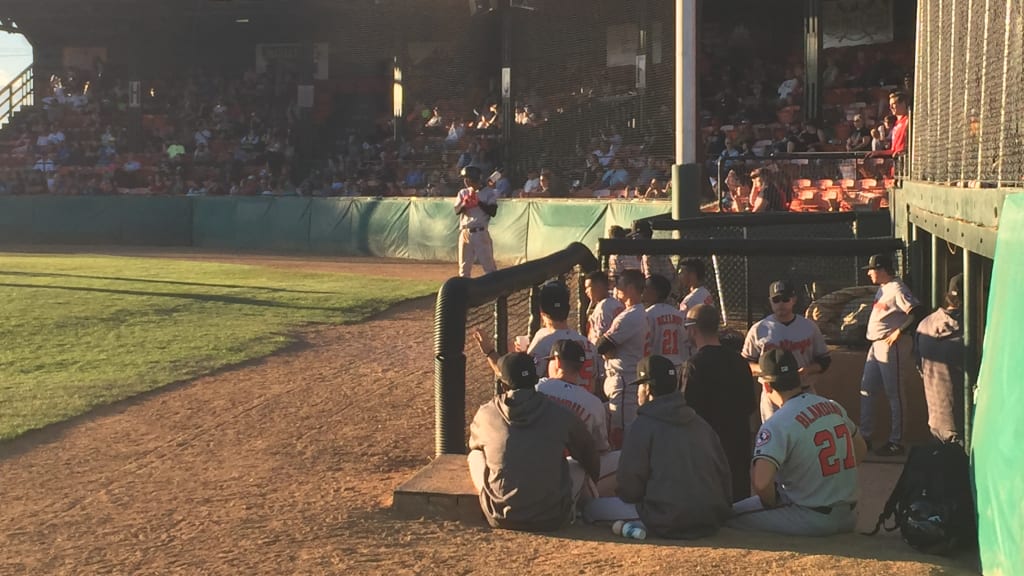
Postscript: The Helena Brewers moved to Colorado Springs prior to the 2019 season, as part of a series of moves that also saw the Triple-A Colorado Springs Sky Sox relocate to San Antonio. Kindrick Legion Field is still in use, appropriately serving as the home ballpark for several American Legion youth teams.
Rosenblatt Stadium
Omaha, Neb.
Home of the Omaha Royals, 1969-2010
Rosenblatt Stadium was the home of the Omaha Royals for 32 seasons, but it's also renowned for its six-decade run hosting the College World Series. This dual usage resulted in operational challenges. The O-Royals needed to embark on a lengthy road trip every season to accommodate the College World Series, and the ballpark's capacity of 23,500 resulted in plenty of empty seats even when a large crowd was on hand. Nonetheless, Rosenblatt Stadium was iconic and lives on in the hearts and minds of generations of Omaha-area baseball fans.
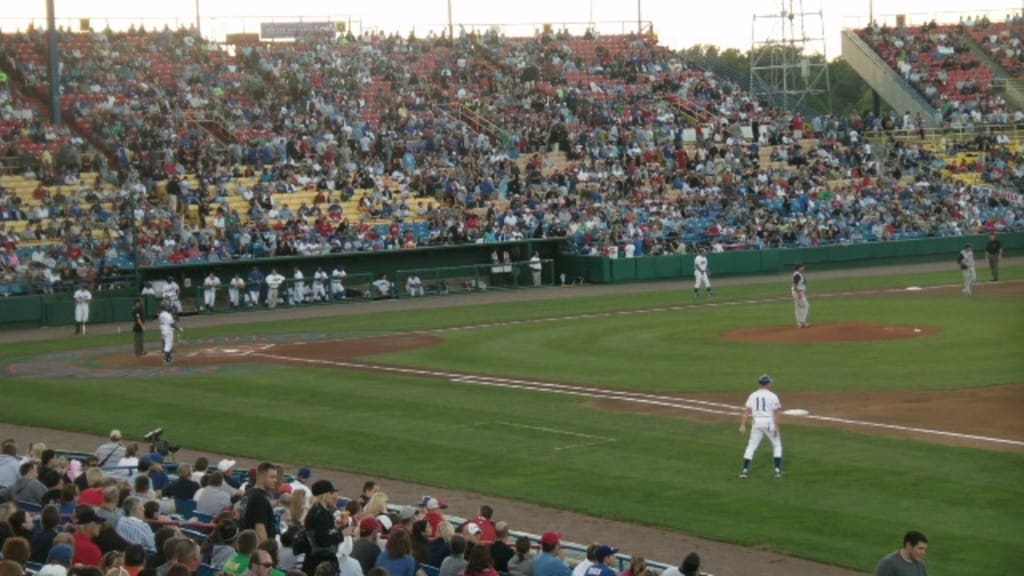
Postscript: The Omaha Royals relocated to nearby Papillion in 2011, changing their name to the Storm Chasers. That season also saw the opening of a new ballpark for the College World Series, now known as Charles Schwab Field. Rosenblatt Stadium was demolished, though portions of it were used to create a miniature ballpark located in the parking lot of the Henry Doorly Zoo and Aquarium.
Yakima County Stadium
Yakima, Wash.
Home of the Yakima Bears, 1990-2012
Yakima County Stadium was shoehorned into a tight location, with a horse racing track located just beyond the outfield. This resulted in its unique layout, as it was just 293 feet down the right- and left-field lines. These strange dimensions, and the rolling hills behind them, could be observed from a seating bowl that featured large swaths of metal bleachers. It wasn't the most comfortable place to see a game, but it was memorable.
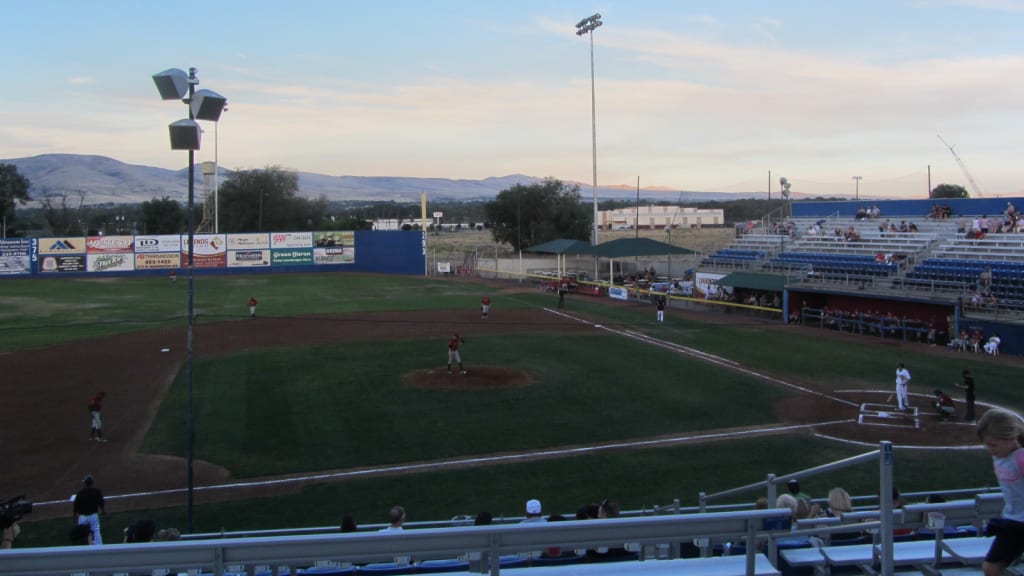
Postscript: The Bears relocated to the Portland suburb of Hillsboro in 2013 and changed their name to the Hops. (Ironic, as the Yakima Valley is the country's top hop-producing region in the United States.) Yakima County Stadium is now home to the Pippins, members of the collegiate West Coast League.