

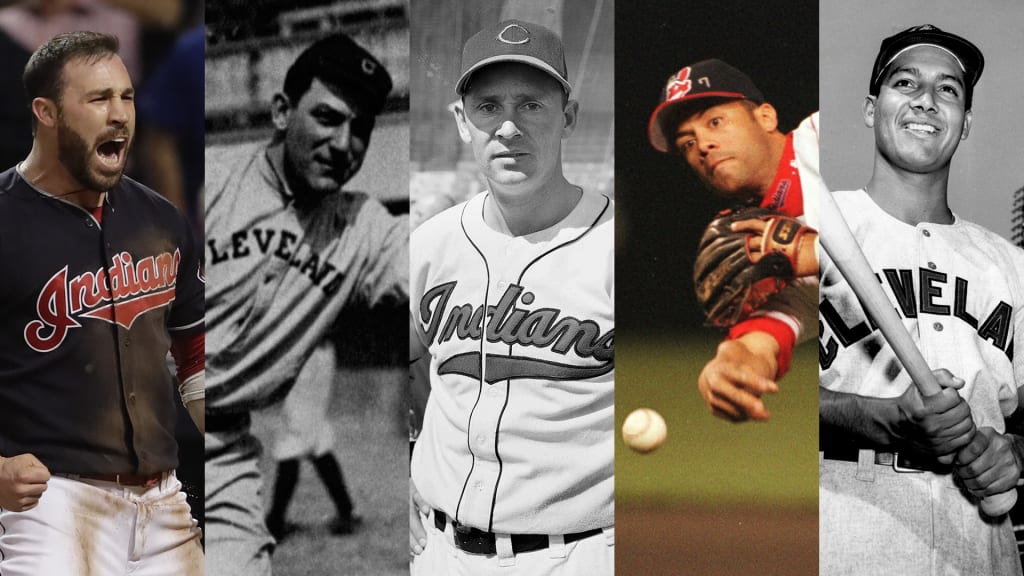
No one loves a good debate quite like baseball fans, and with that in mind, we asked each of our beat reporters to rank the top five players by position in the history of their franchise, based on their career while playing for that club. These rankings are for fun and debate purposes only.
Here is our ranking of the top five second basemen in Guardians history. Next week: third basemen.
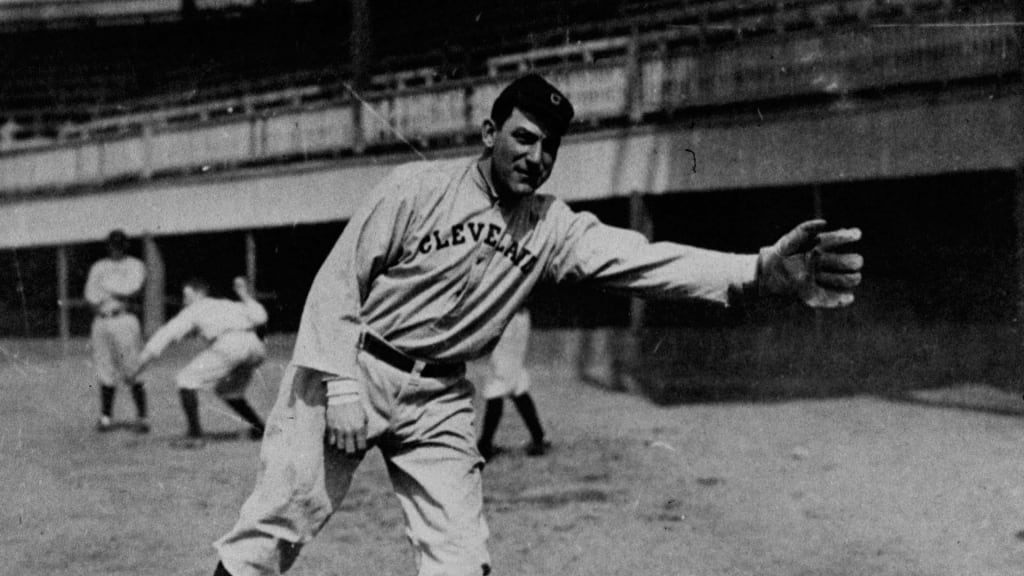
1. Nap Lajoie, 1902-14
Key fact: Cleveland's all-time leader in Wins Above Replacement
As we continue to make these lists, the decisions don’t get any easier. But Nap Lajoie sitting atop the all-time second basemen rankings was as much of a guarantee as you could get.
Lajoie became the face of the Cleveland franchise, joining a club that was known as the Bronchos in 1902 but turned into the Cleveland Naps (named after Lajoie himself) beginning the following season. He remained with the organization through 1914.
In 1904, Lajoie led the Majors in hits (208), doubles (49), RBIs (102), batting average (.376), slugging percentage (.546), OPS (.959) and OPS+ (200) in 140 games. He also had the most hits and doubles in the Majors in 1906 and 1910, with an MLB-best .383 batting average in ’10. Not only was he one of the biggest stars of his time, Lajoie’s name still lives on in the franchise record books. He owns an 80.7 bWAR, the highest of all Cleveland players, and ranks first in hits in Cleveland history (2,052) and third in doubles (424).
In 1937, Lajoie was elected into the Hall of Fame. When reading Lajoie’s online portfolio on the Baseball Hall of Fame website, readers are greeted with this quote from Hall of Fame pitcher Cy Young: “Lajoie was one of the most rugged hitters I ever faced. He’d take your leg off with a line drive, turn the third baseman around like a swinging door, and powder the hand of the left fielder.”
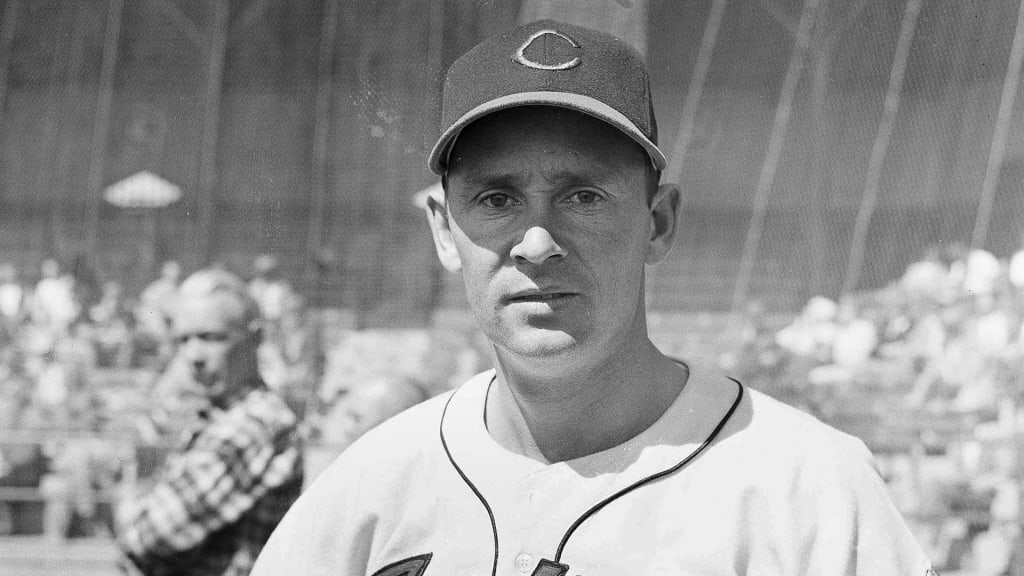
2. Joe Gordon, 1947-50
Key fact: Member of the 1948 World Series championship team
Joe Gordon closed out his 11-year career by playing his final four seasons for Cleveland, with which he was selected to three All-Star Games and placed in the top seven in American League MVP Award voting twice. His bWAR (6.5) trailed just Lou Boudreau (10.4) on the team during its championship run in ’48, and he was a solid defender in all four years with Cleveland. Among the franchise's second basemen, Gordon ranks third overall in defensive WAR (7.4) behind Lajoie (11.5) and Andrés Giménez (8.5).
Although he was a member of Cleveland for only four seasons, Gordon is one of just three second basemen in the franchise to hit at least 100 homers and was a part of one of the two championship teams in franchise history.
3. Roberto Alomar, 1999-2001
Key fact: Won a Gold Glove Award in all three seasons with Cleveland
Although most of his Hall of Fame career was spent away from Cleveland, Roberto Alomar enjoyed two of his best seasons with the franchise, hitting .323 with a .955 OPS in 1999 and hitting .336 with a .956 OPS in 2001. His 7.3 fWAR trailed only Manny Ramirez on the team in ’99 and ranked tied for fourth overall in the Majors that season. Alomar also was an All-Star in each of his three seasons with Cleveland.
Like Gordon, Alomar’s time with the club was short, but he ranks third among all Cleveland second basemen in bWAR (20.3), sixth in homers (63), third in batting average (.323) and first in on-base percentage (.405) and slugging percentage (.515).
4. Bobby Avila, 1949-58
Key fact: Won the AL batting title with a .341 average in 1954
Longevity and consistency -- those are the two adjectives that best describe Bobby Avila’s 10-year career with Cleveland. He played the second-most games, trailing Lajoie, of all the franchise's second basemen (1,207) and posted the second highest bWAR (28.6). Avila was selected to three All-Star Games and finished third in AL MVP Award voting in 1954.
5. Jason Kipnis, 2011-19
Key fact: Owns record for most home runs hit by a Cleveland second baseman
Two All-Star appearances, one Wilson Defensive Player of the Year Award, 123 homers and 1,121 games were certainly enough to earn Jason Kipnis a spot in the top five. His nine-year stint in Cleveland came to an end after the 2019 season, when Cleveland opted to not exercise the club option on his contract. But the man known as “Dirtbag” saw his playing time with the club end even earlier than expected when he broke his right hamate bone in September 2019.
When the injury happened, Kipnis said that he knew he'd likely just played his final game with Cleveland. After reality set in, Kipnis reflected on his highs and lows of his career and expressed his gratitude for the city of Cleveland. But he still had one regret.
“One of the most unfortunate parts of this is that I don’t get to try to finish what I started eight years ago with a bunch of guys: the mission,” Kipnis said. “I think we turned around a franchise. I think we turned around an organization. We raised the bar here. Sometimes, I fell short of the high standards we set here, and I’m OK with that because I’m proud that there are higher standards here. I think this is a very classy organization, viewed that way throughout the league. Part of me likes to think I played a part in that.”
Honorable mentions
• Carlos Baerga was a key piece to the 1990s lineups. In eight seasons with Cleveland, he recorded the fourth-most hits among second basemen (1,097), the fourth-most doubles (190) and second-most homers (104) and RBIs (565).
• Bill Wambsganss: The man who turned the only unassisted triple play in World Series history in 1920 also had the fifth-most hits (1,083) of all Cleveland second basemen.
• Duane Kuiper ranks seventh among Cleveland second basemen with 786 hits and sixth in triples with 26. He also was 11th in defensive WAR (1.9) and was a part of Dennis Eckersley’s no-hitter and Len Barker’s perfect game.