
This story was excerpted from Daniel Kramer’s Mariners Beat newsletter. MLB.com reporter/producer Josh Kirshenbaum pinch-hit for this edition. To read the full newsletter, click here. And subscribe to get it regularly in your inbox.
SEATTLE -- Lazaro Montes stepped out of the car in front of the Mariners’ Dominican training academy a 17-year-old out of Cuba in 2022, already 6-foot-4 and still growing. He had to bend over to hug Walkyria Torres, who got to work right away.
“Usually I try to ask a few questions in English to see how they react, and if they know a little bit,” said Torres, the academy’s education coordinator. “I said, ‘Hey, how are you? My name is Walkyria, what’s your name?'"
Montes replied immediately:
“No se ingles, pero ya voy aprender.”
I don’t know English, but I’m going to learn.
Four years later, Montes made his MLB debut in Boston. He punctuated the Mariners’ 9-6 win on Sept. 1 with his first career home run. And when the microphones found him in the clubhouse at Fenway Park afterward, he talked to reporters in English.
“That was my dream,” Montes said. “To make it, and be able to talk with everybody. To be able to say what I really feel. I was surprised. Like, ‘Man, I made it. I did it.’”
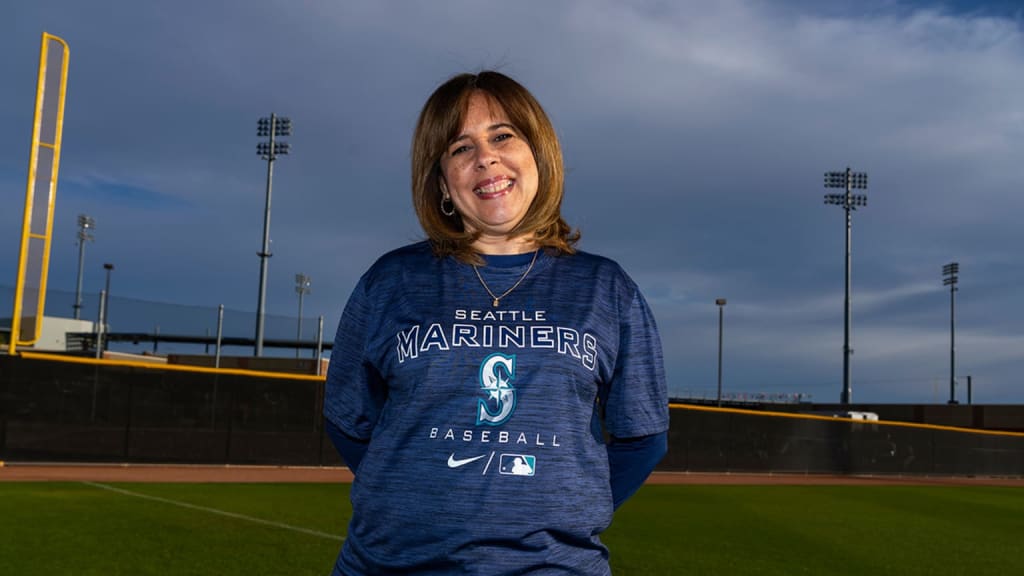
Two days after that, Montes made his home debut. And Torres -- the woman who helped kickstart the star prospect’s journey through a new language -- was there at T-Mobile Park.
It wasn’t planned like that; Torres makes a couple trips to the States every year to check in at each of the Mariners’ affiliates, catch up with former students and meet with Renee Gallegos, who holds a job similar to hers at the organization's complex in Peoria, Ariz. This visit just happened to come just as Montes, the academy’s highest-profile alum since Julio Rodríguez, played in Seattle for the first time.
“I feel so proud,” Torres said. “It’s a privilege to be a little, small part of their journey and to see how much they’ve accomplished. Look at Lazaro. He’s doing all of his interviews in English. Sometimes in Spanglish, but he’s not afraid. He keeps being who he’s been since Day 1.”
But it’s safe to say that Montes doesn’t get here without Torres’ help. Neither does Michael Arroyo, who signed out of Colombia at the same time as Montes, came to Boca Chica with him and, four years later, earned his own callup a week after Montes.
“She’s great,” Arroyo said through interpreter Freddy Llanos. “She makes us feel like family, and that’s huge in terms of confidence. This is our second language, and a lot of guys might get nervous. But to have that confidence with her, being known that we’re not going to be judged or made fun of, it gives us the confidence to keep going.”
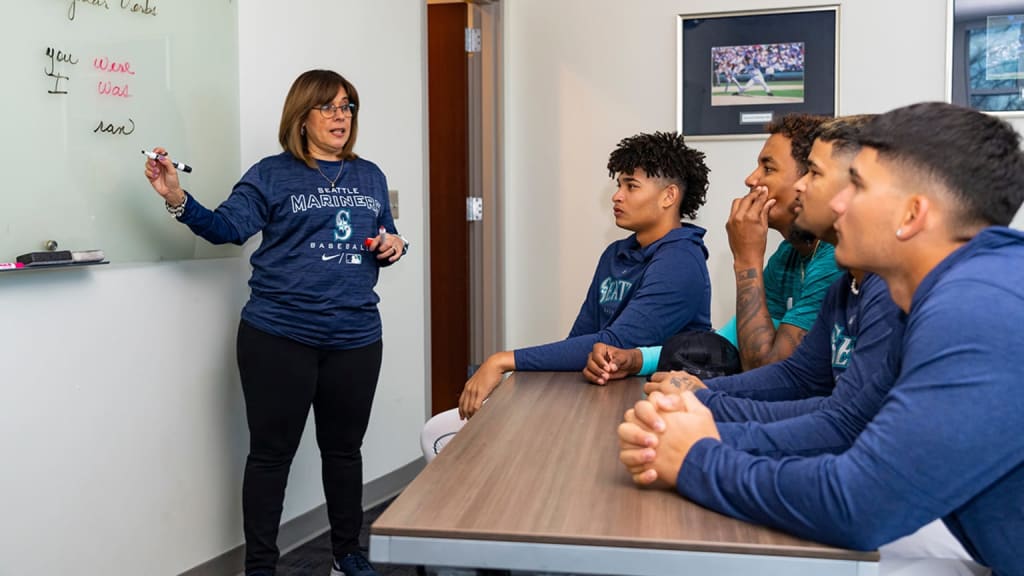
At the academy in Boca Chica, the first half of every day is dedicated to baseball. The afternoons belong to Torres, whose job revolves around organizing the players’ schooling.
But beyond giving the players the equivalent of a high schooler’s education, a lot of that comes down to preparing teenagers for a completely foreign culture. And at the heart of that is English class.
“It’s not optional,” she said. “From Day 1, we start working on English classes. That’s part of learning another culture. How are they going to communicate with their coaches? How are they going to talk to their teammates if not in English?”
That’s not to say that the English classes at the Mariners academy are the same as you’d get at a high school. After all, everyone there is there for baseball, and as Torres said, a whole lot of the communication being practiced is based on the game.
That was one of the biggest changes for Torres, who first came to the United States as an exchange student before returning to the D.R. and beginning her teaching career before being hired by the Mariners in 2018.
“It’s a whole different world,” she said. “When I got to baseball, I had to first learn from them and learn from the system how it works, what was needed. Of course we have a little bit of academic English, but everything is connected to their dreams, which is baseball. That’s one of the keys to keeping them motivated and understanding the importance of learning English.”
If there’s one lesson that sums up everything Torres and the Dominican academy does for prospects, it’s interview practice. It’s not the sort of everyday English that players need to get by, but the highest-profile use of a foreign language that gets put out to millions of fans worldwide. Montes said that back in Boston, he was more nervous to face questions than anything Red Sox pitchers could throw at him. Arroyo added that sometimes the hardest part isn’t knowing what words you want to say, but remembering how to pronounce them -- and conjugate everything correctly -- with a crowd staring at you.
So Torres and the academy staff make it fun -- and, of course, related to baseball. The players try to interview their coaches and see how they answer questions. Eventually, it gets to the point that they’re ready to flip sides. And that’s the sort of development Torres still gets excited about, eight years into her role.
“They get to interview their coaches and mess up and make mistakes,” she said. “We celebrate their mistakes, and then we try again. And we celebrate whenever they improve. It’s fun working with them. I love my job.”