
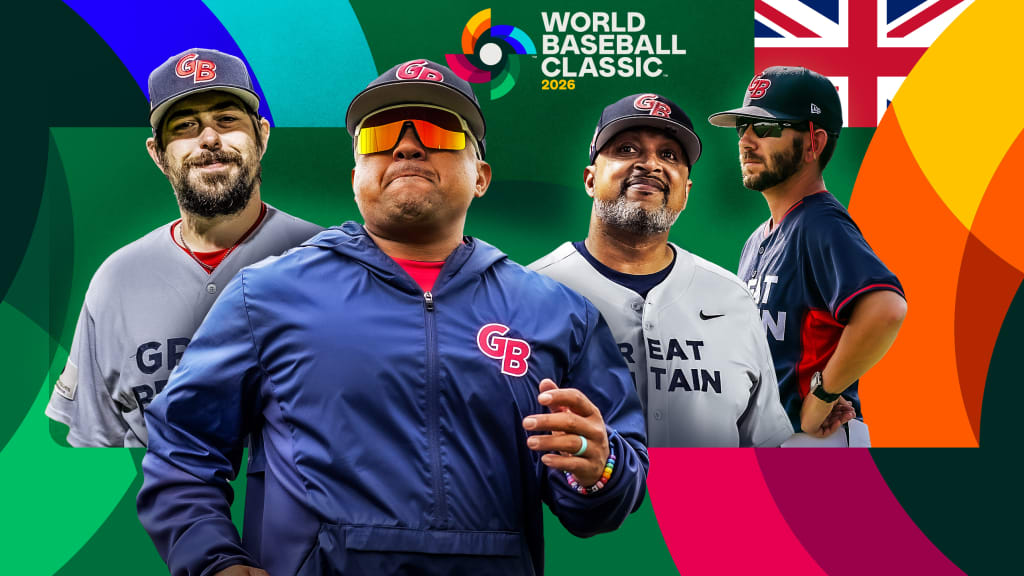
You can get there from here.
Drew Spencer first heard those words many years ago while visiting Dartmouth.
He was a prospective college student from sunny California taking a trip to the frigid East Coast while considering baseball programs. The head coach, Bob Whalen, saw Spencer looking skeptically at all the snow and told him to give it a chance, and that if he was good enough, even at a baseball program in New Hampshire, people would take notice.
“I never forgot those words. It was why I committed to Dartmouth,” Spencer told MLB.com. “And it stayed with me.”
2026 World Baseball Classic
Final presented by Capital One
• Champs! Venezuela beats USA in final
• Box score: Venezuela 3, USA 2
• Maikel Garcia named Classic MVP
• '26 Classic All-Tournament Team
• Final bracket, full results
• Complete coverage
Years later, as Spencer’s life journey took him to Great Britain and he entered the baseball coaching world, he kept those six precious words as his mantra. Now, a generation of coaches who started in British youth baseball are rapidly jumping to MLB organizations. The group is small, but growing every year. It’s all thanks to the strength of their bond, and the power of “you can get there from here.”
One of the first to do it was Liam Carroll. He played youth baseball in London in the late 1990s before attending Porterville College in the U.S. After spending several years coaching GB’s youth and senior national teams, he managed the Britain national team from 2015-2020 and coached in the 2023 World Baseball Classic. His break into pro ball came when he was hired by the Red Sox to manage their Single-A Salem affiliate before the ‘23 season. Now entering his fourth year with Boston, he will manage High-A Greenville for the second straight year in 2026.
No matter who you talk to in British baseball, everyone seems to have a Carroll connection.
“Liam Carroll was at my first ever practice,” said Freddy Mosier, who played for Carroll on the London Mets, a community baseball club.
“Liam, who I met when I was 14, he was one of those coaches and someone that inspired me,” said Jonathon Cramman.
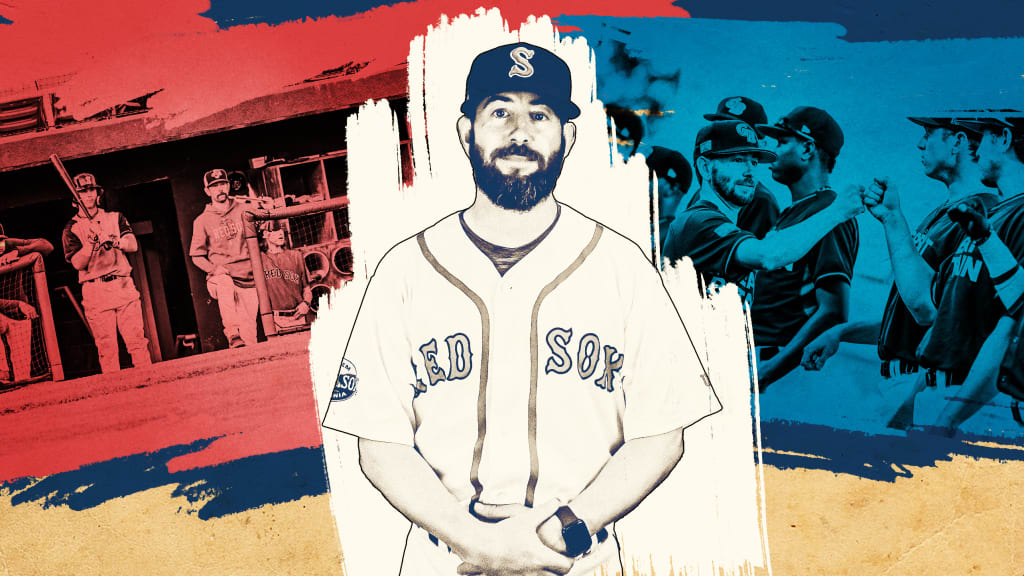
Carroll’s path has been tightly linked to Spencer, who came to British youth baseball not by birth, but by marriage. Once he got to England and had a son who wanted to play T-ball, Spencer’s childhood and collegiate baseball expertise was at a premium. He worked his way up to managing the London Mets, then the Great Britain under-23 team, all the way to succeeding Carroll as the GB national team manager in 2020. With him at the helm, the club qualified for its first World Baseball Classic in 2023 and won a historic game over Colombia during pool play.
Spencer’s eye for guiding young talent was clearly noticed, as he was soon hired by the Yankees as a complex coordinator and left his GB post to focus on this role in early 2025.
If you ask Spencer, Carroll getting his Red Sox gig was a “light bulb moment” for British baseball coaches. Before that, they had no concept that MLB teams would notice them or consider their work directly applicable. Carroll’s hiring as a Single-A manager inched that door open.
Alongside Carroll and Spencer is Brad Marcelino, who grew up in London playing for any youth baseball teams he could find, then held tight to his British baseball roots by playing for and coaching the national team. His experience led to not only his role as GB manager in this year’s WBC – succeeding Spencer, his longtime friend – but also his role as a Minor League hitting coach, with the Mariners from 2022-23 and now with the D-backs.
There’s also Conor Brooks and Antoan Richardson, who have both coached for GB and worked with MLB teams, mentoring many along the way.
Then there’s Conor Baxter, who played baseball in London and competed on GB youth national teams before attending college in the U.S. He’s in his second year working at the Brewers’ Dominican Republic academy. There’s also Mosier, who moved to London at age 12, got involved with baseball and recently joined the Phillies’ coaching staff.
And then there’s Cramman, who has turned a childhood in North London and years of playing and coaching baseball in Great Britain into a new gig as the bench coach of the St. Lucie Mets.
Many interwoven connections have stitched this coaching pipeline together. Spencer and Carroll both coached Mosier and Baxter as teenagers, with Spencer serving as Mosier’s brother’s T-ball coach for good measure. Cramman coached Mosier as well with the London Mets and Britain’s U-23 team. Marcelino will have Mosier on his WBC staff, as the two go back many years.
Years after playing for him, Baxter reconnected with Carroll while pursuing a job in pro ball and still talks to him regularly. Spencer officiated Cramman’s wedding. And when Cramman’s mother, who founded the London Mets to help her son play baseball, passed away in 2021, Spencer and Carroll were invited to the small, COVID-restricted funeral of 30 people.
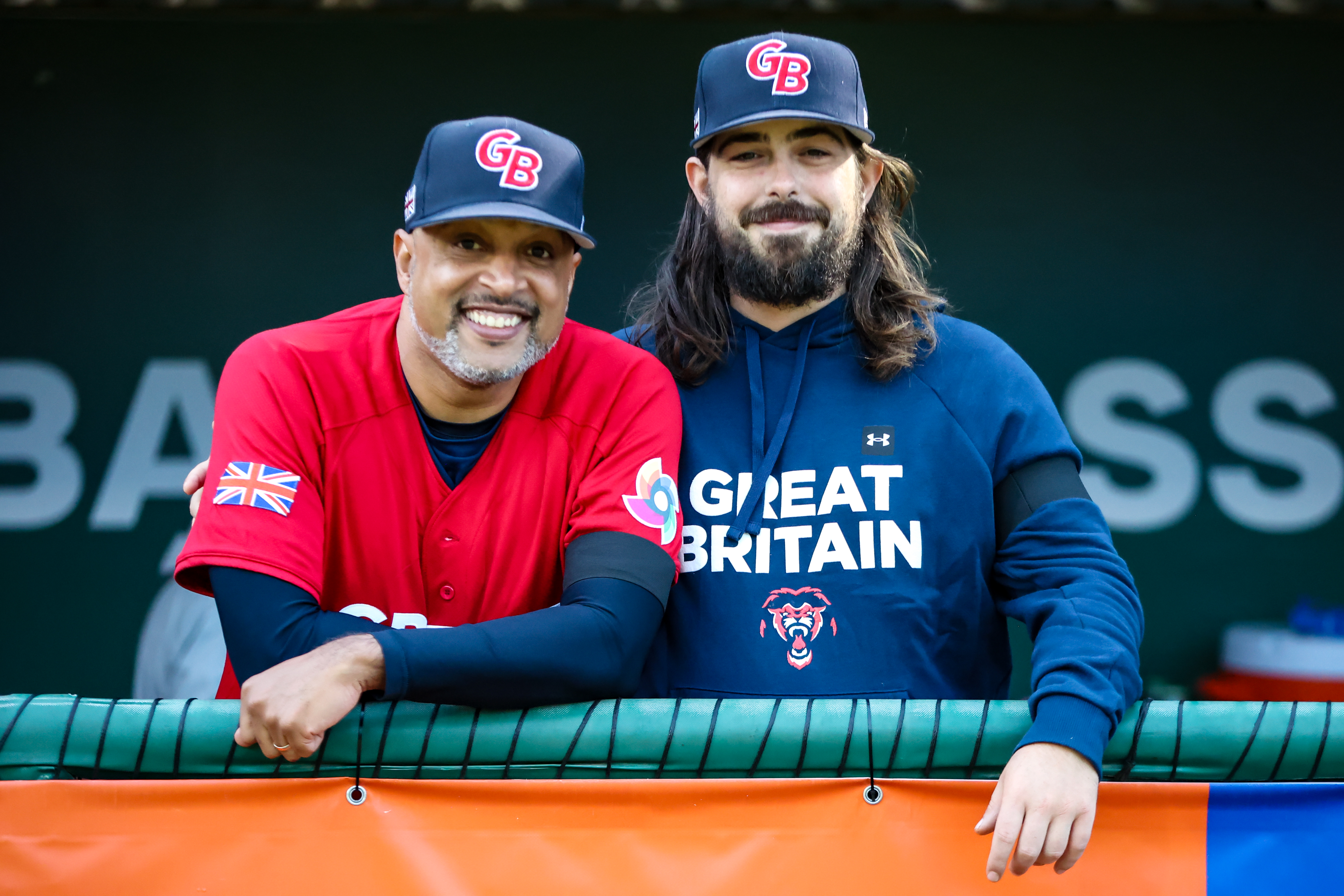
The group is tight-knit, collaborative and texts regularly. Those with less experience turn to their GB-coaches-turned-MiLB coaches for support, and those who have been around for longer guide coaches following in their wake while turning to each other for advice. The group exchanges job openings in case someone is looking for a new role, and will happily provide references to prospective employers.
It’s not all business, though.
“We're friends first, and baseball colleagues second,” Cramman said. “The problem is, any time we try to hang out as friends, we just end up talking about baseball.”
For Carroll, Spencer and Marcelino, who have all coached in MLB organizations for multiple seasons, their time in GB baseball has clearly borne fruit. At the WBC, they spent ample time learning how MLB players go about their business and gaining media training. But even in their non-WBC roles, they used minimal resources to solve problems – there’s always the issue of available fields and mercurial UK weather – and thought creatively about how to communicate baseball strategy to inexperienced players.
For others like Mosier, Baxter and Cramman who are newer to pro ball, their predecessors instilled strong British baseball roots and qualities of creativity, persistence and resourcefulness.
“It's not possible without all those people along your journey, right?” said Marcelino to MLB.com last summer. “You can’t just jump from there to here, especially me growing up in the U.K.”
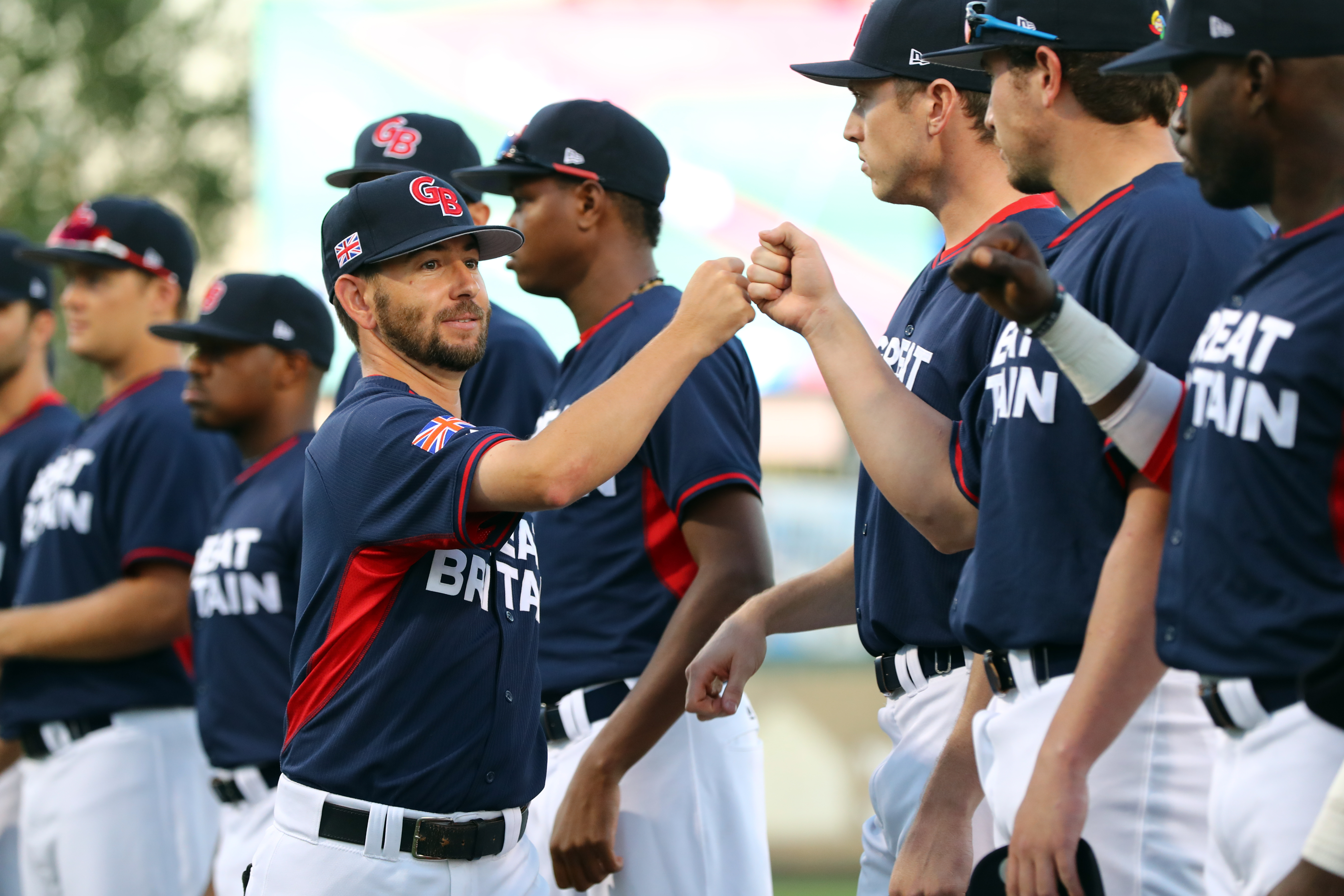
These coaches believe that British baseball is more than a means to an end – it’s a cultural identity. But as Cramman put it, “culture builds by stacking things on top of each other.” This stacking of baseball coaches has built a structure more robust than anyone in Britain thought possible.
--
Of course, once you “get there from here,” where does that leave the game at home? For Carroll, this pull of growing British baseball permeates his life even as he’s deepened his Red Sox tenure. No matter how connected you are to your home turf, it’s impossible to be in two places at once. He sometimes wonders if baseball in Great Britain would be better off if more coaches had simply stayed there.
“I kind of feel guilty on this myself at some point, as much as this is really cool for me,” he said.
But Carroll and co. also emphasized that coaches migrating from Great Britain to the U.S. does grow the game back home. British baseball can only develop so much without on-the-ground professional expertise to nurture aspiring players. That’s where the coaches’ MLB experience comes in. They can take that info back to GB and offer camps and clinics with more granular instruction, instilling baseball enthusiasm into local kids. Their pro ball knowledge can feed into WBC success, which in turn could inspire the British government to give baseball more funding.
If a few reach back and take others with them, that’s when the dam truly starts to burst.
After being away from GB baseball while attending college in the U.S., Baxter recently ran a catchers camp in London with one of his youth baseball coaches, Will Lintern. Many of these coaches have met up at the ABCA (American Baseball Coaches Association) convention, which has a large international presence, and run offseason camps in GB. Spencer still monitors a British baseball Facebook page, answering questions and giving advice to players and coaches.
And of course, continuing to guide the Great Britain national team after working in MLB is an important way of giving back. It could inspire someone to stick with baseball longer than they might have otherwise, if they see there could be a real future in it. It shows the locals that maybe, just maybe, there’s a path to the Majors from Great Britain after all.
“The number of times I tell coaches who have the aspiration of working in pro ball, ‘You have no idea how close you are,’” Spencer said. “I know it feels really, really far away, but that's where ‘You can get there from here’ came from.”
--
No matter how much someone pursues this goal, it can be a culture shock going from Great Britain to coaching professional baseball an ocean away. Most of these coaches only go home to the UK once a year. There can be complex visa issues if they’re not dual citizens. At the Brewers’ DR academy, Baxter has a language barrier to overcome.
The culture shock has a positive side, too. Some of that patented resourcefulness (or as some put it, “underdog mentality”) doesn’t have to be as prevalent, even if it's there below the surface.
“In British baseball, you have to be the doctor and the surgeon,” Cramman said. “You have to diagnose the problem, find the problem and then operate and fix the patient. What I'm realizing about professional baseball is you're just a surgeon. It's diagnosed for you, almost. You're given the information. It's your job to just go in and fix it.
“When we come back to England, our kids can get coached in really, really high detail, and we can teach them what we've learned.”
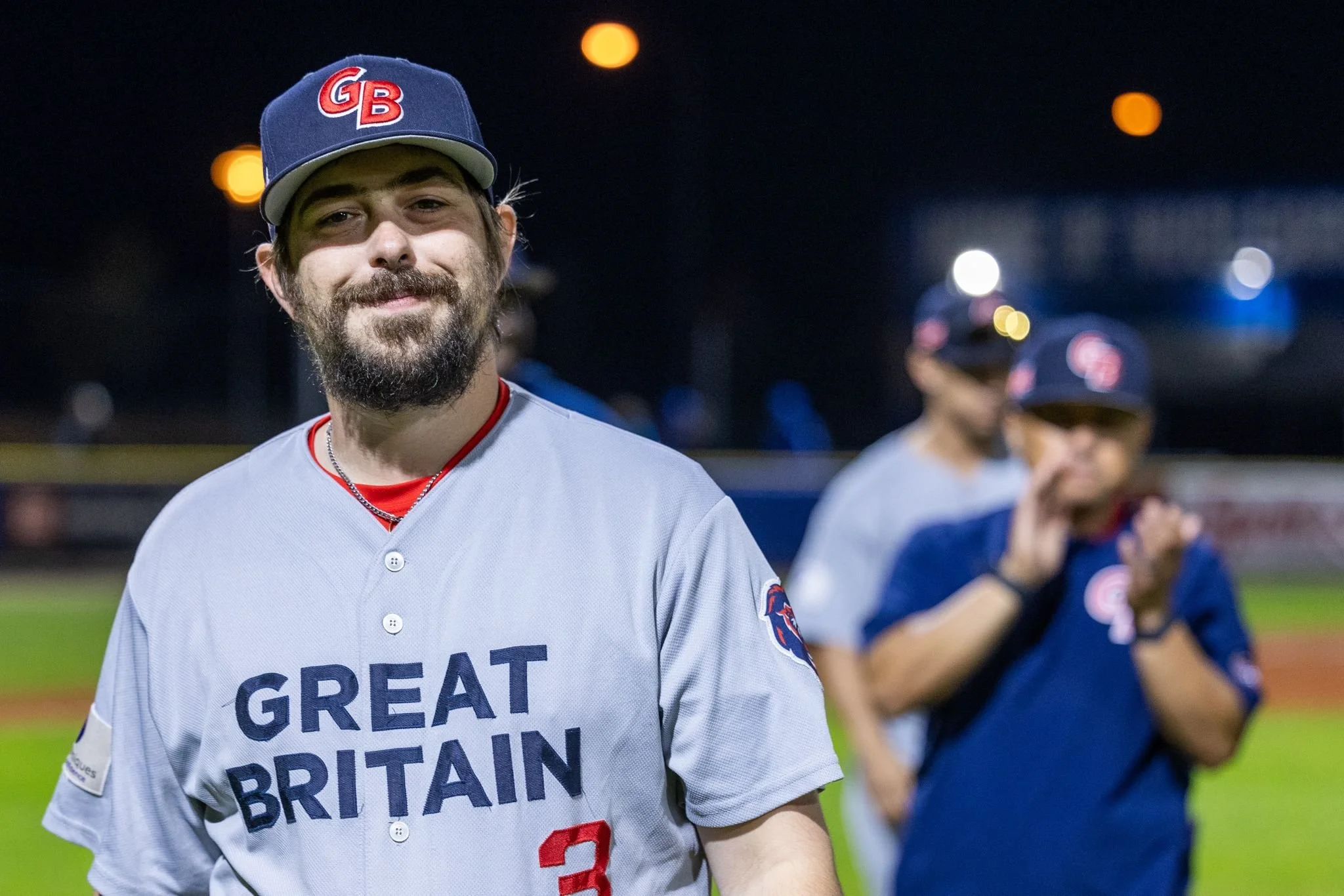
Back in Great Britain, the attitude towards baseball has not drastically turned the tide just yet despite these enterprising coaches’ best efforts. But there are signs of change. There’s less “apathy” towards people wanting to start a baseball club. With GB baseball having qualified for two straight World Baseball Classics, it’s not inconceivable that the Olympics could be next.
If the coaches’ success has proven anything, they can get there from here.
“I do hear the community speak a little bit differently,” Cramman said. “People do look at us a little bit less crazy when we tell them we want to coach in the big leagues.”