


Artifacts of the Machine Era
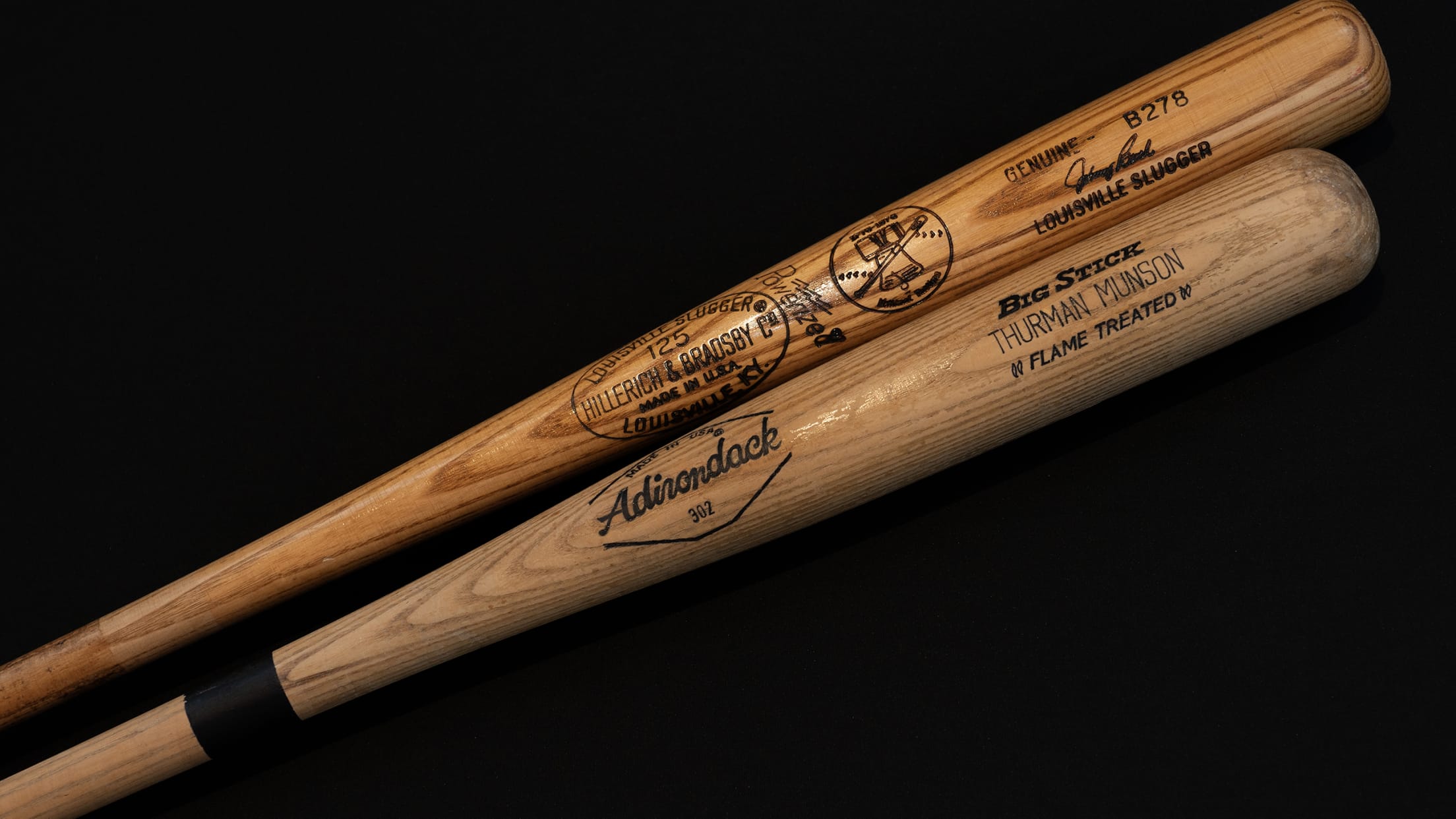
A Catchers’ Story
One of the main story lines as the 1976 World Series approached was the “battle” of catchers between the Reds’ Johnny Bench and the Yankees’ Thurman Munson. As the Series unfolded, both catchers more than lived up to their respective billings on baseball’s grandest stage. Munson shined in a losing effort for New York, batting .529 and leading all Series participants with nine hits. But Bench’s star shined brighter as he led all Series regulars with a .533 batting average and his two home runs and five RBIs in Game 4 proved decisive in completing the Reds’ sweep. Bench earned Series MVP honors for his efforts.
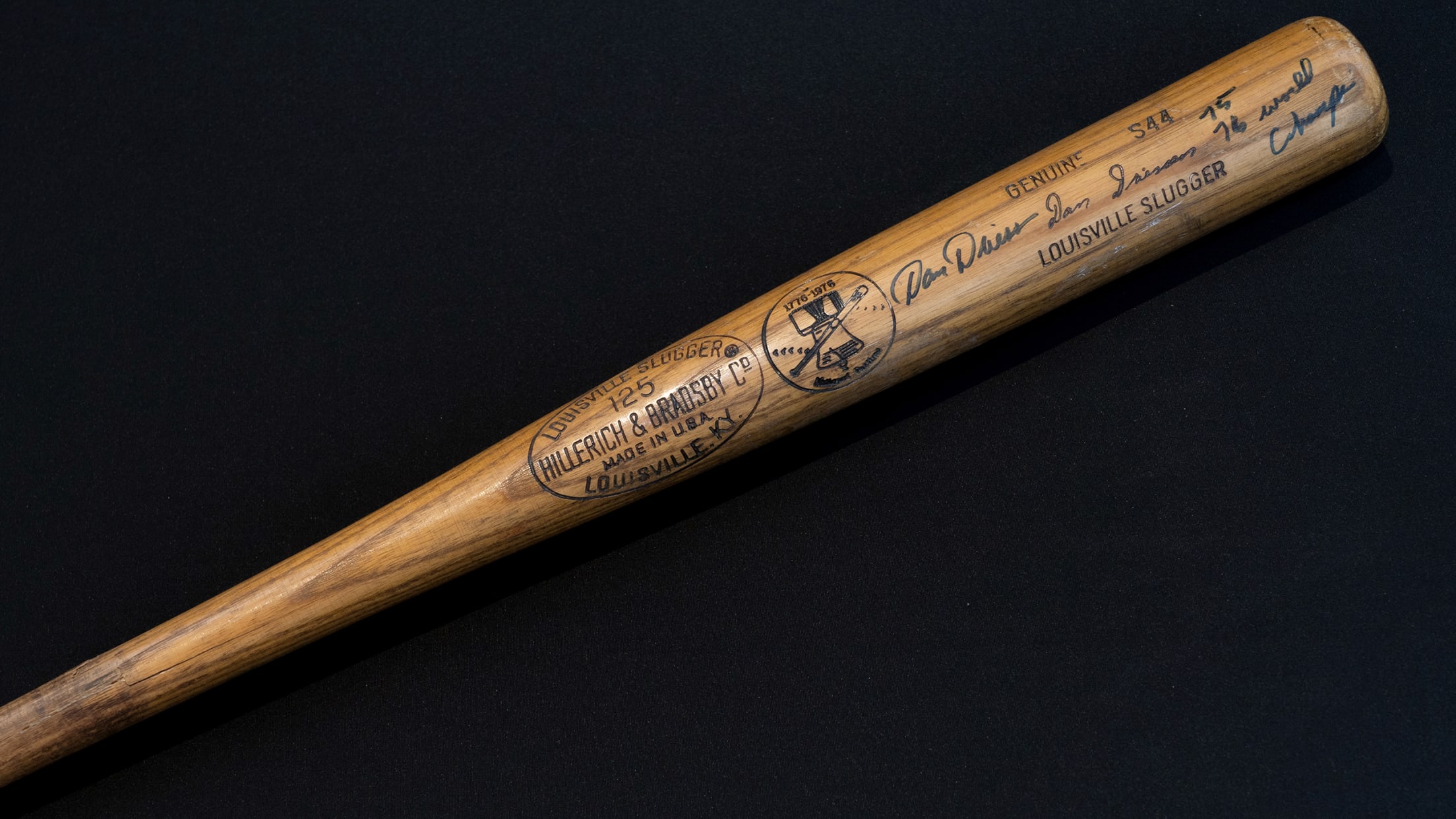
Dan Driessen Game Used Bat, 1976
A reserve infielder and outfielder on the 1976 Reds, Driessen made history in the bottom of the first inning of the first game of the 1976 World Series when he became the first National League Designated Hitter. Introduced in the American League in 1973, the Designated Hitter was incorporated into World Series play for the first time in 1976. Driessen made the most of his opportunity, batting .357 with a home run in the Reds’ sweep of the Yankees. Note the American Bicentennial-inspired Liberty Bell logo that appears on the bat. This commemoration appeared on Louisville Slugger bats manufactured for use during the 1976 season.
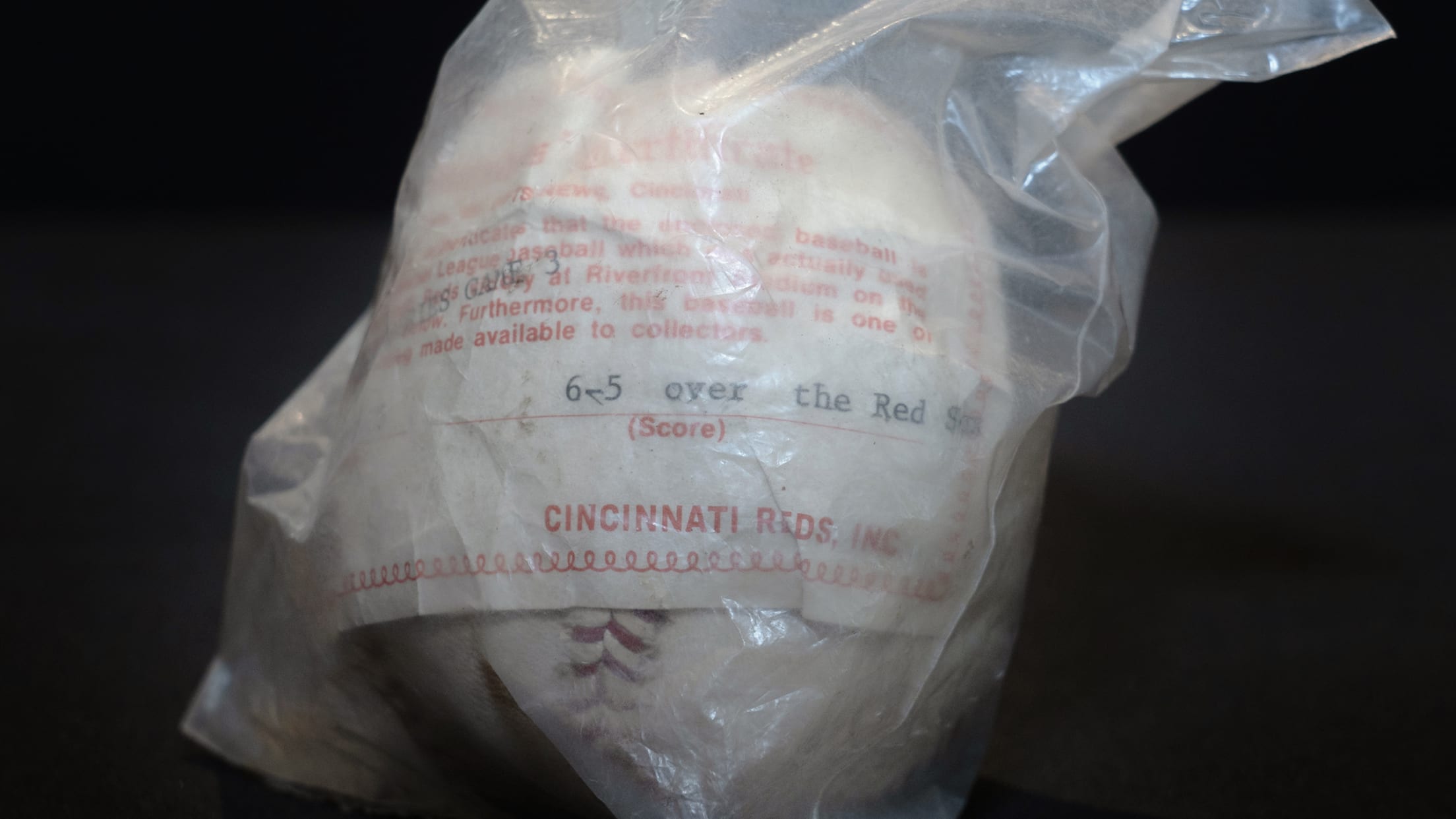
Sealed 1975 World Series Game 3 Game Used Baseball from Reds 580 Gift Shop
For many years, the Reds primary gift shop was located in the 580 Building located at 580 Walnut Street in downtown Cincinnati. In addition to a wide array of traditional souvenirs, the shop also sold game used items including bats, jerseys, equipment, and baseballs. This extremely rare example of a game used baseball purchased at the 580 Gift Shop is still in the original baggy it was sealed in along with the original Certificate of Authenticity from the Reds. The game used items sold at the shop represented one of the earliest iterations of a game used and authenticated program, the legacy of which can be found today in the form of club Authentics programs that have become standard throughout Major League Baseball.
Baseball on Loan Courtesy of Jeff Bray
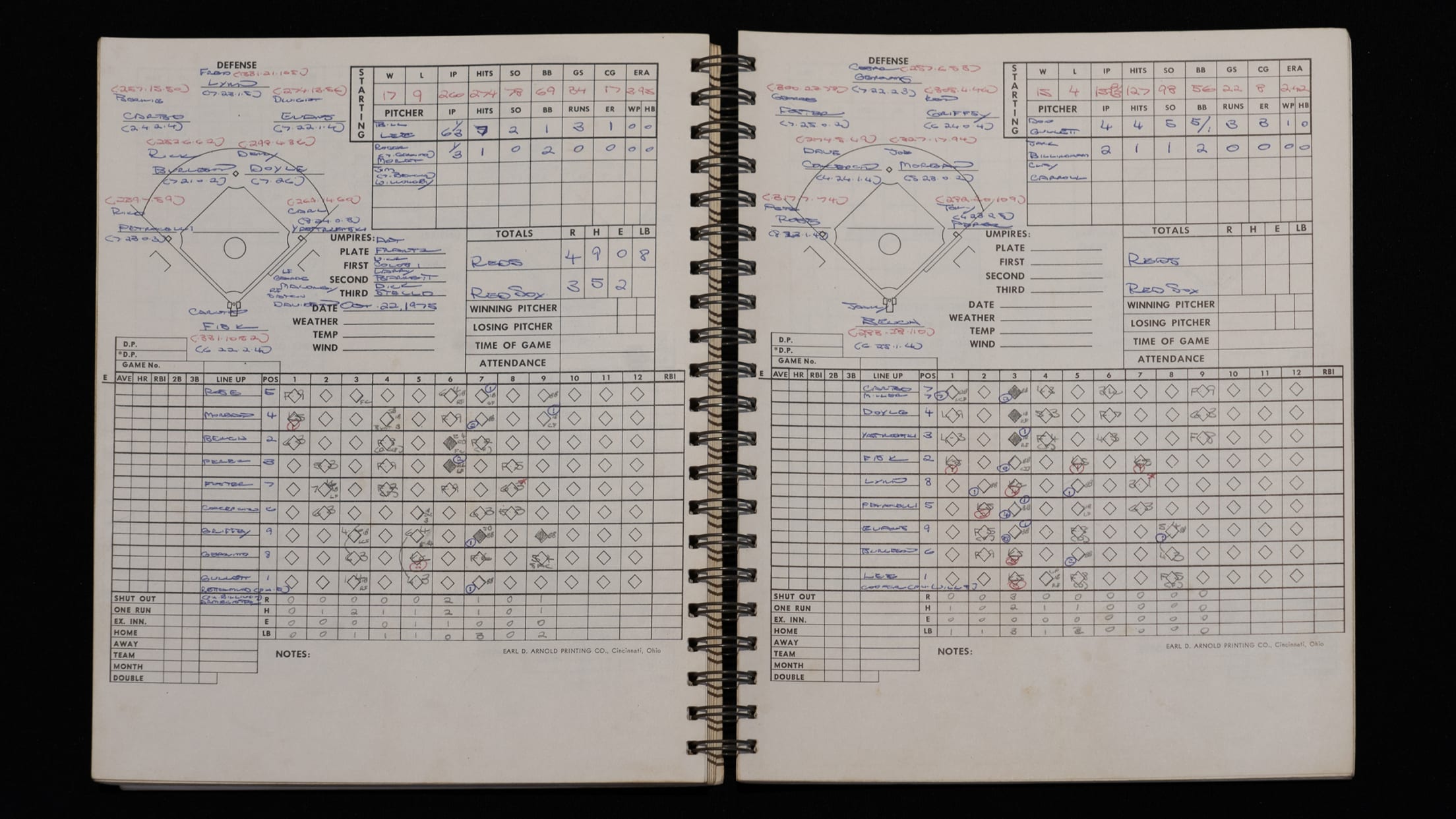
Marty Brennaman’s 1975 World Series Scorebook
This original scorebook from Marty Brennaman’s personal collection documents the Reds Hall of Fame broadcaster’s scoring of the clinching games of the 1975 World Series.
On Loan Courtesy of Marty Brennaman
1975 and 1976 Team Pennants
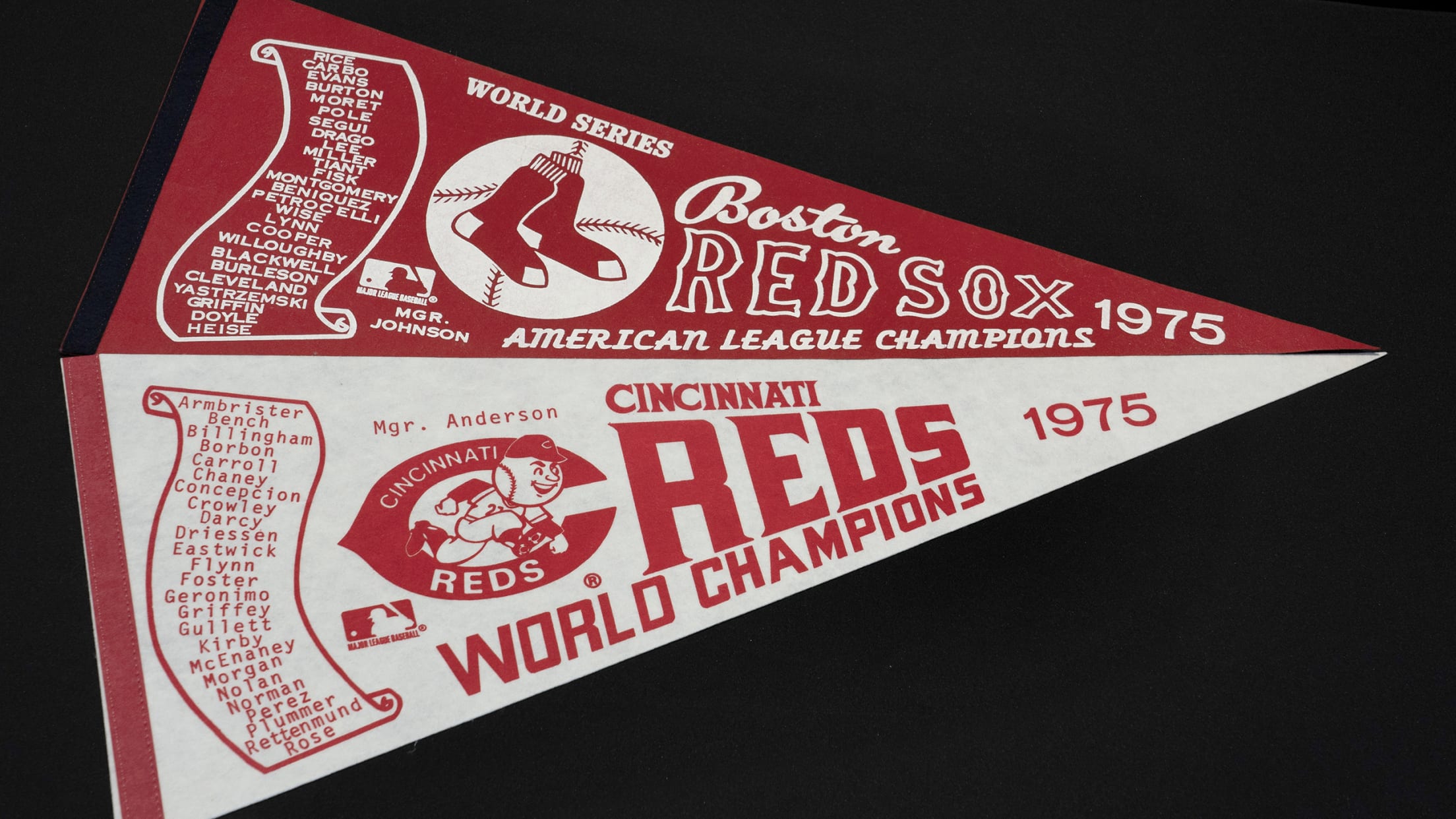
“Roster scroll” pennants that listed player names were popular in the 1970s. This image depicts roster scroll pennants of the 1975 Reds along with a scroll pennant for the Red Sox club the Reds defeated in the 1975 World Series.
Tony Pérez Game Used Cap
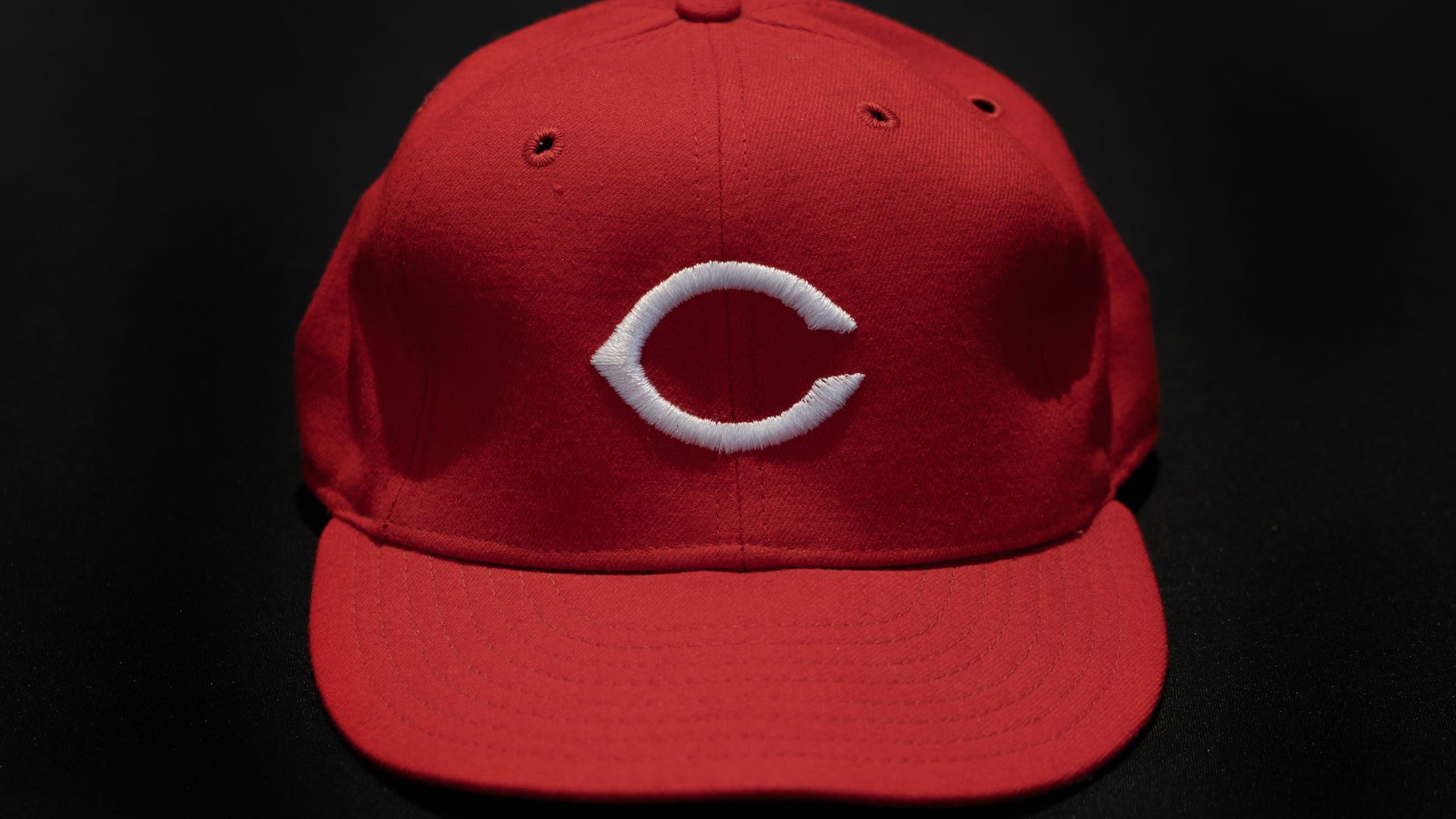
One of the most reliable run producers in baseball history, Pérez’s two-run home run in the sixth inning of Game 7 of the 1975 World Series stands as one of the most important in Reds history. Perez’s shot made Game 7 a one-run game, setting the stage for the Reds’ come-from-behind victory.
On Loan Courtesy of Jeff Bray
Carlton Fisk Game Used Home Jersey, 1975
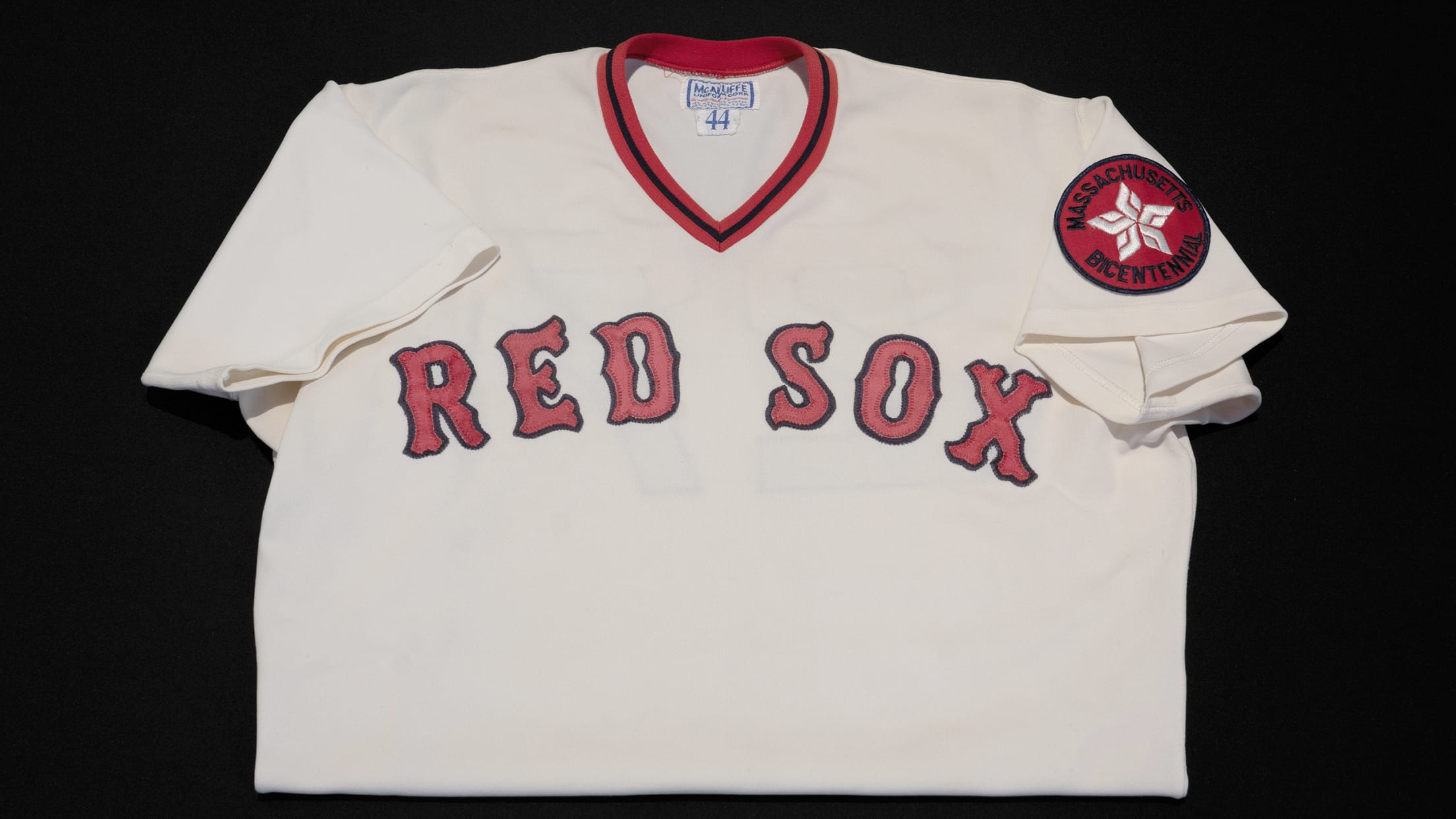
Boston’s star catcher wore this jersey during the club’s 1975 season that culminated with an American League Championship. Fisk’s game-winning home run in the 12th inning of the sixth game of the 1975 World Series, a blast down the left-field line that he seemed to will fair as he made his way toward first base, is arguably the most famous World Series home run in baseball history.
Joe Morgan Game Used Home Jersey, 1975
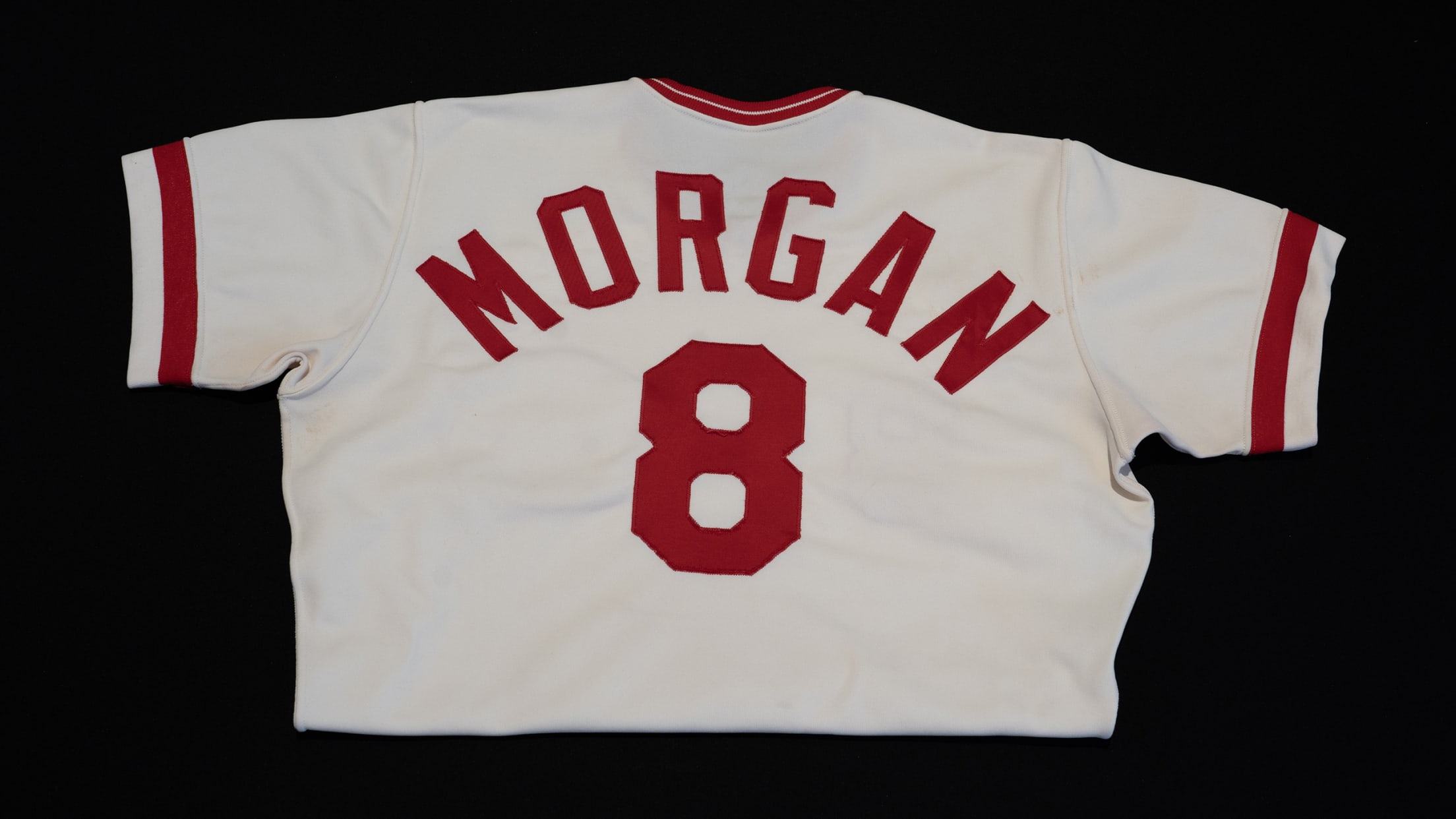
The Reds’ second baseman wore this jersey during the first of his consecutive NL MVP-winning seasons. Already a Gold Glove-winning All-Star, Morgan established himself as arguably the greatest second baseman in baseball history during the Big Red Machine’s championship seasons.
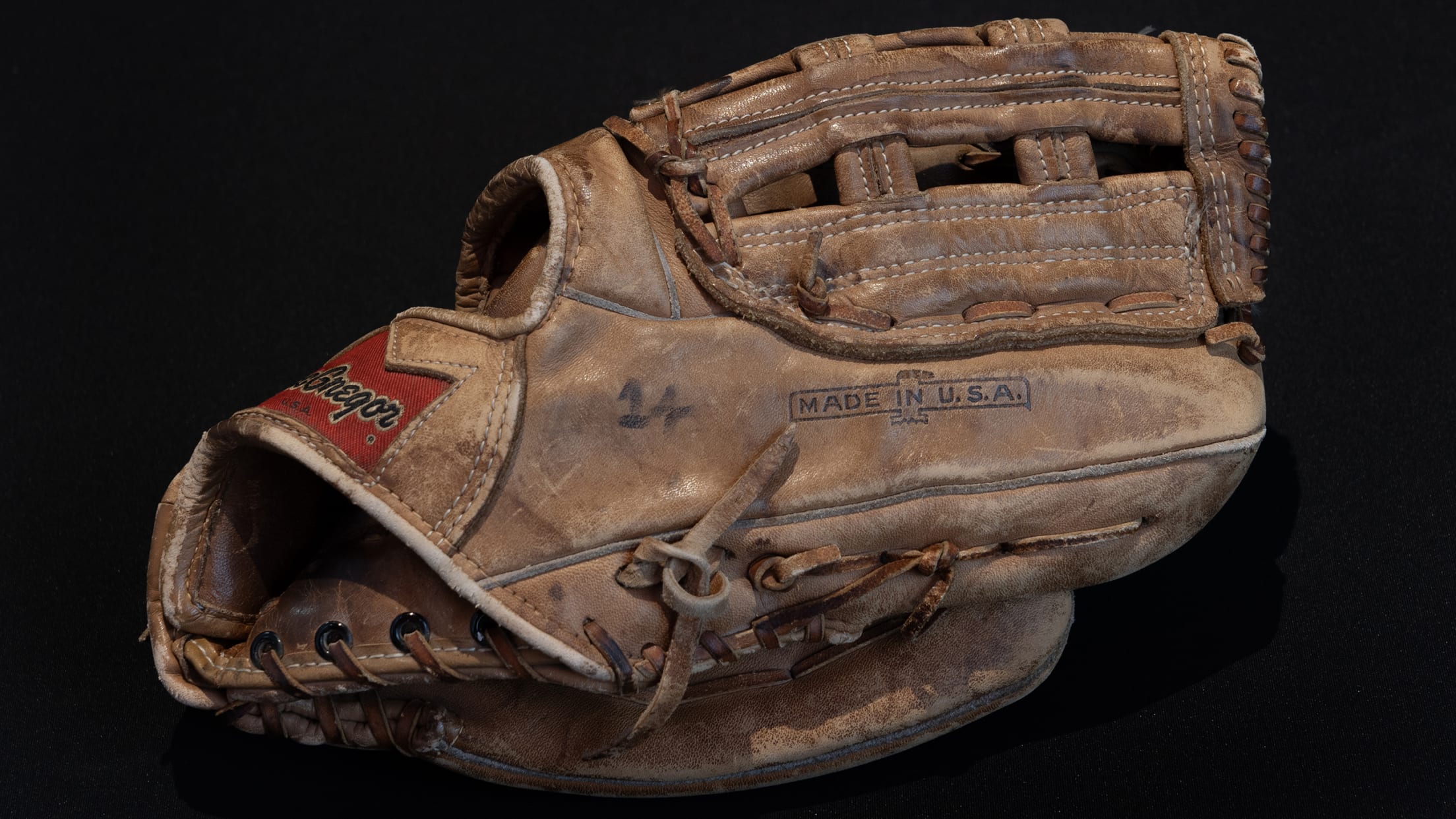
Pete Rose Game Used Glove
An All-Star at five different positions over the course of his illustrious 24-year career, Rose’s move from left field to third base in May 1975 opened regular playing time for George Foster in left, resulting in the formation of the Big Red Machine’s legendary Great Eight starting lineup.
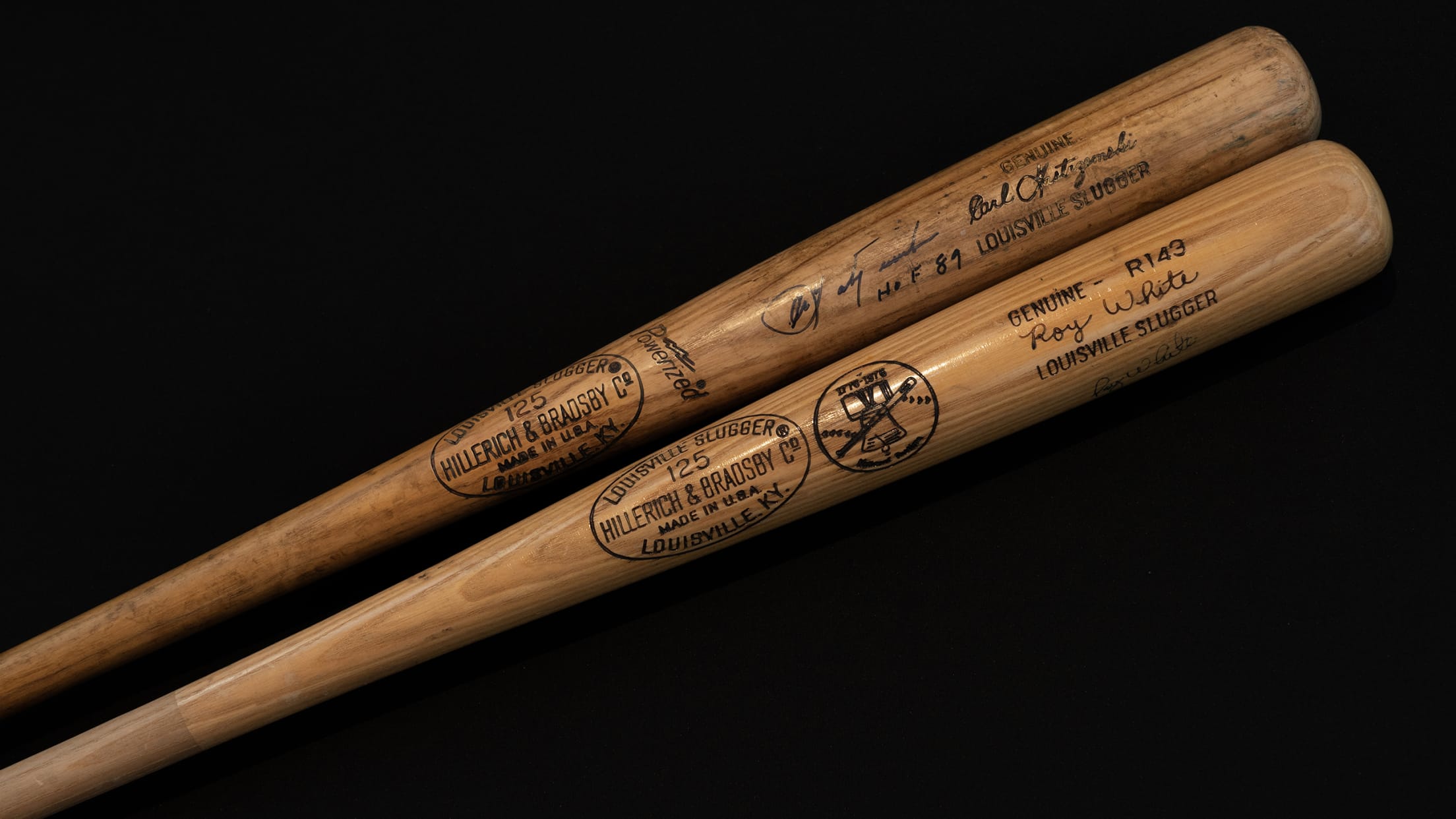
Last World Series Outs, 1975 and 1976
Presented here are period game used bats from the opposing players responsible for making the last outs in the Reds’ 1975 and 1976 World Series victories. Red Sox Hall of Famer Carl Yastrzemski flied out to Cesar Geronimo in the bottom of the ninth inning for the last out of the 1975 World Series. A year later it was Yankee outfielder Roy White’s two-out, ninth inning fly ball to left fielder George Foster that closed out the 1976 World Series.
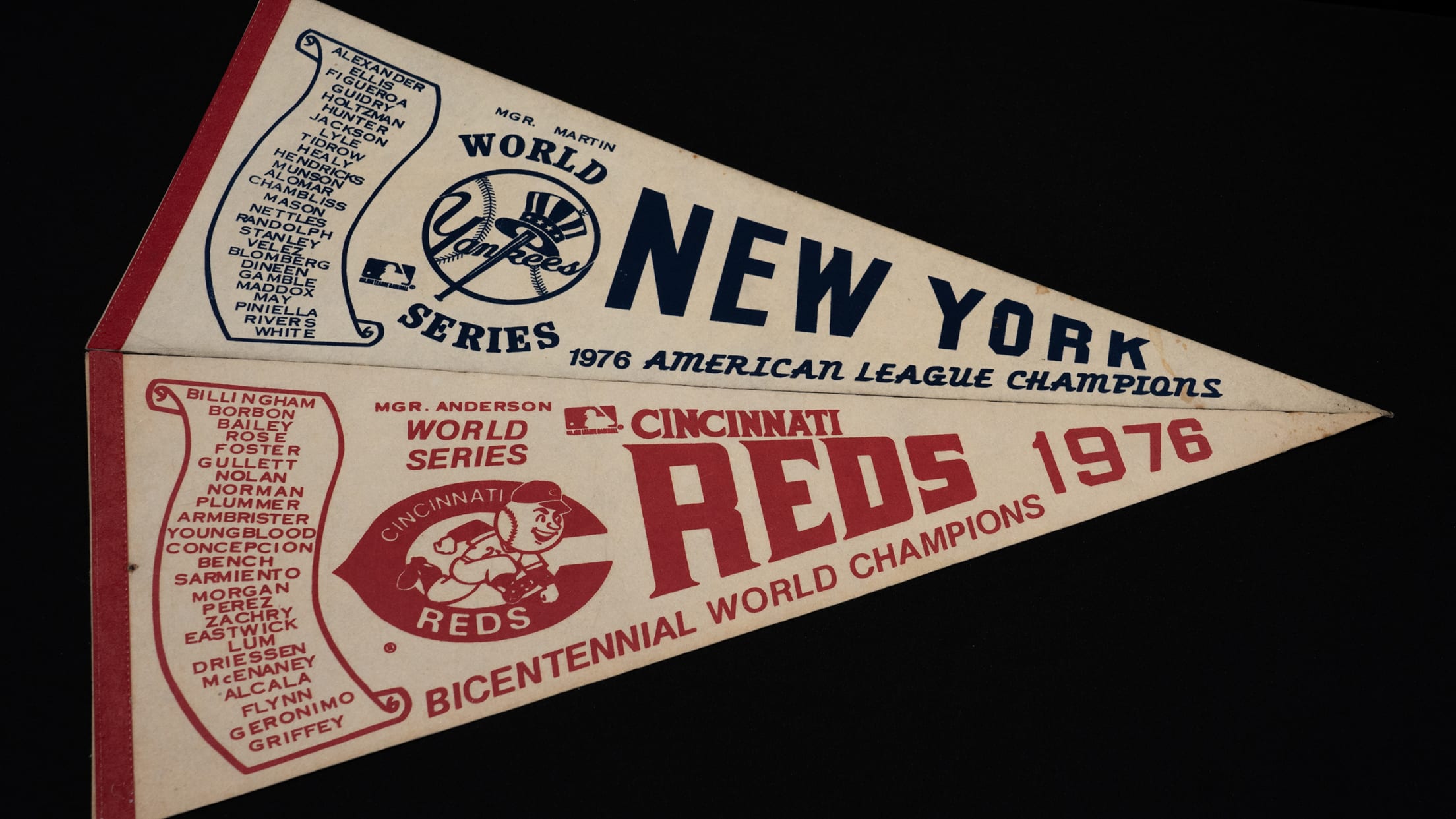
1975 and 1976 Team Pennants
“Roster scroll” pennants that listed player names were popular in the 1970s. This image depicts roster scroll pennants of the 1975 Reds along with a scroll pennant for the Red Sox club the Reds defeated in the 1975 World Series.
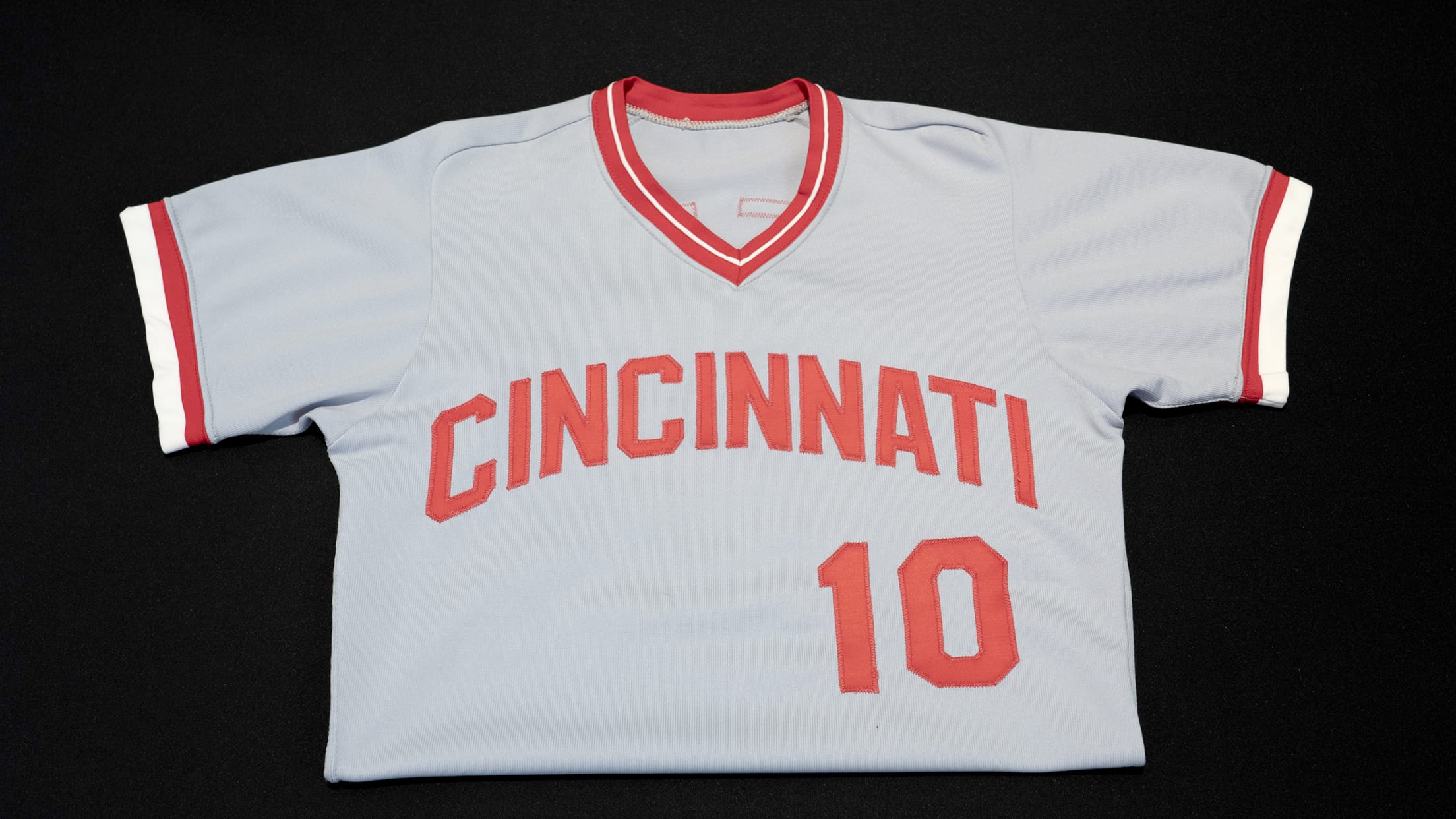
Sparky Anderson Game Used Jersey, 1976
The all-time winningest manager in Reds history, Sparky piloted the Reds to five division titles and the franchise doubled both its all-time pennant count and World Championship count during Sparky’s eight-season tenure.
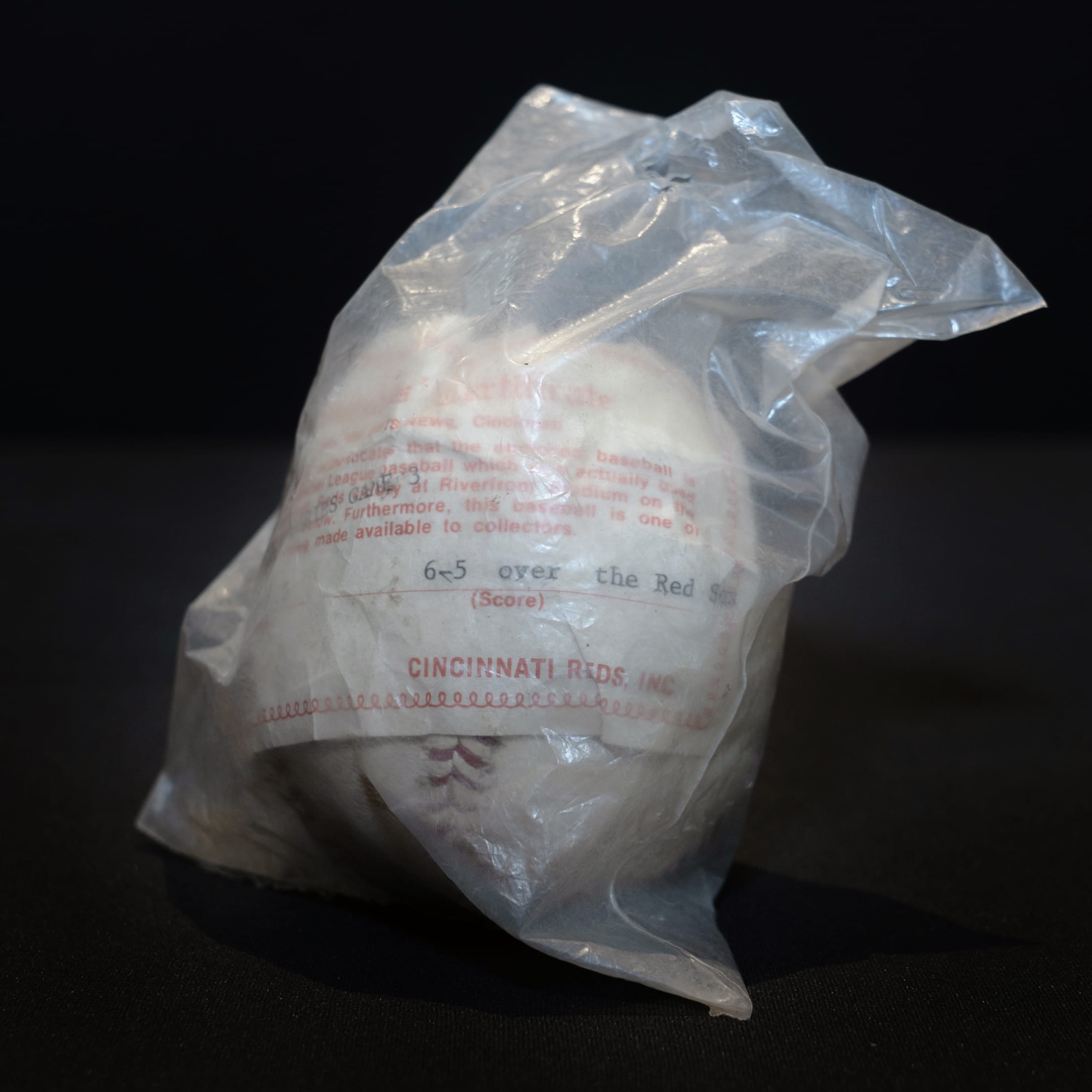
Sealed 1975 World Series Game 3 Game Used Baseball from Reds 580 Gift Shop
For many years, the Reds primary gift shop was located in the 580 Building located at 580 Walnut Street in downtown Cincinnati. In addition to a wide array of traditional souvenirs, the shop also sold game used items including bats, jerseys, equipment, and baseballs. This extremely rare example of a game used baseball purchased at the 580 Gift Shop is still in the original baggy it was sealed in along with the original Certificate of Authenticity from the Reds. The game used items sold at the shop represented one of the earliest iterations of a game used and authenticated program, the legacy of which can be found today in the form of club Authentics programs that have become standard throughout Major League Baseball.
Baseball on Loan Courtesy of Jeff Bray
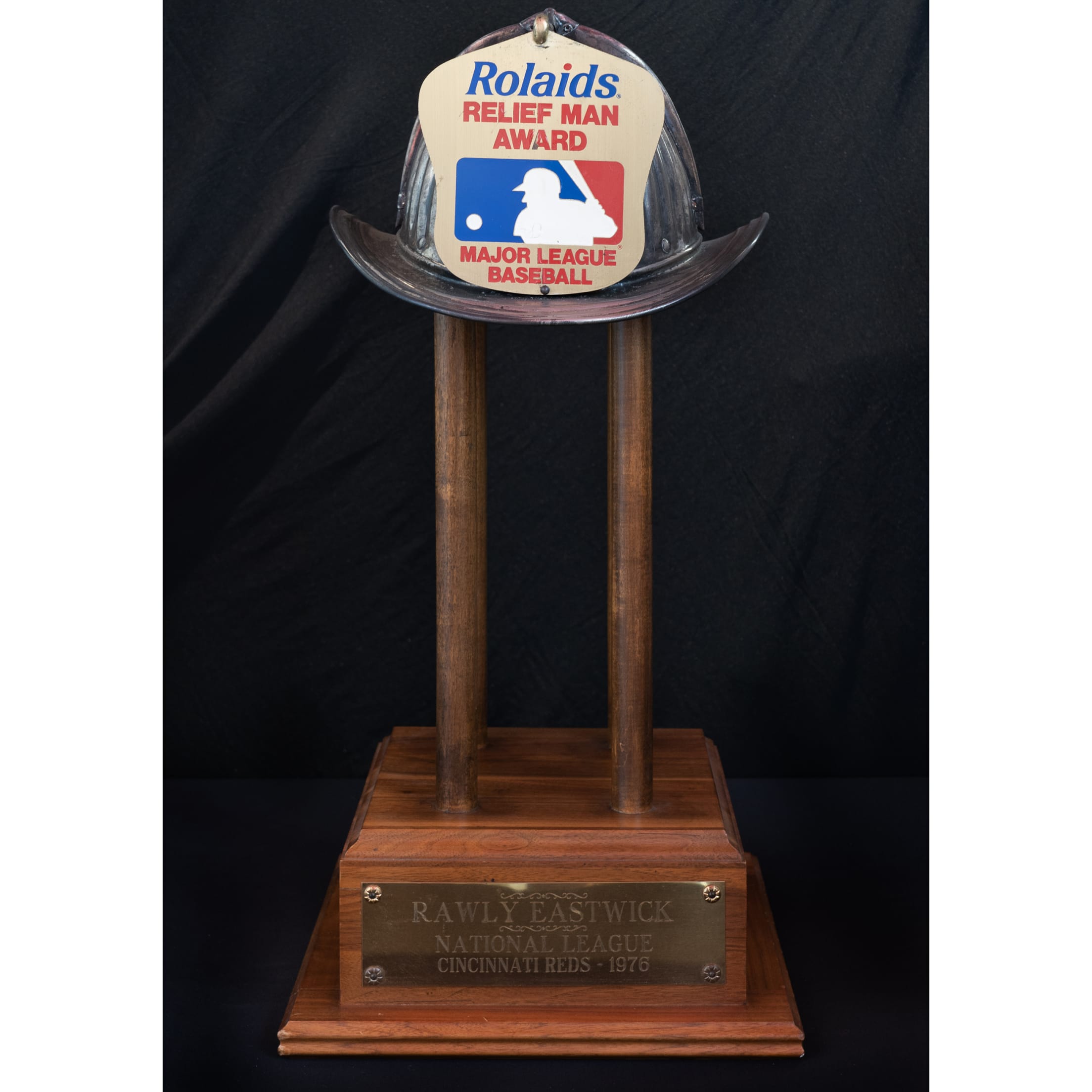
Rawly Eastwick’s, Rolaids Relief Man Award, 1976
While the Big Red Machine was best known for its prolific offense, it was a team that also featured a deep and talented pitching staff. Manager Sparky Anderson’s quick hook at the first sign of trouble was often a source of frustration for his starting pitchers but it gave his effective relievers an opportunity to shine. Rawly Eastwick emerged as the club’s primary closer and was the National League’s top relief pitcher in 1976.
Trophy on Loan Courtesy of Rawly Eastwick
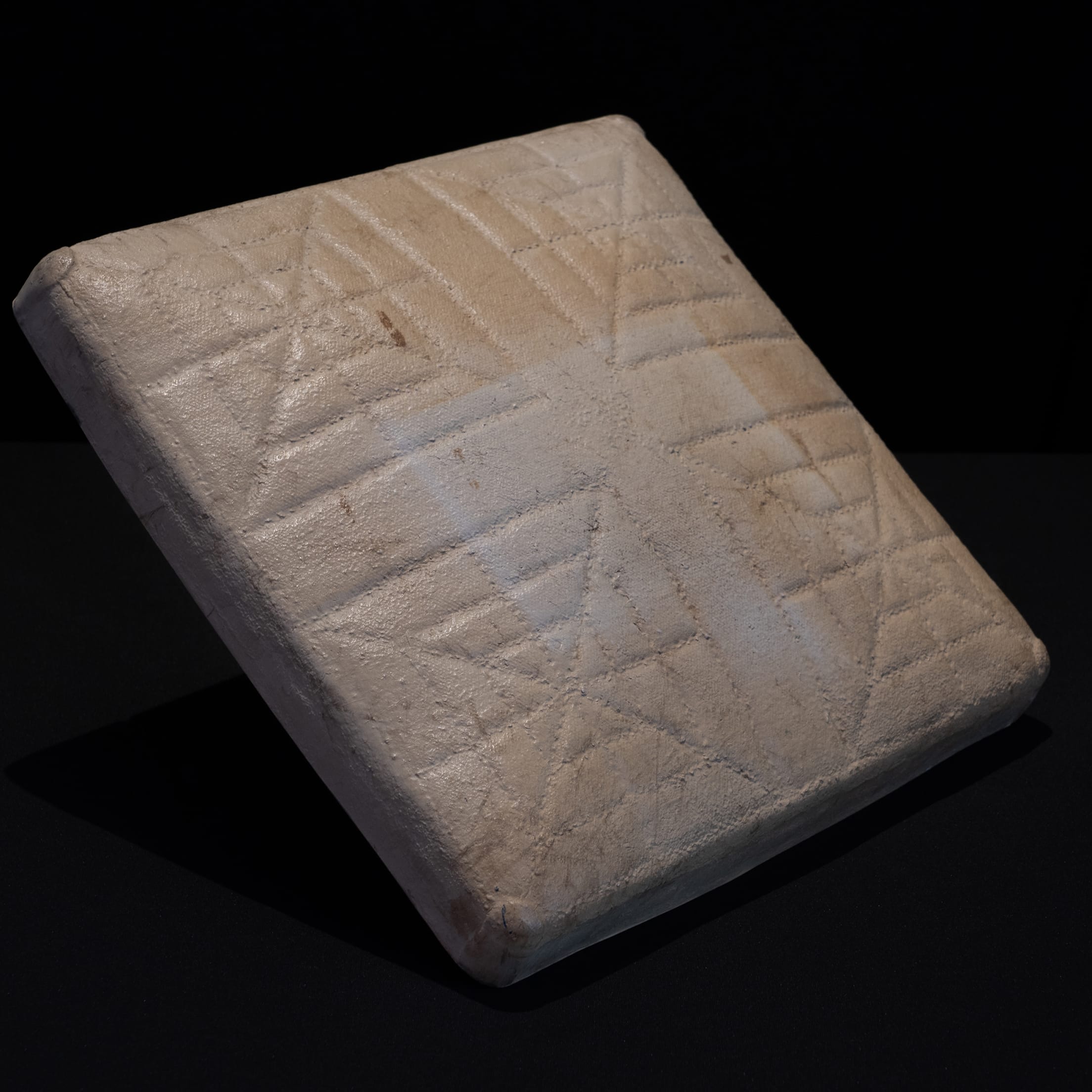
Third Base, Game 7, 1975 World Series
This base was in use throughout Game 7 of the 1975 World Series at Boston’s Fenway Park. The Reds defeated the Red Sox, 4-3, in the contest to clinch the franchise’s first World Championship since 1940. Despite being on the losing end of the World Series, the Red Sox organization appreciated the significance of the 1975 World Series and retained ownership of the base until the club sold it to a Massachusetts sports memorabilia collector in 1977. The original sale price was $100, all of which benefitted the Jimmy Fund, a charitable organization overseen by the Red Sox.
On Loan Courtesy of Mike Jarnicki
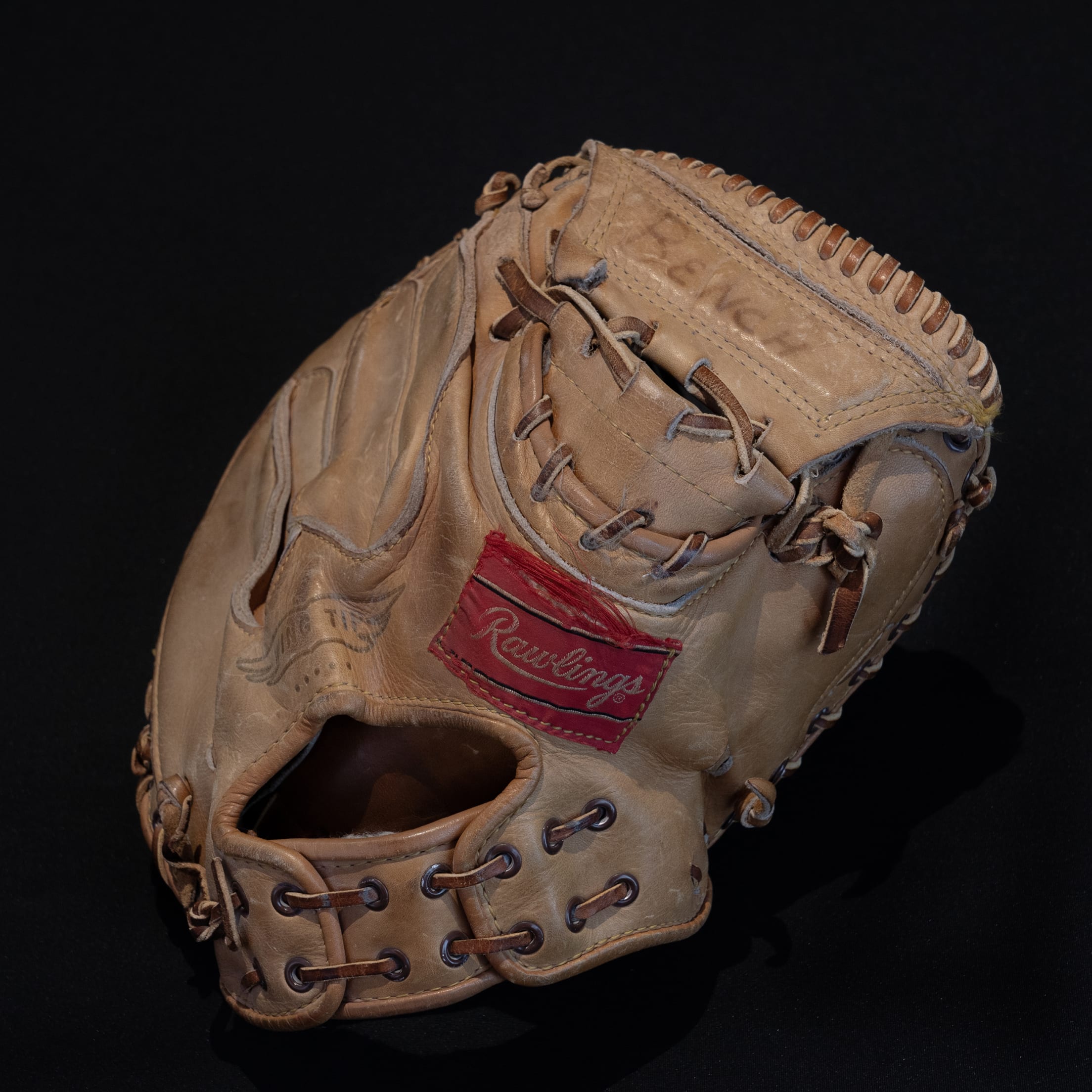
Johnny Bench Game Used Glove, 1975
The Hall of Fame catcher used this glove during the Reds’ 1975 World Championship season. Bench won his eighth consecutive Rawlings Gold Glove Award in 1975, was an all-Star for the eighth consecutive season and finished fourth in voting for the National League’s Most Valuable Player Award.
Glove on Loan Courtesy of Adam Birenbaum