




COOPERSTOWN, N.Y. -- The Hall of Fame Awards Presentation recognizes writers, broadcasters and pioneers, and while all four men who were recognized during Saturday’s ceremony were warmly saluted, no one received a bigger ovation than former National League president Bill White.
White was selected as just the seventh recipient of the Buck O’Neil Lifetime Achievement Award by the National Baseball Hall of Fame -- an award given out not more than once every three years to honor individuals whose efforts enhanced baseball’s positive impact on society and broadened the game’s appeal.
2026 Hall of Fame Induction Weekend
• Trio of legends take rightful place among baseball's immortals
• The pride of Puerto Rico, Beltrán celebrates mentors at Hall induction
• Kent opens up, lets emotions flow during Hall of Fame induction
• Braves Country out in full force as Jones enters Hall of Fame
• Buck returns to Cooperstown as Frick Award winner after creating his own legacy
• Trailblazer Bill White joins Hall legends, received with loud ovations
• Complete Hall of Fame coverage
The 92-year-old received three standing ovations -- one as he walked into the stage for the first time, another when it was his turn to be recognized, and one more after his video-recorded acceptance speech played on the screen behind him.
“This award is meaningful, because when I grew up, I never imagined a life in baseball,” White said in the video. “Baseball was a way to earn money for medical school. But signing a contract with the New York Giants put me on a different path.”
An accomplished eight-time All-Star, seven-time Gold Glove winner and World Series champion with the 1964 St. Louis Cardinals, White had a rich playing career. He was also a beloved broadcaster with the Yankees, the first Black play-by-play person for an MLB team. And later in life, he had a career-capping and groundbreaking role as National League president from 1989-94.
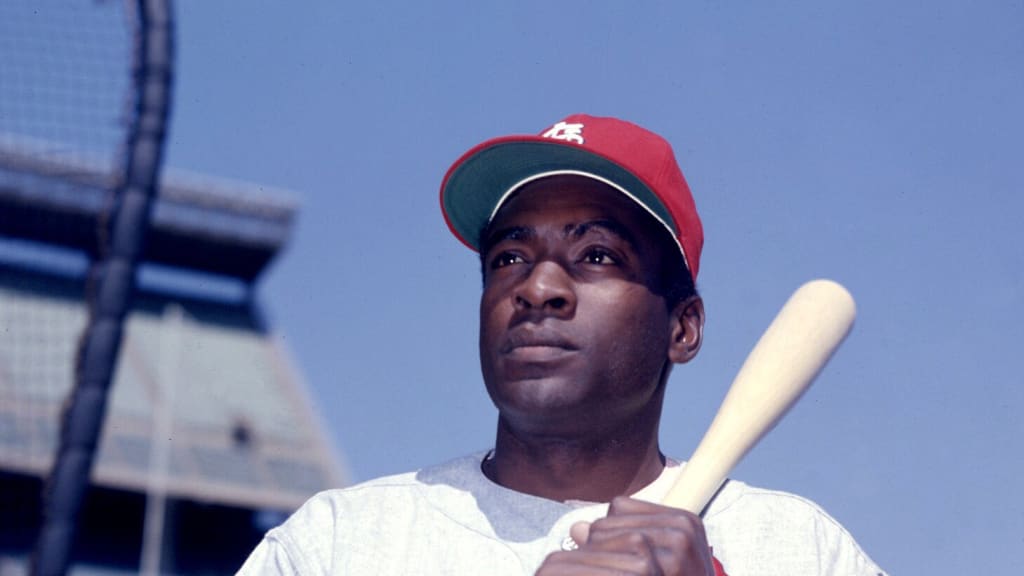
He took on the president role with a little hesitation. White felt strongly about people of color being treated equally in the baseball ranks, so despite his initial reluctance, his position as one of the highest-ranking Black executives in all of sport was an important one.
“Bill had no choice but to accept that job,” Hall of Famer and former teammate Bob Gibson once said. “Not for himself, but for other people.”
The Hall of Fame recognized White’s importance by bestowing upon him an honor that, over the last 20 years, has also gone to the legendary O’Neil (2007), Roland Hemond (2011), Joe Garagiola (2014), Rachel Robinson (2017), David Montgomery (2020) and Carl Erskine (2023). It was recognition of a baseball life that, when split up into individual roles, might not have been worthy of the Plaque Gallery, but, when taken as a whole, constituted a long and important contribution to the betterment of the sport.
White received the O’Neil Award in front of a roomful of Hall of Famers, Major League team representatives and fans at the Glimmerglass Festival Theater. White was honored alongside BBWAA Career Excellent Award winner Paul Hoynes, Ford C. Frick Award winner Joe Buck and former outfielder Rick Monday, who received special recognition for the 50th anniversary of his rescuing the American flag from being burned on the field.
Born in Florida, raised in Warren, Ohio, and educated at Hiram College, White might have taken a different path altogether after he initially rejected New York Giants manager Leo Durocher’s offer of a $1,000 signing bonus to go pro. White explained to Durocher that he would need $2,500 to finish college -- something he had promised his mother. Durocher agreed to the terms and even threw in a pair of cleats.
White’s plan was to give pro ball a trial period of a few years, and, if he didn’t reach the Majors, he’d go back to get his medical degree. But his bat and overall abilities led to a 1956 debut with the Giants. And though his career was interrupted by a draft notice that led to a stint in the Army, he went on to a .286 career average, 202 home runs, four 100-RBIs seasons and a third-place finish in the 1964 NL MVP voting.
After calling games alongside Phil Rizzuto for an 18-year period that begin in 1971, White was offered the job as president of the NL, where he would succeed Bart Giamatti. White recognized that he was being extended the offer as a response to the firestorm caused by Dodgers general manager Al Campanis two years earlier, when he said Blacks might lack “the necessities” to be managers or general managers. White’s appointment was an attempt to prove a point, and he wound up playing a key role in MLB’s 1993 expansion to Miami and Denver with the Marlins and Rockies.
“The years I spent as president of the National League, and on the Hall of Fame board, were amazing,” White said during his acceptance speech Saturday. “During my time at the National League, we added a couple of new teams that helped contribute to the game’s growth. I want to thank the board for this honor.”
The trailblazing White now has the recognition he long since earned, and he’s risen to a special place within the sport he gave his all.