
Yusei Kikuchi and Shohei Ohtani. Two players who rose from Iwate Prefecture to the global stage are set to represent Japan in this spring’s World Baseball Classic. Alumni of Hanamaki Higashi High School, Kikuchi and his younger counterpart share a common origin -- but how have their journeys shaped their hometown of Iwate and their alma mater? This two-part feature explores the impact they have made, both on and off the field. Part two, a visit to Hanamaki Higashi High School, is here.
For Angels lefty Yusei Kikuchi, home has always been a special place.
It is where he reconnects with the game's roots — and with himself.
Even as he continues his journey in MLB, returning to his alma mater in Hanamaki, Iwate Prefecture, has consistently provided Kikuchi with a moment of perspective. Amid the daily demands and results-driven nature of professional baseball, those visits became opportunities to reflect on what the game truly means, and on what he hopes to leave behind for the next generation. Over time, those reflections led to a defining decision: To give back to his hometown by creating a space for the future.
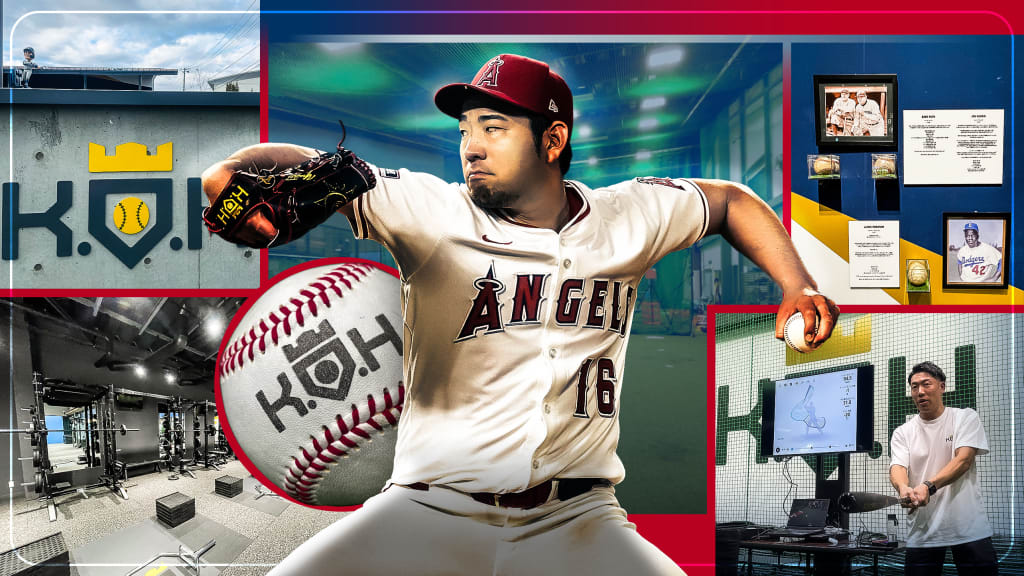
That vision ultimately took shape as an all-weather, multi-purpose baseball facility known as “King of the Hill (K.O.H.)”.
While the name “King of the Hill” can be translated literally as “the king of the mound,” Kikuchi says it represents something deeper. Fueled by a desire to help develop players who can rise to the challenge and control the game, he invested his own resources to build the facility near Hanamaki Higashi High School, hoping it would become a place where the next generation of talent could take its first steps.
When K.O.H. was first built, Kikuchi put it simply.
“Supporting someone else’s dream is fun," Kikuchi said. "Agree?"
The facility was created to empower players who want to get better and aim higher, while also serving as an alternative for young athletes who lack the financial means to train overseas at MLB-level environments. K.O.H. was designed to be a place where ambition is met with opportunity.
Visitors are greeted at the entrance by uniforms from the teams Kikuchi has played for throughout his career, alongside bats and jerseys from Major Leaguers. To the right, a café area opens up, showcasing signed baseballs and bats collected over the years from current players and legends of the game, while MLB games play on monitors overhead. Deeper inside, the facility features a fully equipped weight room, treatment area, jacuzzi, sauna, and even a hair salon -- an amenity commonly found in big league clubhouses. Every corner reflects Kikuchi’s creativity and personal touch.
On the left side of the building, the atmosphere shifts to a more serious, baseball-centric space. Two pitchers can throw simultaneously in the bullpen, and batting cages are paired with cutting-edge technology such as eye trackers and TrackMan systems, creating an environment designed to refine both pitching and hitting through data-driven analysis.
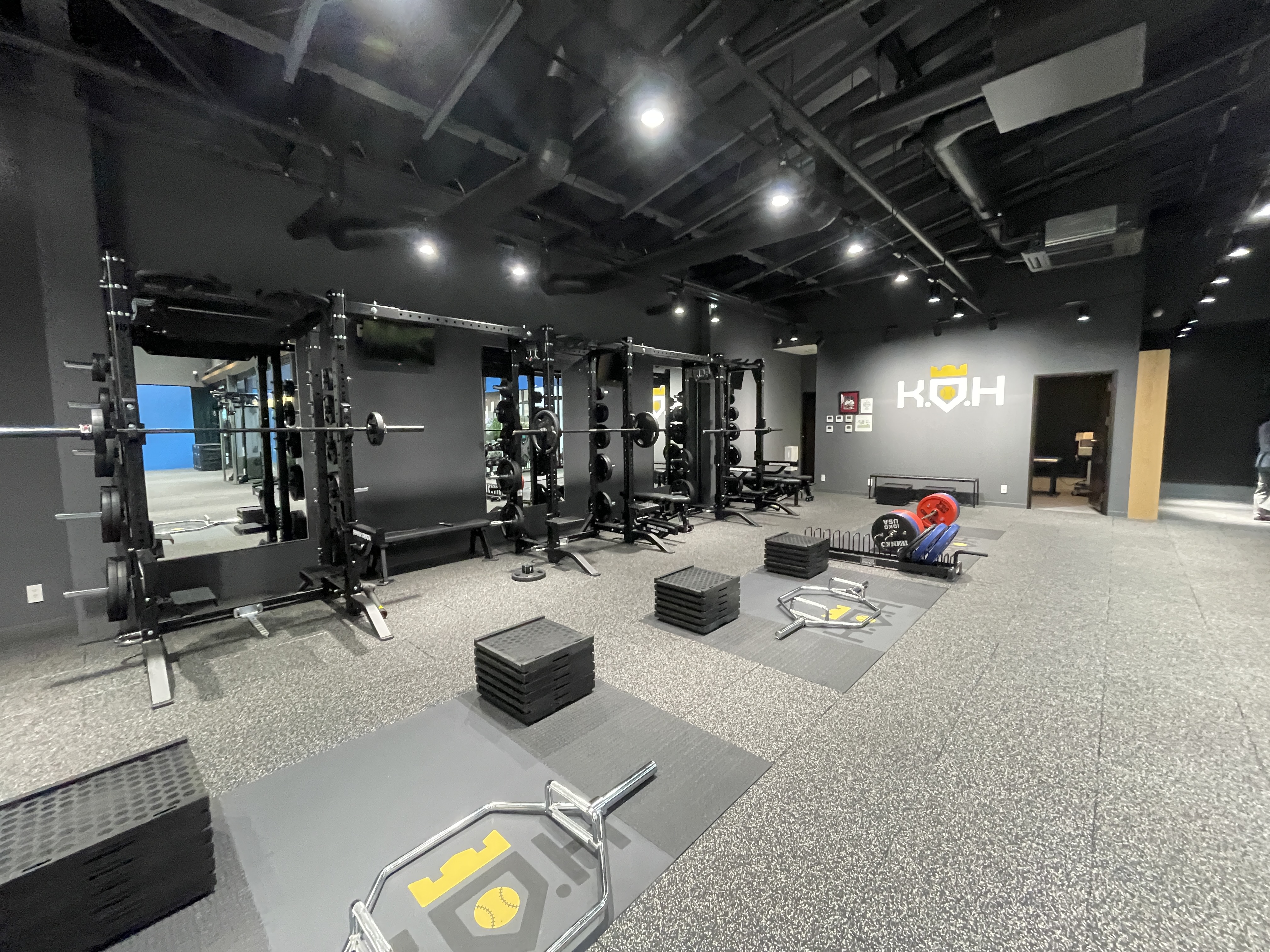
Kikuchi says the concept was inspired by the Toronto Blue Jays’ Spring Training complex in Florida, where he played from 2022-24. Spanning approximately 1,400 square meters, the facility feels like a Major League Spring Training clubhouse brought to Japan, blending both the hardware and software of MLB development culture. It is a place not only to build skills and physical strength, but also to learn how to think, analyze data, and grow independently—serving as a hub where Kikuchi passes on the knowledge and sensibilities he has gained while competing on the world’s biggest stage to the next generation.
While a blanket of white snow covered the fields outside, inside the climate-controlled training facility right-hander Kazuki Takahashi of the Gunma Diamond Pegasus (Independent League) was in the middle of a one-on-one bullpen session with a pitching coach. Following instructions on fastballs and breaking pitches, he delivered each pitch with care and intent.
A native of Hanamaki City -- a town located about 40 miles away -- Takahashi came up through Tohoku Fukushi University and continued his professional career in the independent leagues last season. Since the facility opened, he has been using its personalized training program, working closely with a pitching coach to reinforce fundamental movements and refine his mechanics.
“My first goal is to increase my velocity,” Takahashi said.
Under the direction of pitching coach Kohchiyama, Takahashi goes through his delivery one pitch at a time.
“Be aware of your arm slot."
“Your upper body is rising too early.”
Cameras positioned alongside the mound capture every pitch, with the footage instantly transmitted to Kohchiyama’s laptop.
After reviewing the throws, the coach points out key areas of focus on the screen. Takahashi responds with a brief “Yes,” then steps back onto the mound.
After throwing roughly 70 pitches, mixing fastballs and off-speed offerings, Kohchiyama dives deeper into motion-analysis images, explaining details such as arm usage, posture, and head angle. Takahashi watches the screen intently.
“Being able to see my pitching as data and on video makes my weaknesses very clear,” Takahashi said. “I can also look at the numbers of top-level players, which helps me understand where I currently stand.”
By visualizing his delivery through data and video—rather than relying solely on feel—Takahashi has been able to clearly identify areas for adjustment and apply those corrections directly to his pitching.
Following last offseason, Takahashi continues to train once a week during the winter, working in tandem with Kohchiyama to sharpen the precision of his mechanics. Incorporating feedback from K.O.H., he spends the rest of the week on his own, focusing on throwing sessions, weight training, and core work.
After more than 10 minutes of feedback, the session concludes with tube exercises designed to reinforce proper throwing movements.
“I’m now able to clearly understand both what went well and what didn’t in each session,” Takahashi said. “Even during the season, if my mechanics start to slip or something feels off, I think I can identify the cause on my own.”
Takahashi expressed confidence in the progress he has made through his training at K.O.H. This season with the Gunma Diamond Pegasus, he plans to take on a starting role. Chasing his ideal delivery, his goal is to stay in the rotation and steadily add wins throughout the year.
For players like Takahashi, who continue to grind within limited budgets, K.O.H. offers an ideal training base — one that provides both the hardware and the know-how of a Major League-caliber environment.
“As close to the Major Leagues as possible,” Kikuchi said. “That’s the level of equipment we wanted.”
State-of-the-art technology, along with experienced coaches and staff, has come together to help players take meaningful steps forward in their development.
Kikuchi himself has used the facility as his offseason training base for two consecutive years. Last year, it became a gathering point for several Japanese professional players, including his former Seibu Lions teammate Kona Takahashi. This offseason, the list expanded to include Shinnosuke Ogasawara of the Nationals, Bryan Balzer of the Padres organization, and Yuhi Nishidate of the Yomiuri Giants — all putting in work under the same roof.
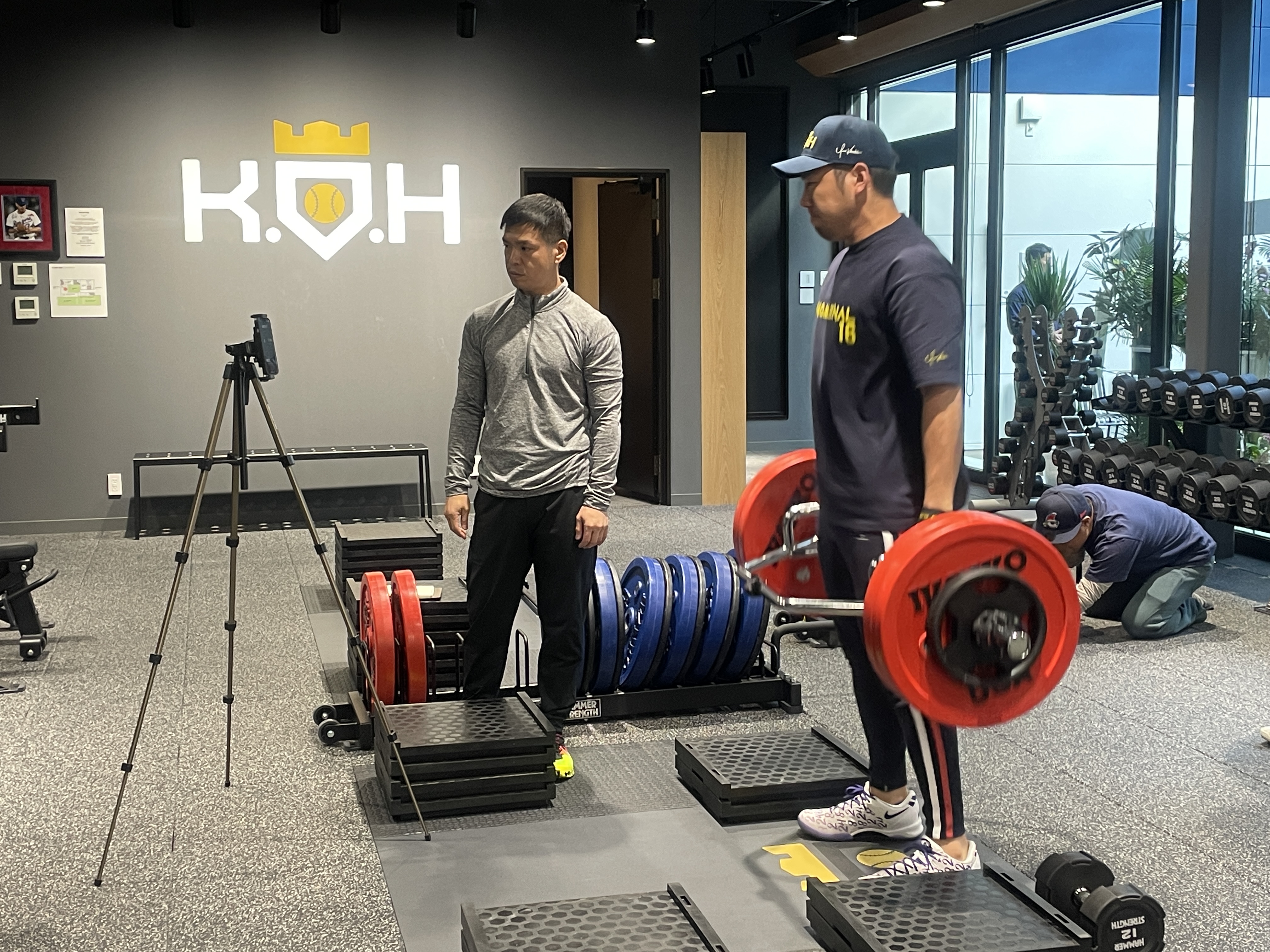
From kindergarteners and elementary school kids who dream of becoming Major Leaguers, to middle school players, professional athletes, and even independent league and corporate team players chasing a shot at the next level, K.O.H. welcomes them all, regardless of age or background.
“To be honest, I’m jealous of the kids who get to attend the K.O.H. baseball classes,” Takahashi said with a smile.
“They’re learning at such a young age, in an incredible facility, from top-level coaches. Even if they don’t fully realize it now, I’m sure what they’re being taught here will become a foundation for them later in life.”
He continued, “If players at that critical stage, such as 8th or 9th grade, are preparing for the next level, train here, their understanding of the game will deepen significantly. And for me, too, I want to make sure I apply what I’ve learned here to my own performance. That’s the best way I can show my appreciation to Yusei for creating such an amazing place.”
Now entering his eighth Major League season, Kikuchi has repeatedly stopped, reflected, and reexamined his own pitching over the years. His journey has been shaped not only by success, but by failure, doubt, and constant self-questioning — experiences that have all become part of his growth.
Today, that accumulated knowledge is being passed on to the next generation through K.O.H.
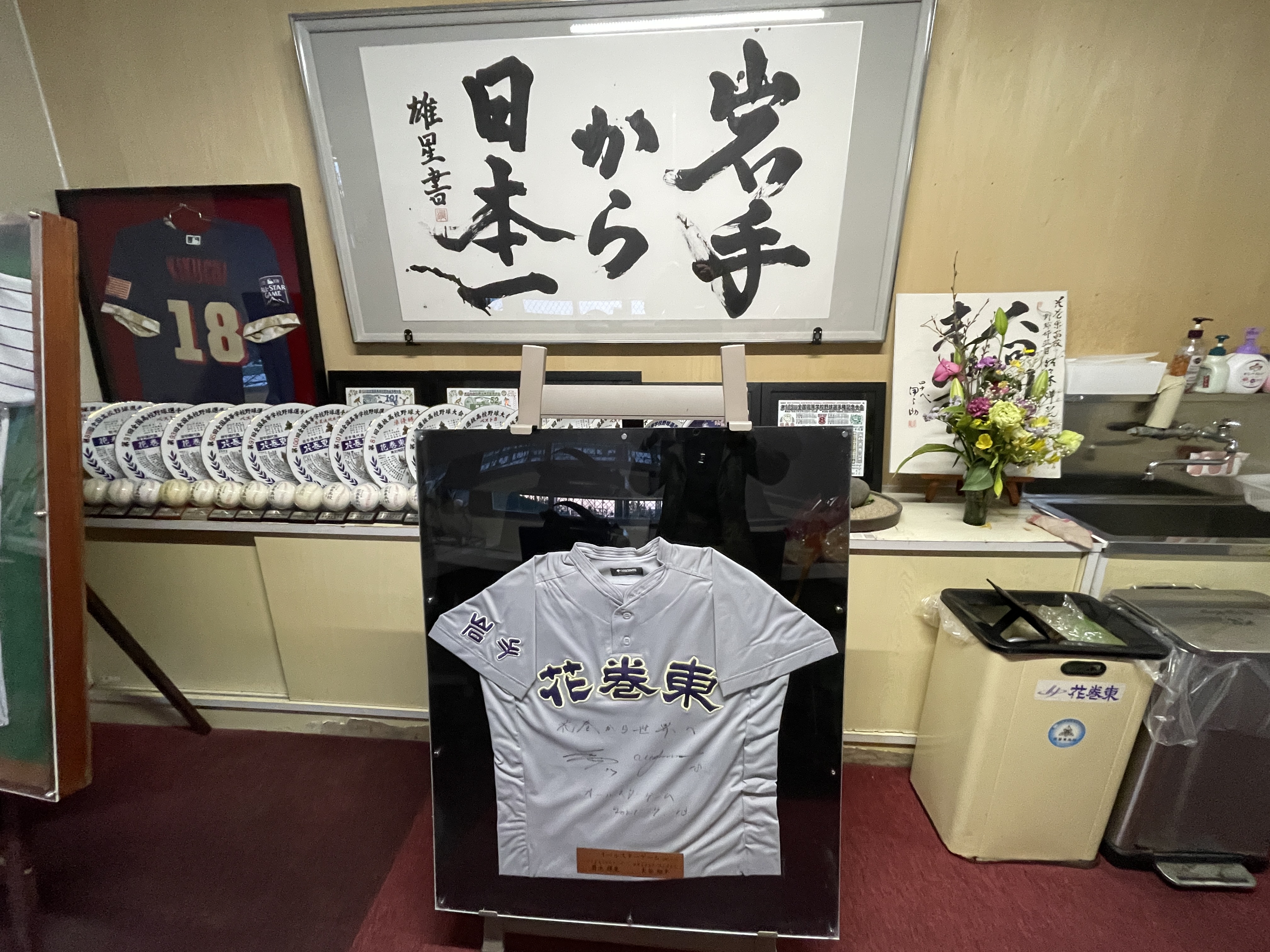
“Iwate to the top of Japan," Kikuchi said.
That was the phrase Kikuchi carried with him as a high school pitcher chasing his dreams. Now, by embodying “Iwate to the world,” he is doing everything he can to lift the next wave of players who share that same ambition.