

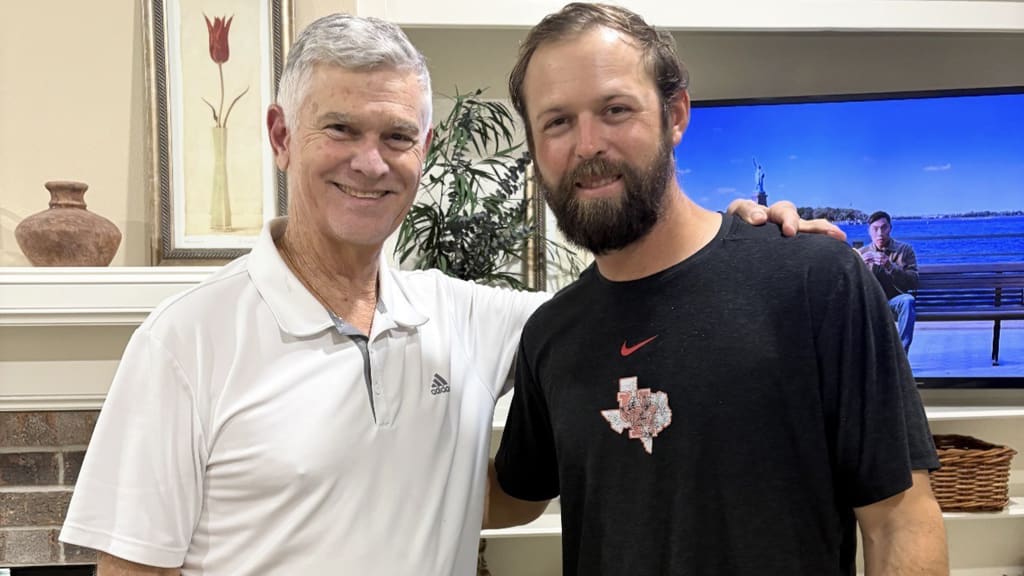
HOUSTON -- Dickie Thon never hesitated. He didn’t worry about the risks to his own health or how long it would take him to get back on his feet and return to his comfortable life as a retired ballplayer. The only thing that mattered was saving his son, who was battling kidney disease and was now in need of a life-saving transplant.
“It was a no-brainer,” he said. “I made up my mind.”
Thon, the former Astros star shortstop whose promising career was altered when he was struck in the face by a pitch in 1984, is recuperating in Puerto Rico -- where he grew up -- less than eight weeks after he donated one of his kidneys to his only son, Dickie Joe -- also known as Joe Thon.
Drafted by the Blue Jays in 2010 and signed to a $1.5 million contract to forgo a chance to play at Rice University -- then one of college baseball’s premier programs -- Joe Thon was diagnosed with kidney disease during a routine physical in Spring Training 2011. He had yet to play a professional game.
“I was used to being in pretty good physical shape before I signed, and then it kind of was taken away from me,” he said.
Joe Thon endured severe fatigue and managed to play seven seasons in the Minor Leagues, reaching Double-A. He eventually got into coaching with the Astros and was named the development coach at Single-A Fayetteville in 2021, then managed at Fayetteville in ‘22 and at Double-A Corpus Christi in 2023-24.
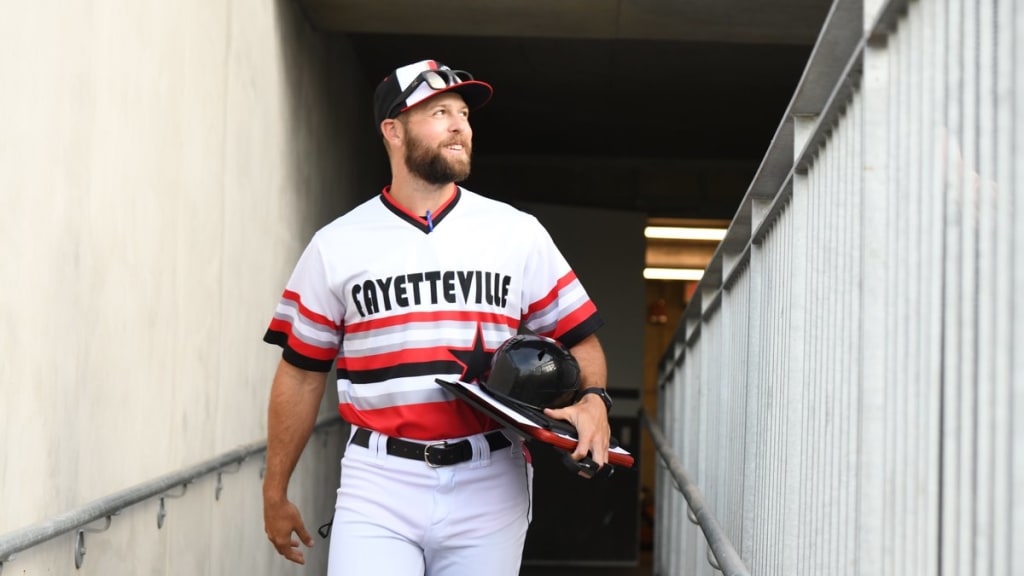
When the fatigue, headaches and nausea began to worsen in January 2025, he was put on kidney dialysis while working as the bench coach for the Dodgers’ Great Lakes High-A affiliate in Michigan, which is only 45 minutes away from his wife’s parents. That allowed his wife, Erika, and toddler son, Leon, to help him throughout the season.
“The most important thing was trying to get through therapy to the actual dialysis,” he said. “And after that, once I was stable, it was to try to get on the transplant list, and that's when I talked to my family and they all tried to donate.”
Everyone in Thon’s family, including his four sisters, were willing to test to see if they were viable candidates to donate a kidney. So was his father, who wound up being the best match. Dickie Thon agreed to donate his kidney to his only son.
“I didn’t even think about it,” he said. “I just feel like that I wanted to do it and I needed to do it. And he has a lot of potential, so, to me, it was very rewarding.”
Joe, 34, was a bit hesitant at first to take his father’s kidney, and for good reason. Dickie is 67 years old and healthy, but the idea of taking a kidney from his father made Joe uncomfortable. It took urging from his dad and doctors to convince him it was the right course of action.
“I didn’t want to put him in a tough spot, either,” Joe said. “But the doctors assured me that everything was good. It wouldn't really take too much of a toll physically, but you hate to put somebody in a spot like that. But it was best for me and my family, too. Dad was really adamant he wanted to do it.”
The transplant surgery was performed on Dec. 15, 2025, at Houston Methodist Hospital. Dickie went into the operating room first and was followed 20 minutes later by his son. There were no complications. Joe was released from the hospital five days later -- one day after his father.
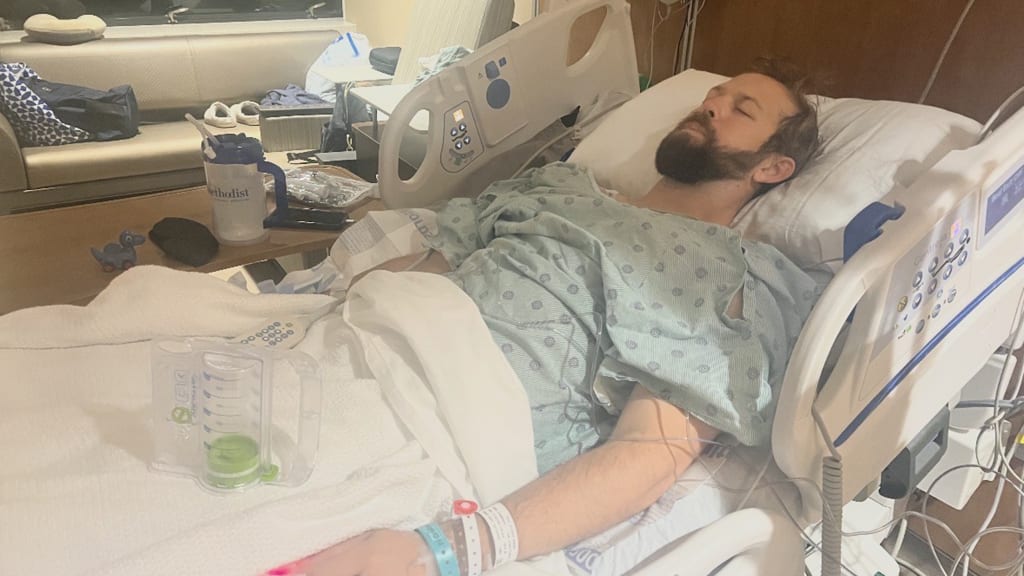
“They say the surgery is a bit tougher physically on the person donating than the person receiving, because the soreness is a bit more because you're taking the kidney away from your body,” Joe said. “So your body's kind of getting adjusted to that. He was sore for a little while.”
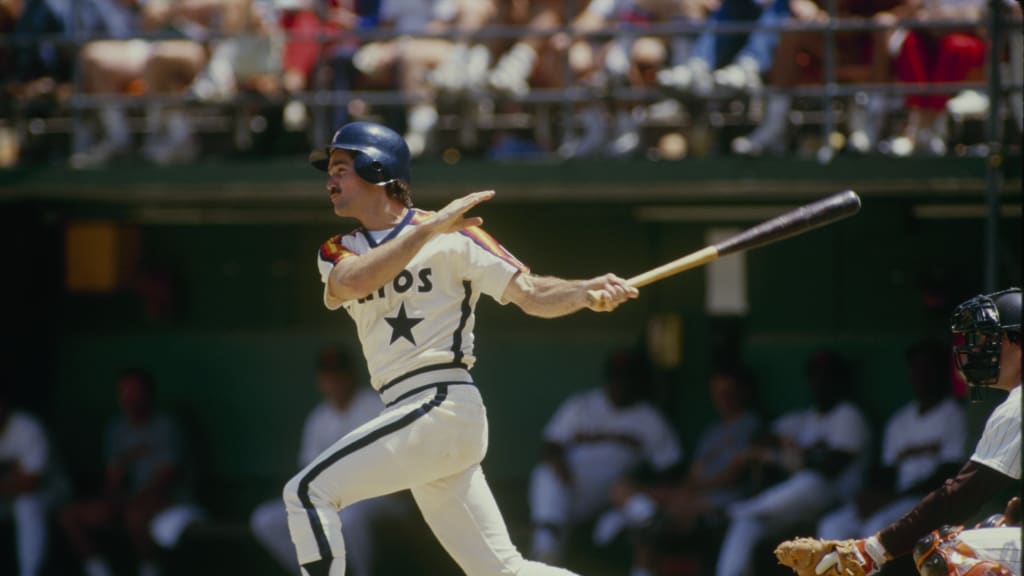
Dickie Thon is as tough as they come. An All-Star with the Astros in 1983 during a season in which he hit .286 with 20 homers, 79 RBIs and 34 steals, he was struck in the face by a pitch thrown by Mike Torrez of the Mets on April 8, 1984. The pitch broke the orbital bone around his eye and ended his season.
Thon had ongoing problems with depth perception and never was the same, though he played nine more years before retiring in 1993. He remained active in baseball after playing but wanted to put his family first. He still does.
“I'm very glad I was able to help him,” he said. “I had a good life and I'm not afraid of whatever happens.”
Joe Thon was himself on the verge of a promising career in the spring of 2011. He was profiled as a solid defender with an above-average arm who showed potential to be as good with the bat as his father. He was having trouble breathing that spring and a routine physical performed at the start of camp showed fluid around his heart and lungs. More tests followed, and Thon was diagnosed with kidney disease.
“I had to find different strategies and different ways be able to play, because I was a little scared that my opportunity to play professionally was going to be taken away,” he said. “I really wanted to make the most of it. ... I was pretty proud of what I was able to do.”
Joe Thon was put on medications to manage his kidney function, which began worsening during his second year managing in Corpus Christi in ’24. That season, he was put on peritoneal dialysis.
“It was nine hours a night with the machine and the solution to be able to work the next day and take the machine on the road,” he said. “It was very convenient to have that type of dialysis because hemodialysis, which I ended up getting on before the surgery, is taxing. You have to go in-session, so [peritoneal dialysis] allowed me to at least keep working.”
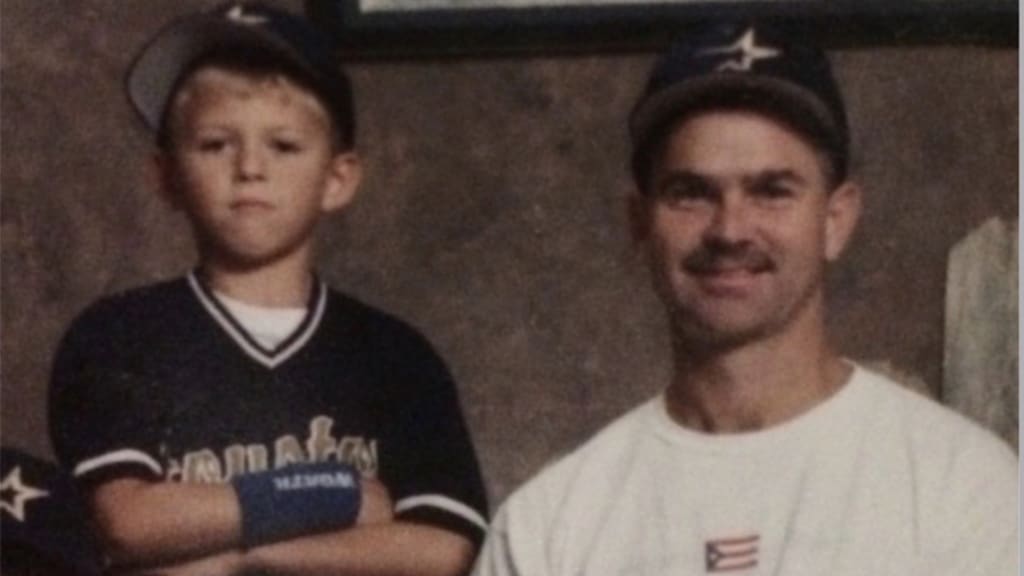
Despite suffering an orbital stroke in November 2024 that cost him his vision in his right eye, Joe Thon hasn’t slowed down. He plans to join the staff at the Dodgers’ Triple-A affiliate in Oklahoma City when the regular season begins this spring. His doctors say he won’t feel back to normal until one year post-surgery. Right now, his biggest risks are infections and viruses, which could lead to rejection of the kidney.
He’ll be on immunosuppressants for the rest of his life, but he has a full life ahead.
Thanks to his father.
"I don’t really think about goals anymore as a coach," Joe said. "I played too much in that pretense of thinking about goals and getting to the big leagues, and I think I consumed too much of myself trying to reach for a goal rather than trying to figure out the responsibilities of today and prepare for today. ... I had a couple of episodes [where] I didn't think I was going to make it. Right now, I’m trying to focus on my family, my players, my team, my staff, and try to help them as much as possible. You focus on that because you don’t know how long things will last.”