
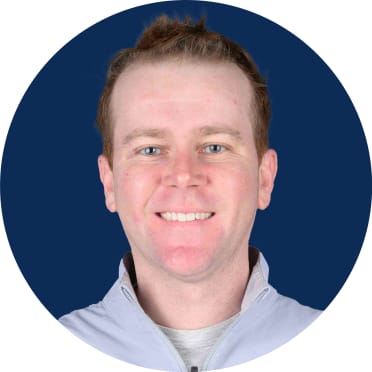
PEORIA, Ariz. -- Mitch Garver is returning to the Mariners, but his role is far from solidified.
The veteran catcher and designated hitter was slated to report to the Peoria Sports Complex on Thursday to undergo a physical, after which his Minor League contract would become official -- and with it, the chance to play his way onto the team as Cal Raleigh’s backup.
A source told MLB.com that Garver will earn $2.25 million if he’s added to Seattle’s active roster at any point in 2026 -- be it for just one day or the entire season.
The Mariners had been seeking catching depth all offseason, and they arrived in Arizona with a restocked group after seeing Garver depart via free agency and trading Harry Ford to the Nationals for Jose A. Ferrer. Reinserting Garver bolsters that mix, but it also makes for more complex decisions.
The position battle
Barring injury, this boils down to Garver and veteran Andrew Knizner, who signed a one-year, $1 million Major League contract on Dec. 16.
Presuming that Raleigh will be in the lineup every day -- at catcher or DH -- it could boil down to who the Mariners prefer starting against lefties. Garver had a .718 OPS last season against southpaws, but his longer track record is much better, with a career .832 OPS. Knizner’s was .680 and .513 for 2025 and his career, respectively.
Knizner has a leg up defensively, but only slightly, as both ranked below-average by most advanced metrics last season.
Framing: -2 | 1
Blocks above average: -2 | -3
Caught-stealing above average: -3 | 0
Pop time: 2.04 seconds | 2.00
There’s also the reality that Garver is the familiar face, knows the pitching staff and settled into the backup catcher role nicely from 2024-25.
Can they both make the team? The Mariners carried three catchers from when rosters expanded on Sept. 1 through the postseason after they truncated back to 26 players. Ford, a Top 100 prospect per MLB Pipeline, was the addition, but he had just nine plate appearances over that seven-week stretch.
Moreover, three backstops doesn’t seem feasible given Seattle’s 2026 roster construction and planned platoons for right field and DH.
The money involved
Knizner’s contract is already guaranteed, and he’s out of Minor League options, meaning he can decline an outright assignment to Triple-A Tacoma and still cash out. It’s not a large sum for the Mariners to eat, but it would be pretty confounding to do so by Opening Day.
Garver’s money is not yet guaranteed, and it’s a far more palatable amount for the role he’s fulfilled for the past season and a half since being demoted from the full-time DH role after the 2024 Trade Deadline. Back then, he was on a two-year, $24 million contract and the headlining addition of Seattle’s 2023-24 offseason. His return in '26 is under a much different context.
Another component is that Garver’s veteran status gives him opt-outs to his Minors deal -- on March 21, May 1 and June 1 -- meaning the Mariners could have to make a decision on him by Opening Day or risk losing him to another team.
The Minor League depth
Jhonny Pereda is also in the mix, acquired from the Twins for cash considerations on Jan. 27. But he has a Minor League option remaining and, as such, the roster flexibility to begin the year at Tacoma.
The same goes for Brian O’Keefe, who rejoined the organization after spending the last two seasons in the Royals’ system. Nick Raposo, a 40-man roster player at one point in the 2024-25 offseason, returns after spending all of last season at Double-A Arkansas. Also in camp are Josh Caron, Connor Charping, Jakson Reetz and Luke Stevenson, their Competitive Balance Round A pick in last year’s MLB Draft, at No. 35 overall.
The prospect to keep tabs on
Stevenson is the one to watch longer term, and his upside played a significant part in the Mariners’ willingness to part ways with Ford, their first-round pick in 2021 and a long-heralded face of the farm system.
After the Draft, Stevenson accumulated 100 plate appearances at Single-A Modesto, over which he had an .860 OPS. But more encouraging, in the Mariners’ eyes, was that he had just a 19% K rate which was much lower than anticipated given some of the swing-and-miss he exhibited in college.
At 21 years old, he’s more seasoned than Ford, and he oversaw a pitching staff at the University of North Carolina for two seasons. Stevenson is Seattle’s No. 8 prospect per Pipeline.