
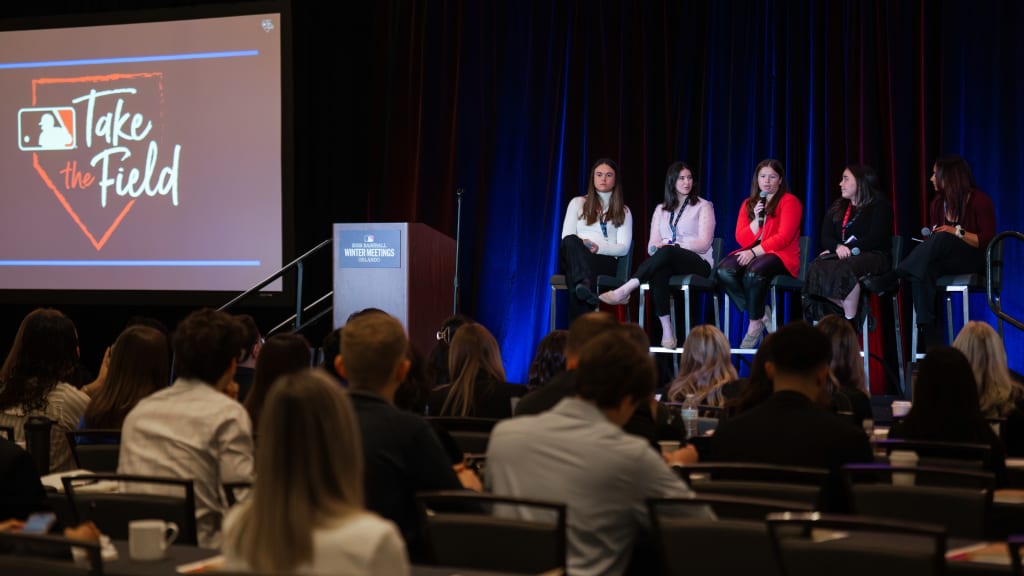
ORLANDO -- Major League Baseball’s Take the Field program kicked off on Saturday morning in the most fitting way possible: with a five-person alumni panel.
Take the Field, a two-day program created in 2018 and held during the annual Winter Meetings, is aimed toward those interested in pursuing baseball operations, front office or on-field careers.
The program provides opportunities for education and engagement through breakout sessions, speaker panels and professional development facilitated by industry leaders from all 30 Major League clubs and the league office.
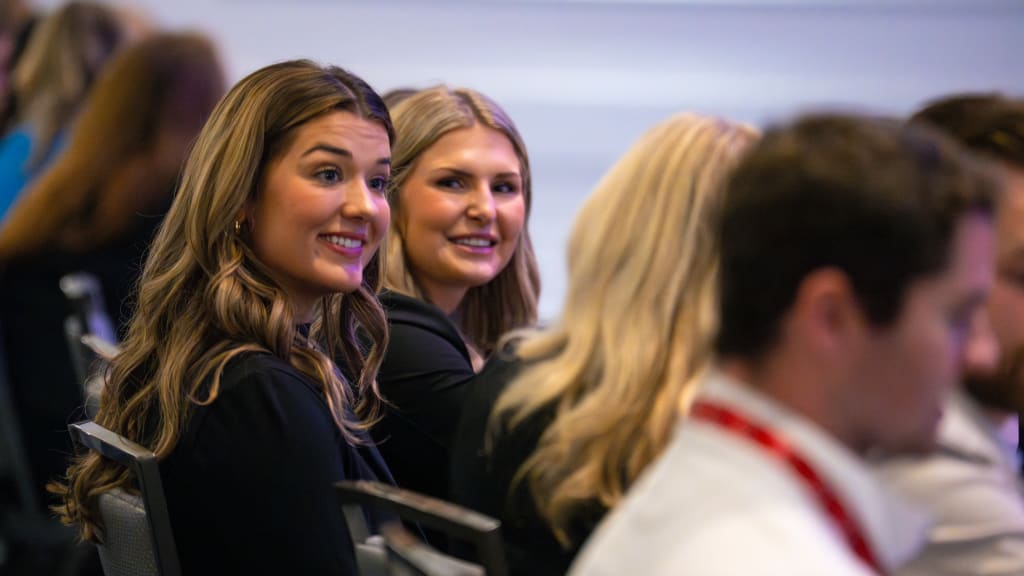
This year marks the biggest Take the Field yet, with more than 130 attendees chosen from over 800 applications. Seeing this sort of evolution is gratifying to Julia Hernandez, MLB’s coordinator of on-field operations.
“Being able to watch this event grow from its inception when I was in the seats that some of our participants are in now, all the way to now, when we are getting close to three times the size of it in terms of participants and club representation,” Hernandez said. “We have all 30 clubs here represented in some way, shape or form. That really shows how important this is to the industry as a whole, and how clubs see this as a value to themselves, to try and find their next person that they want to bring in and develop.”
Take the Field offers participants opportunities to learn from current baseball employees, develop in their areas of interest and network with peers and other industry professionals. Sessions cover all the bases: analytics, baseball operations, coaching, player development, research and development, scouting, technology and umpiring.
While MLB selects participants based on their readiness for job opportunities such as internships, fellowships and entry-level full-time positions, existing experience isn’t the be-all and end-all. Take the Field also holds resume reviews, mock interviews and networking.
Michael Hill, MLB’s senior vice president of on-field operations and workforce development, has worked in the game for decades. In his speech, he emphasized that these types of early career events didn’t exist when he was trying to break into the industry. Giving back is something Hill takes pride in being part of now.
“No matter how you approach it, everyone's just looking for whatever that competitive edge is to be successful,” Hill said. “And hopefully, over these next two days, we'll be able to give our applicants a little taste, a look behind the curtain, so that hopefully they can pursue their dreams in the game.”
Hill then introduced friend and keynote speaker Chanda Lawdermilk, vice president and assistant general manager with the Rays, to detail her circuitous journey. Lawdermilk, who started as an unpaid intern giving tours at the then-new Astros ballpark in the early 2000s, at one point worked at a call center before rejoining the Astros.
Lawdermilk later shared three themes that stood out when she polled some of her colleagues from various organizations about working in baseball: the importance of resilience, being open to opportunities not on one’s vision board and selflessness.
“I think as humans, it's very easy to put the goal outside of it and just work towards it like blinders on,” Lawdermilk said. “‘I'm going to do this. I'm going to be this.’ But even my story, like being in the HR department, it was not something that was on the bingo card at all. But had I not done that, I would not be able to do the things I get to do today.”
That was a sentiment echoed by all five panelists: Amanda Taylor (Braves, assistant in Minor League operations), Hailey Leviton (Twins, assistant director of baseball operations), Rachel Neugart (Mets, Dominican Republic assistant field coordinator), Emma Segerman (MLB, international operations coordinator) and Micaela Abbatine (Pirates, amateur scouting coordinator). Each had attended Take the Field for multiple years.
The panelists covered topics ranging from why they chose a career in baseball to what separates employees: authenticity, hard work, attention to detail, curiosity and open-mindedness. They also took questions ranging from how to reset from the daily grind to the importance of player evaluation.
“My best piece of advice would be just to be present,” Taylor said. “I think so often when we're job seeking, when you have internships or thinking about ‘what's next, what's next,’ it's really hard to be present. I'm definitely guilty of that. … There's a lot of knowledge in this room. There's a lot of really awesome people here. So just be present. Enjoy this. Take all your notes. Listen closely, ask the questions you want to ask.”