

The name was always there, but the meaning didn’t automatically reach all of the tenants of the building.
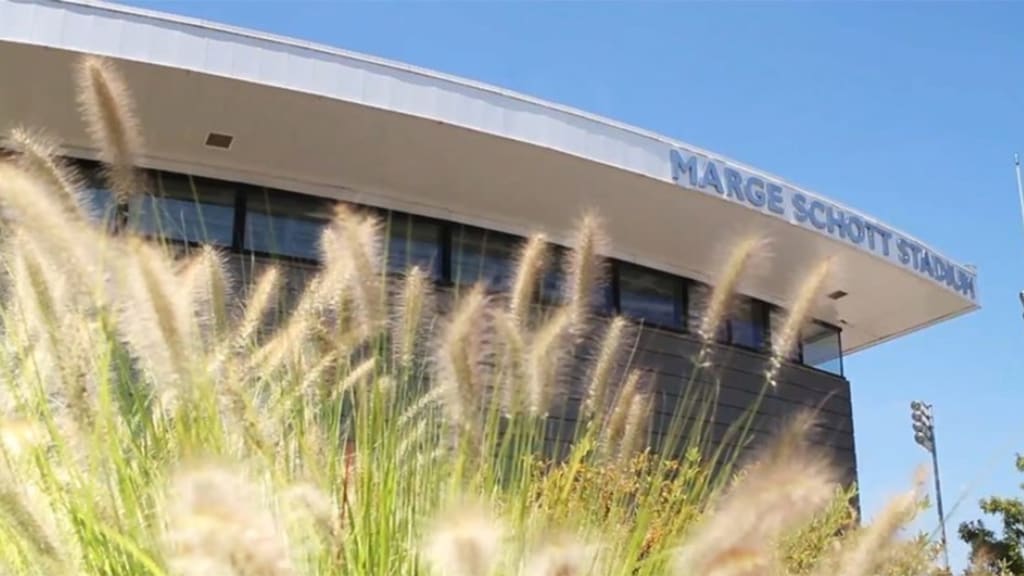
Anyone who has played baseball for the University of Cincinnati in the past 14 years has played in only one ballpark on the Clifton campus: Marge Schott Stadium, named after the late former Reds owner. Schott, who was born and raised in the Queen City, has a complicated legacy there, one exacerbated by her history of bigotry that resulted in her ouster from Major League Baseball more than two decades ago.
Some UC baseball players knew of Schott’s past; others are just learning about it now. But today, most of them share one commonality: They’d like her name to be removed from the stadium.
“With everything going on in the world, it's a good time to reflect and really look at, ‘What are we allowing? What are we allowing?'” former UC outfielder Jordan Ramey said. “You can put your foot down and say, 'We're not going to allow it anymore.'”
Ramey, an African-American who last played for UC in 2018 and earned his degree in December, knew of Schott’s controversial past. It’s one that is peppered with confirmed accusations of racism and bigotry directed toward people of varied races and religions. Ramey was bothered by it, but also was conflicted, feeling that maybe his devotion to his team, and his appreciation of the chance to play college ball and earn a diploma, should take precedent over speaking out about his misgivings about the stadium’s namesake.
Times are different now. The death of George Floyd, an African-American man who was killed by a white police officer in Minneapolis on May 25, has sparked a worldwide reckoning. More are speaking out about racism. More are demanding a call for change.
Including Ramey.
“People feel strongly about this,” Ramey said. “As the country is now, the state that it's in, we're all raising our standards of what we're allowing.”
Ramey started a petition on change.org titled “Change the name of the University of Cincinnati’s Marge Schott Stadium.” As of Thursday afternoon, more than 8,600 had signed it.
Support for the petition has been far-reaching. It filtered to several well-known Bearcats baseball alumni, including two Major Leaguers: Josh Harrison, who reached stardom with the Pirates in the last decade, and retired Red Sox first baseman Kevin Youkilis, whose support of the movement helped Ramey’s petition reach areas beyond Cincinnati.
“It was powerful to see that the players did the research into who Marge Schott was and the issue she had when suspended by MLB,” Youkilis said in an interview with MLB.com. “I was happy to see that this became a topic since I had my own issues with the name for years. These issues were discussed behind closed doors, and I was vocal in my disliking of the name.”
The origin of UC’s baseball field being named Marge Schott Stadium traces back to 2005, when UC accepted a $2 million gift from the Marge & Charles J. Schott Foundation. The university was building Varsity Village, a $100 million project that upgraded UC’s athletic facilities. Part of the renovation was the construction of a new 3,085-seat baseball stadium.
The ballpark opened at the end of the 2004 season. Toward the end of '05, Bob Goin, UC’s athletic director at the time, announced the stadium would be renamed Marge Schott Stadium, beginning the next season.
That decision came with public relations risks. Schott, who owned the Reds from 1984-99, was forced to sell the franchise in the wake of several controversies that escalated over time.
She was found to have used slurs toward African-Americans, Jewish people and people of Japanese ancestry. She also made statements in support of the Nazi party, which resulted in a two-year suspension from 1996-98.
Schott died in 2004, at the age of 75. Sixteen years later, Bearcats ballplayers are questioning why their ballpark is named after her. And they’re asking for change.
One of those players is Nathan Moore, a senior pitcher and captain of the team who will begin graduate school at UC in the fall. He didn’t know a lot about Schott prior to seeing Ramey’s petition. Moore starting doing some digging online, and he quickly learned of Schott’s past.
"There were a million questions in my head -- why would we commemorate our field after somebody like that?” Moore said. “That was my main question. But I didn't want to focus on it too much, just because it had already happened. I can't change it now. The main thing I can do is bring change to it now, but not be upset about what happened in the past."
Moore posted an impassioned note on his Twitter, asking people to sign Ramey’s petition.
“As a young black man and student-athlete, I simply cannot understand why our great university would not address the removal of this hurtful and offensive commemoration of racism," Moore wrote.
Youkilis, who is Jewish, retweeted Moore’s note and shared some of his own experiences. Youkilis said he was once approached by the university and asked to donate to the baseball program, and in exchange, the stadium would be renamed "Kevin Youkilis Field at Marge Schott Stadium."
Youkilis’ dad explained to him why he should not accept the proposal. Youkilis relayed his dad’s words in his recent Twitter post:
“Kevin, that is a tremendous honor that they would think of doing this. The only problem is that our family name will never coexist with that other individual. I will never let our family name be next to someone that was filled with such hatred of our Jewish community.”
Youkilis declined UC’s proposal, choosing instead to donate scholarships to help the baseball program, in the full amount allowed by the NCAA.
Awareness of Schott’s history of bigotry is not new; what has changed is the comfort level of young people -- and, specifically, student-athletes -- to denounce it.
Moore said after he posted his note on social media, he heard from UC athletics director John Cunningham, who praised Moore for taking a leadership position and “using my voice to say something.” Cunningham released a statement on Monday acknowledging the players’ desire to see Schott’s name removed from the stadium.
“We appreciate the willingness of our current and former student-athletes to have tough conversations and express their feelings about the name of our baseball stadium,” Cunningham wrote.
Moore hopes the next step will be action.
"I would like to see the board of trustees of the university get together and meet and talk about the issue. Not even talk about it -- just decide a plan of action for it,” he said. “It's something I feel like it's super easy to address and to change. It would also give a chance for the school to come out and fix something like that. I just really hope they realize it's much bigger than a namesake thing."