

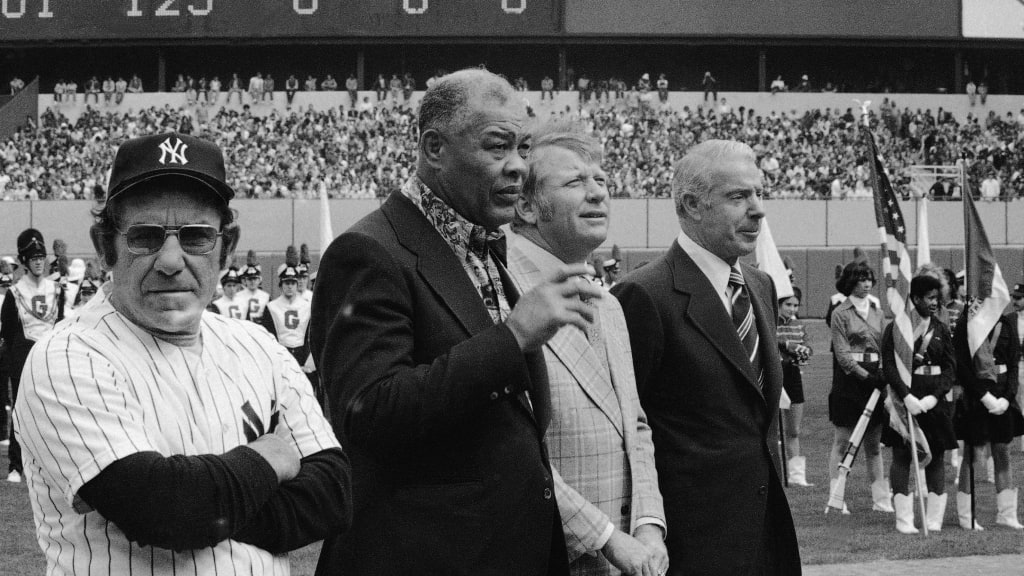
NEW YORK -- Joe DiMaggio leaned against a railing, neatly clad in a sport coat, blue shirt and tie, overlooking what had once been his office: center field at the original Yankee Stadium.
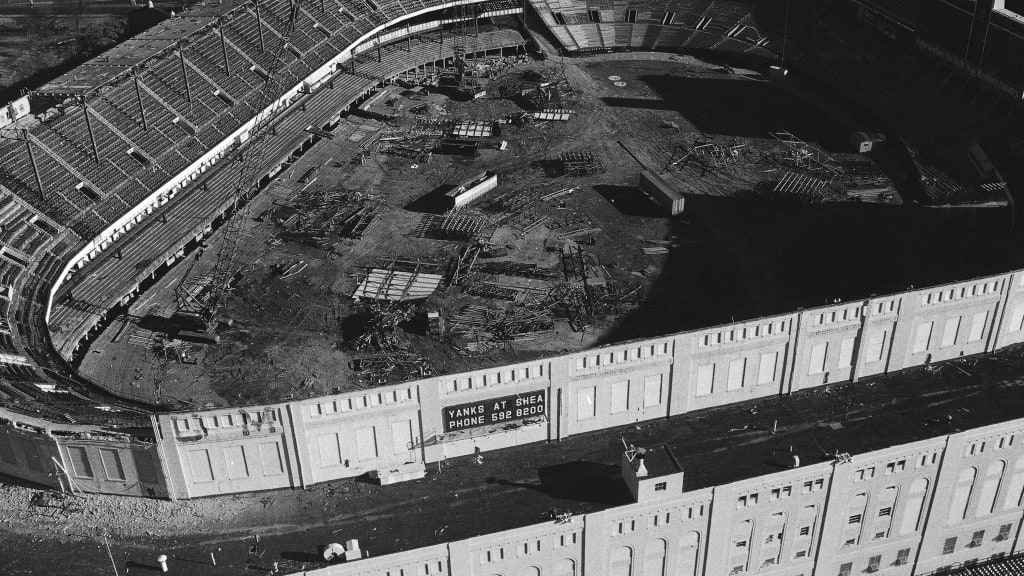
It hardly looked like a ballpark on that afternoon in 1974. The field was torn to bits with heavy machinery parked where the great DiMaggio had once glided toward fly balls, a massive reconstruction swallowing the Stadium whole.
“I remember the first day I came here. It took my breath away,” DiMaggio would say. “Do I remember what I did the first day I played? I sure do. We played the St. Louis Browns, and I got three hits.”
For two years, memories were all the big ballpark in the Bronx had left. While the Stadium was dismantled and reimagined, the Yankees played their home games across town at Shea Stadium, waiting for the return of “The House that Ruth Built.”
The wait ended on April 15, 1976, when Yankee Stadium II reopened following a reported $100 million renovation, more than half of it spent on improving the surrounding neighborhood and connecting roads. The investment proved worthwhile.
An enthusiastic crowd of 52,613 welcomed the team home from its season-opening journey to Milwaukee and Baltimore. Hours before first pitch, workers were still busy with paint brushes and hammers, racing to finish a ballpark that already felt alive again.
“I’m excited for the kids,” Yankees principal owner George M. Steinbrenner said that day. “It’s the end of a two-year road trip.”
The pregame ceremonies leaned heavily into history. Bob Shawkey, the starting pitcher for the Stadium’s first game in 1923, threw out the ceremonial first pitch. DiMaggio was joined by Mickey Mantle, Whitey Ford, Don Larsen and Yogi Berra, plus all the living members of the ’23 Yankees.
Robert Merrill performed the national anthem, and as he observed the festivities from the dugout, Mantle seemed to be itching for another at-bat.
“I notice that center-field fence isn’t as far out as it used to be,” Mantle told United Press International. “I’d have liked to have that 417-foot fence they got out there now to shoot at, instead of 471 feet the way it was.”

The Twins were on the visitors’ side, less interested in nostalgia. They nearly spoiled the fun, putting up a three-run first inning that sealed Dan Ford’s place as the first player to homer in the remodeled facility, belting a two-run shot to left-center field off Rudy May’s fifth pitch of the afternoon.
Nearly three decades earlier, a dying Babe Ruth had leaned on a bat borrowed from Cleveland’s Bob Feller and remarked, “I’m proud to have hit the first one in this park. Lord knows who’ll hit the last.”
In time, the answer would become José Molina, who went deep on the Stadium’s final day in September 2008. But following that first game in ‘76, Ruth and a Minnesota outfielder nicknamed “Disco Dan” stood shoulder to shoulder.
“There really wasn’t that much of a fuss made about that home run in the Stadium,” Ford told Herb Rogoff years later. “I knew about it, and it was talked about, but now I hear about it all the time.”
Down four runs early, the Yanks surged back with 11 unanswered runs -- a glimpse of the offense that would carry Billy Martin’s club to 97 wins and the franchise’s first pennant since 1964.
A four-run fourth inning featured run-scoring hits from Oscar Gamble, Willie Randolph, Lou Piniella and Otto Velez. A six-run eighth helped put the game away, and Dick Tidrow picked up the win in relief.
In the next day’s New York Daily News, Phil Pepe cracked: “Perhaps they will bring him back to throw out the first ball after they have remodeled Yankee Stadium II into Yankee Stadium III in the Year 2026 at a cost of several billion.”
Pepe’s date was off. The dollars were correct.
Beyond the game itself, the ballpark was the real star. Fans raved, with these reactions captured by the Daily News: “Enthralling.” “A sure winner.” “A grand slam hit.” “Four stars.”
Elston Howard, who first walked into Yankee Stadium in 1955, admitted that he got lost on his way to the clubhouse.
“The most important part,” Howard said, “is we’re back home again. Playing at Shea the last two years didn’t give us a home-field edge. We had to share a locker room with the Jets.”
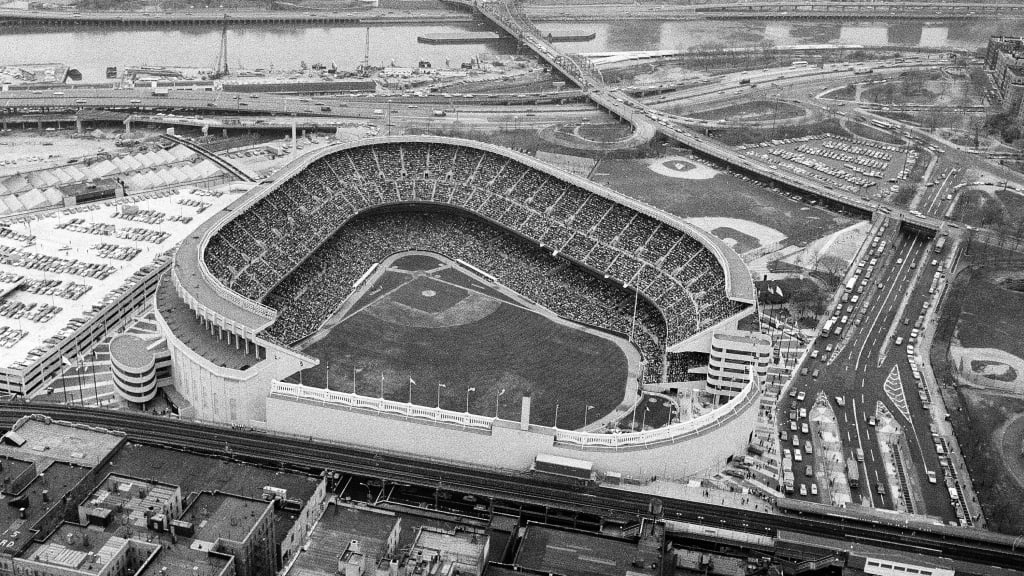
Architecturally, the changes were dramatic. By cantilevering the upper decks and lowering the playing field while increasing the slope of the stands, sight lines were vastly improved. Steel support columns were removed, while wider plastic seats replaced wooden ones.
Outside, three escalator towers rose at the entrances, along with a 138-foot Louisville Slugger-shaped smokestack. Known simply as “The Bat,” it became a favored meeting place near the home-plate entrance and still stands today.
As DiMaggio stood in the dugout that day, surveying the transformed field, he shook his head in quiet appreciation.
“Last time I was here was more than a year ago,” he told UPI’s Milton Richman. “It was a shambles then. They sure did a lot of work on it since then.”