
This story was from Thomas Harding’s Rockies Beat newsletter. To read the full newsletter, click here. And subscribe to get it regularly in your inbox.
DENVER -- This much is known as the Rockies seek new baseball leadership: They are going to be different.
In falling into the disrepair of a club-record seven straight losing seasons -- including three straight of 100-plus losses and a 43-119 record that was tied with the 2003 Tigers for the third worst in the Modern Era -- the Rockies operated in much the same way as they had since early expansion success. Last week’s departure of general manager Bill Schmidt was the first signal that the Rockies are ready for change.
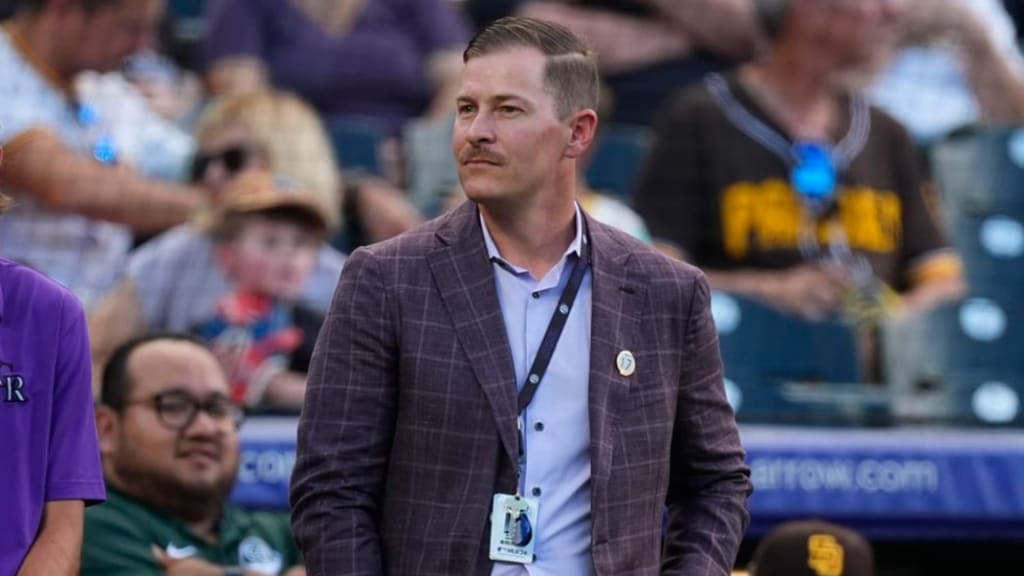
“We're looking for someone that can come in here, put their eyes on our operation, compare it to operations that have been successful elsewhere around Major League Baseball and help us architect an operation that can reinvent the way we go about things in order to narrow the gap,” said Walker Monfort, who will take over as executive vice president in January but is operating as a key figure in the search for a new baseball operations leader.
Walker Monfort’s promotion from vice president of corporate partnerships was announced in June. He spent the remainder of the season completing those duties but also learning business-side aspects of his new role from outgoing club president Greg Feasel and studying the baseball side.
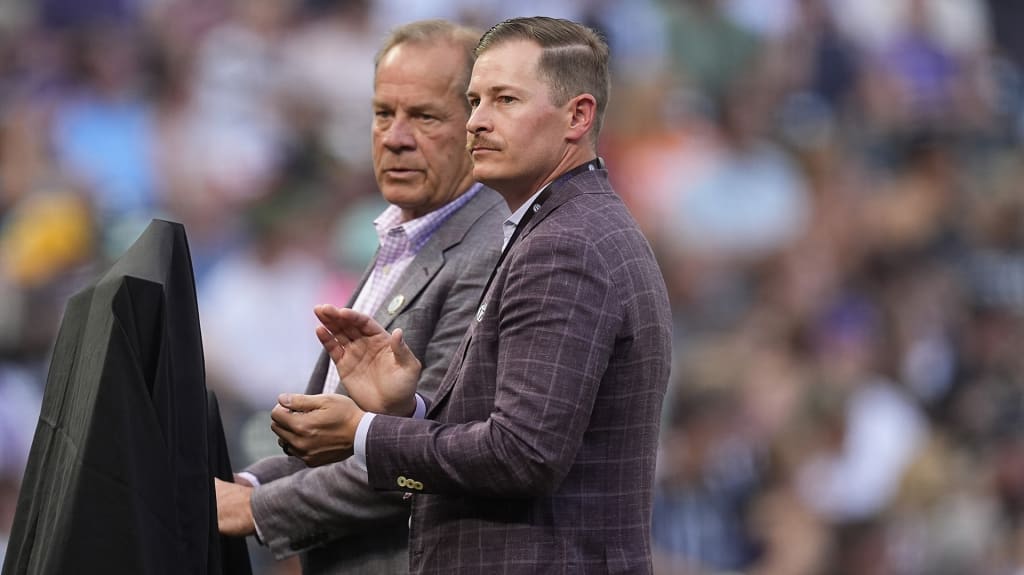
Monfort and his father -- club owner, president and CEO Dick Monfort -- are planning the search for new baseball operations leadership. The new hire will be tasked with reshaping how the Rockies operate on the field, how the roster is built and how players are developed.
Walker Monfort did not identify possible candidates, since the search has not begun. Anyone under contract to another club would have to be granted permission to interview, so the Rockies are preparing internally for the interview process. Contract and roster decisions begin coming due after the World Series, and the MLB General Managers meetings are set for Nov. 10-13 in Las Vegas. Monfort said he is aware of those dates, but what’s important is making a sound decision.
What will be different about the Rockies?
Through much of the Rockies’ history, their most successful rosters have been populated with players who came to Colorado as amateurs. But this system also has seen long gaps in competitive records, including the current run.
The Rockies' active roster on the final day of the season had an average age of 25.9 years -- and that is with six players 30 or older.
Several small-to-mid-market teams have made shrewd moves to acquire either talented youth to augment their farm systems or economical players with valuable experience. Monfort expressed as much when his promotion was announced in June.
“I’ve talked about doing a deep dive into what we’re doing and how we’re currently allocating our resources,” Monfort said in June. “Part of what we’re talking about here is looking at clubs. Milwaukee is an example. Cleveland is an example. Arizona is an example, Minnesota -- similar market size teams that have had recent success. We need to look at what they’re doing that may be different from us.”
This week, Monfort said the interview process -- which is expected to target officials from teams that have won without spending big on free agents or acquiring big contracts -- will give the Rockies more information on new approaches. The leader will be tasked with executing a plan.
“It starts with who we hire,” Monfort said. “We’ve got to have extensive understanding of what their thoughts are, how they want to go about things, what their vision is for the Colorado Rockies.
“Ultimately, we’re open to understanding that. As we need to move forward, we’re looking at ways that we can get better, and that person’s taking the lead on it. The unique situation that we’re in is we have the ability to go outside the organization and, through this new hire, garner some best practices that can be replicated here.”
What does all this mean?
Monfort said much of this will hinge on ideas of the new leadership, be it one person or a small team that operates under the supervision of Dick and Walker Monfort. The key, Walker said, is that the Monforts plan to trust their hire to foster change.
The focus is on putting leadership in place before making decisions on staff, such as the team’s manager. Warren Schaeffer was promoted from third-base coach to interim manager after the club relieved Bud Black of his duties on May 11. Schaeffer received positive reviews from players.
From conversations with various Rockies baseball officials since the end of the regular season, some principles have emerged:
• No matter who is in charge, an unending factor is the reluctance of big-name pitchers to sign with Colorado during their prime years, and the inflated cost that anyone who would entertain the club would demand. Efforts to develop pitching will continue but will need new eyes.
New baseball leadership will be tasked with finding innovative ways to develop pitchers who are either drafted and signed or acquired from other clubs. The Rockies need a refresh after 2025 starters posted a 6.65 ERA -- the highest in MLB since ERA became an official stat in 1913.
• In an issue related to pitching -- but just as much to every area of the club at every level -- new leadership will be charged with helping the Rockies catch up with other clubs (especially successful small-to-mid-market clubs) in gathering and using information.
The team has made small increases in the number of employees in one of the game’s smallest analytics groups. The opening of a performance lab in Scottsdale, Ariz., before the 2024 season has helped, and the team has made steps in the use of biomechanics as a tool to help players. But information-gathering for the Major League clubs and all of the affiliates lags behind others, as do staffing levels in game-planning, coaching and information-gathering.
• Are there innovative ways of scouting, whether for the Draft or to acquire players from other organizations? Can the Rockies develop ideas of what works for them and find those players economically?