

Baseball is the national pastime for a reason, and each pocket of the country has its own unique connection to the sport. To celebrate the 250th anniversary of this nation, we’re taking you on a summer road trip across the U.S. with Baseball in America, presented by Booking.com, 50 stories from all 50 states. Follow along here.
When Jen Pawol stepped onto the field in her all-black uniform in August of 2025, she became the first woman to umpire a Major League Baseball game. She will always hold that distinction as a trailblazer, but Pawol’s path can be traced all the way back to 1904, when a young woman named Amanda Clement made history in her own right.
Clement, born in 1888 in the territory that one year later would be ratified as the state of South Dakota, was just 16 years old when she took a trip with her mother to watch her brother play a semipro baseball game in Iowa. There was the equivalent of a scrimmage game before the regularly scheduled matchup, and when nobody showed up to umpire it, Clement’s brother volunteered her.
This did not come entirely out of nowhere; Clement grew up near a local ballpark where her brother played, and she often found herself umpiring the boys’ sandlot games. That meant she was coming in with some experience, and she comported herself so well in the scrimmage that when the umpire again did not show up for the regularly scheduled game, both teams agreed that she could step in.
Thus Clement is believed to be the first woman paid to umpire a baseball game, according to the Society for American Baseball Research.
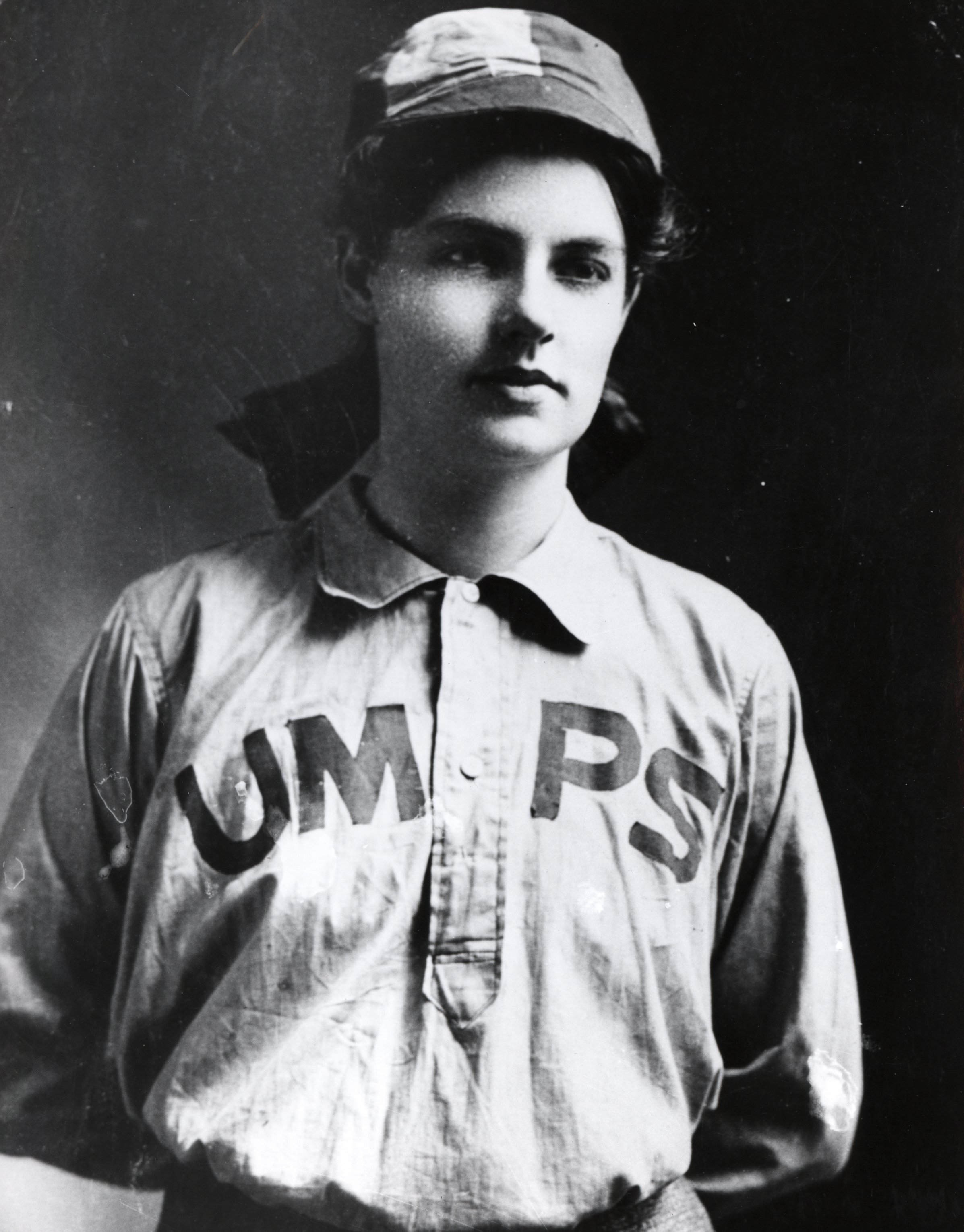
That one chance occurrence began a six-year career for Clement during which she umpired about 50 games each summer, traveling around the Midwest and earning between 15 and 25 dollars per game.
Reports from the time dug up by SABR show that Clement was widely lauded for her work. A report from The Meriden Daily Journal in 1906 said she possessed “an eagle eye” and “seldom makes a mistake.” Her stature began to grow and she became so in demand that she sometimes had to turn down umpiring opportunities.
Of course, Clement also faced her fair share of detractors, and sometimes even the supposed compliments she received were coded in the latent sexism of the early 20th century.
“She umpired the game as quietly and easily as other young women would sweep a floor or make a cake,” one local paper wrote, according to a scrapbook about Clement housed in Cooperstown.
Another newspaper report alleged that overeager men would often propose to Clement after watching her umpire, to which she once supposedly gave the best response imaginable: “I’m wedded to baseball.”
Still, Clement commanded a considerable amount of respect on the field, calling games by herself from behind the mound as was the custom at the time, and she was not afraid to hand out ejections. According to an account in South Dakota Magazine from a longtime friend of Clement’s, some of the players knew better than to get on her bad side when they protested a call: “Beg your pardon, Miss Umpire, but wasn’t that one a bit high?”

After her umpiring career came to an end, Clement used the money she’d made to pay her way through college and later worked as a teacher and a social worker. She became something of a local legend in South Dakota, so much so that she was introduced to President Teddy Roosevelt when he visited the state. According to reports at the time, he already knew who she was.
A native of Sioux Falls until she passed away in 1971, Clement was a big fan of the Twins, the closest big league team to South Dakota. She was inducted into the South Dakota Sports Hall of Fame in 1964 and the South Dakota Historical Society Press published a children’s book about her story in 2010 titled “Umpire in a Skirt.”
In the leadup to Pawol’s groundbreaking game in 2025, she had this to say about generations of young umpires to come:
“I'm aware of the gravity, I'm aware of the magnitude. I believe that I'm going to be a very good steward and representative for young girls and women, and boys and men, that this is possible.”
Just the way Clement showed it was possible over 120 years before.