

NEW YORK -- As Jo Adell and Brent Suter toured the Jackie Robinson Museum, they couldn’t help but marvel at the more than 4,000 incredible artifacts, such as his game-used jerseys and bats, his 1949 NL MVP Award, his 1955 World Series ring, highly graded baseball cards and even his Army uniform.
Jackie Robinson Day coverage presented by Capital One
• How MLB is commemorating Jackie Robinson Day
• On this annual day of celebration, 'We Are Jackie'
• Top 10 Jackie Robinson Day moments
• A few words from Jackie inspired this former MLB star for life
• 10 significant moments from Jackie's life
• How Jackie's on-field dominance helped lead him to Hall
• Why does Jackie have two Hall of Fame plaques?
• This is what it was like to wear No. 42 every day
• Each club's last player to wear the iconic No. 42
• Robinson Foundation Scholars reinvigorated by visit to MLB HQ
But more than that, Adell and Suter were amazed by Robinson’s legacy and impact on American society and Major League Baseball when he broke the color barrier with the Dodgers in 1947, and also his work with the Civil Rights Movement. Adell and Suter joined MLB Network’s Harold Reynolds for a tour of the museum before Tuesday’s game against the Yankees and just ahead of Jackie Robinson Day that will be celebrated on Wednesday across MLB.
“For me, I know about the history of why I'm able to do what I do, and why I'm able to kind of thrive in the career that I'm in today,” Adell said. “It’s pretty special to obviously walk around here today and experience this, because ever since I was a kid growing up playing baseball, we all knew who Jackie was.”
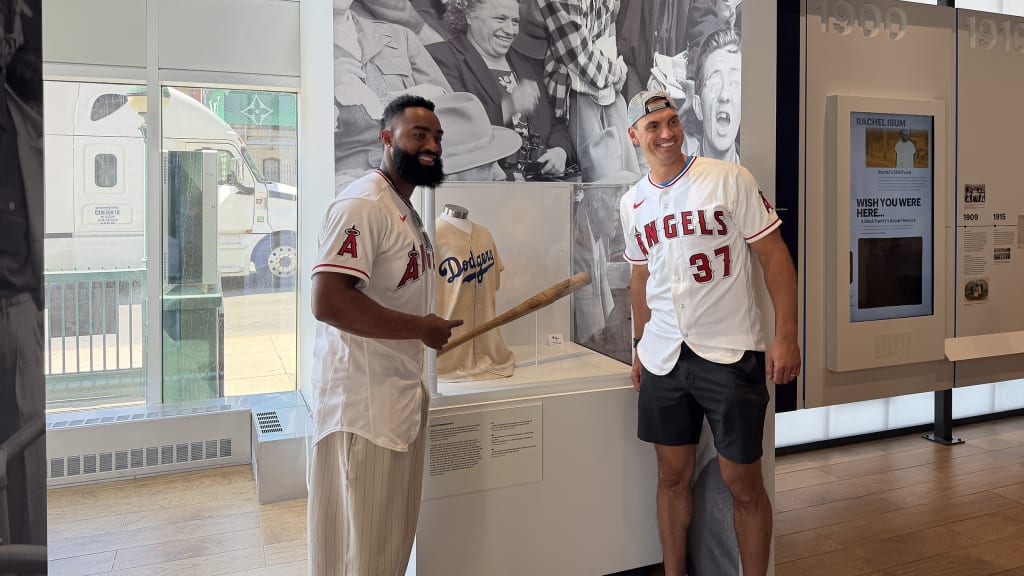
Adell said he gained a deeper appreciation for what Robinson went through after going through the tour and hearing about his early life in Pasadena, Calif., his time as a four-sport star at UCLA, his time in the military and his time breaking into baseball before becoming an MVP in ‘49, a World Series winner in ‘55 and a Hall of Famer in ‘62.
But Robinson was so much more than that, especially as a groundbreaking civil rights advocate and businessman and a devoted family man. Robinson passed away in 1972, but his wife, Rachel, is still alive and well at 103 and was a driving force behind creating the museum, which opened in 2022, with the artifacts she collected and stored herself during his lifetime.
“He’s been in my heart as just a hero, someone I want to be like,” Suter said. “The courage he had, the strength he had, withstand all the abuse he took and still perform, still be a great family man, still having hope and an optimism for humanity is something we admire.”
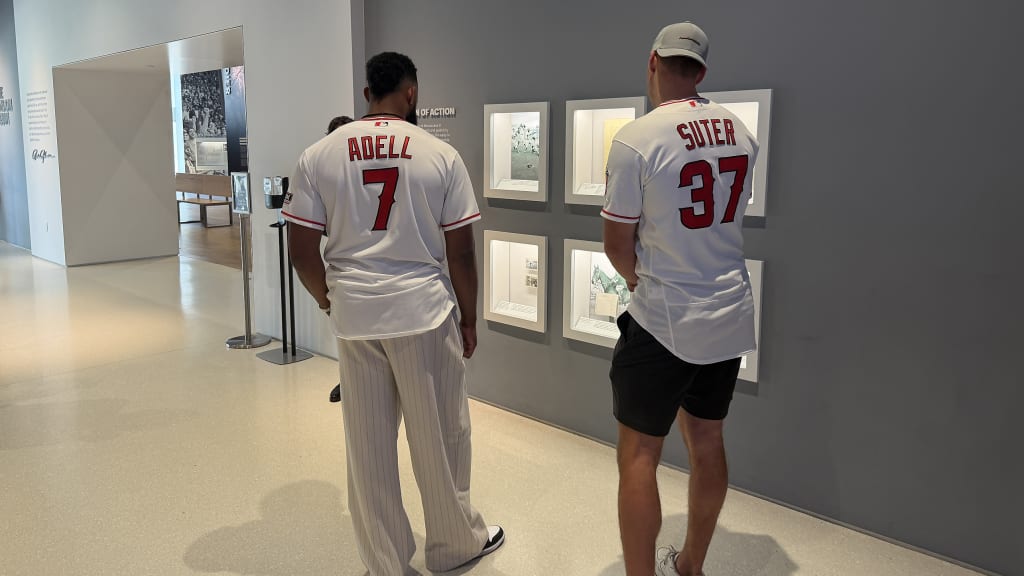
While it was the first time for Adell and Suter, Reynolds has been to the museum countless times and believes it’s essential to understand Robinson’s impact on American history. As a former 12-year big league veteran himself, he also thinks it’s important for baseball players to know more about the history of the game and who came before them.
“You don't know where you're going if you don't know where you came from,” Reynolds said. “I really think it's important to know -- here's the history, and here's why I'm standing up for what I'm standing up for. Even with baseball.”
Della Britton, the president and CEO of the Jackie Robinson Foundation (JRF), was thrilled to welcome the Angels’ contingent to the museum, especially with Jackie Robinson Day coming on Wednesday. Assistant curator Sidney Carlson White led the tour and both Adell and Suter had several thoughtful questions throughout their time at the museum that lasted more than an hour.
“It's such a treat, of course, when the big stars come, because that attracts an audience, but it's just so important to hear them appreciate the legacy and appreciate how they stand on his shoulders,” Britton said. “All players, not just Black players, stand on the shoulders of Jackie because when the leagues were integrated, it really made it a truly American sport. And that's what we are so proud of with his legacy, that it really brought people together.”
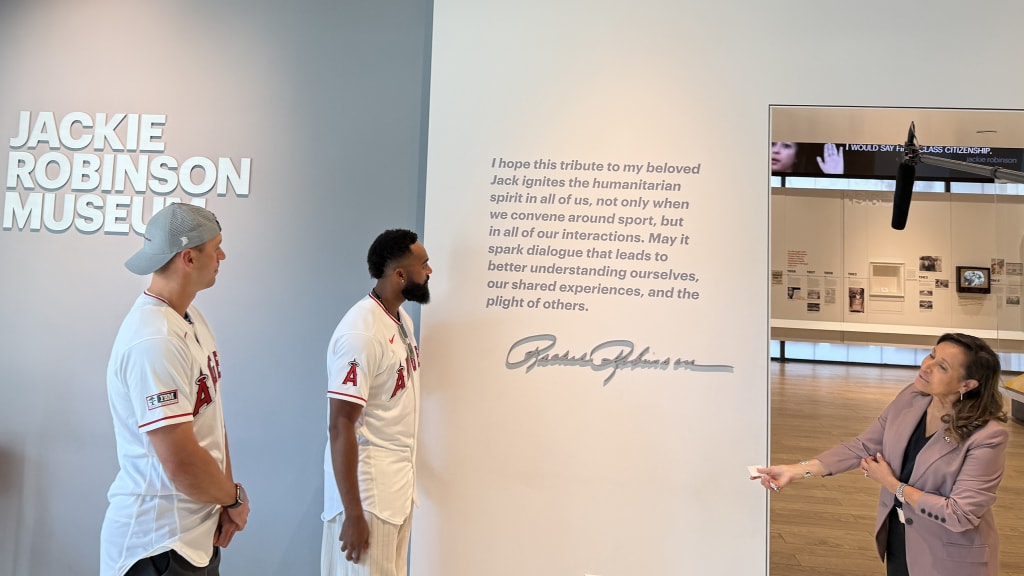
It all hit home for Adell, who said he also takes a lot of pride in wearing No. 42 on Jackie Robinson Day and learned about Robinson as a child. As an African American player, Adell is aware of the impact Robinson made on his life and he’s also made it a mission to give back as a result, including joining the Players Alliance, which aims to make baseball more equitable and accessible.
“It's just full-circle inclusion,” Adell said. “It’s about me having the opportunity to be where I am today and have the experiences that I have, to meet such great people and teammates, and be able to continue to improve in my career and do what I do because of him. And him sticking through what he had to stick through and becoming what he was -- that's why I'm here.”