
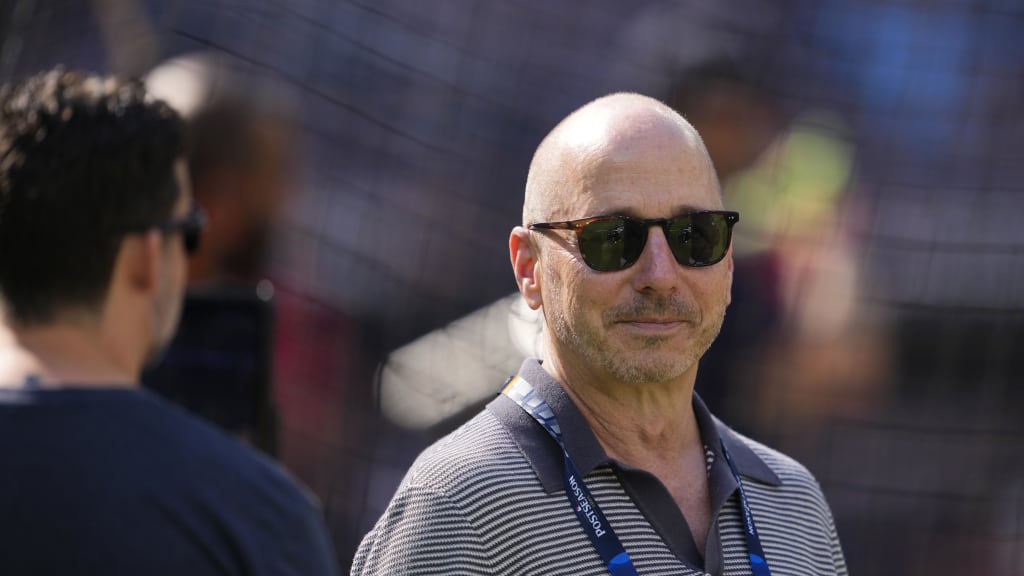
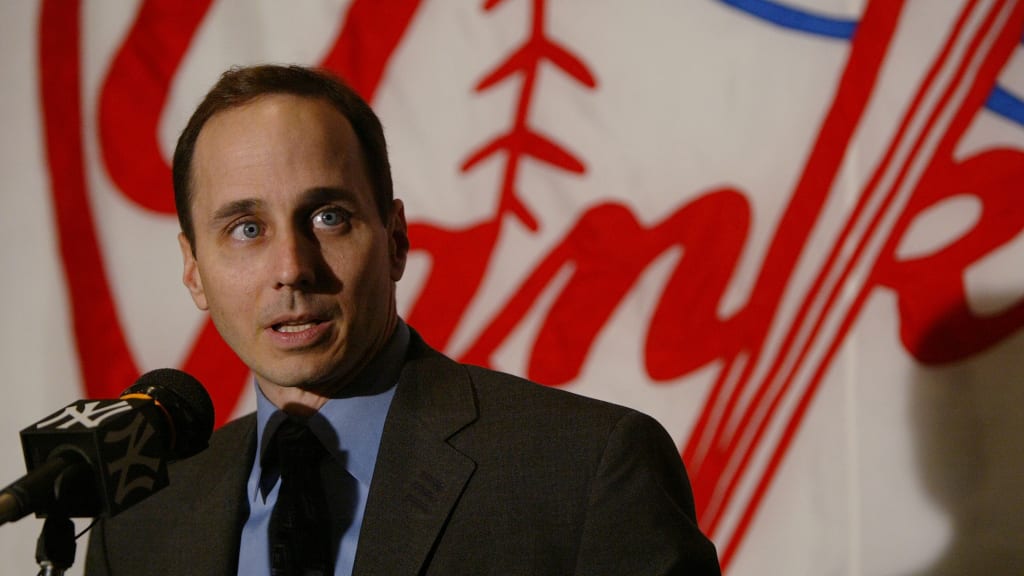
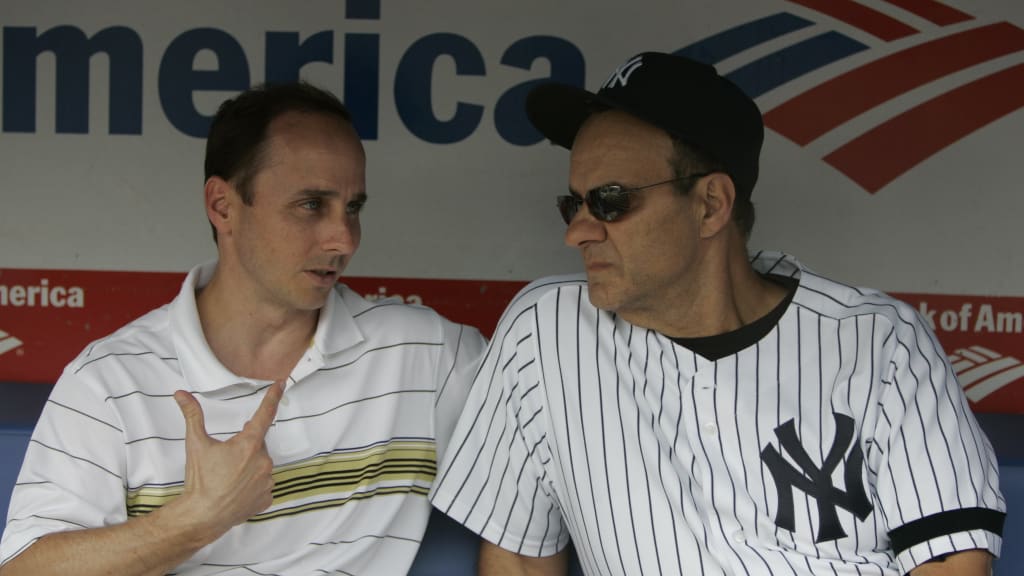
Brian Cashman was 30 years old when he became the Yankees’ general manager in 1998, the new kid on a block filled with grizzled veterans.
Nearly three decades later, he is the grizzled veteran, though listening to him talk about his job, Cashman sounds very much like his junior counterparts -- many of whom were in grade school when he began this incredible run.
“The world is changing on a daily basis around us,” Cashman said. “If we're not up to the test in changing with it, we'll be left behind.”
Despite the beliefs of a fanbase that holds him to a championship-or-bust standard and is disheartened by a drought entering its 17th season, Cashman has proven throughout his tenure that he is capable of evolving in a sport that has experienced multiple cycles of change.
This marks Cashman’s 29th season at the helm of the Yankees’ baseball operations department, an unprecedented run in a job where turnover isn’t just common, it’s expected.
Since Cashman was promoted to general manager prior to the 1998 season, 146 people have combined to lead baseball operations departments for the other 29 clubs -- an average of just over five per franchise. In a world where even successful teams have changed leadership on multiple occasions, the Yankees view stability as an asset, not a liability. Cashman’s two assistant GMs -- Jean Afterman and Michael Fishman -- have been in those positions for 25 and 12 years, respectively. He has had only three managers over 28 seasons: Joe Torre, Joe Girardi and Aaron Boone. That’s fewer than any club in the Majors.
Cashman’s Yankees -- who had won the World Series in 1996 while he was Bob Watson’s assistant GM -- won championships in each of his first three seasons as GM, adding American League pennants in 2001 and 2003, giving him five World Series appearances in his first six seasons in the big chair.
After nearly three decades, Cashman is still in the same job, grinding away each year in search of a championship.
“The only reason I'm still relevant is because I've never thought I was the smartest person in the room,” Cashman said. “I have actually thought I was the dumbest person in the room, so I hire people smarter than me.”
The job that consumes him today couldn’t be more dissimilar to the one he accepted in 1998 -- and believe it or not, the death of George Steinbrenner doesn’t even rank near the top when it comes to the changes he’s been forced to adapt to over the years.
“When I became GM, the internet was just getting started and social media wasn't around yet; those are whole new ballgames,” Cashman said. “Performance science teams, analytic teams, mental skills teams, none of those departments existed. The playoff structure keeps evolving. Revenue sharing, luxury tax, the changes in the Collective Bargaining Agreement over time, you have to adjust to all of it.
“It’s a different world.”
Analytics
The analytic revolution in baseball, which started back in the 1990s before exploding in the early-2000s with the release of “Moneyball,” has had the most dramatic effect on the game, both on and off the field.
For years, there were truisms and beliefs based on the way things had always been done, but analytics presented data that either backed up those theories or proved them to be outdated and obsolete.
“You actually could start utilizing math to kind of capture what is real and what you can debunk,” Cashman said. “Back then, it was, ‘If you're the fastest runner, you have to bat leadoff so you can be the jackrabbit in front of all the big hitters.’ But it didn't take in context if you can get on base or if you can hit. If the fastest guy can't actually hit or get on base, he shouldn't even be in the lineup, let alone the front of it.”
That same data gave executives a more informed approach to free agency and trades, relying on more than a scout’s report. The immense amount of information Cashman and his staff sort through on a daily basis helps him make more educated decisions.
“I'm in a better position to make recommendations than I’ve ever been because of the new additions over the course of time of performing science, analytics, stuff like that,” Cashman said. “We’ll still make mistakes, but we're making fewer mistakes because of the benefit of this structure.”
Remember the old “scouts vs. stats” debate of the mid-2000s? That’s about as relevant today as the BlackBerry or the iPod.
The Yankees employ a large number of both scouts and analysts, while Cashman has routinely surrounded himself over the years with former executives with vast experience and knowledge including current advisors Jim Hendry, Omar Minaya and Brian Sabean, and the late Kevin Towers. Tim Naehring, a former player who spent eight years in the Reds’ front office, has been with the Yankees for the past 19 years, the last 11 as vice president of baseball operations.
“There’s a lot more information to process and package in a way that you can understand before you make a decision, but you're making more theory-efficient, safer bets,” Cashman said. “There's a lot of data streams that need to be digested and compared, and then you obviously test the data to make sure you weed out bad data. Every department is important; it's a spoke in the wheel. You need those folks to let the wheels go round and round and round.”
Social media
Back in 1998, the only way players and executives heard what people were talking about was by listening to “Mike and the Mad Dog” or reading the local sports columnists. If there was a really big story, maybe they talked about you on Sunday morning’s episode of The Sports Reporters on ESPN.
“Now there’s an explosion of access and criticisms that our players have to deal with,” Cashman said. “That's a whole different area to try to create support for our athletes.”
And for Cashman.
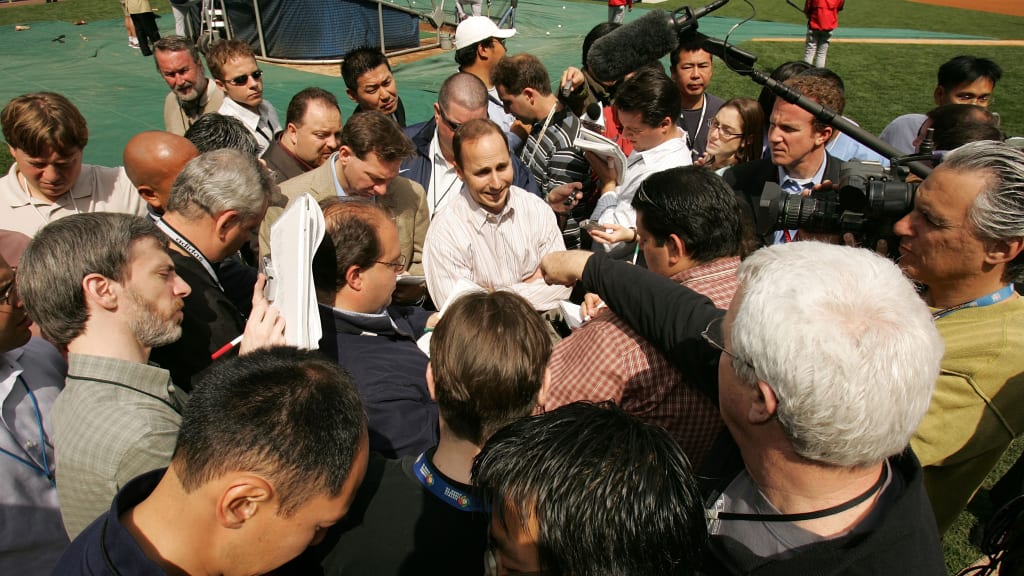
It takes a thick skin to hold a GM job in any market; in New York, it takes a suit of armor. Despite four World Series championships, Cashman has been a frequent target for fans and media alike at times throughout his tenure, especially over the past 15 years as the Yankees seek their first World Series title since 2009.
Still, the Yankees have had a winning record in all 28 of Cashman’s seasons as GM, part of a 33-year streak that extends back to 1993.
“I don't think it's easy to be continuous,” Cashman said. “I started with the Yankees in 1986; from 1982 through 1994 we weren't a playoff team at all. That’s a long time -- and that was with easier rules. Totally different ballgame. I'm proud of the fact that we've been a consistent championship contender, but I’m disappointed that we haven't punched through at the same time.”
The game
At first glance, the game of baseball looks very much like it did when it was first invented in the 19th century. Nine innings. Nine players in the field. Pitcher vs. batter.
Yes, there have been many tweaks over the years, from the designated hitter to the specialization of relief pitchers to the pitch timer. But it’s the way teams strategize and deploy their players that has changed most dramatically during Cashman’s time as GM, altering the way he has gone about putting the Yankees together through the years.
During Cashman’s first season as GM, the Yankees’ rotation included three pitchers who threw more than 200 innings. In fact, over his first four years in the job, 13 Yankees starting pitchers threw more than 180 innings, compiling nine 200-inning seasons during that stretch.
Compare that to the past four years, when the Yankees have had only four pitchers throw at least 180 innings in a season -- half of them from Gerrit Cole, who is the only pinstriped starter to reach the 200-inning mark since CC Sabathia and Hiroki Kuroda accomplished the feat back in 2013.
“Generally, information has been provided that the longer and deeper you turn lineups over, the less effective a starter happens to be,” Cashman said. “Then you get into the numbers game of whether your middle-relief choices might be a better alternative than a third-time-through-the-lineup starter that might be a mid-to-back-of-the-rotation starter. The numbers have shown that, so people start rearranging their strategies because of that. Every win is vitally important.”
The next frontier
Not too long ago, only a handful of teams had analytics departments. Ditto for performance science, mental skills and a variety of other training techniques that are now commonly being used by big league clubs.
So what’s next? Cashman asks himself -- and his staff -- that very question on a regular basis.
Cashman and his staff have spent time with people from the San Antonio Spurs, New Jersey Devils, New York Giants, Brooklyn Nets and Manchester City -- just to name a few -- in an effort to “peek under somebody’s hood … to see what people do, how they do it, why they do it, what makes them tick.” He’s consulted with rugby teams, college programs and just about anybody else he can think to speak with, all in the name of looking for an edge.
“I preach to our personnel -- and not just the last five or 10 or 15 or 20 years, but every year I've been involved -- that just because we're the New York Yankees, we can't assume that somebody's not doing something better than we're doing,” Cashman said. “And if they are, we have to find that out. It doesn't matter if it's Netflix, the University of Kentucky, an NFL or NHL team or a high school wrestling program -- if somebody is doing something culturally, analytically, in their training, using a specific modality that we haven't seen before, that's why we stay engaged.”
The future
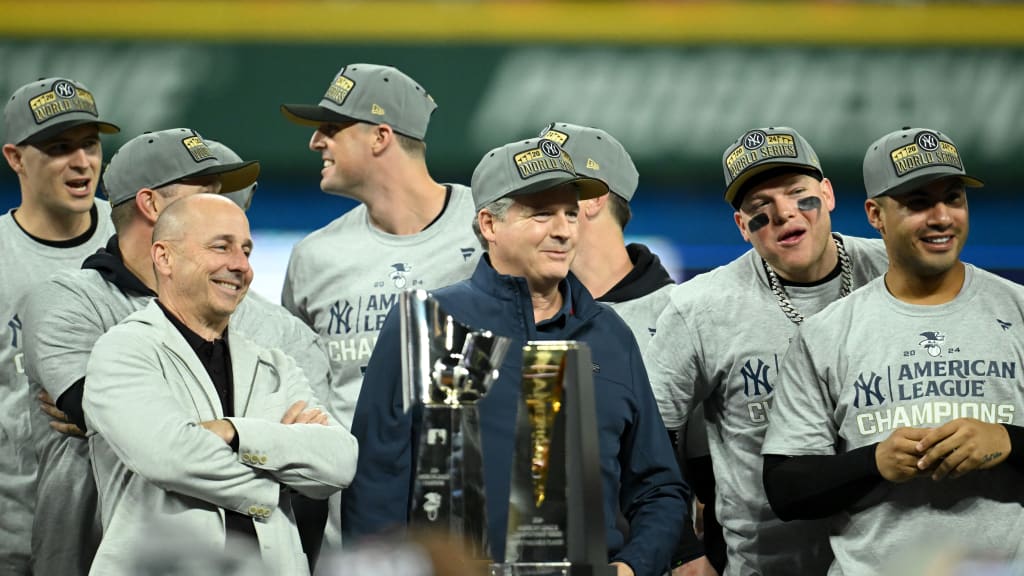
Cashman signed a new four-year contract prior to the 2023 season, meaning his deal expires at the end of the upcoming season. The 2027 season would mark his 30th as general manager, a number believed to be achieved by only four men in history -- all of them coming in the first half of the 20th century.
How long will Cashman continue guiding the most storied team in the Majors – and possibly in all of sports?
“I enjoy what I do,” Cashman said. “I like competing. I like being a part of a group of people that are fighting for something, so that hasn’t changed in any way, shape or form. You have to have somebody wanting you to do it, and you have to be contributing. If I'm contributing and somebody wants me to continue to do it, then at least in the present, it's all good. But I can’t predict the future.”