
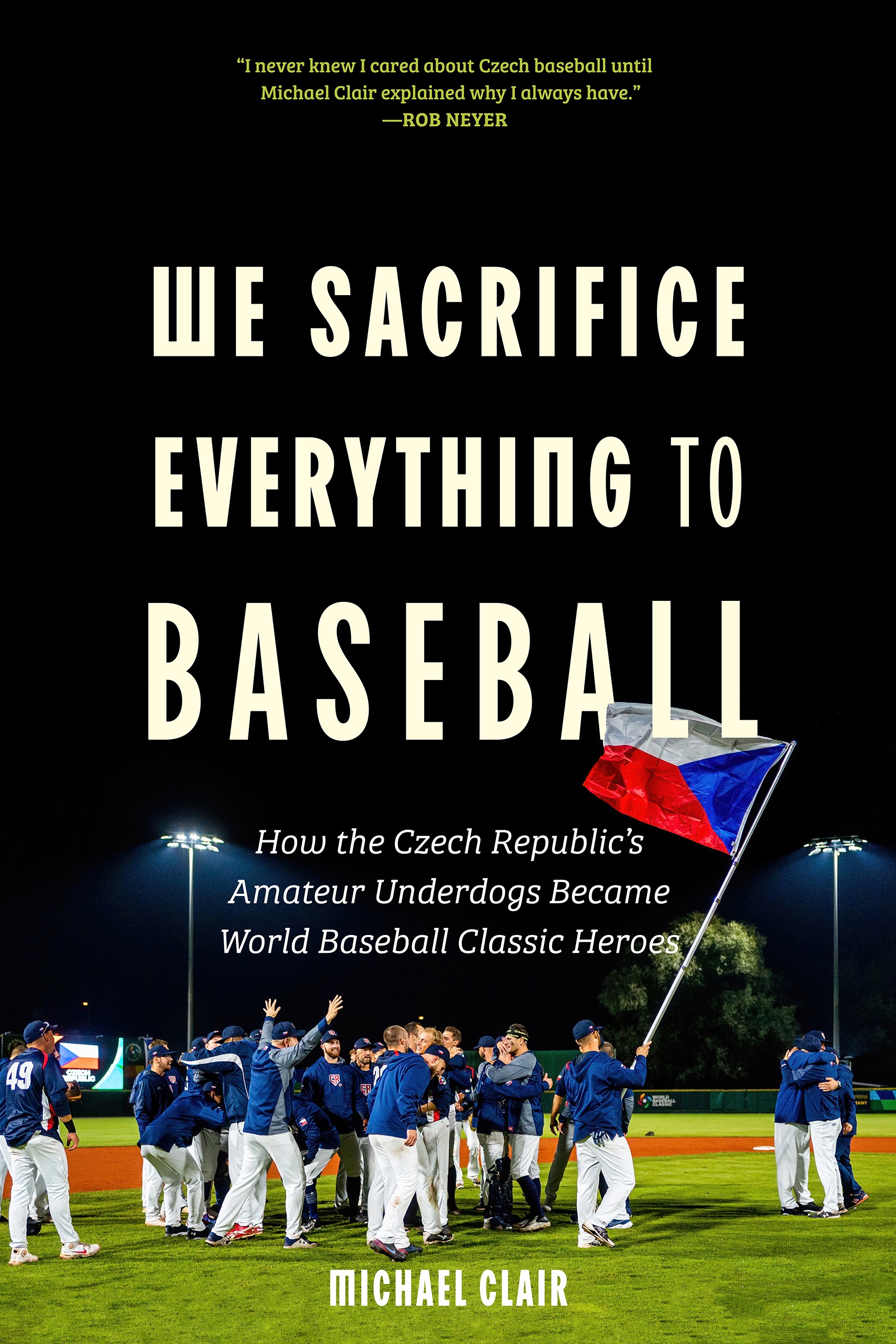
The following is an excerpt from my upcoming book, “We Sacrifice Everything to Baseball,” which follows the story of how a team of amateur ballplayers from the Czech Republic reached the World Baseball Classic and proved themselves to the entire world (Shohei Ohtani included).
The following excerpt takes place before the final game of the 2022 World Baseball Classic Qualifiers, when the Czech Republic needed to defeat Spain to reach the main tournament for the very first time.
“In fifteen, twenty years, if I save one person from a fire,” Martin Schneider said from inside the cavernous garage of the fire station in his hometown of Olomouc, “my job is done.”
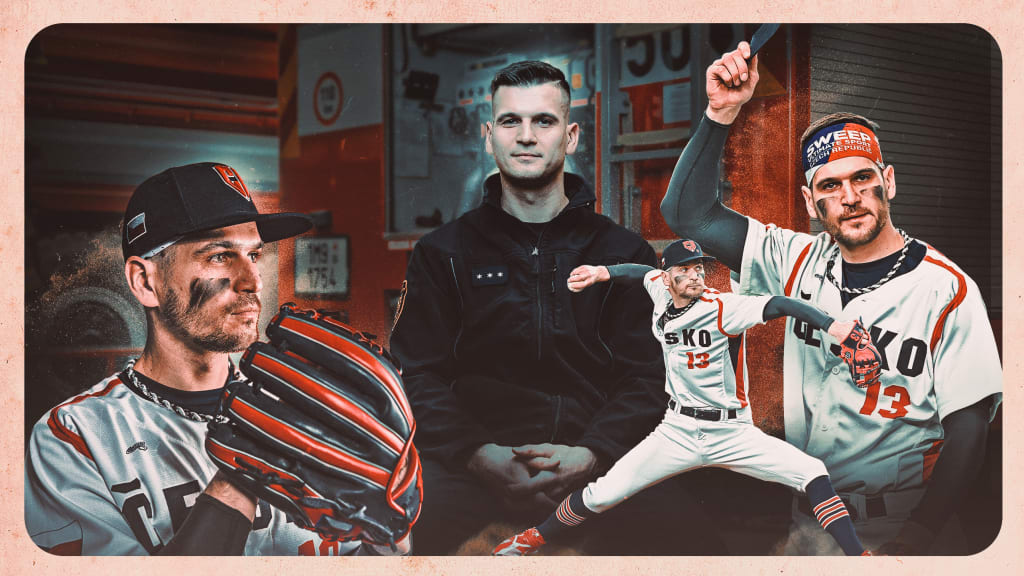
On a team filled with players defined not only by what they do on the diamond but off it as well, Schneider stands out. He lives his life in two parts, both of which are dreams harbored by young boys. In one half, he’s a firefighter in his hometown of Olomouc, a city of about one hundred thousand people in eastern Moravia, situated about halfway between Brno and Ostrava. Here the stakes are literally life and death. When the alarm bell rings it’s all hands on deck; he and his teammates in the firehouse fly down the fire pole, lugging on heavy, black turnout gear and helmets before jumping into the bright red fire truck and racing toward danger.
In the other half of his life, he is dedicated to baseball and his brothers on the national team.
“[The national team] is my third family,” Schneider explained. “Because I’ve got one family, my proper family. Second family is my work family, and my third family is my baseball family. I couldn’t ask for more.”
Unlike the other jobs -- whether it’s center fielder Arnošt Dubový’s role as a geography and physical education teacher at a high school in Brno (Kids can sometimes earn extra credit by answering bonus questions about what happened in the Extraliga over the weekend), Martin Červenka’s role in sales, or even slugger Martin Mužík’s job as a caretaker at the field in Hluboká -- Schneider’s job requires that he be at the firehouse for twenty-four hours before earning two consecutive days off. Because the Extraliga season plays the majority of its games from Friday through Sunday, Schneider must miss at least one contest every weekend. It’s one of the reasons why he had pitched just nineteen innings in the summer before the 2022 World Baseball Classic qualifiers, having tossed just 14 1/3 the year before that. It’s why manager Pavel Chadim had planned to use him out of the bullpen, getting short bursts from the team’s longtime star when they needed it most. He simply hadn’t had the opportunity to build up his arm for a greater workload.
But with the Czech team playing in its biggest game in the country’s history, needing just one more victory to reach the World Baseball Classic, there was no holding back. The Czech Republic would get a chance for revenge against Spain just a few days after losing 21-7. If they were going to do it, there was only one man Chadim wanted on the mound. It was a player he had helped bring to the Extraliga powerhouse Draci Brno over fifteen years earlier.
He needed the “silent assassin.”
He needed Martin Schneider.
Chadim approached, a wide grin on his face and his arms outstretched, while Schneider was sitting in the locker room with Červenka following the victory against Germany to set up the rematch.
“Why are you smiling?” Schneider asked his manager. “You want me to start, right?”
“Yes,” Chadim replied. “I do.”
“You know me. I’m willing to die out there tomorrow,” Schneider replied. “So it’s up to you. It’s your decision. I’m ready for it.
That was it: with everything on the line, Chadim was going to turn to the player who always came up big when his team needed it most.
It was time for Martin Schneider to save the day.
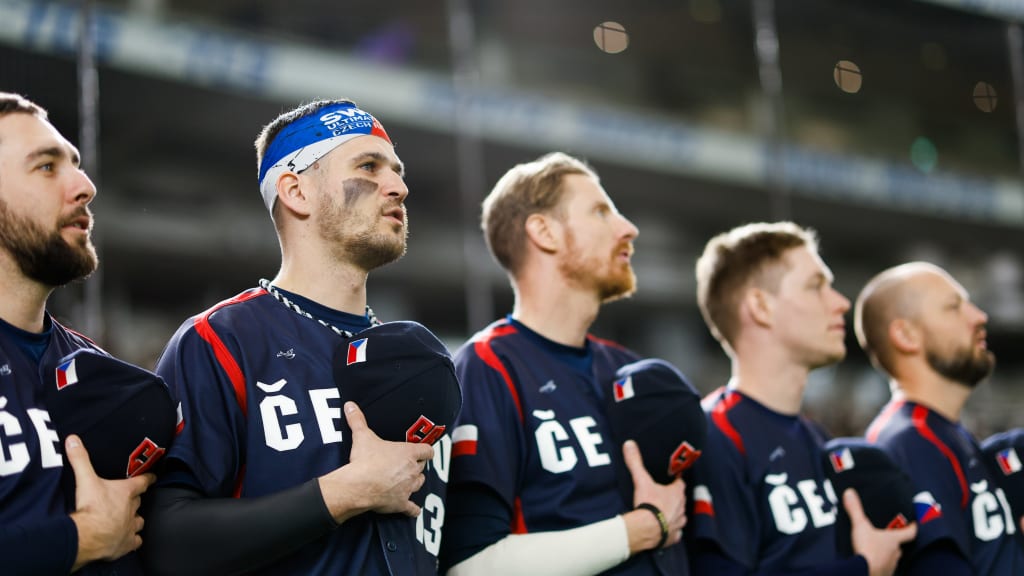
Schneider carries himself with a swagger that is singular in the ball club. He moves with a rhythm, a slouching bounce, with each step. On the field, he wears a headband, a Phiten necklace -- those “performance-boosting” necklaces that became an MLB player’s must-have in the mid-aughts -- with thick smears of eye black spread across his cheeks. His socks are always stretched high, his ballcap fashionably askew, and the top button of his jersey is left unbuttoned, flapping with each toss. He exudes cool kid in the back of the class energy; he has a practiced nonchalance. Sure, he knows that he can come off as brash and overconfident, but he’s not changing anything.
“So many people who don’t know me off the field think that I’m a cocky [expletive],” Schneider said, his face lighting up like the child who thinks they got away with something. “I get it. I don’t care.”
In some ways, though, Schneider is the exact opposite: rather than being a baseball’s rebel without a cause, someone who doesn’t care about anything, it may be that he simply cares so very deeply. There is the feeling that he perhaps isn’t good enough, hasn’t accomplished enough, and he’s still trying to prove his worth to himself as well as all of his teammates.
“He’s never satisfied,” Chadim noted.
“I’ve got a lot of people around me who tell me you should be more satisfied with yourself,” Schneider retorts. “‘You’re doing good.’ I was like, ‘No, I’m not.’”
When asked what he would tell a younger version of himself, he says, “I will tell him you should work harder.”
He feels like it’s perhaps his own fault, an almost Puritanical moral failing, that he hasn’t done more.
“I think I could have done more to get even higher than I am right now or could be,” Schneider said.
Schneider’s father worked with deaf and hard-of-hearing children, first learning softball from the school’s physical education classes. He brought the game home to his son, who quickly became enamored with it. There was a baseball team in the area — Skokani Olomouc, the same team that Schneider now lines up for during the Extraliga season — but they didn’t offer any youth programs or junior teams. So Schneider’s father and one of his friends decided to start one of their own ball clubs in a town where most people — if they had heard of baseball at all — knew it involved a wooden bat, a leather ball, and little else.
It’s perhaps his father’s independent streak that Martin picked up and adopted to his own life. Schneider is almost entirely self-taught on the mound, first spending his youth constructing breaking pitches like a mad scientist whose laboratory is the ball field. These days, he sets up a radar gun and records himself, studying and analyzing his motion, release point, movement, and velocity (here, you can see his past work as a shortstop, his arm slot very much a three-quarters slingshot, as if he were almost whipping the ball to home plate), spending his precious few minutes away from his children, work, and official team practices obsessing and tweaking minute details.
“I never focused on [only] pitching until the WBC qualifier. Seriously, I never threw a bullpen,” Schneider said. In the past he’d be called in to pitch at the end of games from his position at short. “I practiced some mechanical things, but, like, 99 percent of the things that I do on the mound, I figured it out myself. I made up my slider. I didn’t want to spend [expletive] hours and hours in the bullpen [being told] ‘hold it like this and throw it like a fastball.’ It made my career, figuring that out.”
In some ways, this attitude has been good for him. Even as he ages and can spend less and less time on the ball field, his responsibilities to his children and his job taking precedence, he’s able to seemingly will himself to improve. He trains, lifting weights and running in between emergency calls to the firehouse. He built himself a mound in his backyard, too, making sure he could throw every day as he pushed himself to try and top 90 mph ahead of the World Baseball Classic.
He is feverishly devoted to the game. Skokani Olomouc is currently in the second tier of Czech baseball, meaning that — even in a country where few even know that baseball is being played there — attendance may number in the single digits. Unlike the top tier, there are no cameras to stream it either. The Czech Republic’s star ballplayer, one who has lines of fans — children and adults alike — gathering to get his autograph when making appearances with the national team, is out there, every weekend, playing the game he loves and hoping to inspire his young teammates with no one there to see it.
“I was always studying for a few years before [the qualifier] because I knew that was something that I want to do — not only pitching but about all the other baseball stuff,” Schneider said, his dark eyes searching. “I made up my own program. I’m trying to find the shortcut, testing on myself if everything works. I threw basically every day, in every condition.”
In other ways, though, this fiercely independent, self-reliant streak has led to decisions that Schneider still struggles with. Fifteen years earlier, when he was twenty-two years old, a Minnesota Twins scout came to one of Draci Brno’s winter practices, where Schneider was playing at the time.
When practice was over, they approached him with an offer. Scouts are usually looking for younger players, teenage phenoms with high ceilings and plenty of growth left to dream on. Despite battling a stomach illness that day, running to the bathroom in between drills, Schneider put on a show. He may have been just twenty-two years old — barely an adult to the rest of the world — but that made him practically ancient in baseball prospect circles.
“We can give you a one-year contract to go straight to single-A,” the scout told him. “You have to prove yourself. If it doesn’t happen, we’ll send you back.”
For someone like Schneider, that wasn’t a problem. His whole baseball-playing life was built around proving himself to others. But there was one problem: the team didn’t want him as a shortstop; they wanted him to pitch — and only pitch.
“I didn’t want it,” Schneider said, reflecting.
This was years before anyone had heard the name “Shohei Ohtani” or even thought it possible that someone could succeed at multiple positions. Even if they had, the Twins’ scouts certainly would not have advocated it for a European prospect who already was at an age that few other teams would sign.
“That probably closed the door. I’m not bitter about it. It happened. Lots of better things probably came to me after,” Schneider says, perhaps trying to convince himself. “I don’t want to talk about destiny, but things happen because it happened. Just thinking about it, I would love to have that chance. Like, one year for a $5,000 signing bonus? I know that I would do 1000 percent for that; I would work my ass off.”
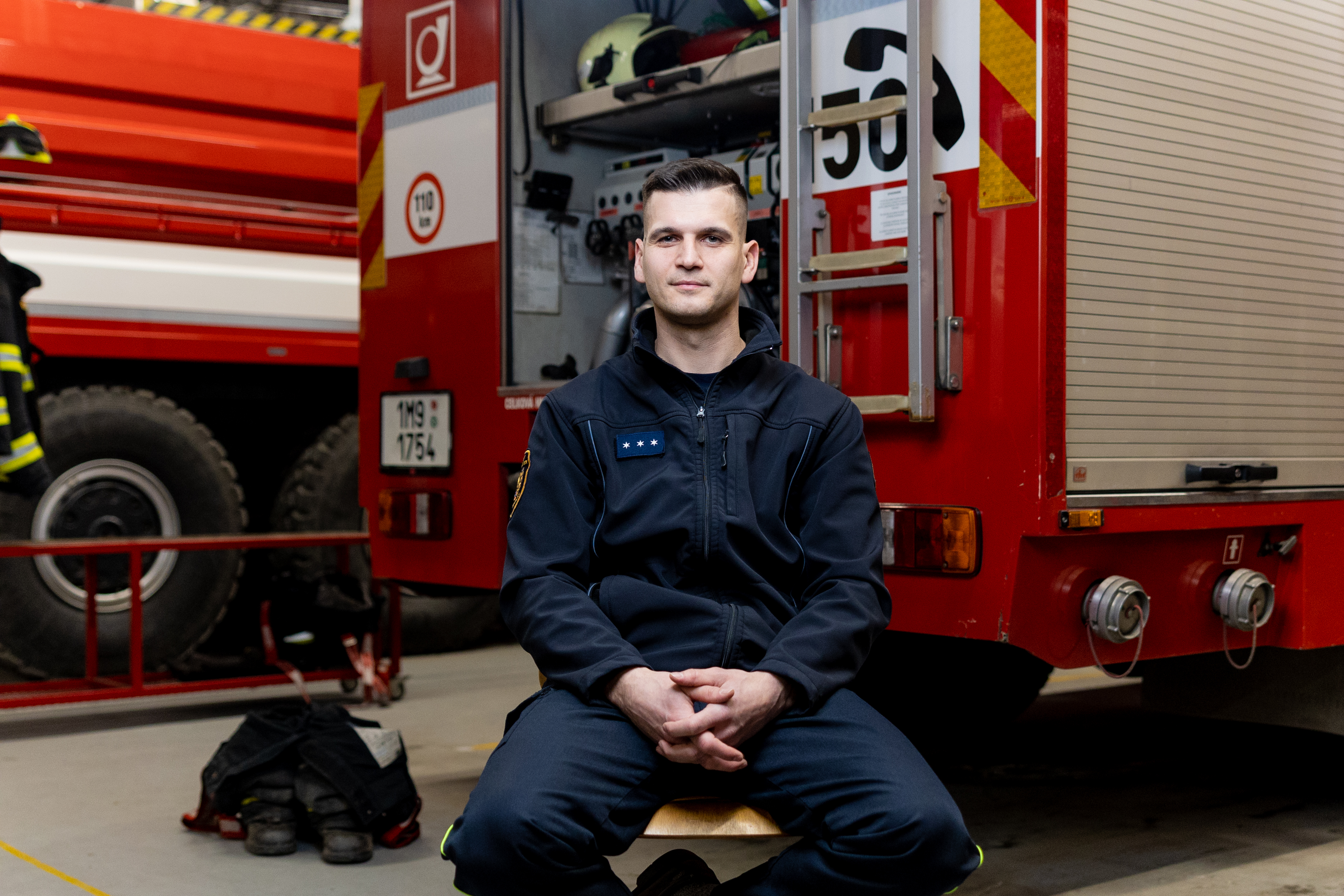
He tries to compartmentalize and keep his focus entirely on the task at hand. It’s a useful skill in baseball as players need to shake off the ignominy of an 0-for-4 ballgame the same way they can’t get too inflated by a multi-home run game. Useful in baseball, it’s also paramount at the firehouse where Schneider must make life-or-death decisions each day.
“In a firefighting job, it’s even more important to believe in your abilities, what you have trained for. If you have any distractions or any doubts, you [expletive] up,” Schneider said. “Because if you have something like that in your head, you could die or someone else could die. In those situations, I’m 100 percent sure that I’m giving all I know, all I’ve got, all I’m trained for, to do my job. Once I leave and I shut the door in the fire truck, I’m not thinking about anything else.”
He shares little of this part of his life with his children, protecting them from the danger of this job. He doesn’t talk much about his baseball career with them either. They’re children; they care more about being around him than any of the jobs that define him to the outside world.
“That’s why my head has the right mentality for this kind of work because when I leave the station, close the door, I leave everything behind. I don’t want to think about it; I don’t want to talk about it,” Schneider said.
Where would Schneider be had he taken that offer from the Twins, giving up his dream of playing two positions to focus on pitching? Would he have willed himself to the Major Leagues, thriving in the game’s biggest moments the way he has whenever the Czech Republic needed him? Would he still be fighting fires in his hometown, rushing back at the end of every tournament, worried about how the rest of his coworkers at the firehouse have had to rearrange their own schedules, shifts, and lives to let him go play a game around the world?
Ask him about Ohtani, the idol of every baseball player around the world, and you have to wonder.
“He’s doing it on the biggest stage in the world, and he’s [playing two positions] like nobody else,” Schneider said. “I might have gotten there, if they gave me a chance.”
Captain Petr Zýma sees the difference in the team when “Schneidy” is around. His very presence electrifies the atmosphere
“When he is around, everybody’s more on their toes to see what Schneider’s doing, what he is not doing, so nobody’s behind. But Schneider’s been a great player for so many years now. His body — he’s a machine basically,” Zýma claimed.
“In almost every win, he either closed it down or made a defensive play that impacted the game in some way,” former national team manager Mike Griffin said. “He just loves the moment. When he has the baseball at the end of the game, he’s just able to do it.”
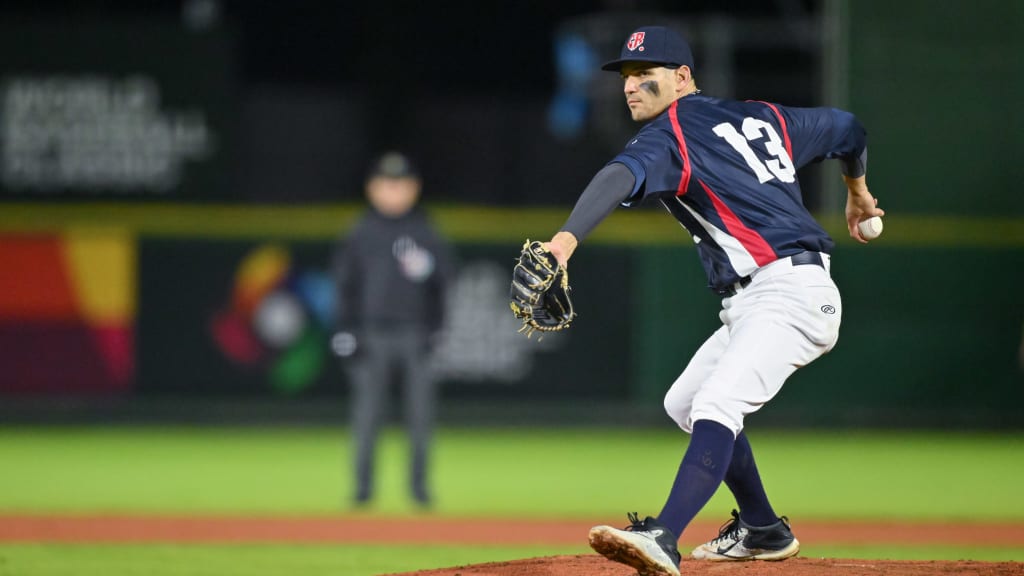
The fact that Schneider has become so confident in big moments is a little amusing considering that he once had too much stage fright to compete in the youth tournaments. He had to turn those nervous moments into a competitive fire for himself — something he is still relying on all these years later.
“My base mental situation is completely different than you see on the field,” Schneider said. “I have low self-esteem. I think that I’m not that good.”
With the Czech Republic about to play the biggest game in the country’s history, Schneider had given up playing shortstop. He wouldn’t be closing the game either. Now, for the first time with the national team and in the most crucial moment, he’d be starting it. “I have to prove something,” Schneider said. “The only thing that I have in my mind is that I have to prove myself, that I’m still able to help my team.”
As for what happened next? Well, you can read about the game here or pick up the book for the whole story.