

DENVER – For Denny Dressman, it started three years ago as a gift from his wife, Melanie. But for the longtime author of 16 books, fate would have this trip from suburban Denver to the Negro Leagues Baseball Museum in Kansas City lead to something lasting.
Anthony High has earned enough esteem with his paintings in various media, displayed in his hometown of Kansas City, that fellow artists had been encouraging him to display them in book form. High and his wife, Sandra, met the Dressmans on their trip, and ideas flowed.
The result is a new co-authored book, “Black Baseball’s Heyday: Capturing an Era in Art and Words,” (McFarland & Company, Inc., Publishers). It features 22 meticulously researched chapters from Dressman, and 44 works from High. The two traded ideas and made words and colors mesh to bring to life the Negro Leagues -- with all of the associated joys, struggles and accomplishments.
Colorado Rockies fans are familiar with Dressman through three books: “16 Pitches, Walk-Off! Game 163,” on the famous 2007 tie-breaking win over the Padres; “16 Pitches: The Night the Winning Pitcher was a Catcher as the Rockies Beat the Braves;” and “Walk-off! Coors Field’s 1995 Marathon Opener and the Eventful Early Days of the Colorado Rockies.” Another of Dressman’s books was on Grambling’s famed and influential collegiate football coach, “Eddie Robinson: The Martin Luther King of Football.”
The narrative is the result of Dressman’s lifetime with the written word. Dressman became a newspaperman in his high school days, and his career took him to the Cincinnati Enquirer and Denver’s Rocky Mountain News.
“I thought it was more than just baseball -- balls and strikes, wins and losses -- so I tried to capture the personalities of the guys and the culture around it,” Dressman said in an understated sense, much like how he presents a historic time as if it’s in real time.
The original plan was a coffee table book, but things could not come together with a publisher. Dressman had a relationship with McFarland, a major publisher of academic and sports books. McFarland’s success comes from an efficient process and formula. But in a shrewd stroke, the McFarland senior editor, Gary Mitchem, agreed to alter the size slightly to better display High’s work.
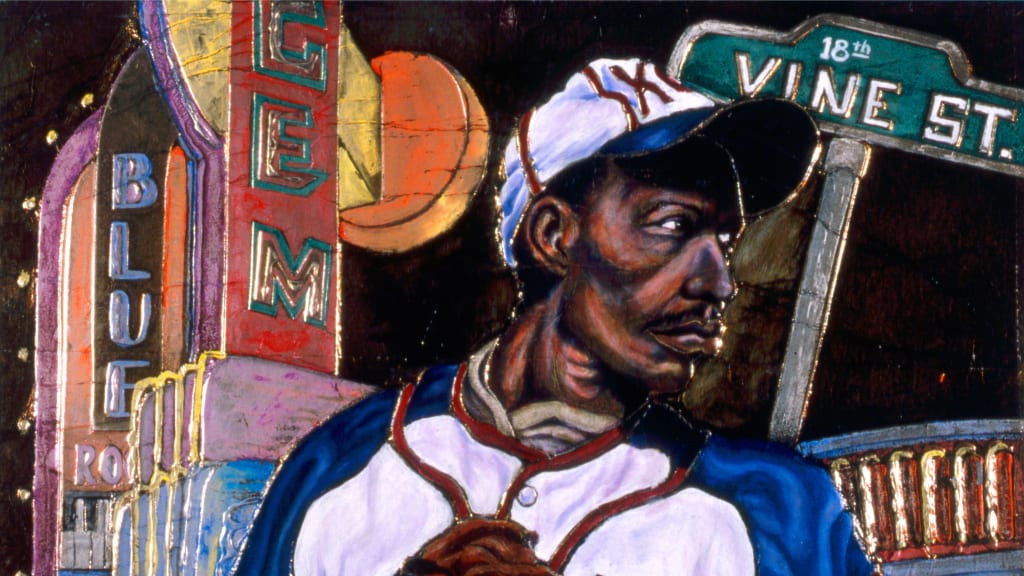
High grew up in Kansas City and taught school to inspire youth. The Negro Leagues Museum and the adjacent American Jazz Museum inspired High, to the point that he did his thesis showing for his Lincoln University studio art master’s degree at the building that houses the history centers. Using Dressman’s prose and reference photos to take him to the periods he depicted, High spent hours in front of his easel -- “sleep painting,” he called it laughing, with his wife, Sandra, keeping him on task.
The book is structured as a readable walk through time, but with some stops -- headlined as High-Lights, or stories of inspiration and technique that grew from conversations between Dressman and High, who recalls that the two men and their wives attended a Royals-Rockies game. The artist is especially adept at the collagraph, in which materials are glued or sealed to the paper or medium so the painting over it will have a 3D effect.
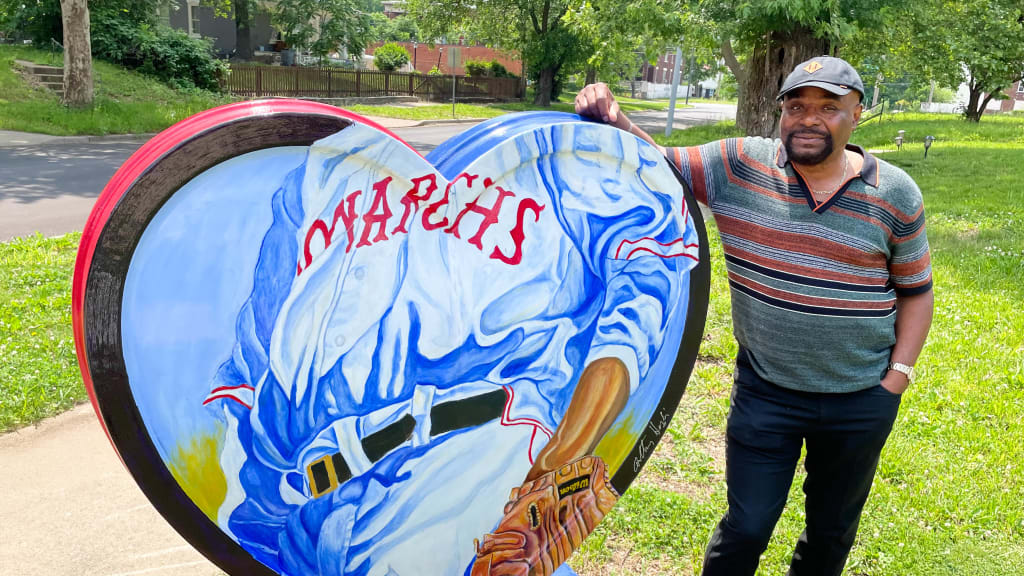
But the ideas shine through in several works:
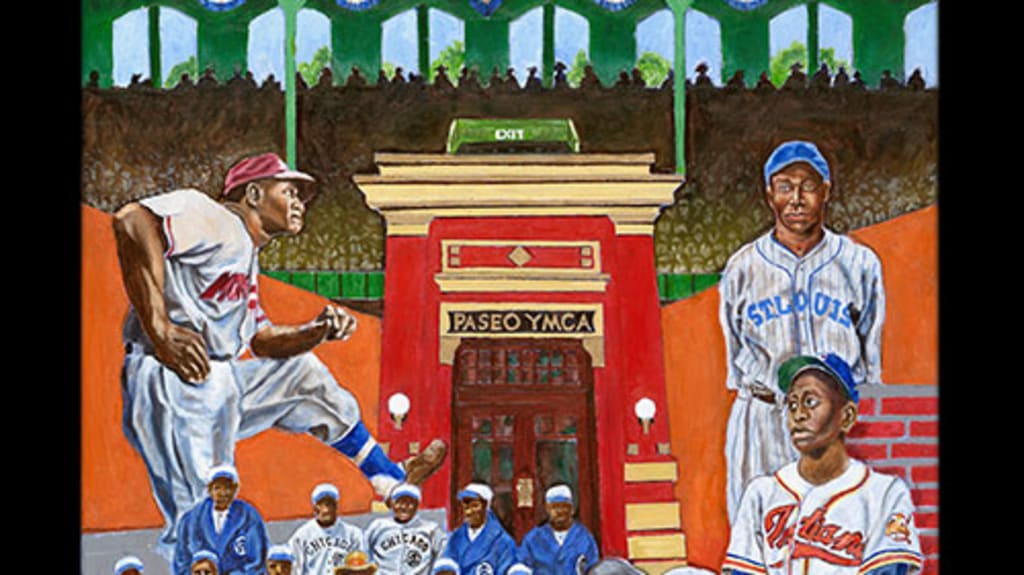
• The cover is a collage of Negro Leagues figures -- Buck O’Neil, Rube Foster and the Chicago American Giants, Cool Papa Bell and Satchel Paige arranged around the Paseo YMCA in Kansas City, where the Negro Leagues were formed. But Paige, depicted seated on the dirt in the Cleveland Indians uniform he wore after MLB integrated, comes to life through the sole of his left foot -- a textured look at the bottom of his spikes that created a giant print on baseball history.
“Marvel Comics had all that foreshortening, and I learned how to draw that – and that gave the picture depth,” High said.
• On page 24 is a depiction of O’Neil in his advancing years -- gray haired, wearing a recreation of his Kansas City Monarchs jersey and tipping the white, pinstriped cap. But the true focus is the badge hanging from a lanyard: “Hall of Fame 2022 Buck O’Neil.” It corrected a wrong from the reference picture High used.
O’Neil was not inducted into the National Baseball Hall of Fame until 16 years after he died.
“He had on a visitor’s badge; he’s tipping his hat, yet they overlooked him,” said High, whose uncle, Alfred Surratt, played for O’Neil in the Negro Leagues and was a co-founder of the museum. “I made up my own badge.
“As an artist, we can do that.”
Matter-of-fact descriptions and colorful artistry came together in this book.