
A few minutes after noon on a cold December day, the now-61-year-old Dwight Gooden, forever a New York sports icon, walked into the bar room of one of his old hideaways, Peter Luger Steak House in Great Neck, New York.
Although it has been more than four decades since Gooden burst onto the scene with the Mets and immediately became one of the most recognizable people in New York City, and 30 years since he captivated a second fan base in the Big Apple, just about everyone in the Long Island steakhouse still knew exactly who he was.
With the success that Gooden had, it’s impossible to be forgotten.
Three decades after he authored an unforgettable memory for every Yankees fan alive, coming back from a drug suspension and throwing a no-hitter against a vaunted Seattle Mariners team at Yankee Stadium on May 14, 1996, Gooden reminisced about the euphoric feeling he had as he was being carried off the field by his teammates that night.
“I’ve never been to heaven,” Gooden said as he settled in for lunch at a corner table with a group of friends. “But if heaven is what they say it is, that’s the closest you could come to heaven. To be in that moment after everything I had lived through before that, that was the happiest I had ever been.”
As well-documented as Gooden’s incredible accomplishments on the mound have been, his fall from grace -- more than once -- has been just as notable. His journey has brought him to the deepest depths of despair as a result of addiction. He has been suspended from baseball and incarcerated, and he has also missed out on some of the greatest moments that his success should have afforded him, including the ’86 Mets’ World Series parade.
But Gooden has finally found peace, and because of that, the current chapter in the great pitcher’s life may not just be his most reflective time, but also his proudest.
***
Gooden’s first few years in New York City were anything but peaceful. In the mid-1980s, Gooden captivated the Big Apple like few athletes ever have, and his gaudy statistics only tell part of the story about what he meant to the city.
At 19 years old, Gooden led the Majors with 276 strikeouts in 1984 and won the National League Rookie of the Year Award. A year later, he captured the rare Triple Crown of pitching, leading the sport with 24 wins, 268 strikeouts and a 1.53 ERA. In that Cy Young Award–winning season, Gooden threw 16 complete games and eight shutouts.
When he took the hill in Queens, fans filled Shea Stadium. The games that Gooden started were more like rock concerts than mere regular-season sporting events. Gooden was the toast of the town, a celebrity that everyone wanted a piece of. Even soon-to-be heavyweight champion Mike Tyson came out to Shea Stadium to meet Gooden and fellow Mets phenom Darryl Strawberry before a game.
“When I got to Shea Stadium at around 3 p.m. for games I was starting, the parking lots were already packed,” Gooden said. “When you’re in it, you don’t realize how big it all is. You’re just having fun.”
Not that he needed any more reinforcement, but Gooden quickly began to feed off of the adoring crowds in Flushing.
“Every time I got two strikes on the batter, the fans would start clapping,” Gooden said. “Shea Stadium would be shaking. I didn’t have to throw a strike because if I threw it close enough, the umpire was going to call it a strike. The hitters didn’t want to go down looking, so they expanded the zone. I felt like there was no way anyone was going to beat me in Shea Stadium in 1985.”
Away from the field, Gooden was literally larger than life. The city’s newest sports hero was celebrated in Midtown Manhattan with a mural displayed on the side of the Holland Hotel, overlooking 42nd Street. The Nike ad showed Gooden in full windup, and the image spanned a significant portion of the building’s height.
“I was 20 years old,” he said. “I was living in a basement apartment in Roslyn, N.Y., and when I would go outside, I would get swarmed. It got to the point where on the days I pitched, everyone in the deli I would go to at 7 in the morning would be cheering when I walked in. I felt like a singer in a concert, even though I played a team sport.”
After missing the postseason despite winning 98 games in 1985, the ’86 Mets defeated the Boston Red Sox in seven games to capture their first Fall Classic since 1969. Gooden remained at the top of his game, winning 17 games and again reaching 200 strikeouts that year.
For Gooden, that season could be characterized as the most thrilling time and also the most damaging period of his life. Playing alongside Strawberry -- his lifelong friend with whom he also played on the 1996 Yankees -- and a host of other stars, Gooden’s experience that summer ran the gamut.
“We got a lot of publicity for partying and for starting a lot of brawls, but we really cared about the game,” he said. “When we would be on the road, we would check in to the hotel, and then all 25 of us would meet downstairs and go out to eat together and then go out to the clubs. We would get back to the hotel just in time to take a shower and get on the bus for a day game. I remember some opposing players didn’t understand why our whole team would be drinking coffee during batting practice, but we were all hungover.”
Gooden’s hard living that season turned into a life-changing battle with substance abuse, one that reshaped his life.
***
It may have seemed as if Gooden was on top of the world when the Mets came back against Boston to win the 1986 World Series, but in reality, he was sinking to one of the lowest points in his life. In the throes of drug addiction and with no games left to pitch, Gooden went on a serious bender, believing that he could sober up in time for the championship parade. But that would not be the case.
“I remember being in Long Island in the projects,” he said. “That’s where drugs takes you. I was out there with a drug dealer and a guy who worked for him. They become your best friends. I remember watching the coverage before the parade on TV, and just thinking, ‘I’m out of here in an hour.’ Then, ‘I’m out of here in 40 more minutes.’ … ‘OK, 20 more minutes.’ Then, the sun is coming up, and I’m still there. Before I knew it, the parade was on TV, and I was still in the same place. I remember seeing ‘We love Doc’ signs on TV. But Doc was not there.
“Missing the parade was one of my toughest days. You can never redo that one.”
Things only got worse for Gooden. He returned home to Tampa, Fla., and it was even harder for him to fight his addiction in his hometown.
“I was living two lives back then, and my biggest problems were in Tampa,” Gooden said. “When I was in New York, I was a celebrity and a ballplayer. I was insulated because I had a job. In Tampa, I had nothing to do the next day. I was hanging out with guys I grew up with, and I enjoyed that life. Going to the park and drinking beer and doing drugs, that was fun. I still felt like I was just one of the guys, but I wasn’t.”
Gooden’s 1987 season got off to a rough start. He tested positive for cocaine during Spring Training and was admitted into a drug rehabilitation program at the Smithers Clinic in Manhattan. He would return to the team in May and make his first start of the season on June 5.
“I was in denial,” said Gooden. “At that time, I didn’t think I had a problem. I would just do more and more to cover up things that were hard. And then the guilt and shame would follow when I would sober up, and it just became a cycle.”
As Gooden’s 1987 season took shape, he was able to get his life back on track. He won 15 games for the Mets and then put together another stellar campaign in 1988, winning 18 contests and earning his fourth All-Star selection. His career was on a Hall of Fame trajectory, and his all-world pitching extended into the next decade, when he won 19 games with a 3.83 ERA in 1990.
Gooden remained a bona fide ace in Queens for several more seasons, passing multiple drug tests each week, but he would again succumb to cocaine addiction early in the 1994 season. After injuring his foot in an early April start, which shelved him for most of the next two months, Gooden failed two drug tests and was suspended for 60 days on June 28.
“When I look back on that season, I constantly ask myself how I got to that point,” Gooden said. “Even though I was not in shape and constantly getting high, I still thought I could come back that September and be an effective big league pitcher.”
While suspended, Gooden tested positive two more times, and in November 1994, he was banned from baseball for the entire 1995 season. The yearlong suspension was devastating for the then-29-year-old. With his contract set to expire after the 1994 season, Gooden knew his days in Flushing were over after 11 years and 157 wins.
In fact, he suspected that the entire baseball world had given up on him and, in turn, he was quickly giving up on life.
“My self-esteem was really low, and I was just planning to get high every day until I died,” he said. “That was the way I was going to go out.”
***
Throughout Gooden’s life, good people came into his world when he needed them most. Whether it was longtime Mets manager Davey Johnson or pitching coach Mel Stottlemyre off the field or Hall of Fame catcher Gary Carter behind the plate, Gooden had impactful mentors in his corner during the most pivotal times.
That trend repeated itself during Gooden’s season-long suspension. As his downward spiral extended into 1995, Gooden reached out to sportswriter Bob Klapisch, who covered the Mets during the pitcher’s heyday. The two had become friendly, and with his career hanging by a thread, Gooden asked Klapisch if he had any connections to teams in Japan.
Klapisch quickly turned to Ray Negron, a longtime advisor to George M. Steinbrenner, and at that time a Yankees employee. A year earlier, at the behest of the Boss, Negron had worked side by side with Strawberry as the slugger made his own comeback from cocaine addiction and found new life on the diamond with the Yankees.
Negron, who was living a few miles away from Gooden in St. Petersburg, Fla., wanted to help.
“Well, first of all, he’s Doc Gooden,” said Negron, who was also on hand for the December 2025 lunch at Peter Luger’s. “The success I had working with Darryl the year before was a big reason it made sense for me to work with Doc.”
For Gooden and Negron, things got off to an ominous start.
“On the same day that Bob called me about Doc, he and I went to Doc’s neighborhood, where he owned all of the houses on the block,” Negron recalled. “That same day, someone had threatened Doc’s sister, so when Bob and I drove onto the block, several people with guns came at us from every direction.
Thankfully, Doc came running out of his house, yelling, ‘No, no, no!’”
After the initial scare, Negron took Gooden under his wing. He got the pitcher into the Freedom House rehabilitation center, where he would work with Ron Dock, the same counselor who helped rehabilitate Strawberry. Negron also insisted that Gooden immediately begin filling his days with activity, eliminating most of his down time.
“Ray told me that he could get me a contract to play in Japan, but only if I agreed to start working out right away,” Gooden said. “Ray picked me up every morning, and we went to Eckerd College to work out. I would go home, take a shower, and we would go to AA meetings. After that, we would go to the same Chinese restaurant every day. I would get home just in time to pick up my kids from school, and then we did a radio show together at night. Just like that, my days were full -- there was no time to do drugs. My confidence started to build up as well.”
As Gooden began to regain his stamina and arm strength while stabilizing his life in the 12-step drug rehabilitation program, he began to contemplate making a big league comeback rather than restarting his career in Japan.
Negron supported his idea, and unbeknownst to Gooden -- who was also being pursued by the Marlins, where his nephew, Gary Sheffield, was playing at the time -- he was already communicating with Steinbrenner about possibly bringing the pitcher to the Bronx.
“I asked the Boss about Doc,” Negron remembered. “I thought it was a great idea. He said, ‘Let’s do it. But you’re going to have to watch him the whole year.’ The very first call that the Boss made after the Yankees lost to the Mariners in the 1995 playoffs was to Doc. He literally called him a few minutes after the last game of that series, inviting him to dinner the next day in Tampa.”
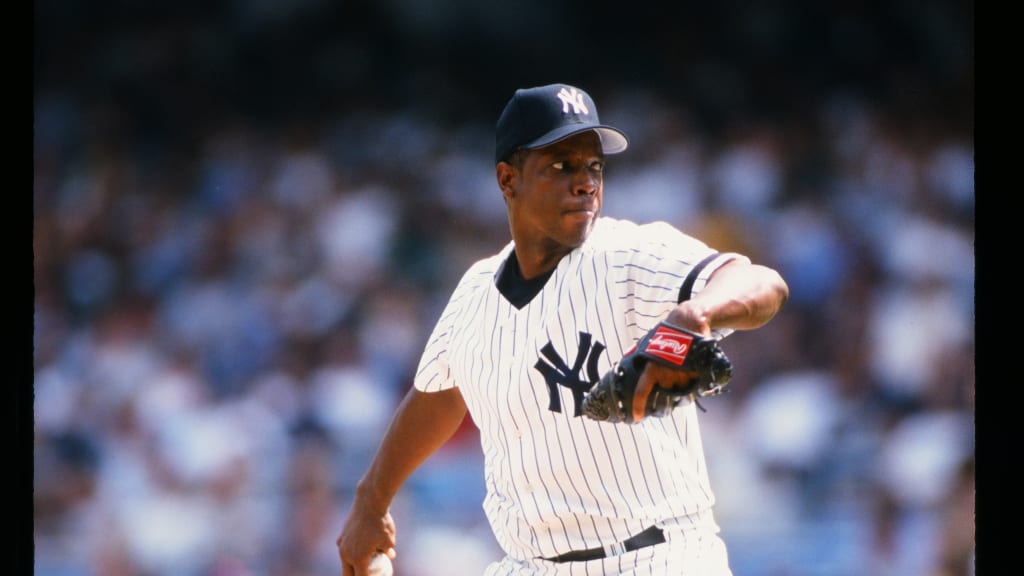
After getting to know Gooden over a three-hour meal, the Boss set up a formal meeting with the intent of signing him to a contract.
“That was the first time I had ever talked to him,” Gooden said. “I got to know a side of the Boss that not many people ever saw. He wanted the best out of everybody, and he would put you in the best situation to succeed. He was a very sensitive guy who wanted to help everyone he could. He had a soft spot for people who were going through difficult things, but he didn’t want anyone to know that.”
With Gooden’s father and Negron with him at the meeting a day after the dinner, the one-time Mets star became a Yankee, but not before one simple demand from the Boss.
“George had a great meeting with Doc,” Negron said. “And right as we were leaving, the Boss walked over to Doc, looked him in the eyes, and in so many words said, ‘Don’t you let me down.’”
***
Gooden’s first few months with the Yankees made it seem as if he was not going to hold up his end of the deal. He didn’t pitch well in Spring Training but nonetheless began the regular season in manager Joe Torre’s rotation.
After the team traveled north, Gooden continued to struggle. He lost his first three starts and gave up 17 earned runs in 13 1/3 innings during a brutal April stretch.
“When I came to the Stadium after the third loss, [Yankees general manager] Bob Watson and Joe Torre decided to take me out of the rotation,” Gooden said. “I wasn’t even in the bullpen; I was on the bench. So, if we were up by 10 or down by 10, I wasn’t getting into the game.”
Despite the circumstances, Stottlemyre, the Yankees’ pitching coach, told Gooden that he was a lot closer to finding the magic he had with the Mets than it seemed. And that vote of confidence meant the world to Gooden.
“Mel and I started to come to the ballpark early to work on just about everything,” Gooden said. “He never gave up on me, even when I doubted myself.”
In a twist of fate, Yankees ace David Cone -- a former teammate of Gooden’s in Queens -- was sidelined with an arm aneurysm that would require surgery a week after Gooden was taken out of the rotation. Yankees brass reportedly debated who should take Cone’s spot, and the Boss ultimately pulled rank, inserting Gooden back into the rotation.
This time around, Gooden would not let the Boss down. In his first start, Gooden allowed one earned run over six innings in an eventual 10-inning loss to Minnesota on April 27. He followed that up by shutting out the White Sox in six innings of work on May 3, and he earned his first win as a Yankee five days after that with an eight-inning outing against Detroit in which he gave up just two hits and retired the last 22 batters he faced.
“It was just a matter of me proving to myself that I could do it in games,” Gooden said. “My confidence came back after that first game.”
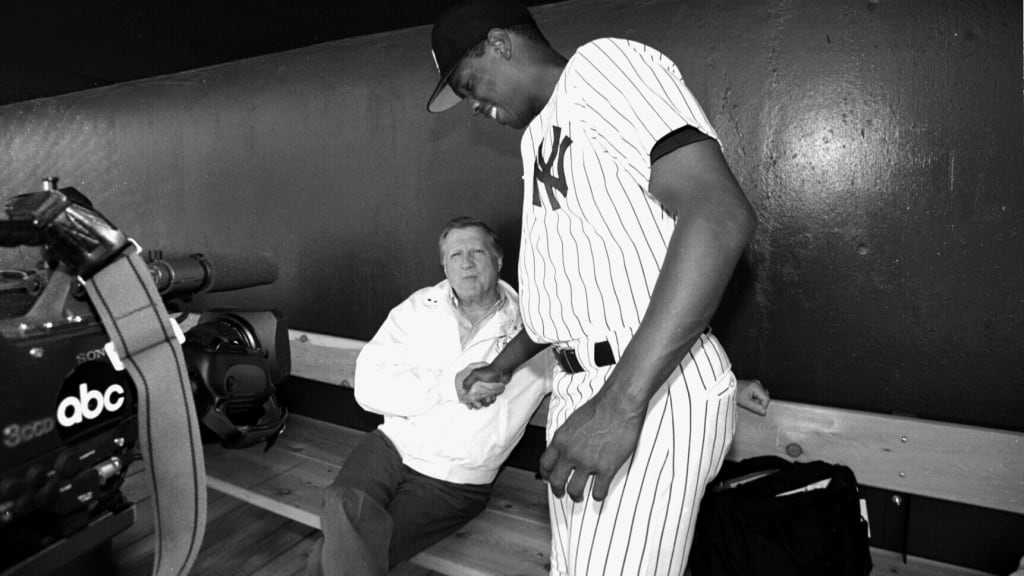
Although Gooden was cruising, his next start would prove to be the most challenging outing of his career, for reasons having little to do with any on-field opponent, even if the lineup he was due to face included Ken Griffey Jr., Alex Rodriguez and Edgar Martinez. Gooden’s father had been dealing with serious health issues, and things suddenly took a turn for the worse. Dan Gooden, the person closest to Doc, was scheduled for open-heart surgery in Tampa on the night of his son’s next start in New York. Initially, Gooden planned to skip the start, but he would ultimately change his mind, believing that Dan would want his son on the mound.
“My dad always taught me that you have to put your responsibilities first,” said an emotional Gooden.
“That day, when I woke up, I started thinking about my dad, and I felt like he would want me to make my scheduled start. So, I called Joe Torre and told him that I wanted to pitch.
“Then, I called my mom and told her. She said, ‘No, you’re coming home. Your dad needs your support.’ I had to hang up on her, and I just broke down crying. I just said to myself, ‘This game is going to be for him.’”
***
As Tuesday, May 14, approached, Gooden was still anxious. The first inning didn’t make him feel any more assured that the right place for him that night was in Yankee Stadium. If not for an almost impossible catch, Gooden’s no-hit bid would likely have been done just two batters into the game. After a walk to leadoff hitter Darren Bragg, A-Rod hit a line drive to center field that appeared to be traveling too fast for Yankees center fielder Gerald Williams to track down. But after turning around and sprinting toward the center-field wall, the team’s fastest defensive outfielder jumped into the air and caught the baseball in his outstretched glove.
“Gerald Williams made a catch that most players would not have been able to make,” Gooden said. “When it was hit, I figured that I had to back up third or home. If Gerald didn’t make that catch, Bragg would have scored, and Alex would have been on third with no outs and with Griffey and Edgar coming up. I probably would have gotten knocked out in the first, but that catch changed the whole dynamic of the game.”
After getting through the opening frame unscathed, Gooden was still trying to keep his emotions in check.
“Before I went back out for the second, I was standing in the walkway between the clubhouse and the dugout, thinking about my dad,” he said. “I was tearing up, thinking about whether I would ever see him again.”
But Gooden put his trust in Joe Girardi, throwing any pitch the veteran catcher called for, and before he knew it, the game moved into the middle innings.
“I remember looking at the scorecard to see who I was going to face in the sixth inning, and I noticed that there were no hits,” Gooden said. “That was the first time all night that I was able to put my dad’s situation aside for a little while. I started to concentrate on the hitters.”
But just as he tried to turn his focus away from his father, the man who taught him how to pitch was top of mind again. After Bragg reached base on an error to start the sixth, Gooden found himself thinking about the advice his father instilled in him back on the Tampa baseball diamonds where he first fell in love with the game.
“When I was in Little League, my dad used to talk to me about how each pitch has to have a purpose,” Gooden said. “You’re aware of who is on deck and who is coming up after that. You’re aware of who gives you the most trouble.”
Gooden’s strategy for the sixth was simple: Leave it all on the mound against Seattle’s most dangerous hitters. And with the game still scoreless, Gooden retired Rodriguez, Griffey and Martinez in order.
“There are certain parts of the game where you have a little extra in the tank that you reach for,” Gooden said. “With those guys coming up, that sixth inning became my ninth inning. I went as hard as I could to get through that inning without worrying about the next inning after that.”
After a 14-pitch seventh inning and a 13-pitch eighth, Gooden took the mound for the real ninth inning. He had already thrown more than 100 pitches, and fatigue had set in. Rather than throwing his usual regimen of warm-up pitches, he instead threw just three or four.
“I was trying to save my bullets,” Gooden said. “I knew what was at stake, and I was gassed. I probably shouldn’t have been out there because I had nothing left. But with my dad’s situation, I really wanted it. When the inning started, I threw every pitch as hard as I could.”
Staked to a 2-0 lead, Gooden walked A-Rod to start the inning before getting Griffey to ground out for the first out of the frame. Martinez followed with a walk, putting runners on first and second.
The second walk of the inning brought Stottlemyre to the mound.
“When Mel came out, he asked me how I was doing,” Gooden said. “I told him, ‘It doesn’t matter. I’m not coming out of the game.’”
Gooden’s brief conversation with his trusted coach gave him a much-needed breather, and he came back to strike out former Yankee Jay Buhner on five pitches, bringing Mariners first baseman Paul Sorrento to the plate for what the pitcher hoped would be the last out of the game.
With a 2-1 count, Girardi called for a curveball, and Gooden delivered it.
“Believe it or not, the last pitch I threw to Sorrento hung right over the plate,” Gooden said. “It was not a good pitch.”
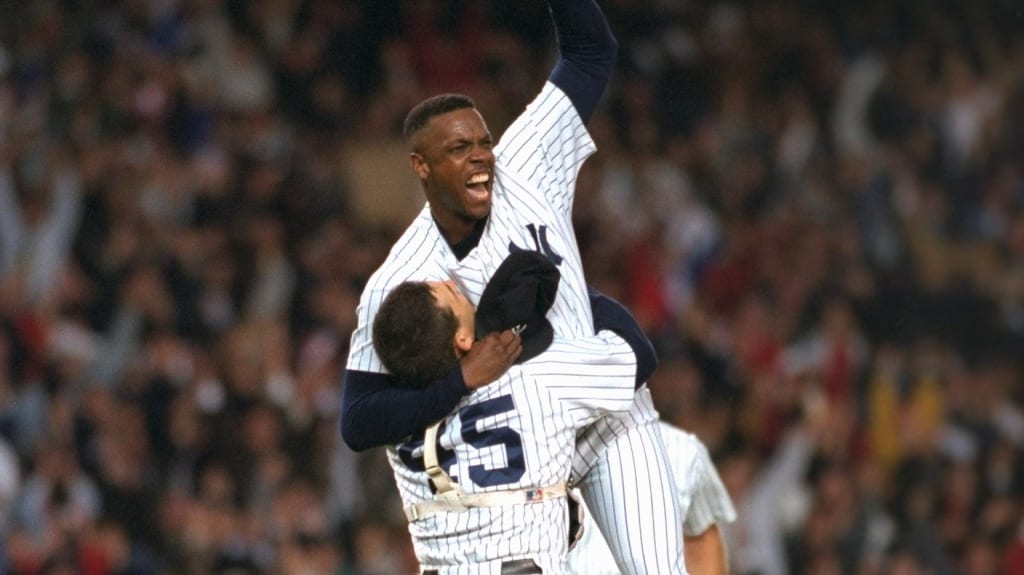
But Gooden had destiny on his side that night, and Sorrento hit a high popup to shortstop Derek Jeter, who anxiously waited for the ball to come down. After the rookie shortstop corralled the final out, Gooden jumped into Girardi’s arms.
His Yankees teammates then carried him off the field.
“In that moment, I was thinking about where I was,” Gooden said. “I was thinking about all the times I had relapsed and how Ray never gave up on me. I was thinking about the Boss telling me not to let him down. I was thinking about how I almost got released that April. All of those things were going through my mind.”
Gooden’s father made it through surgery, and the two reunited the morning after the no-hitter. When the pitcher showed up at the Tampa hospital, Negron and Steinbrenner were there to greet him in the waiting room. In an emotional moment a few steps away, Gooden handed his father the baseball that landed in Jeter’s glove for the final out.
“When I think about the no-hitter, more than anything else, I did it for my dad,” Gooden said.
***
Gooden finished the 1996 season with 11 wins, and a decade after helping the Mets win it all, he was part of a Yankees team that captured its first championship since 1978. He relished every minute of the Yankees’ World Series parade up the Canyon of Heroes, especially those he spent with Strawberry, Stottlemyre and the Boss.
Following the 1996 season, Gooden pitched for three more teams before coming back to the Bronx halfway through the 2000 season. In his first start after returning to the Yankees at 35 years old, Gooden took the mound at Shea Stadium in a mid-July game against the team with which his journey began.
“All I wanted at that point was one more chance to pitch at Shea Stadium,” Gooden said. “The Boss gave me that opportunity, and just like in 1996, it was meant to be. When I took the mound that day, everything just clicked.”
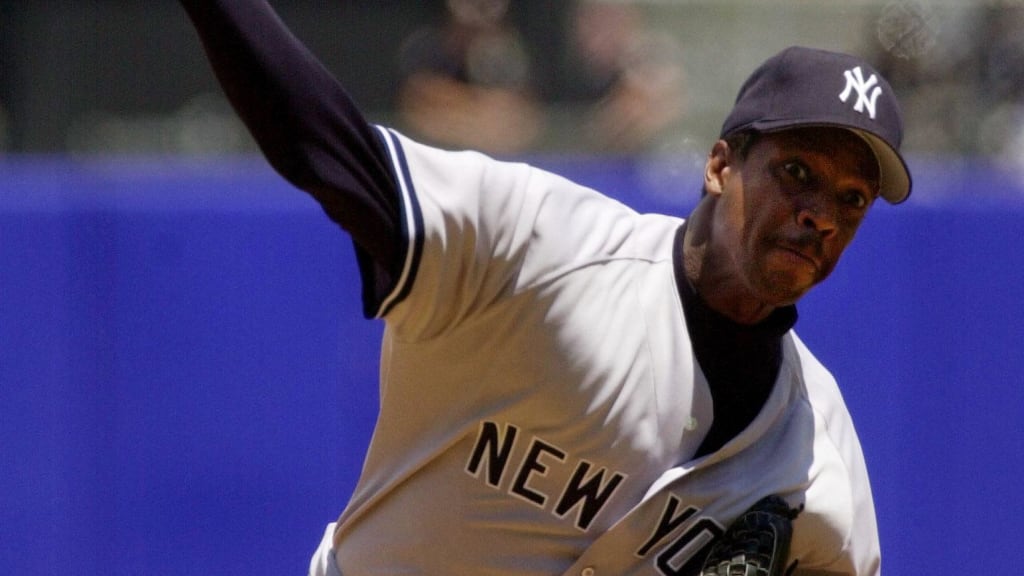
Gooden gave the Yankees five innings of two-run ball, earning the win. He won three more games during the regular season, closing out his career with a 194-112 record, a 3.51 ERA and 2,293 strikeouts in 16 seasons. He also pitched in two postseason games that October, and although he didn’t appear in the World Series against the Mets, closing out his career with a third championship -- clinched on the field at Shea Stadium, of all places -- made for a fitting swan song.
In the 25 years since Gooden last threw a pitch, his life has been more challenging than when he was on the mound. While still grieving the loss of his father, who passed away in 1997, Gooden also struggled to replace the excitement that pitching provided him and again found himself continually turning to drugs.
“As crazy as it sounds, I was getting a rush from doing drugs and not getting caught,” he said. “If I had drugs in my car and didn’t get pulled over, that was a rush. I was just trying to replace the times I wanted to be back in, like the mid-80s.”
In 2005, which began with Gooden working for the Yankees as a special assistant, he was charged with fleeing police after getting pulled over in August. The felony would cost him a chance to advance his post-playing career with the Yankees, and a year later, he was sentenced to a year in prison for violating his probation by using cocaine.
Then, in 2019, after years of trying to stay sober, Gooden was charged with DUI twice in a matter of weeks. When he was brought in front of a judge, he was given the same options he had been offered several times in the past: 30 days in jail or 60 days in a drug treatment facility.
“I told him that I didn’t want either,” Gooden recalled. “I told him that I needed more than that. I had been to rehab seven or eight times, and I had been in jail. I knew that with either of those options, I would be doing drugs again in a few months. I just told the judge that I needed mental help.”
The judge agreed, and Gooden began an outpatient program in New Jersey focused on mental health and drug addiction.
“I was tired of living like that,” he said. “I had been fighting addiction for 40 years, and I kept coming up with the same results. As someone who would literally be crying on the way to get drugs, I knew that I had mental issues that I needed help with.”
Gooden -- who has five children, seven grandchildren and one great-grandchild -- believed almost immediately after beginning the program that this was the type of help he needed.
“It was a lot of work because I had to go all the way back to my childhood and relive a lot of stuff that I thought I had dealt with,” Gooden said. “I’m not justifying anything, but growing up in the inner city, you witness a lot of things, like stabbings and my dad and sister getting shot. A lot of stuff that I witnessed created trauma, and I self-medicated with drugs and alcohol.”
As Gooden’s life has improved in recent years, he has also improved the lives of others. He works with the Suffolk County Sheriff’s Department, speaking at youth events about mental health. He also visits treatment centers and mentors teenagers who are dealing with drug addiction.
“I was 21 when I first started using drugs,” Gooden said. “I used to ask myself how I could go the rest of my life without a drink or without getting high. That seemed impossible. These kids probably feel the same way, and I’m trying to help them.”
Gooden, whose No. 16 was retired by the Mets in 2024, still treats his battle against addiction with a one-day-at-a-time approach, but he is finally able to forgive himself for the past.
“What brings me peace now is being OK with who I am today and accepting the things I did,” Gooden said. “Also, being able to remove the mask, that is something I’m really proud of. I can be completely honest because I’m not living that life anymore. I’m OK with my past, because that’s not who I am today. I have a good relationship with my children, and I know that the things that I did were because of my addiction, not because of the person my parents raised me to be or because of the type of heart I have.”
And as the 30th anniversary of his timeless performance in pinstripes approaches, Gooden is also able to soak in the good memories from his past.
“I love reliving the night I became part of Yankees history,” he said. “I feel like I’m being carried off right now.”
Alfred Santasiere III is the editor-in-chief of Yankees Magazine. This story appears in the May 2026 edition. Get more articles like this delivered to your doorstep by purchasing a subscription to Yankees Magazine at www.yankees.com/publications.