
Baseball is the national pastime for a reason, and each pocket of the country has its own unique connection to the sport. To celebrate the 250th anniversary of this nation, we’re taking you on a summer road trip across the U.S. with Baseball in America, presented by Booking.com, 50 stories from all 50 states. Follow along here.
A version of this story was originally published in August, 2006
Gary Redus' performance with the Billings Mustangs in 1978 ranks as one of the greatest ever produced in a Minor League season. And the funny thing about his magical year in the Pioneer League is that it almost never happened.
The Alabama native hit .462 that summer, making headlines across the Northwest. It's the highest recorded batting average in Minor League history (though it did not come at a full-season level) and makes Redus the answer to a very esoteric trivia question.
Redus, however, almost didn't sign with Cincinnati after being drafted in the 15th round in June 1978. It took some soul searching and a few lengthy discussions with his mother before he decided to join the Reds and head for Billings after starring at Athens State University. If he hadn't, the record for the highest batting average in a single Minor League season would belong to Bill Krieg, who hit .452 in 1895 with Class B Rockford of the Western Association.
"There was some debate as to whether I would play or not," said Redus. "I was wondering whether I should play or just stay home and work. The year before, I was drafted by Boston [in the 17th round] and I was more or less trying to see how big a bonus I could get from them after being picked -- and I didn't get [one].
"I played in the Cape Cod League after I was picked by Boston and I was an All-Star there. So I went back to school, had an even better year and was an All-American. There were scouts watching me. I figured I played with a bunch of guys in the Cape League and on the day of the Draft I saw them all get drafted in the first 10 rounds, and I figured I should have [been], too. And when I didn't, it was a big disappointment."
The Red Sox had offered Redus a $6,000 bonus, which he turned down. The Reds only offered $2,000, which stung the talented infielder. So Redus told the folks in Cincinnati that he planned on staying home, that he could make that much working over the summer. It wasn't until his mother got involved that Redus changed his mind.
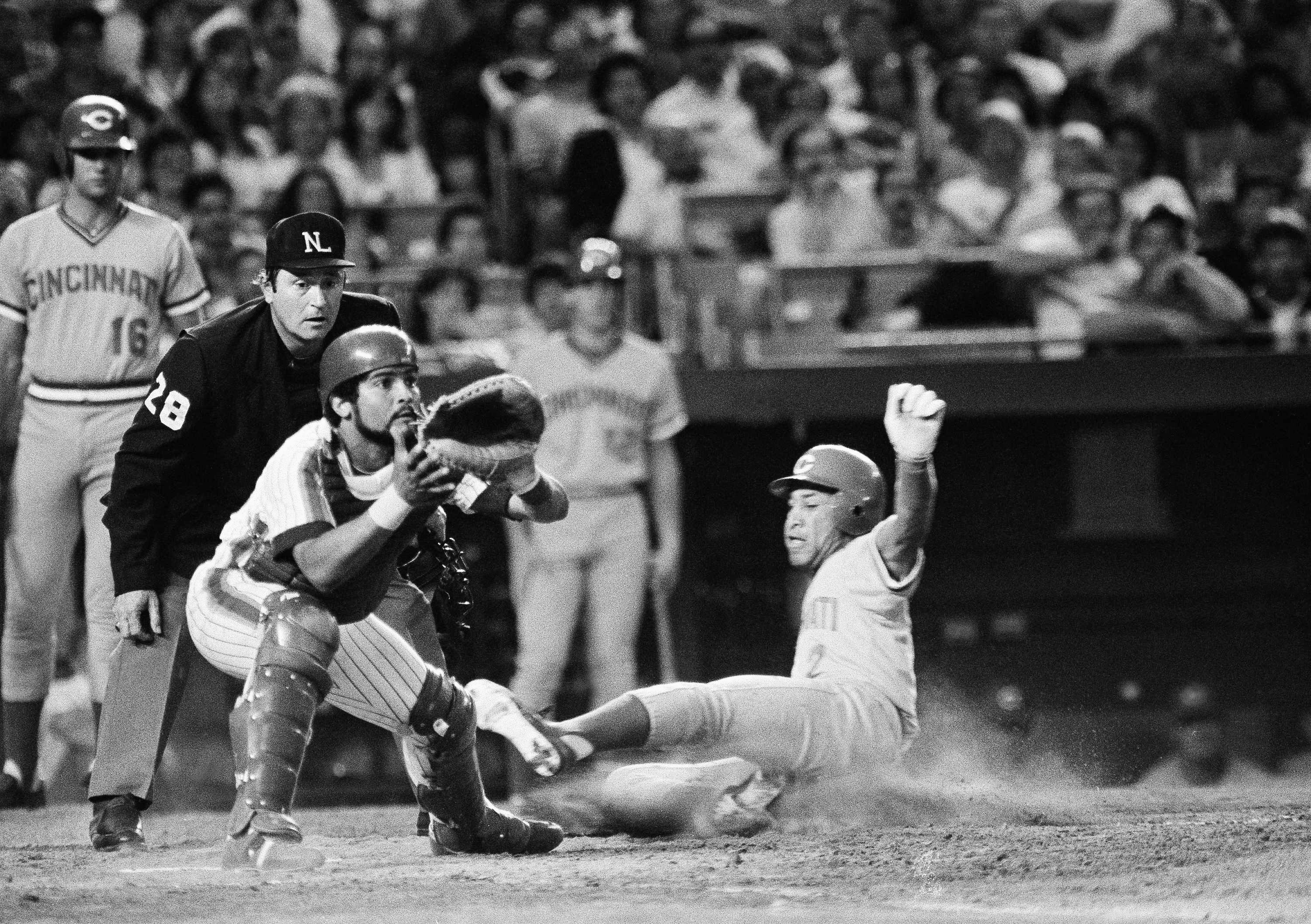
"All I ever wanted to do was play baseball," Redus said. "It was my first love. So she told me, 'Just go play.' So that's what I did. And the Reds called and bumped my bonus up to $3,000, and after looking at it I realized that I couldn't make $3,000 at a summer job, so I went."
And the results turned out better than anyone could have imagined, Redus included. The Pioneer League has a storied history and has seen some special players come through its ranks, but none has matched what Redus did that summer. In addition to his astounding batting average, Redus scored 100 runs in 68 games and racked up a .787 slugging percentage.
"I never played with a guy that had so much power and speed," said former Billings teammate Skeeter Barnes, a veteran of nine big league seasons and longtime manager and coach at the Minor League level. "Even in high school and college, I never saw anyone that had it all in one package like that. That's what I remember most about him that year.
"He was built like a cross between a cornerback and a sprinter. He had a big upper body and little bitty legs. I never saw a player with that much power and speed until I played with Eric Davis."
Barnes was another big reason why the Mustangs went 50-18 and waltzed to the league championship that year. Billings hit .304 as a team, with Barnes contributing a robust .368 average and 76 RBIs. Future Major Leaguer Nick Esasky also was on that squad and hit .305.
Redus points to the fact that most of the Billings players were older, having played in college, and were used to being away from home. There wasn't a big adjustment in that regard, and he believes it proved to be a huge advantage against the rest of the league, which sported teams comprised mostly of recent high school graduates.
Future Angels All-Star Mike Witt was in the Pioneer League that summer and, according to Redus, was the only pitcher who gave him trouble. Witt, a fourth-round pick who turned 18 during the season, pitched for Idaho Falls. He went on to win 117 games in the Major Leagues, including throwing a perfect game, and was well aware of what Redus was doing when the two met.
"This guy was just tearing up the league," Witt said. "When it was my turn to face him, I considered it a big challenge. I think I did well against him. I think he had a pretty decent career, but if you saw him in 1978, you would have thought it was the second coming of Rickey Henderson.
"You could tell he had played some ball and knew his way around the batter's box and how to set up pitchers. In that regard, he was a little more advanced. All the pitchers on my team couldn't understand why he was in that league."
After that storied season, Redus started making his way up the farm system. He hit .333 for Triple-A Indianapolis in 1982 and earned a September callup to the big league club, making his debut on Sept. 7.
That end-of-year stint with the Reds marked the beginning of a 13-year Major League career, during which he collected 886 hits and batted .252. Redus hit a career-high 17 homers and drove in 51 runs while batting .247 in 1983 to finish fourth in National League Rookie of the Year voting (Darryl Strawberry won it that year). In 1993, he hit a career-best .288, only 174 points off that magical season in Montana.
"I don't know if you can say it's unrealistic to keep playing that way," Redus said of his 1978 run. "It didn't get me any closer to the big leagues any quicker. I ended up in A-ball the next year, anyway. But I just loved to play. That was it. I think about that year, but I don't dwell on it a lot.
"I knew it was special. And it always comes up in trivia and stuff like that. And when some of the younger guys look at the back of my [baseball] card, they go, 'Wow!' It tells some of the Minor League guys that they have to play and perform to get to the big leagues."