

CINCINNATI -- As baseball's first professional club, the Cincinnati Reds have a long and storied history filled with some great players, memorable teams, five World Series championships and even one star-studded dynasty -- the Big Red Machine.
Among the traditions that also run deep is the franchise's history with its mascots.
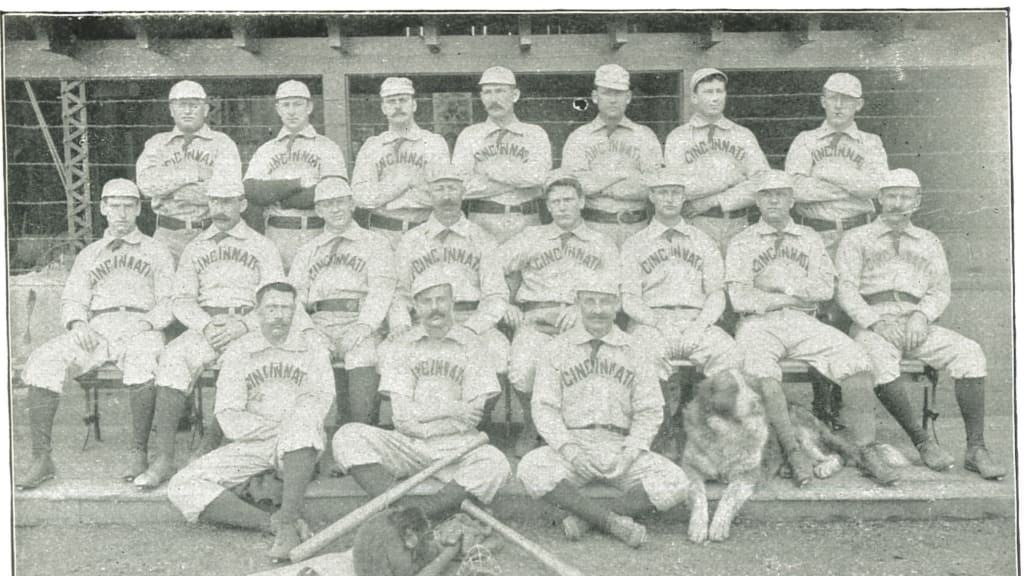
According to the Reds Hall of Fame, team mascots existed in the late 19th and early 20th centuries, and were live animals. There was a rabbit, several dogs and even a monkey. An 1896 team photograph shows players with a dog and a monkey, named Mose.
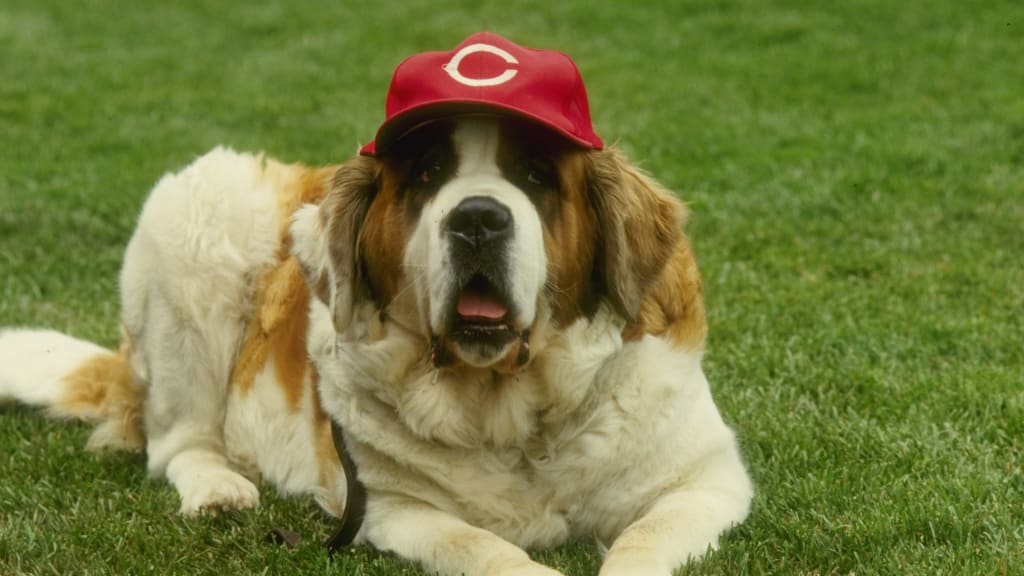
Nearly a century later, a St. Bernard, named "Schottzie," was a constant companion of then-owner Marge Schott and became a de facto team mascot in the 1980s, as was its successor, "Schottzie 02."
Costumed mascots for the purpose of entertaining fans -- namely kids -- eventually joined the scene around Major League Baseball, including Cincinnati, in the latter portion of the 20th century.
Currently, the Reds employ four full-time mascots: Mr. Redlegs, Rosie Red, Gapper and Mr. Red.
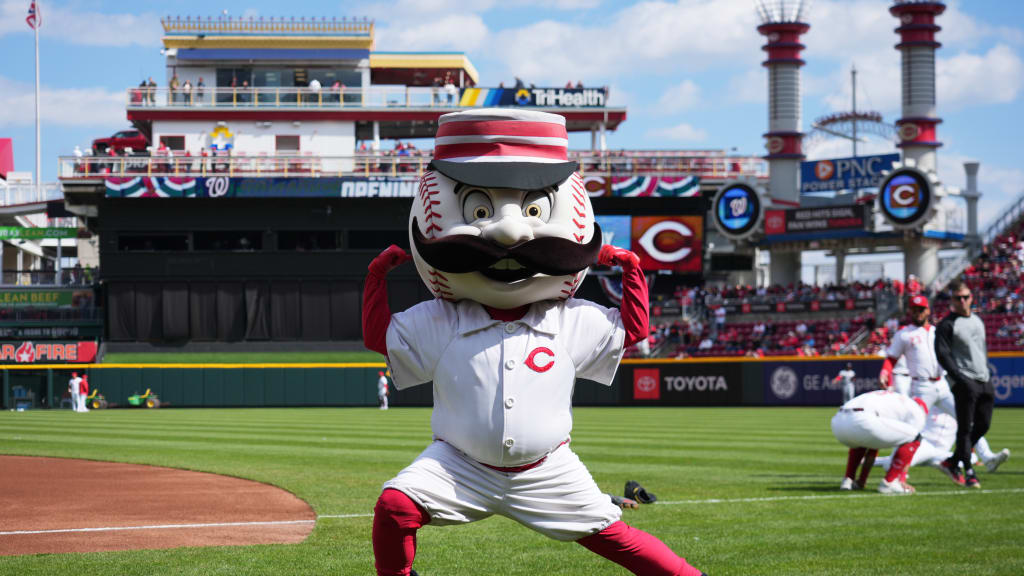
According to the Cincinnati Enquirer, their sports cartoonist at the time -- Harold E. Russell -- unveiled an emblem for the team that was Mr. Redlegs in 1953. It came after the club changed its identity to the Cincinnati Redlegs for political reasons as anti-communist sentiment swept the United States.
A mustachioed fellow with a large baseball-shaped head, Mr. Redlegs was designed with a uniform of the 1869 Cincinnati Red Stockings, including a pillbox cap. He eventually appeared as a logo on the club's jerseys and in souvenir yearbooks. Although the Redlegs name ended for the team in 1959, the mustached character remained until a clean-shaven character took hold in 1968.
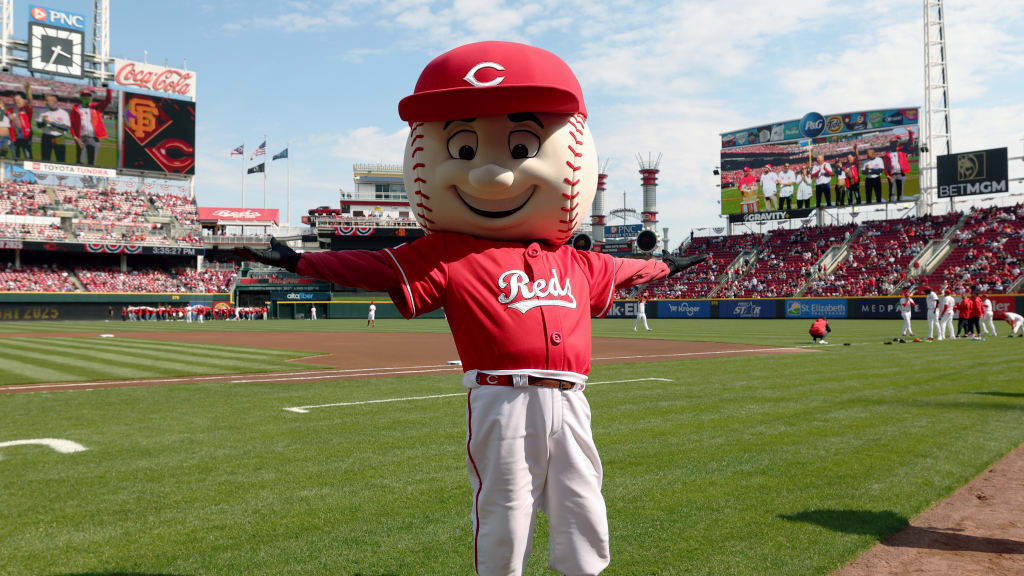
That would be Mr. Red, who appeared on logos as a "running man" with an updated uniform. He even sported his own jersey number, 27. The team's first costumed version of Mr. Red debuted in 1973. Perhaps not coincidentally, the lack of a mustache occurred during a period when the club instituted a no facial hair policy.
Also, no Reds players wore No. 27 after Gene Locklear departed during the middle of the 1973 season until ‘88, when starting pitcher Jose Rijo arrived in a trade.
After the 1992 season, Mr. Red was retired as a logo after the costumed mascot had already been put on mothballs a few years earlier. A new Mr. Red mascot's costume returned in 1997. However, this version looked -- for the lack of a better word -- creepy, especially his eyes. He remained in use until 2007, when a redesigned and mustached Mr. Redlegs triumphantly returned in conjunction with a uniform reboot that featured him as a jersey shoulder patch.
Mr. Red was not out of commission for very long. In 2012, a friendlier-looking version of his costume debuted and still remains.
Gapper was unveiled in December 2002, during Redsfest, and first appeared on the field in 2003 as the Reds opened Great American Ball Park. A furry monster with no distinct origin, Gapper provided fans a more lovable mascot to enjoy.
During the summer of the 2008 season, the Reds introduced a rarity for professional sports -- a full-time female mascot. Named Rosie Red and sporting black hair under her Reds cap while wearing a skirt, her origin story dates all the way back to 1964.
The Rosie Reds, a social organization with a philanthropic mission, was formed as a support group for the team. It started when there was talk of the Reds franchise leaving Cincinnati. The name is actually an acronym for "Rooters Organized to Stimulate Interest and Enthusiasm" in the Cincinnati Reds.
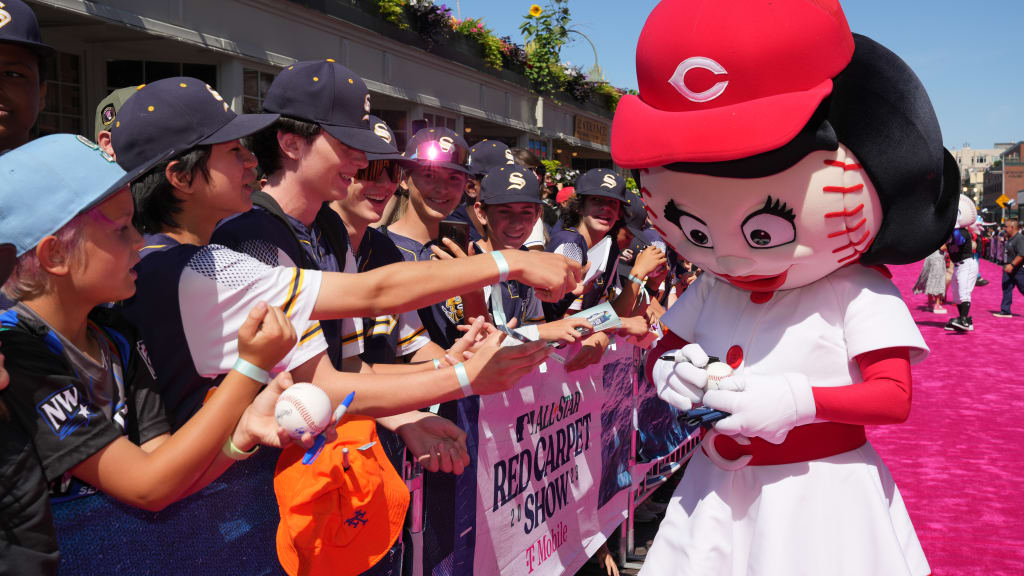
Although the group is composed mostly of women who love the Reds, men are also welcomed. They have an annual meeting and several events each year and work to raise money for local baseball and softball programs.
The Rosie Red mascot more than holds her own on the field with her three male counterparts.
All four Reds mascots can be found at Great American Ball Park during home games each season, but their efforts to entertain are not limited to gamedays. The mascots often visit kids in the hospital, tour the region on Reds Caravan, appear at Redsfest and are often on hand for community-oriented events throughout Ohio, Kentucky, Indiana and West Virginia.
Whether it's on or off the field, all four mascots are ready to provide added fun for Reds fans of all ages.