Baseball is the national pastime for a reason, and each pocket of the country has its own unique connection to the sport. To celebrate the 250th anniversary of this nation, we’re taking you on a summer road trip across the U.S. with Baseball in America, presented by Booking.com, 50 stories from all 50 states. Follow along here.
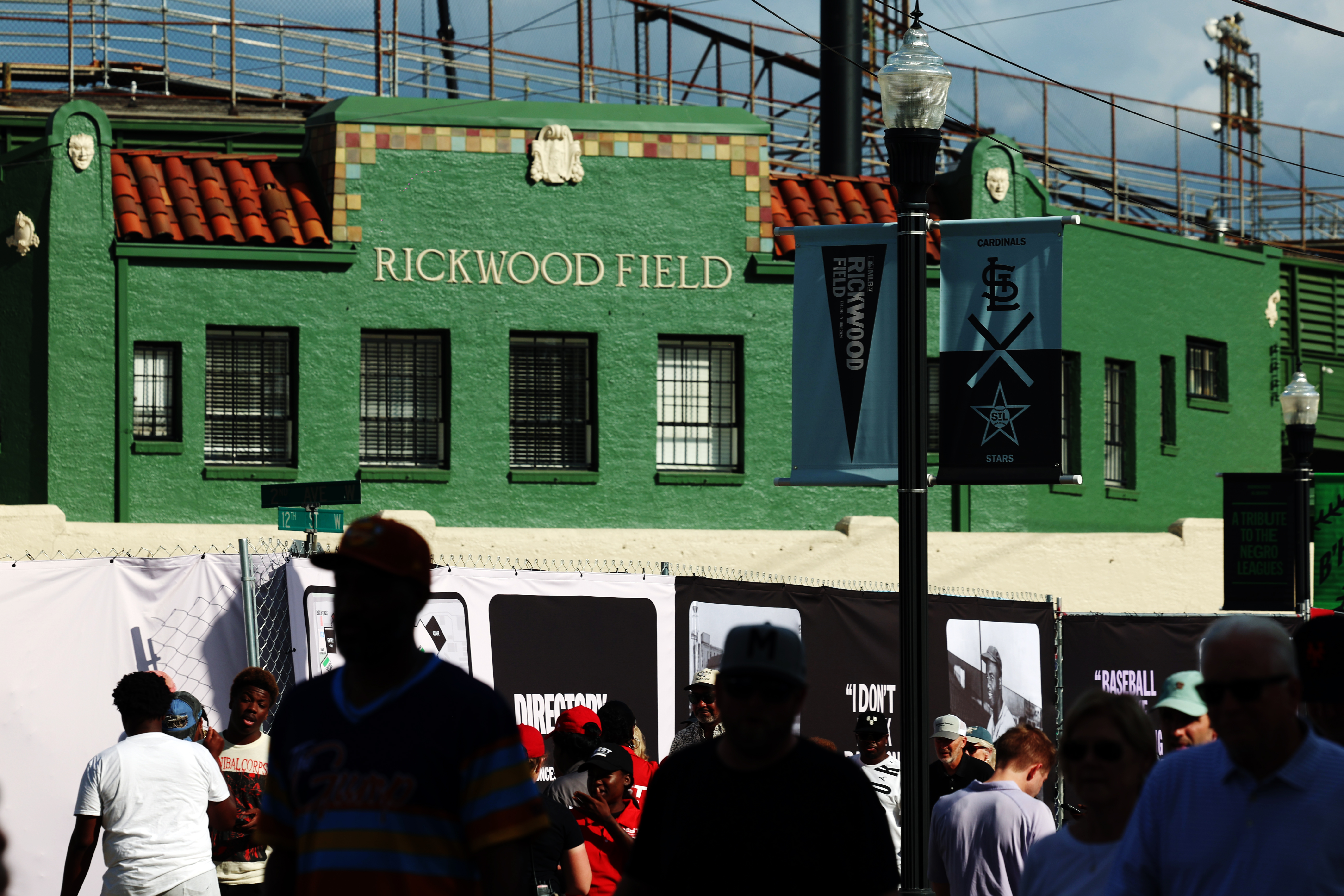
On a wide plot of land just west of the bustling downtown of Birmingham, Alabama, sits a monument that immediately evokes a sense of a bygone era. The mission-style structure with a striking green exterior and sturdy white columns beckons visitors to explore the world that exists within its gates.
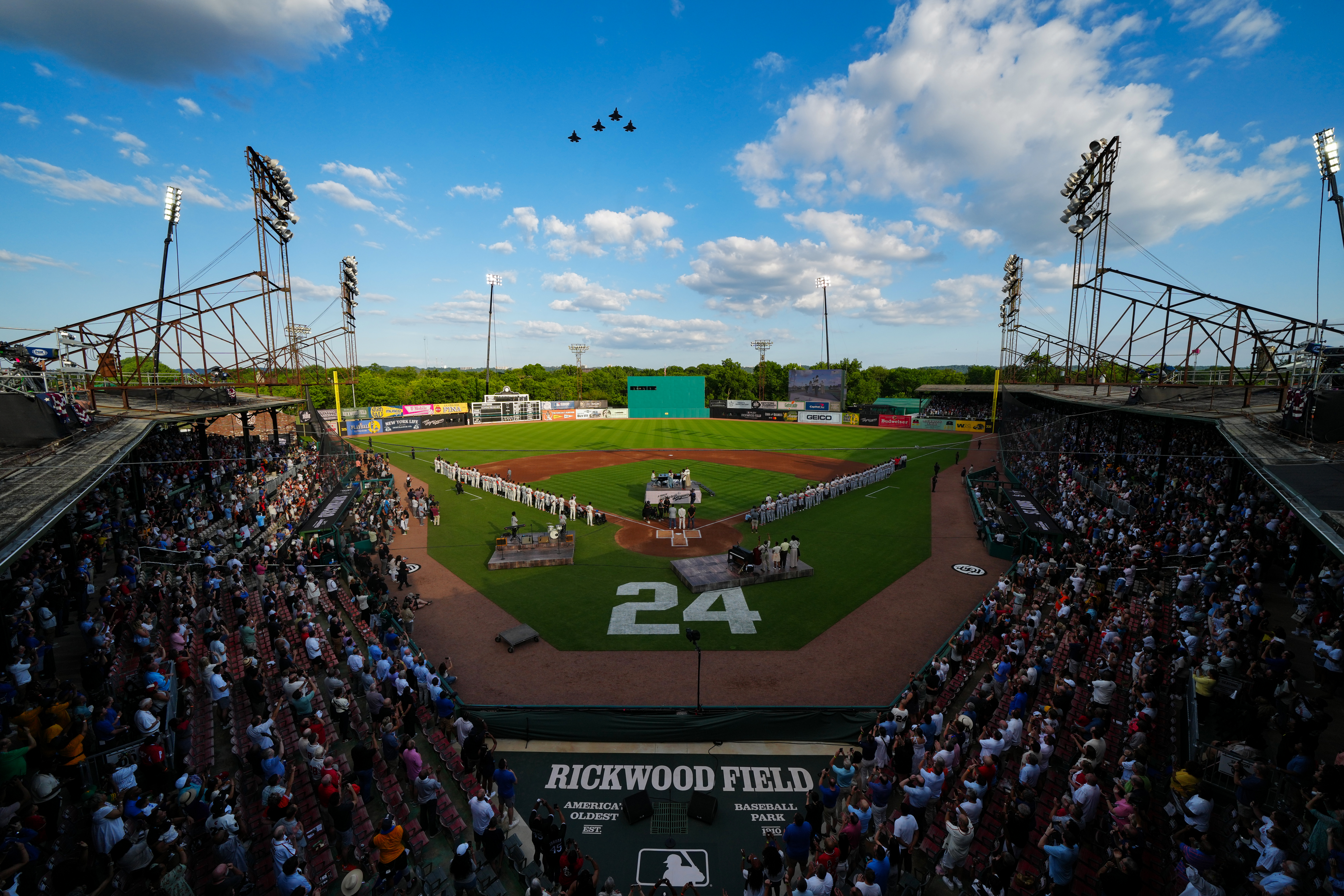
This is Rickwood Field, the oldest ballpark in the United States. Opened in 1910 by local industrialist A.H. “Rick” Woodward as the first concrete-and-steel ballpark in the Minor Leagues – modeled after Forbes Field, the longtime home of the Pittsburgh Pirates – Rickwood has been listed on the National Register of Historic Places, the federal government’s list of sites deemed worthy of preservation for their historical significance or great artistic value, since 1993.
In the interceding years, Rickwood bore sight to many iterations of baseball, and some of the greatest players to ever play the game suited up on its diamond, including 181 Hall of Famers – some of whom made a name for themselves in the Negro Leagues and others who went on to star in the AL/NL.
More recently, as one of only six Negro Leagues ballparks still standing, Rickwood hosted the first regular-season MLB game in the state of Alabama, played between the St. Louis Cardinals and San Francisco Giants in tribute to the Negro Leagues on the day after Juneteenth in 2024.
Here is a timeline of some of the biggest moments in Rickwood’s storied history.
1910: Opening day for Rickwood Field
It was Aug. 18, 1910, and businesses all over town shut down early in anticipation of the field’s debut. An estimated 10,000 people crowded into the newly constructed ballpark, eager to support their team, the Birmingham Barons. After Woodward threw out the game’s first pitch (which was not ceremonial and actually counted), the Barons pulled off a 3-2 victory over the Montgomery Climbers.
1921: Here come the Birmingham Black Barons
With Jim Crow as the law of the land in the South, the Barons were – like everything else in the city – segregated by race. But as the Negro Leagues came into being at the start of the Roaring 20s, the aptly named Black Barons were formed as one of the first eight teams in the Negro Southern League. They made an agreement with Woodward to rent out Rickwood for their games when the all-white Barons were out of town.
1936: The stars are coming out
When the National Baseball Hall of Fame’s inaugural five-player class was unveiled on Feb. 2, 1936, Rickwood received one of its biggest claims to fame. At least once in their illustrious careers, Babe Ruth, Honus Wagner, Christy Mathewson, Walter Johnson and Ty Cobb had all played there. Rickwood was conveniently located near a railway hub, and Major League teams would often stop at the ballpark on their way from Spring Training in Florida back to their home city. Lou Gehrig, Stan Musial, Mickey Mantle, Joe DiMaggio and Roberto Clemente are just a few of the notable names who did the same.
1948: Rickwood hosts the Negro League World Series
The 1940s were a golden era for the Black Barons, whose run of dominance turned their games into can’t-miss communal events for the city’s Black population. From 1943-48, the team posted a .604 win percentage and captured three Negro American League pennants, though they never won it all. The 1948 team was the darling of the bunch, buoyed by a high school-aged Willie Mays and a heroic Game 7 outing from Bill Greason – the oldest living Negro Leaguer – to reach the World Series, where they fell to the Homestead Grays in what ended up being the league’s last championship as integration came to the Majors.
1964: Ballclubs segregated no more
As the Civil Rights Movement sought change nationally, Birmingham was an epicenter for disenfranchisement and violence. It took the ouster of public safety commissioner Bull Connor for Barons owner Art Belcher to be able to reform the club as a charter member of the new Southern League with the city’s first racially integrated Barons team. A Double-A affiliate of the Kansas City Athletics that season, they became Alabama’s first integrated sports team and the first professional team to play at Rickwood without segregated seating.
1967: Birmingham A’s put on a show
After the city purchased the rights to Rickwood in ‘66, Birmingham native Charles O. Finley, who owned the Major and Minor League A’s and had been a Barons batboy in his youth, populated the team with the best players in the farm system, including Hall of Famer Reggie Jackson, the No. 2 overall pick in that year’s Draft. Withstanding the racism directed his way, “Mr. October” hit 17 homers and 17 triples to lead those A’s to an 84-55 record and the Southern League championship in 1967; after he and many of his teammates graduated to the Majors, MLB’s A’s won three consecutive World Series titles from 1972-74.
1994: A Hollywood revival on the diamond
As attendance declined in the ensuing decades and pro ball moved to the suburbs, Rickwood fell into disarray. In ‘91, the Chicago White Sox’s famed Comiskey Park had been demolished, leaving Rickwood as the nation’s oldest ballpark. But with the possibility of it being next on the chopping block, five local men created the Friends of Rickwood organization, with the blessing of then-Mayor Richard Arrington Jr., to help save it. As it turned out, Hollywood writer/director Ron Shelton was looking for an old-timey ballpark to shoot his 1994 film “Cobb.” Rickwood fit the bill, and it was later used for 1996’s “Soul of the Game” about Josh Gibson (whose Grays won two Negro World Series over the Black Barons in 1943-44), Satchel Paige (who pitched in five different decades but started at age 20 with the Black Barons) and Jackie Robinson.
2024: Rickwood takes center stage once more
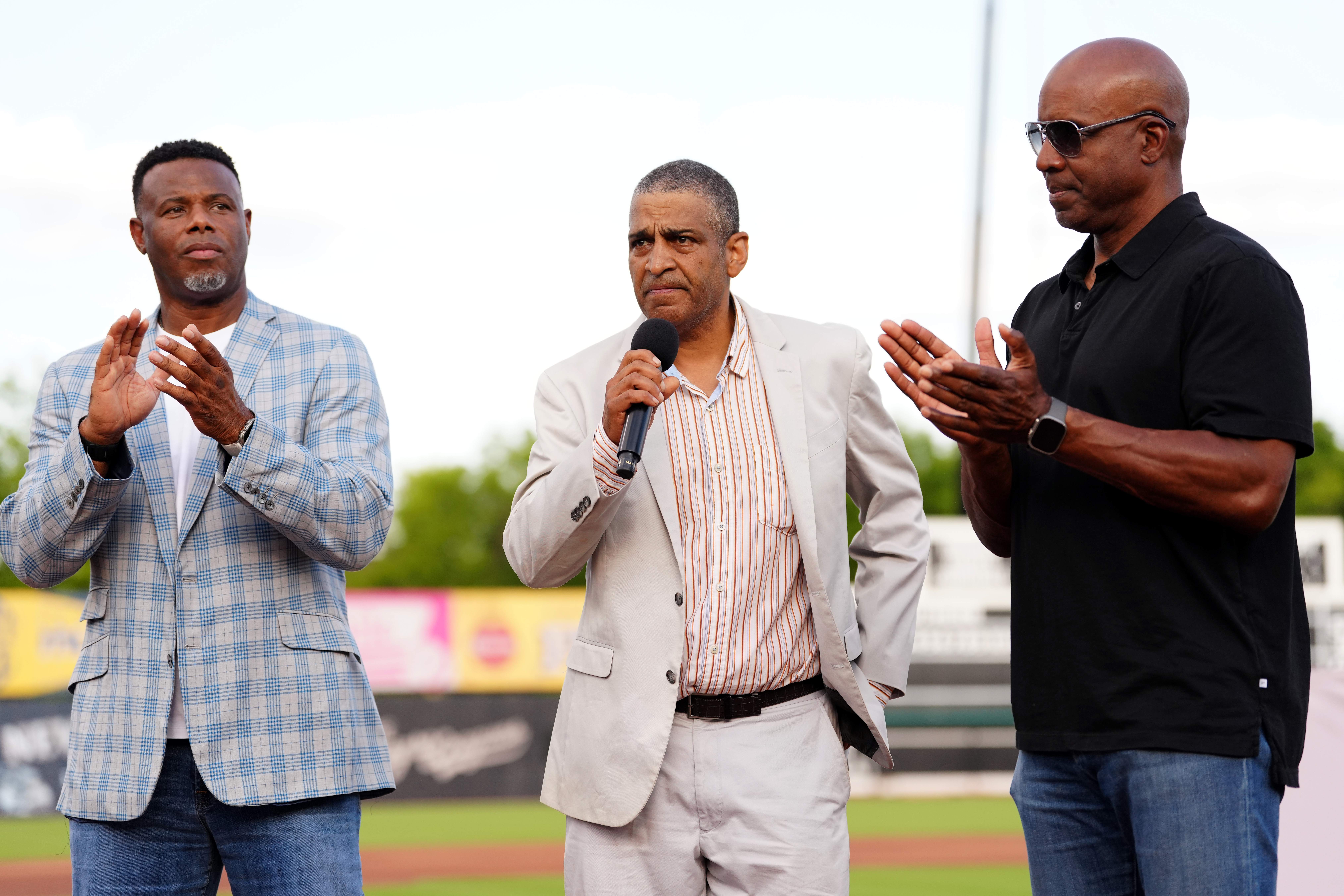
Given how long it had been since the ballpark had seen game action, MLB, Friends of Rickwood and the City of Birmingham collaborated on a $5 million makeover for the showcase event, updating the entire playing surface and adding a padded outfield wall, new dugouts, a modern batter's eye in center field, a digital scoreboard and netting along the foul lines. With the eyes of the baseball world on Rickwood, the Giants and Cardinals wore throwback uniforms that evoked their Negro Leagues counterparts (the San Francisco Sea Lions and St. Louis Stars), and were accompanied onto the field pregame by former Negro Leagues players in a special ceremony. Michael Mays, Willie’s son, gave a powerful speech on behalf of his father, who had passed away at 93 two days before the game took place. It ended as a 6-5 win for the Cardinals.