

This story was excerpted from Anne Rogers’ Royals Beat newsletter. To read the full newsletter, click here. And subscribe to get it regularly in your inbox.
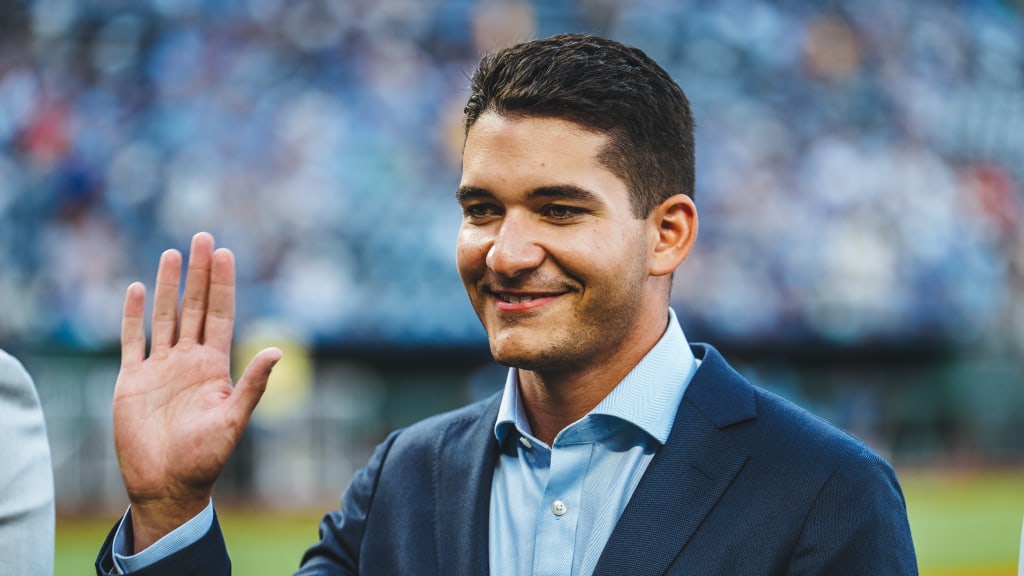
In 2017, Daniel Guerrero was in his early 20s, wrapping up an internship with the Nationals and planning his next move. He wasn’t sure what awaited him the following season, so he went to the place that always felt like home: A baseball field.
Guerrero’s dad, Mike, was the bench coach for the Tigres del Licey in the Dominican Republic that winter, so Daniel stayed with him and helped out with the team.
On one of Daniel’s last few days in the Dominican, he was sitting behind home plate writing scouting notes when Rene Francisco, the Royals’ top international official, sat beside him and struck up a conversation.
“I had no idea who he was,” Guerrero said. “But we talked the entire game.”
It ended up being an interview, because Francisco hired Guerrero shortly after to scout in the Dominican Republic. Less than 10 years later, Guerrero is the Royals’ director of international scouting, overseeing signing periods that have generated buzz around the industry. Nine of the Royals’ Top 30 prospects were signed internationally, including right-hander Kendry Chourio (Royals No. 1 prospect/MLB No. 54), outfielder Angeibel Gomez (No. 3/No. 84) and shortstop Jaider Suárez (Royals No. 18).
COMPLETE ROYALS PROSPECT COVERAGE
Baseball is in Guerrero’s blood. His grandfather, Epy, was a longtime and highly respected international scout. Epy had five sons, all of whom found their way into baseball, including Mike, Daniel’s dad, and Fred, Daniel’s uncle, who now also works for the Royals.
“It kind of was an overwhelming pressure to be in baseball, but I love it,” Daniel said. “When I talk about my professional life, it’s almost like it started so long ago because I’ve been in a clubhouse since I was a kid.”
That was the center of the conversation between Francisco and Guerrero that day in the stands.
“He reminded me of when I started,” Francisco said. “Born in the Dominican, grew up in the States, went to work in the Dominican for my first job. Basically, that’s what we gave him. Gave him a small area in the DR to start off.”
Guerrero quickly established himself as a rising star in the front office. The Royals brought him stateside after a year to scout and learn the Draft process, and his area expanded to all of Florida in 2021.
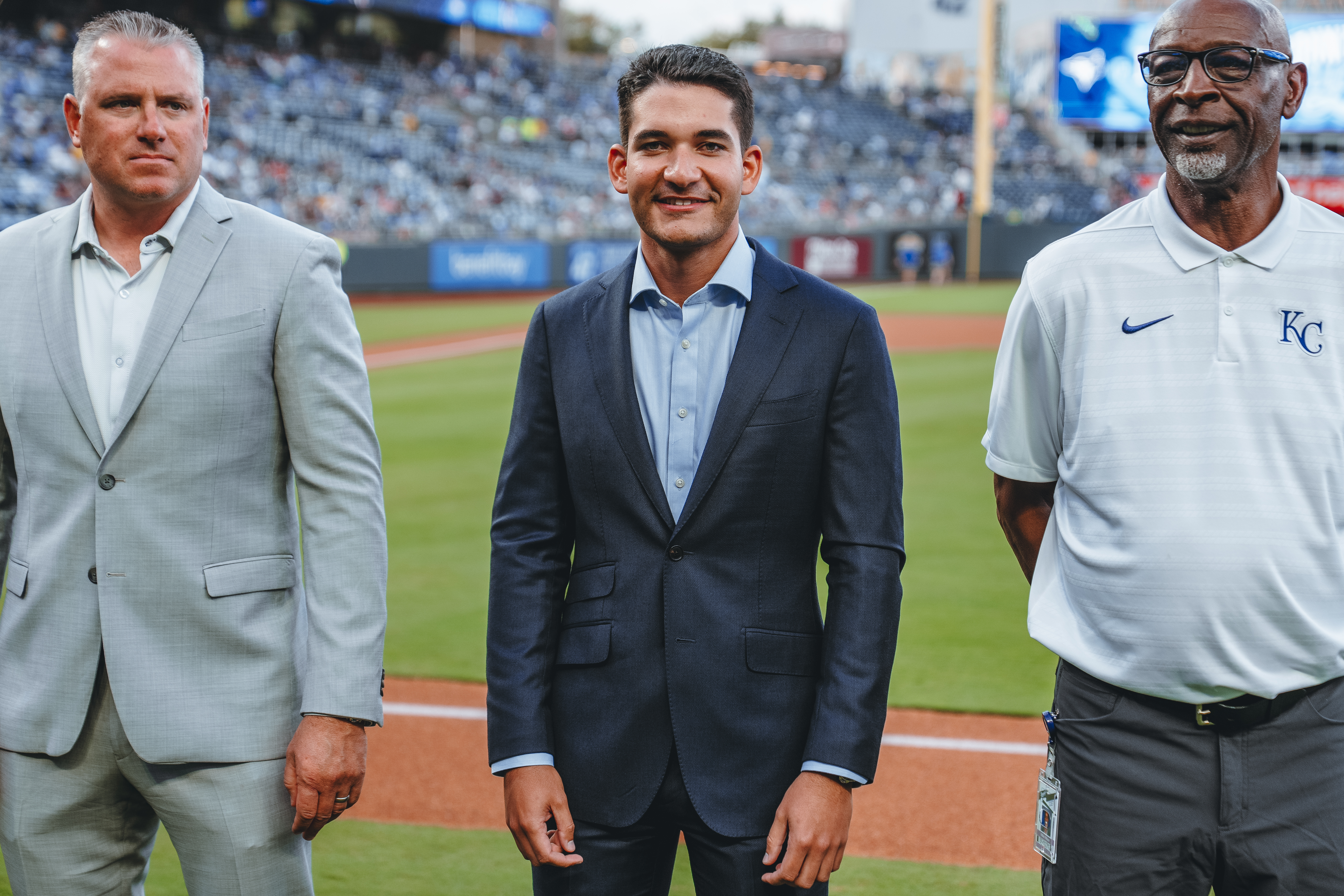
He returned to the international department in ‘23, and at the end of that season, he was promoted to director of international operations, working directly with Francisco as the Royals revamped their international presence. The Royals have found some gems on the international market, but there was more to be desired, especially since Kansas City went over its bonus pool during the 2015 signing period, leading to future restrictions. Their ‘15 class included high-bonus players like Seuly Matias and Jeison Guzmán, neither of whom made it past Double-A. It did produce two catchers who made it to the big leagues in Freddy Fermin and Sebastián Rivero.
The Royals wanted their recent rebuilding of player development processes to include the international side, too.
“I thought Daniel was going to be more hands on,” Francisco said. “He’s very thorough. He listens and makes a decision. He asks a lot of questions. He asks for a lot of advice from a lot of people.”
Guerrero is the face of the change, but the Royals also brought in two experienced scouts to assist him: Johnny DiPuglia as special assistant of international scouting, and Fred Guerrero – Daniel’s uncle – as coordinator of player evaluation. Both have strong scouting records; for example, DiPuglia was involved in the signing of Juan Soto and others with the Nationals. Guerrero played a role in signing Luis Arraez with the Twins, among others.
“Both of them know the market,” Francisco said. “They know the agents that we need to know. They know the process of the Latin players. And I thought it would be great for Daniel to have two different minds – because they think differently – helping him, along with me.”
“It’s like having an ace in your back pocket for every guy they go see,” Daniel Guerrero said of their experience.
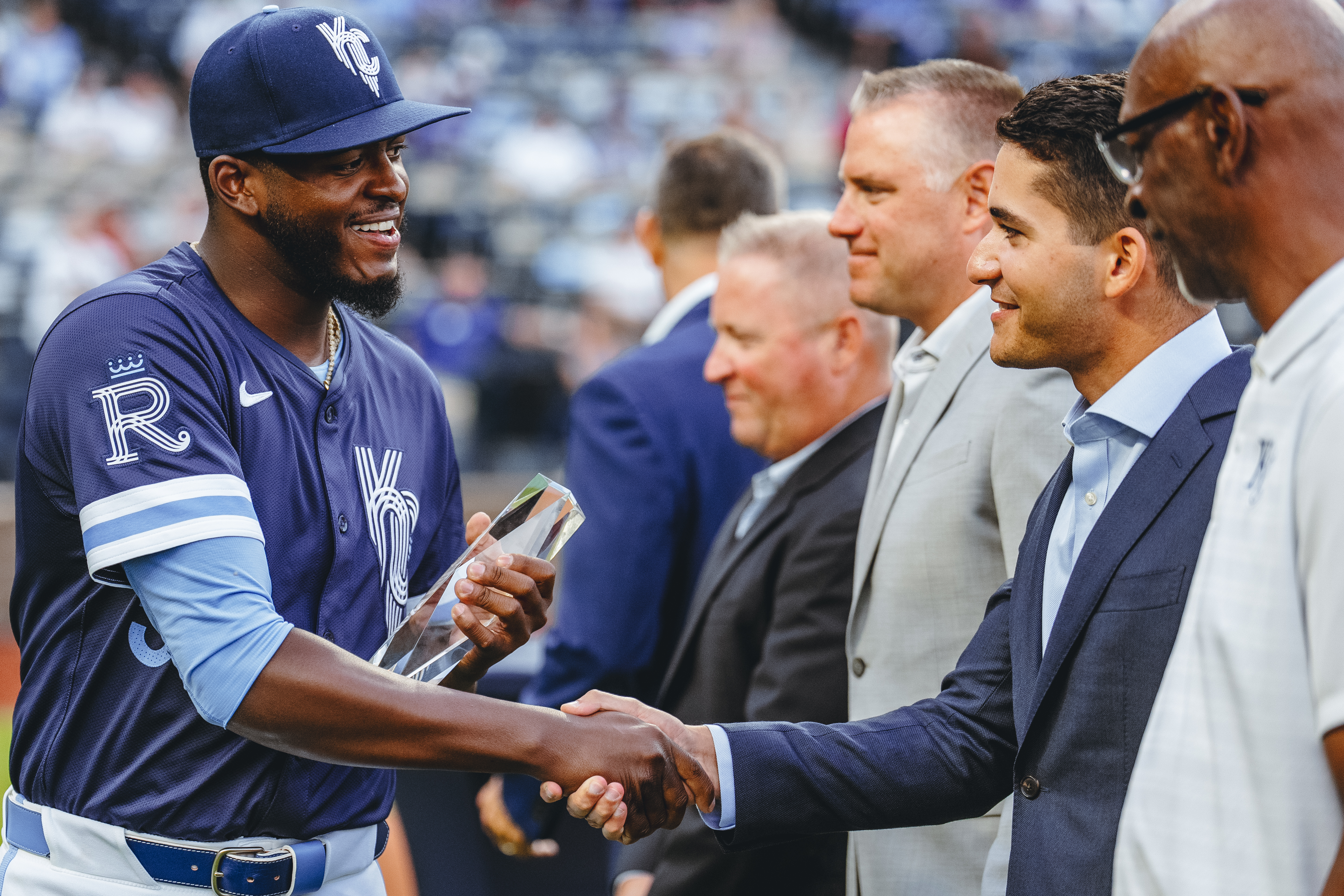
Scouting is still the heart of what the Royals do. But an investment of technology and resources help with player evaluation. A portion of the organization's research and development team is devoted to the international department and building evaluation models, something that wasn’t the case a few years ago.
“The game has advanced,” Guerrero said. “At the core of it, we’re still scouting. But we have a lot of components to that evaluation. We’ve added so much, whether that’s people to help us develop players differently, data and analytics, having a relationship with R&D, adding tech – everything from blast, force plates, Trackman – all that stuff has been added in.”
Philosophically, the Royals have emphasized the idea of finding Royals-type players: Up-the-middle athletes that impact the game through quality contact. That idea hasn’t changed in decades, but the way they find those players is evolving.
“It’s been defined what our profile is,” Guerrero said. “It always comes back to those same things. Athletes up the middle, minimize chase rates and swing and miss. Maximize contact skills and hard-hit rates. It’s profile and makeup.”
International scouting is risky because teams find players at a young age and sign them as teenagers. They go through so much to even reach affiliate ball, let alone the big leagues.
“Most of the players you sign from Latin America are going to be high-ceiling players because a lot of them have tools, but a lot has to click,” Francisco said. “You’re trying to minimize risk by looking at chase rates, the swing and miss, because that’s the hardest thing to do and to teach. You want tools. You also want some skills. That’s the thing we’re trying to find.”
Time will tell if the Royals’ highly-ranked prospects add value to the organization long term. That goes for the Draft process, too.
But the Royals are making an impact on the international side again, and the work is just beginning.
“What we do on the field, that’s a product of scouting,” Guerrero said. “But scouting is no longer watching a guy and writing in a notebook. It’s a lot more. We gather more track record, we take more video, we get more data, we do all these things to get a better understanding and feel for the player and who he is, and that will hopefully let us recognize patterns better. Our guys are all in.”