

Ian Happ hit a notably loud home run on Opening Day in Chicago. Kind of. So did Yordan Alvarez in Houston. Also, kind of.
It doesn’t say that in the box score, because Happ went 1-for-5 (a single) with three strikeouts, as the Cubs fell to Washington 10-4, while Alvarez reached base only via walk in a 3-0 loss to the Angels. Neither rounded the bases. Neither will see the home run column on their baseball card tick up by one. No one scored. Their teams didn't win.
It was somewhat easier to see what befell Alvarez’s moonshot in the first inning against the Angels: It struck the rafters at Daikin Park, getting redirected harmlessly into the seats in foul territory down the right field line. It was ruled a foul ball, a call that was confirmed upon video review.
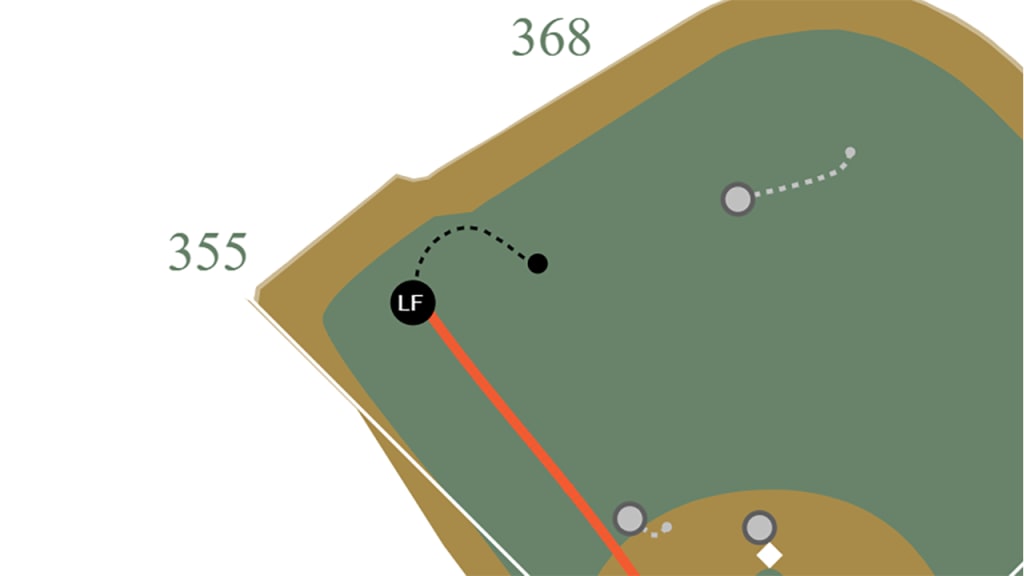
In Chicago, the only gloved patron who caught a souvenir on Happ's play was Nationals left fielder James Wood, who hauled in the ball well short of the warning track -- a mere 322 feet from home, to be exact -- for the second out in the ninth inning.
That it didn’t go actually over the fence – surely you’ve noticed this was not a rulebook homer by this point – has almost nothing to do with Happ and just about everything to do with the notorious Wrigley wind, for this is where the ‘record’ comes in: Due to the gusting breeze at the time, Happ’s blast was pushed in a wild 113 feet by the wind.
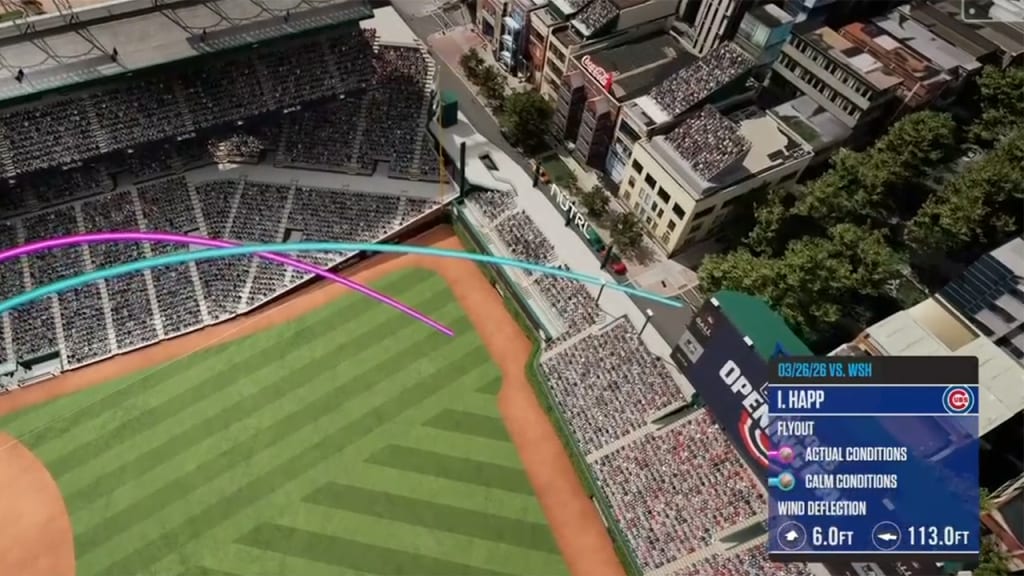
It’s the most distance that wind has taken off a would-be home run in the Weather Applied Metrics database, which covers the entirety of the previous three seasons. On a calm day, Happ’s ball would have gone approximately 435 feet. On a day when the wind was blowing out? Well, it wouldn’t be in Wood’s glove, anyway. It might not still be in Illinois.
Thursday, obviously, was not a calm day, with the forecast calling for hail and the wind blowing in at 22 mph from left in the box score, and gusting to 30 mph when Happ came up. Just look at how each broadcast reacted, laughingly, to how Wood had to go from “watching a no-doubter” to “having to come in on it.”
You can see the effect even more clearly by looking at the circuitous route he had to take. While Wood isn’t generally considered a strong defender, this wasn’t bad route-running, either. This was tracking a ball that really did not take any sort of route a fielder would expect it to.
So when we say “Happ hit a homer,” he really did about all he could possibly do. When he took that Cionel Pérez fastball, mashing it 108.5 mph off the bat, and with a launch angle of 32 degrees, he hit an essentially guaranteed dinger. That’s not really hyperbole; that combination in past years has led to a home run 97 percent of the time. Just not this time.
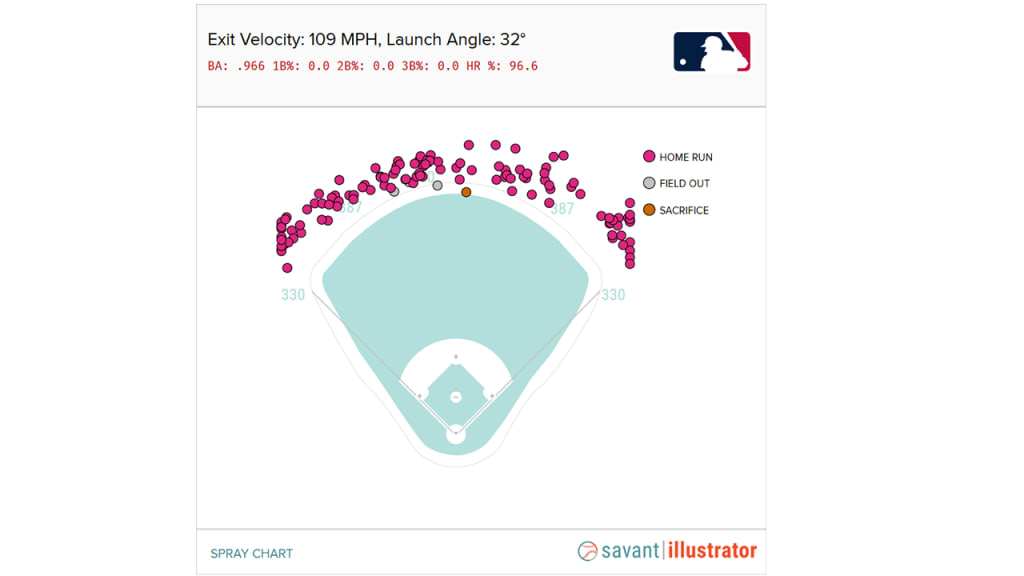
There was, almost literally, nothing more Happ could have done here – except not be in that park at that time. You may remember that when we first looked at the wind data a year ago, it was of course Wrigley which ranked near the top of wind-affected baseball, and while sometimes that creates massive blasts (like, say Jarred Kelenic’s 482-foot bomb in 2023), it can do some silly things, too, like when Patrick Wisdom hit an absolute tank that was also pushed back by more than 100 feet, eventually causing the Blue Jays defense some chaos before they tracked it down.
It’s with that in mind that we present you with what’s now the second-biggest wind-prevented ball. It wasn’t a homer, and wasn’t ever going to be a homer. But it did come on Thursday at Wrigley, too. “Fly ball, left field,” calmly stated Cubs broadcaster Boog Sciambi, before he realized what Luis García Jr.’s hit was actually going to do: “Nah, it’s to shortstop.”
The 30 mph headwind cost García Jr. 111 feet of distance. That's right: It's not just homers, or potential homers, that have to deal with this.
If it wasn't clear already, when we recently ranked all the ballparks in terms of how easy it was to play defense in the outfield -- or not -- Wrigley came in as second-hardest, ahead of only San Francisco. It's not hard to see why. It makes Pete Crow-Armstrong's heroics look even more impressive.
If you remember our deep dive into whether Ted Williams’s famous “red seat” home run was actually 502 feet away – it wasn’t, it was further – you remember the accepted math, too: Wind, in the right direction, can add or deny approximately 18.8 feet for every additional 5 mph. When Happ and Garcia had 30 mph coming right at them, well, there’s your 100-plus feet right there.
Wrigley Field, after all, may be the Friendly Confines. But it’s also the Windy City for a reason, too.
Wind matters, just like the rafters in the roof at an indoor ballpark. Wind kept Happ from his first homer of the season, just like the rafters in Houston did to Alvarez. In Happ's case, the obstacle gave him something like a new record, too. At least until the next home game.