
When the Mariners began negotiations to trade starter James Paxton in the 2018-19 offseason, one of the most interested teams was the rival Astros.
But as soon as Seattle president of baseball operations Jerry Dipoto demanded then-Astros general manager Jeff Luhnow include a young prospect named Yordan Alvarez in the deal, that interest disappeared.
“You won’t include the guy you got for Josh Fields?” Dipoto recalled saying.
“Off limits,” Luhnow replied.
“Well,” Dipoto responded, “then you’re not getting James Paxton.”
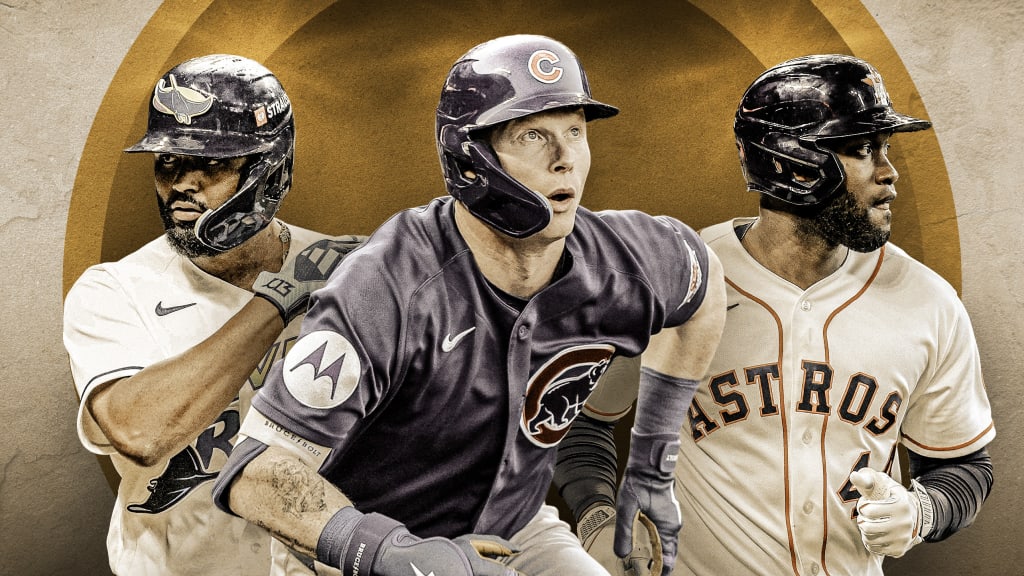
All these years later, as they bask in Alvarez’s 2026 AL MVP campaign, Astros fans are sure happy their team made Alvarez untouchable.
But for the Dodgers team that initially dealt Alvarez to Houston at the 2016 Trade Deadline (for Fields, who had a 6.89 ERA at the time of the deal), the nightmare scenario has played out. They dealt a 19-year-old Cuban-born international signee who went on to become one of the best pure hitters on the planet.
The Mets are living a similar nightmare, having dealt eventual 2026 NL MVP Pete Crow-Armstrong to the Cubs in the summer of 2021, when he was a 19-year-old whose first professional season was held up by shoulder surgery, so that they could acquire two months’ worth of Javier Báez.
And the trauma extends to the Guardians, who traded an 18-year-old Junior Caminero to the Rays for right-hander Tobias Myers. While Myers never tossed a pitch for them, Caminero had an MVP runner-up finish in 2026 and also finished off the Guardians’ season in the ALCS.
These are the kinds of trade results that can haunt a franchise forever. Hence, why teams are so protective of their prospects -- especially in an era in which players are making their way to the Majors so quickly and pre-arbitration control is so highly valued.
“When it comes to high-leverage prospects,” Phillies president of baseball operations Dave Dombrowski said, “people are really risk averse.”
Dombrowski, you might have noticed, is not one of those people. In his long and distinguished career, his list of prospects traded does include future Hall of Fame closer Trevor Hoffman. But considering Hoffman’s trajectory was forever changed by a beach volleyball injury that happened after the trade (forcing him to master what became his signature changeup), we’ll give Dombrowski a pass on that one. Most of the prized prospects Dombrowski has dealt through the years in his efforts to augment his current Major League club failed to live up to their big potential for the acquiring team.
And frankly, the math was on his side.
At this year’s Trade Deadline, we looked at the list of 101 MLB Pipeline Top 100 prospects who had been dealt since the first such list came out in 2004. Only 23.8% had gone on to accumulate at least 5 career wins above replacement, and only 17.8% had accumulated at least 10 career WAR.
In the time since, five more Top 100 guys -- River Ryan and the appropriately surnamed outfielder Zyhir Hope (from Dodgers to Tigers in Skubal trade), shortstop Arjun Nimmala (from Blue Jays to Angels in the José Soriano trade), right-hander Anthony Eyanson (from Red Sox to Orioles in the Adley Rutschman trade) and infielder Jefferson Rojas (from Cubs to Mets in the Clay Holmes trade) -- have joined the list. Obviously, it will be awhile before we can accurately assess their outcomes, and the situation is still fluid with other recent prospects to change hands.
Still, the overarching trend is pretty clear: Proven talent is generally more valuable than prospect promise.
“The odds are against them becoming That Guy like Yordan or PCA,” Dipoto said. “You’re not expecting it. And I’m not sure that either the Astros or the Cubs were expecting it. It just happens.”
Though it might sound crazy, what happened to the Dodgers, Cubs and Guardians could have happened to any club.
The Dodgers liked Alvarez enough to pay a $2 million pool penalty tax on top of the $2 million it took to sign him in the summer of 2016, but he had yet to fill out his body, was below-average defensively with limited mobility, hit a lot of ground balls and had yet to prove his power against live pitching. He hadn’t even played a single professional game in their system. He was unranked as a prospect.
The Mets liked PCA enough to make him the 19th overall pick in the 2020 MLB Draft, and he was ranked No. 5 in their system by Pipeline because of his speed, defense and bat-to-ball skills. But his game power was considered below-average, he was drafted out of high school in the midst of a pandemic that canceled the 2020 Minor League season and his shoulder surgery rehab further limited his own club’s looks at him.
The Guardians had signed Caminero out of his native Dominican Republic in the summer of 2019, and, more than two years later, he was unranked as a prospect. He had whip-quick bat speed, but his professional track record included all of 43 games in the Dominican Summer League and there were doubts (proven correct) about him sticking at shortstop. In fact, one and a half years after acquiring him from Cleveland, the Rays included Caminero -- by now more of a known prospect commodity -- in a summer 2023 offer for the Angels’ Shohei Ohtani. So they almost punted on him prematurely, too.
Point is, as bad as the MVP ballots might look for the teams that moved on from these players so quickly, it’s hard to go too far with the criticism of trades that involved players who were so far removed from the Majors at the time.
“We all have our skeletons,” Dipoto said with a smile of his front-office brethren. “There’s always a deal you made that you wish you could undo. It’s kind of like a hanging slider. Once you throw it, you don’t get it back.”
The question is whether these MVP examples will compel clubs to be even more risk-averse than they are already.
Not that the MLB Pipeline lists are ironclad, but it’s interesting to look back and note that, from 2004 through 2017, there were nine players listed in Pipeline’s Top 10 who changed hands in trades – Scott Kazmir (Mets to Rays in 2004), Cameron Maybin (Tigers to Marlins in 2007), Jacob Turner (Tigers to Marlins in 2012), Wil Myers (Royals to Rays in 2012), Trevor Bauer (Diamondbacks to Cleveland in 2012), Dansby Swanson (Diamondbacks to Braves in 2015), Yoan Moncada (Red Sox to White Sox in 2016), Lucas Giolito (Nationals to White Sox in 2016) and Eloy Jiménez (Cubs to White Sox in 2017).
In the time since? Only one -- shortstop Leo De Vries, who went from the Padres to A’s in last year’s Mason Miller swap.
So it would be difficult for the industry, at large, to become more risk-averse than it already is.
“I do think we have moved to a point over the last 10 or 15 years where teams do place a higher value on prospects than they did before,” Guardians president Chris Antonetti said. “But that said, there are still opportunities to find ways to improve and put yourself in a better position in the future than you are today. And we also try to have the humility to know that, whatever the lists say today, that doesn't necessarily predict the future.”
Even if teams generally stop short of trading Top 10 types, we are in a highly transactional era in which the lines between buyer and seller have blurred. It offers plenty of opportunity for teams to find diamonds in the rough in the prospect realm.
“What we're all trying to do is find as many good players as possible,” said Marlins general manager Peter Bendix. “There's a lot of different ways you can do it. You look at both of the teams that made it to the World Series, and they traded prospects away in July, but they also both traded for prospects last offseason. There's a lot of different ways that your team can come together.”
Ultimately, as bad as the Alvarez, Crow-Armstrong and Caminero trades may look today, those trades of teenagers are still a far cry from the famous 1990 swap that sent Jeff Bagwell from Boston to Houston for Larry Andersen. Bagwell was in Double-A and, therefore, much closer to the big leagues.
Today’s front offices have better data and, therefore, a better handle on what they have. They have a deeper analytical ability to scout themselves.
That doesn’t mean they won’t make mistakes. In fact, they’ll continue to make big ones. But there is also an expectation that those whiffs come with the territory.
“You're going to trade guys that turn out to be awesome players,” Dipoto said with a shrug. “And at the end of the day, if one of them becomes a Hall of Famer, I will attend their speech.”
Anthony Castrovince is a senior writer for MLB.com. Read his columns and follow him on X at @Castrovince.