

The Mariners weren’t Seattle’s first Major League team. The Brewers were.
Well, sort of.
Eight years before the Mariners played their first season in 1977, the Seattle Pilots became the first Major league club to call the Emerald City home. That team, after just one season, would move to Milwaukee and become the Brewers.
With the Brewers reaching the World Series for the first time in 44 years and looking to win the franchise’s first World Series title, it’s an apropos time to look back at the first of its 58 seasons -- the one it spent in the Pacific Northwest.
For such a brief episode in the game’s long and rich history, the story of the 1969 Seattle Pilots is a fascinating -- and wild -- one.
DiMaggio, Mantle and Yastrzemski helped make it happen
The people of the Pacific Northwest region had coveted a Major League Baseball team for years, and in 1967, they had their chance with MLB expanding by four teams set to begin play in ’69.
But being awarded a new franchise would require local voters to pass an initiative to expand the current Minor League ballpark in Seattle -- Sick’s Stadium -- and begin construction of a new domed stadium as a permanent home. So the American League sent its president, Joe Cronin, as well as legendary players Joe DiMaggio, Mickey Mantle and Carl Yastrzemski, to Seattle to help with the campaign.
The initiative passed, and renovations to Sick’s Stadium began. Construction on what would become the Kingdome began in 1972.
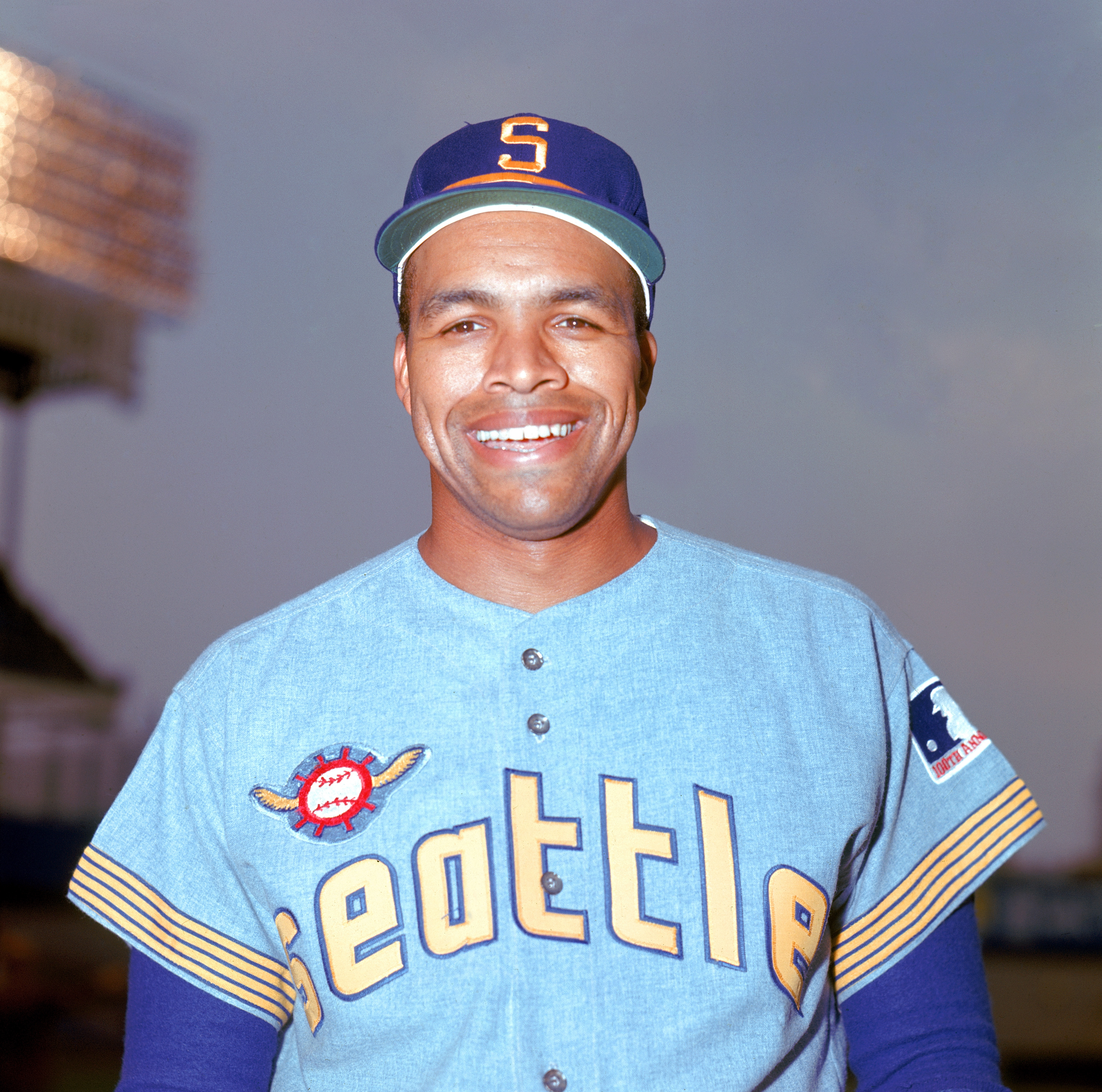
The Pilots are cleared for takeoff
In honor of the region’s maritime heritage and aerospace industry, the new club was named the “Pilots.” Their colors would be blue and yellow.
In the 1968 MLB Expansion Draft, which featured the Pilots, as well as the franchises awarded to Kansas City (Royals), Montreal (Expos) and San Diego (Padres), Seattle’s first selection was veteran first baseman Don Mincher from the Angels.
Mincher was an All-Star with California in 1967, when he hit 25 homers and posted an .854 OPS. He was one of the Pilots’ best hitters in their lone season, leading the club with 25 homers in another All-Star campaign. Seattle’s second pick was infielder/outfielder Tommy Harper from Cleveland, and he stole an MLB-leading 73 bases in ’69.
The Pilots played their first game on April 8, against Mincher’s former team, the Angels. Seattle scored four runs in the first inning and made that stand up for a 4-3 win in Anaheim.
In the early going, the Pilots played pretty well -- on July 1, they were 35-39. But from there, they struggled to a 64-98 finish ... with one tie.
Game 163 … for a last-place team?
Yes! The Pilots played a 163rd game in 1969. Why? Well, according to the rules back then, if a game was called due to weather or for some other reason but ended in a tie, it would be replayed from scratch if at least five innings had been completed. Since the original game in this case was halted due to rain in the 10th inning, it counted in the official record (though not in the standings -- not that it would’ve mattered in Seattle’s case).
The game that ended in a 1-1 tie in 10 innings was played against -- you guessed it -- the Angels, in the second game of a doubleheader at Sick’s Stadium on Sept. 12. They played it again as the first game of a doubleheader the next day, with the Pilots winning, 6-4.
They played the White Sox … in Milwaukee … before ever moving there
On June 16, 1969, the Seattle Pilots and Chicago White Sox played each other. But it wasn’t at White Sox Park on the South Side of Chicago. Nor was it at Sick’s Stadium in Seattle. It was played at County Stadium in Milwaukee.
After the Braves moved from Milwaukee to Atlanta in 1965, Milwaukee sought another Major League team as a replacement. A local businessman named Allan H. “Bud” Selig -- who would later become MLB Commissioner -- had formed an organization with the objective of making that happen, and in 1967, he helped get the White Sox to play an exhibition game against the Twins at County Stadium.
That game drew a huge crowd and the White Sox agreed to play some regular-season games in Milwaukee over the next two seasons. That included 11 games in 1969, including the June 16 contest against the Pilots. The White Sox won, 8-3.
Little did anyone know that by that time the next year, the Pilots would be the Brewers, whose home ballpark would be County Stadium in Milwaukee.
Financial woes
Following the Pilots’ first season, the franchise was in dire financial straits and filed for bankruptcy. The bankruptcy court approved a sale of the team to a group led by Selig, who planned to move it to Milwaukee.
The Pilots would become the second Major League team to spend one year in a city before moving. The other?
That was the 1901 Milwaukee Brewers, who became the St. Louis Browns in 1902.
A chaotic move to Milwaukee … six days before Opening Day
The sale wasn’t approved by the bankruptcy court until March 31, 1970, at the end of Spring Training. The Pilots were in Tempe, Ariz., and when camp broke at the end of the month, “truck day” -- the annual rite of having moving trucks loaded with equipment to transport from Spring Training sites to each club’s home ballpark ahead of Opening Day -- became … complicated.
The drivers of the trucks simply didn’t know whether to drive from Tempe to Seattle or from Tempe to Milwaukee. On top of that, the uniforms still had “Pilots” stitched across the front.
On April 2, the papers were signed, officially making the Seattle Pilots the Milwaukee Brewers. The trucks, which had stopped in Provo, Utah, while the dust settled, resumed the trip with Wisconsin as the destination.
As for the uniforms the Brewers would wear, they would be the same -- just with “Pilots” removed and “Brewers” stitched on.
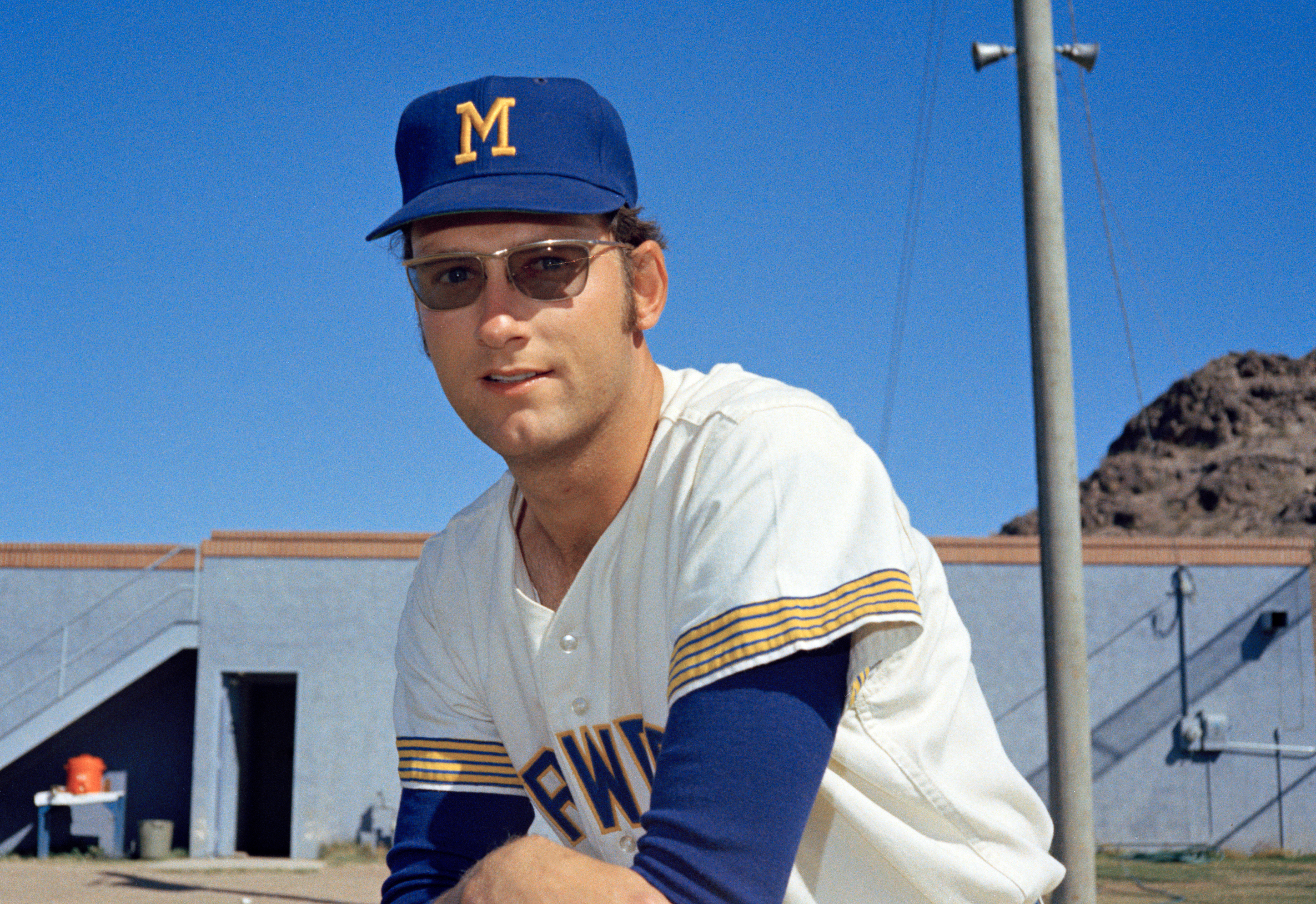
On April 7, 1970, the Brewers played their first home game at Milwaukee’s County Stadium, losing to the Angels, 12-0. That would be the club’s home for the next 30 years before a new ballpark -- Miller Park (now American Family Field) -- was built.
And on Friday, the Brewers will open Game 1 of the World Series there, four victories away from the first championship in franchise history -- a history that began with a bizarre inaugural season spent some 1,700 miles away.