

This story was excerpted from Anne Rogers’ Royals Beat newsletter. To read the full newsletter, click here. And subscribe to get it regularly in your inbox.
As soon as the ball Carter Jensen crushed to the right-field seats landed on Friday night, the drone was ready.
In the TV truck positioned outside Kauffman Stadium, director Steve Kurtenbach signaled to cut to the small, flying object that’s in position for the bottom of every inning at Royals home games. Suddenly, everyone watching on a TV, tablet or phone at home was transported to the sky to watch the fireworks and light show.
It was everything the Royals.TV broadcast crew wanted -- and had been waiting for since the drone was introduced this season, an innovation available to them at home games as part of the broadcast moving to Major League Baseball in 2026.
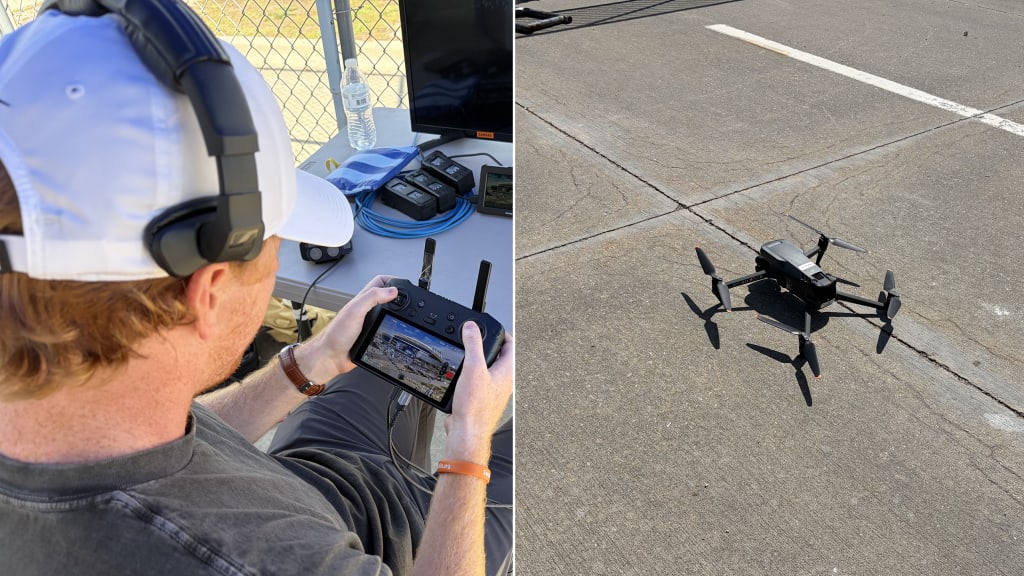
“That just takes the show to that next level, where it feels big,” said Doug Johnson, MLB’s senior vice president and executive producer of local media. “A great drone shot is majestically beautiful, and it makes people proud of where they live and how beautiful the stadium is. We’re really happy to have all these new innovations for the Royals broadcast this year.”
Producing a baseball broadcast is science, art and magic all mixed into one. There’s so much going on behind the scenes to produce camera angles, replays and graphics that add to the flow of the game and make sense to the viewer at home.
As the game and its fans have evolved, broadcasts have had to follow, reaching more fans with easy access to not just the actual game, but also to the team.
That’s why the Royals are so excited about the transition to Royals.TV this year, expanding reach but also access for what they’re able to do with the broadcast, bringing in new resources, voices and ideas.
“The Royals are really committed to making this the best broadcast for the fans,” Johnson said. “And I wouldn’t say that if I didn’t mean it. From Day 1, they’ve been invested in, ‘What can we do to be better and put out the best product?’”
What does that look like? It starts with resources. The Royals have 11 manned cameras around the stadium, plus two new cameras in the drone and wire camera, which is positioned above the stands and runs the length of the first and third base side. That allows fans to see plays unfold, framing the ball and the baserunner at the same time.
All the work to show those views happens in the TV truck, positioned in a fenced section of the parking lot at Kauffman Stadium. There are 34 people on the broadcast crew, including on-air talent. Sixteen people work in the truck at home with a smaller crew that travels on road trips.
The crew itself hasn’t changed too much, which has helped the transition.
Stepping inside the truck is almost like transporting to a different world. It’s dark and busy with activity. Kevin Cedergren is the producer, responsible for the show overall. He’s painting the picture for viewers at home, cueing the replays and graphics, managing the on-air talent and making sure everything runs smoothly. Sitting next to him is Kurtenbach, the director, responsible for making split-second decisions on live camera angles. Coordinating producer/pre- and postgame show producer John Harvey is on the front bench, too, helping with unified production.
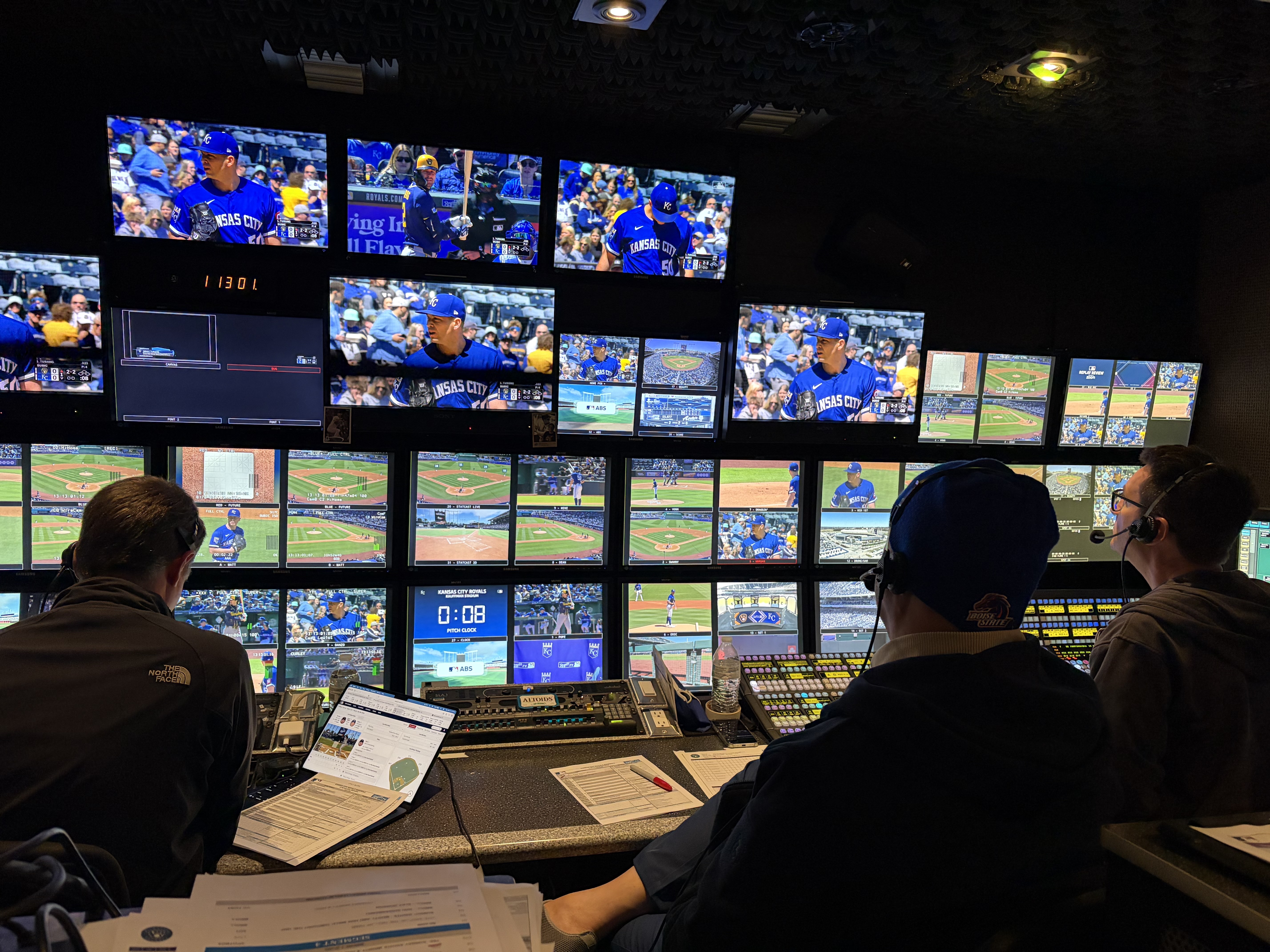
They sit in front of a big wall of screens to see everything at once. They’re each on headsets with a console that helps them communicate with different parts of the truck and booth. As each pitch is delivered, they’re anticipating what might happen while reacting to what does happen.
In baseball, you never know what might come next.
“We have really talented people in our crew, and we have for a long time,” play-by-play broadcaster Ryan Lefebvre said. “When you see how many people it takes, how they communicate, how quick the decisions are, it’s like magic making. It’s our job as broadcasters to listen to them because they’re guiding the bigger picture, but then it’s also their job to listen to us and try to complement what we’re saying.”
Other roles in the truck include a technical director, audio engineers, video engineers, replay operators, scorebug operators, a graphic producer and operators, engineers that run truck operations and more.
Watching the operation in real time is mystifying when you see how many monitors, buttons and moving parts there are in the humming truck. But the chemistry the crew has built makes it look like a well-oiled machine.
That foundation has allowed them to change other aspects of the broadcast with the move to MLB.
One of those aspects: More access to players -- like when they played a taped interview with Jensen while he stepped to the plate Saturday, explaining what he wrote in the dirt before every at-bat. They had a similar interview on Thursday with Bobby Witt Jr., who explained his pre-pitch routine as viewers saw him do it during the at-bat.
The team also has a rotating crew of analysts in the booth alongside Lefebvre, including Rex Hudler, Jeremy Guthrie, Eric Hosmer and Jeff Montgomery, who bring a different style and perspective. Bridget Howard has joined Joel Goldberg as sideline reporter and pre/postgame show host.
The goal is to put the Royals’ stamp on the broadcast, allowing their market to drive decisions.
Connecting fans with the team is at the center of it.
“The potential for us to brand our own broadcast with the support of Major League Baseball has everybody excited,” Lefebvre said. “We’re all rejuvenated by it. I’ve heard fans say it looks better, the audio sounds better. The wire cam has given us a different angle in the stadium. The drone camera is amazing.
“When it’s all said and done, it really doesn’t matter what I think, or the production team thinks -- it’s going to come down to whether the fans like it or not. Hopefully they do, hopefully they subscribe, and we can build something that will help the Royals in the future.”