

The pop of the mitt. The crack of the bat. Players talking about being in the best shape of their lives.
Even as many of us work to dig out from beneath the latest snowfall that disrupted the weekend, the sounds of spring will be here before we know it.
It’s comforting to know that the start of Spring Training is only a couple weeks away, but which teams have done the most to justify the excitement as we look toward the 2026 season?
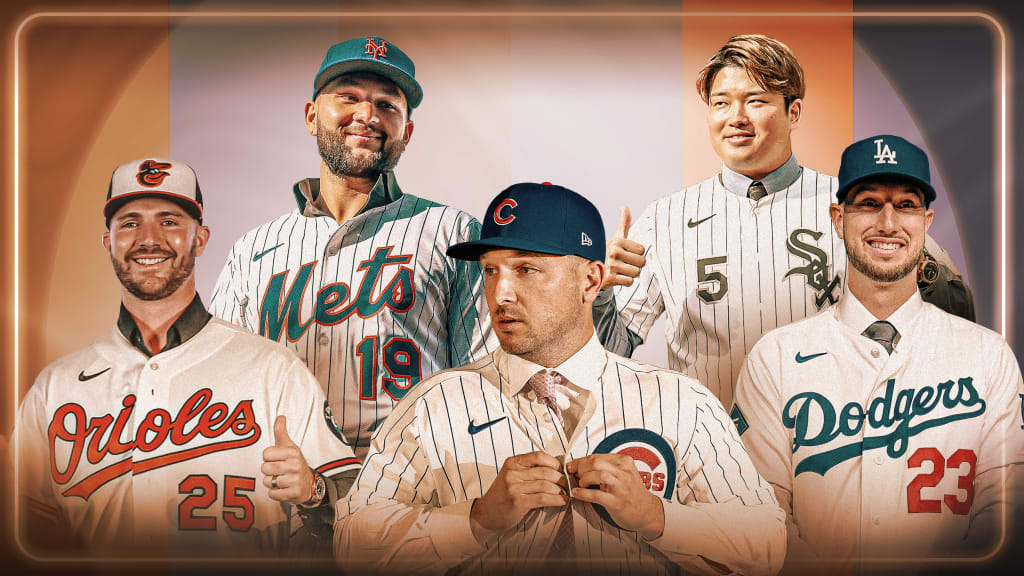
Here’s a look at seven teams that have had impressive winters. This isn’t meant to be viewed as the seven teams that should be favored heading into the season, but rather those that have made moves to put themselves in a better position than they were last year.
Dodgers
Had the two-time defending World Series champions decided to run it back with the same group that hoisted the Commissioner’s Trophy in October, the Dodgers would likely have entered the season as favorites to win it all again. But that’s not the Dodgers’ way.
Instead, Los Angeles doled out a three-year, $69 million contract to Edwin Díaz, the top closer on the free-agent market, to bolster one of the few trouble spots on the roster. More than a month later, the Dodgers made arguably the biggest move of the offseason, signing Kyle Tucker – the No. 1 player in free agency – to a four-year, $240 million deal, adding the four-time All-Star to an already loaded lineup.
After winning two straight championships, the Dodgers added the best hitter and best closer on the market. If that’s not a strong offseason, I’m not sure what is.
Blue Jays
The defending American League champs struck early this winter with the signing of Dylan Cease to a seven-year, $210 million contract, adding a frontline starter to a rotation that was losing Chris Bassitt and Max Scherzer. Toronto also signed Cody Ponce, who went 17-1 with a 1.89 ERA last season in Korea, to bolster the rotation, while Tyler Rogers was added to beef up the bullpen.
Although the Blue Jays missed out on Tucker after an aggressive pursuit, they did add Kazuma Okamoto, a 29-year-old power-hitting infielder who is expected to see the bulk of time at third base. Yes, Toronto lost Bo Bichette, but with Andrés Giménez able to slide over to shortstop and Ernie Clement and Davis Schneider capable of covering second base, the Jays were set up to handle life without Bichette.
The Blue Jays put it all together in 2025 and came tantalizingly close to winning their first World Series since 1993. The moves this offseason have them in position to take that final step in 2026.
Mets
The Mets were active in the month leading up to Christmas, trading Brandon Nimmo for Marcus Semien while signing Jorge Polanco, Devin Williams and Luke Weaver. Yet after watching Díaz sign with the Dodgers and Pete Alonso leave for the Orioles, the public perception was that the Mets were having a dismal offseason.
That all changed last week.
In the span of a few days, New York traded for White Sox center fielder Luis Robert Jr. to solidify a big hole in the lineup, signed Bichette to a three-year, $126 million contract to play third base, then made what may have been the most important move, acquiring Brewers ace Freddy Peralta for top prospects Jett Williams and Brandon Sproat.
After missing the postseason in 2025, the Mets have turned over 30 percent of their 40-man roster, giving them a brand-new look heading into 2026 as they seek a return to October.
Cubs
Like the Mets, the Cubs transformed a slow winter into a very solid one in the span of a few days, first trading for right-hander Edward Cabrera in a deal with the Marlins, adding him to a rotation that had already returned Shota Imanaga after he accepted a qualifying offer in November.
Only days later, Chicago came to terms on a five-year, $175 million deal with Alex Bregman, the club’s biggest free-agent signing since Dansby Swanson ($177 million) three years ago, and the third-biggest guaranteed total in franchise history after Swanson and Jason Heyward ($184 million). The Cubs also signed Tyler Austin, who has had success over the past six years in Japan, adding depth to its bench.
Prior to the Cabrera and Bregman moves, the Cubs had focused on upgrading the bullpen, which was facing the loss of Brad Keller, Drew Pomeranz and Andrew Kittredge, among others. Chicago pivoted quickly and effectively with the additions of Phil Maton, Jacob Webb, Hoby Milner and Hunter Harvey, reshaping a group that ranked fifth in the NL in bullpen ERA (3.78) last season.
Orioles
After watching president of baseball operations Mike Elias build up a young core of players, we’ve been waiting to see it all come together for Baltimore.
Elias came through with a big offseason, starting off with a trade for Taylor Ward, adding a much-needed outfield bat to the lineup. It came at a potentially steep price (Grayson Rodriguez), but the Orioles play in the toughest division in baseball and are in win-now mode, making such a risk worth taking.
Ryan Helsley signed a two-year, $28 million deal to become Baltimore’s new closer, becoming only the second free agent to land a multi-year deal during Elias’ tenure. It didn’t take long for the Orioles to boost that list to three, as Baltimore signed Alonso to a five-year, $155 million contract, making the biggest free-agent splash in franchise history. Alonso’s deal trails only Chris Davis’ seven-year, $161 million contract in terms of total guarantee. The Orioles needed to send a message that they were serious about contending after a disappointing 2025, which they did with the Alonso signing.
A little more than a week after signing Alonso, Elias made another big move, trading four prospects and a Draft pick to the Rays for right-hander Shane Baz. Zach Eflin also returned on a new deal, strengthening a rotation that also includes Kyle Bradish, Trevor Rogers and Dean Kremer. The Orioles might not be done, either; they continue to be connected to free-agent lefty Framber Valdez, who would give Baltimore the workhorse atop the rotation it still lacks.
Pirates
While the first five teams on our list have all been to the postseason recently, the Pirates haven’t played into October since 2015. Early in the offseason, word was that Pittsburgh was ready to spend some money this winter, though nobody expected them to dive into the top end of the free-agent market.
Still, the Pirates hadn’t signed a free agent to a multi-year deal since Ivan Nova in December 2016, and no free-agent hitter had received a multi-year contract since John Jaso a year before that. That changed this winter when the Pirates signed All-Star Ryan O’Hearn to a two-year, $29 million deal, while the Pirates also acquired two-time All-Star Brandon Lowe. The additions of O’Hearn and Lowe should help a lineup that ranked last in the NL in runs scored in 2025, while Mason Montgomery (acquired in the Lowe trade) and Gregory Soto (one year, $7.75 million free-agent deal) should help fortify the bullpen.
Throw in the trade for center fielder Jhostynxon Garcia – who ranked as the No. 3 prospect for the Red Sox and offers offensive upside – and the Pirates have had a solid winter as they take aim at their first winning season since 2018.
White Sox
Like the Pirates, a successful winter for the White Sox was going to be viewed differently than some of the league’s heavy hitters. Chicago surprised everybody with its two-year, $34 million deal with Japanese slugger Munetaka Murakami, who may ultimately be seen as a steal if his prodigious power can translate to the Majors.
The White Sox also signed left-hander Anthony Kay, who posted a 1.74 ERA in 155 innings last season in Japan. Chicago had success a few years ago when it brought back Erick Fedde to the Majors, and if Kay – who signed a two-year, $12 million deal – can have similar results, the White Sox may have a solid trade chip to use either this season or next.
Chicago added Seranthony Domínguez on a two-year, $20 million deal, while Sean Newcomb – who was considered by many to be one of the best left-handed relievers on the free-agent market – took a one-year, $4.5 million deal to join the Sox. Those signings will help a bullpen that ranked 10th in the AL with a 4.16 ERA, and they could wind up giving the Sox more valuable chips to use at the Trade Deadline.
Last week, Chicago dealt Luis Robert Jr. to the Mets for infielder Luisangel Acuña and righty Truman Pauley, adding more young, controllable talent to the roster while finally bringing an end to the trade speculation that had long surrounded Robert. The White Sox also rolled the dice on former top prospect Jarred Kelenic, signing him to a Minor League deal.