

This story was excerpted from Anne Rogers’ Royals Beat newsletter. To read the full newsletter, click here. And subscribe to get it regularly in your inbox.
KANSAS CITY -- The bullpen session that Noah Cameron threw before his now notorious July 24 outing against Detroit -- the seven scoreless innings in relief that kickstarted this successful run he’s on -- was one of the best he’s ever thrown.
Luke Maile, who tries to catch as many bullpen sessions as his schedule allows, called it the best bullpen he’s caught all year. Cameron’s word for it was “ridiculous.”
Why? So. Many. Strikes.
“I was hitting every corner you could imagine, every pitch was in the strike zone, exactly where I wanted it to be,” Cameron said. “I threw 30 pitches and like 30 strikes. Of course, I was like, ‘Let’s do that more.’ And then I went to Detroit, pitched really well, and it was like, ‘OK, let’s do that every time.’”
A lot has been made, rightfully, about Cameron’s turnaround stemming from calling his own pitches. That’s been the main reason we’ve seen the lefty post a 1.29 ERA -- seven earned runs in 48 2/3 innings -- since July 24. He’s using his pitch mix better, including an increase in his slider. But there’s yet another reason that has helped Cameron in this stretch, and it hasn’t helped just him, either, with several pitchers hopping on the new trend.
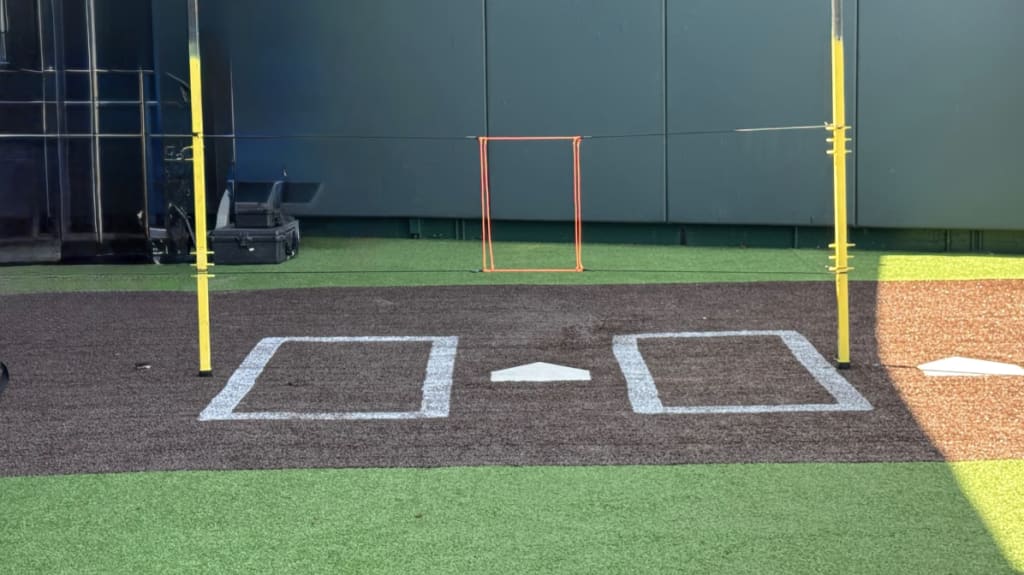
A physical strike zone, constructed out of pipes, bungee cords and bright orange string, has been installed in the bullpen at Kauffman Stadium to help pitchers during their side sessions. Although Cameron hasn’t thrown a bullpen in between every start over the past month to save pitches during a long season, he uses it as much as he can. Randy Dobnak likes it. Daniel Lynch IV has started incorporating it, too.
The concept came from assistant pitching coach Mike McFerran, who used it when he was the A’s pitching coordinator in 2025. The idea behind it is to keep pitchers in the zone with the box that more or less mirrors the Automated Ball-Strike System zone that’s deployed in games. And it gives them immediate, physical feedback with every pitch.
“What I saw it do was give guys a visual that they can then measure their shapes off of: Where is this pitch starting, where is this pitch actually ending?” McFerran said. “It gives you more direct feedback because it bounces right back into place with the bungees. … There was a lot of benefit to it. But for the most part, it’s a visual constraint that they have to move through.”
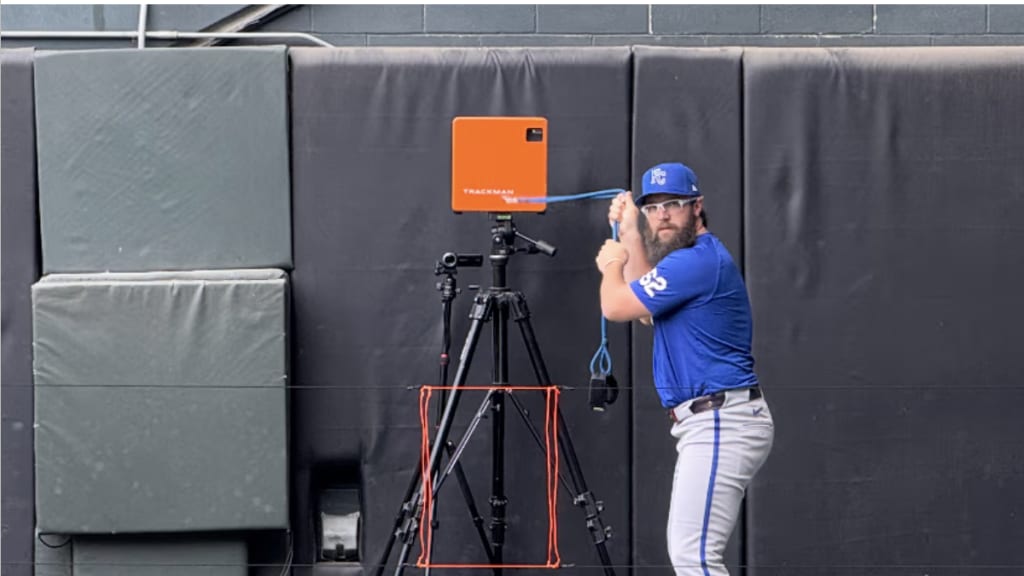
Once McFerran brought the idea up to Royals pitchers, it was trial and error to get it just right, including physically positioning the pipes into the ground and configuring the bungee cords just right so it can move up and down based on the zone height.
That was just at The K; taking it on the road was a whole different story that involved a trip to Home Depot when the Royals were in Anaheim. McFerran had to buy poles, rubber clamps and string.
“There were a couple of iterations,” McFerran said. “Fun side project.”
The Royals have Trackman data for each bullpen, which is useful for strike-tracking but not perfect. It gives the pitcher the numbers behind each pitch shape; the physical zone tells the pitcher what those numbers actually look like as the pitch crosses the zone.
“Sometimes it’s hard to know where the pitch is actually going in bullpens,” said Dobnak, who has used it with other organizations and jumped right on it when the Royals brought it to their ‘pen. “You’re working on stuff, so it’s nice to see the actual result. I want this sinker away, did I land it or did it just look good?”
This form of constraint-based training is something McFerran believes heavily in and used when he worked at Wake Forest. Another example of it is when a pitcher needs to shorten his stride on the mound to stop leaking energy. McFerran could just tell the pitcher where he needs to land for every pitch. Or he could show the pitcher exactly where with a PVC pipe or a piece of string as a visual representation. The pitcher won’t land anywhere else because there’s something physically blocking him from doing so.
“You end up installing the move much more quickly,” McFerran said. “It’s the same idea for throwing strikes.”
Plus, the more a pitcher repeats something, the more likely he’s going to do it in a game. You hear that on the hitting and defensive side all the time: The harder it is in practice, the easier it is in the game.
“I tell Noah: You want that box burned into your brain when you go out there,” McFerran said.
“Wish we could have it in the game,” Cameron added, laughing.