
Going into September, the 1964 Phillies were leading the National League by 5.5 games. Fans were buzzing ... a pennant for the first time since 1950 seemed like a great possibility.
A key injury occurred on September 8 with the Phillies leading by six games. Slugger Frank Thomas fractured his right thumb diving back into second base. In his first nine games that month, the 35-year-old had three home runs and eight RBIs.
Thomas, who had provided an offensive spark after being acquired in a trade a month earlier, missed 16 games. When he returned on September 25, he started three games (2-11) and pinch-hit in three others (1-3).
Trying to fill the void, GM John Quinn acquired 36-year-old first baseman Vic Power from the Angles the day after Thomas broke his thumb. In 18 games, Power batted .208 with three RBIs.
Leading by 6.5 games with 12 left a sure pennant vanished during a 2-10 finish. Those 10 losses were consecutive. (The longest losing streak up to then had been four games). Over the course of the season, the Phillies were in first place for 132 days, July 16-September 26.
The Phillies played sound fundamental baseball for most of the season. Everything manager Gene Mauch did worked. Double switches, platooning, pinch-hitters, defensive replacements, hit-and-run, squeeze plays. He loved to bunt early and get on the scoreboard first.
Heading down the stretch, the buzzing intensified. But now, everything that had gone right on the field, started to go wrong. Fundamentals turned sloppy.
“For 150 games I could stumble over home plate, and it would turn into two runs,” Mauch said.
Going into the final 12 games, knowing they needed just one win, Mauch started Jim Bunning and Chris Short on two-days’ rest, but they couldn’t pick up a win. Prior to the streak, Bunning and Short had combined for a 35-12 record and 2.15 ERA. In the streak they were, 0-5, 7.89 (Dave Smith, Retrosheet).
One other note about Mauch’s pitching decision, the Phillies had a day off in Pittsburgh on August 27 and didn’t have one again until October 1 in Cincinnati. In between those dates, they played 34 games in 35 days, which was very taxing on the rotation.
Offensively, the Phillies scored 4.3 runs per game, while posting a .260 average and a .771 OPS before the streak. Then, 3.4 runs per game, .217 average and .630 OPS in the streak. Dick Allen was the only one who performed better, .425 average and a 1.076 OPS. Johnny Callison, .275, .902. Homers, Callison 4, Alex Johnson 3, Allen 1. (Dave Smith, Retrosheet).
Defensively, 13 errors and five passed balls helped lead to eight unearned runs in the 10 defeats. For the entire season, 157 errors were fourth fewest in N.L.
Critics blamed Mauch for losing the pennant. It was more than starting Bunning and Short on short rest. It was a total team effort, unfortunately.
Going into the last day of the season (Sunday, October 4) the Cardinals (1st place) were home to the woeful Mets while the Phils (3rd place) were in Cincinnati (2nd place). A St. Louis loss and Phillies win would create an unprecedented three-team round-robin playoff scenario (double elimination). Game one would be the next day with the Reds at the Phillies, followed by the Cardinals at Reds on Tuesday and the Phillies at Cardinals on Wednesday.
St. Louis rallied for a pennant-clinching win over the Mets.
While the Phillies finished 2-10, the Cardinals went 9-3 (8-game winning streak) and the Reds, 8-4 (7-game winning streak).
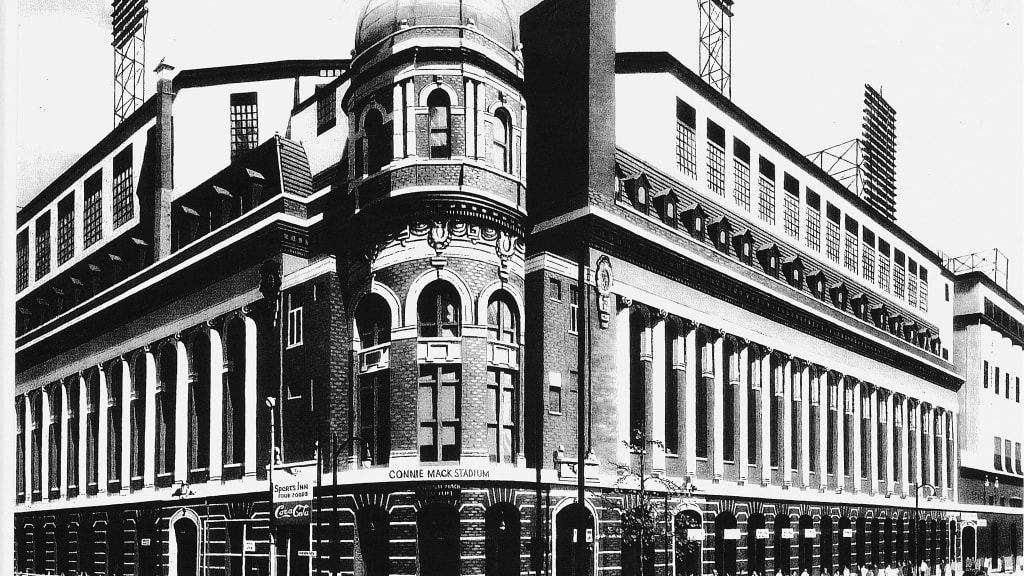
A franchise record 1,425,891 fans attended Phillies games at Connie Mack Stadium. Cheers turned into jeers because of the sad ending.