

Baseball is the national pastime for a reason, and each pocket of the country has its own unique connection to the sport. To celebrate the 250th anniversary of this nation, we’re taking you on a summer road trip across the U.S. with Baseball in America, presented by Booking.com, 50 stories from all 50 states. Follow along here.
Some say the greatest magic trick of all time is when David Copperfield made the Statue of Liberty disappear. Others say it was when Harry Houdini escaped from the water torture cell. My grandpa used to think it was when he found a quarter behind my ear.
Sorry. All of those are wrong.
The greatest trick ever, the grandest illusion, took place during a real live baseball game. Back on June 7, 1982. Under the immense pressure and intense spotlight of the College World Series taking place in Omaha, Nebraska.
"I will tell you, I've never heard a stadium buzz like that," Dave Scott, former assistant coach at the University of Miami, said. "Everybody was trying to explain what they had just seen."
The entire college baseball world knew how good the Wichita State baseball team was in 1982. They had a team batting average of .350, more than 100 home runs, 327 stolen bases and a 71-12 record.
Miami, meanwhile, had more or less snuck into the College World Series. They proceeded to knock off Maine in the first round, but then the Shockers awaited.
"They had maybe one of the best college baseball teams ever," Scott said. "They were so much superior to us with talent. But we had some inner strength there with baseball savvy."
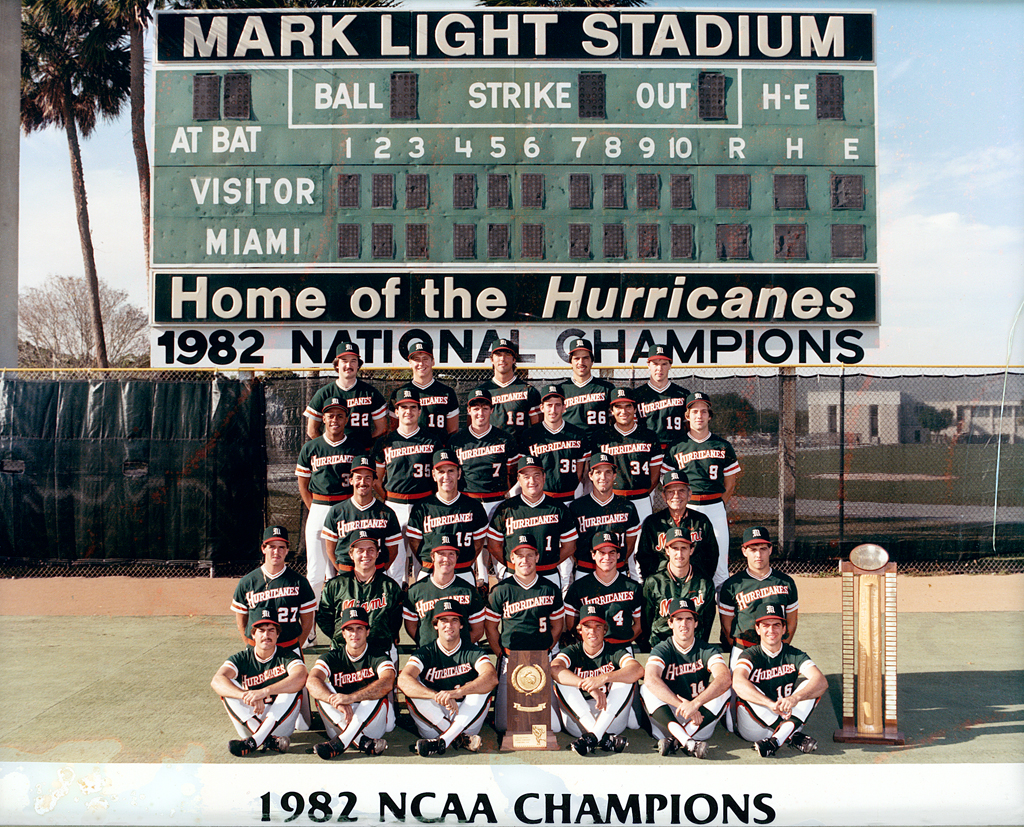
Part of that savvy was a trick play that Scott had in his back pocket.
He'd been wanting to try it pretty much all spring, asking head coach Ron Fraser before games in the regionals and main tournament. For this matchup, it was now or never.
"I tell Skip, 'Skip, we gotta run this play,'" Scott remembered.
Fraser gave Scott the green light to, at least, show the players how the play would be pulled off -- figuring it probably wouldn't be executed in the actual game.
So, two days before their game against Wichita State, Scott gathered his first baseman Steve Lusby, starting pitcher Mike Kasprzak, second baseman Mitch Seoane, shortstop Bill Wrona and right fielder Mickey Williams on a nearby practice field. But then, the University of Texas showed up to the same practice field. Scott knew he had to shut it down for the day.
"We're all staying in the same Holiday Inn in Omaha," Scott said. "The word would get out, so we couldn't do it. We had to pack it in."
Scott delayed practicing the play until the next day, just one day before the game against Wichita State. And this time, his right fielder and shortstop couldn't make it. They were out sick.
Still, the show had to go on. Scott filled in new players in those spots, and would meet with the starting shortstop, Wrona, and right fielder, Williams, separately to go over their roles.
Shockers head coach Gene Stephenson later said the Hurricanes must've practiced the play 100 times, but Scott knows that was very far from the truth.
"We only practiced it two times," he smiled. "On that high school field."
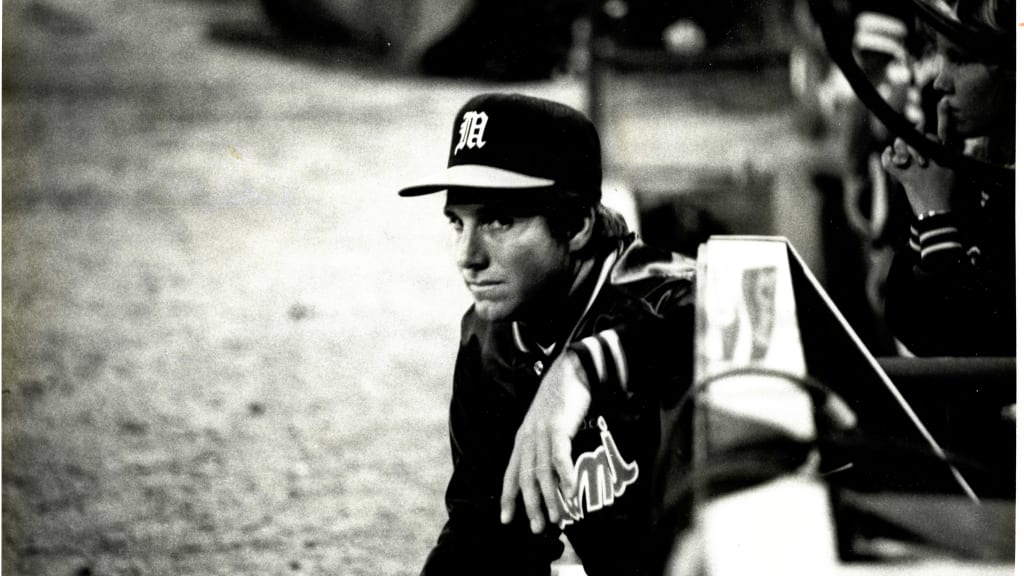
The morning before the game against the Shockers, Scott's preparedness didn't stop. He had an almost maddening focus on making this impossible trick play work.
"I get to the main field at 7 a.m. and I take three baseballs with me," Scott told me. "I stand on the mound and I throw wild pick-off plays toward first base. And I see where the balls go. What I'm going to do, is put a towel on the fence where the ball ends up. That's the spot."
The workings of the play were, at that point, set.
Kasprzak would fake the pick-off throw to first, Lusby would dive wildly for the ball over the runner, the right fielder and second baseman would run toward the towel that was hanging near the Miami bullpen bench. The bullpen pitchers and catchers would scatter from the imaginary ball. Scott and some of his coaching staff, at the edge of the dugout, would point and look. Even the bat girls were asked to take part in the ploy.
"Yeah, they even knew," Scott said. "They were just supposed to stand up."
There were a few times during the game where Scott and his team thought they could've pulled off the play, but in the bottom of the 6th inning, with Miami up, 4-3, it all came to be.
Wichita State's Phil Stephenson worked a lead-off walk. Stephenson was, and still is, perhaps the greatest base-stealer in NCAA history. He stole 86 bases in 90 tries at the time that season. There was no way he wasn't going.
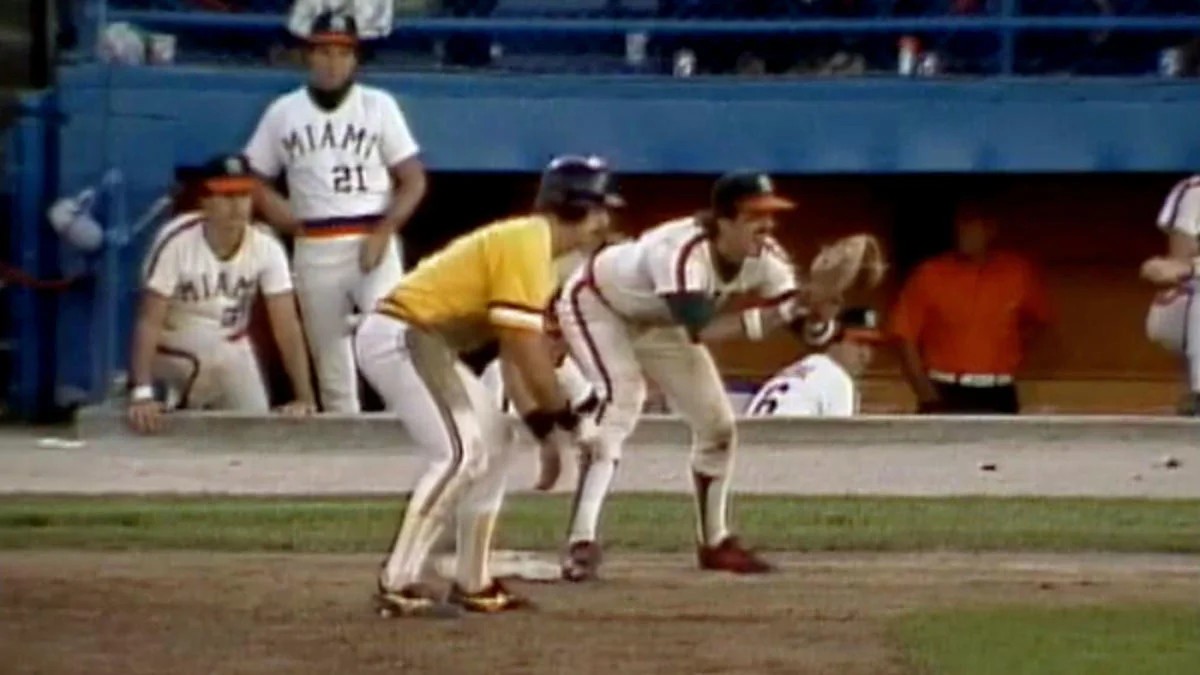
"They always took maximum leads," Scott said. "And they dove back into the bag every single time."
Kasprzak had been setting up for the play all game, routinely throwing over to first when runners got on. When Stephenson got to first, Kasprzak looked into the dugout to see if the play might finally be on.
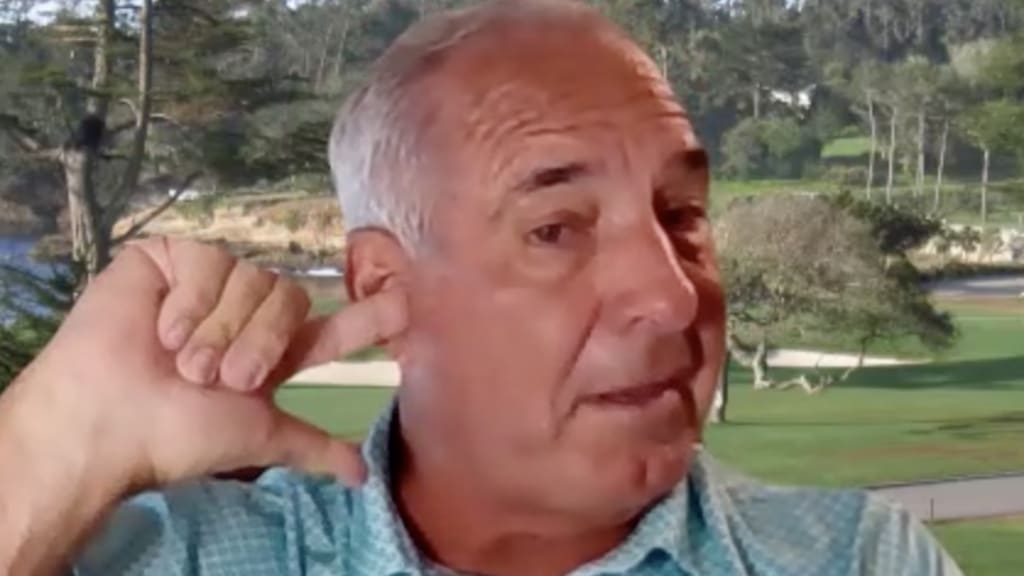
"I said to Skip, 'It's showtime,'" Scott recalled. "The sign is merely the twisting of the finger in the ear to the pitcher. The pitcher acknowledges and he turns and looks to the infielders and he does the same. I walk down to the end of the dugout, where I had a bunch of relief pitchers sitting on the steps, and I pointed out to right field and to the bullpen. I told the guys, 'OK, this is it.'"
And then, magic.
Scott raves about everyone's part in the illusion, from the bat girls to his first baseman's faux dive over the runner's back. He did have one minor critique, though.
"The catcher in the bullpen does a pirouette," Scott said. "If you actually see the full video, he spins too soon. But I'm the only one who would ever point that out."
The Wichita first-base coach claimed he was telling Stephenson to stay, while Stephenson claimed he told him to go (that was probably, mostly, the Miami dugout screaming those words). Wichita State head coach Gene Stephenson, Phil's brother, came out to argue, but really had no grounds. His team had been fooled. The umpire sent him back to the dugout.
The Hurricanes used the momentum to win that game, then beat Roger Clemens and Texas the next night (Scott said Longhorn runners were taking tiny leads) and they beat Maine, again, the night after that.
Opposing baserunners were afraid to advance at all on the basepaths.
"We have a freshman on the mound and he thinks there's a pick-off play at second base," Scott said. "When he went to turn to throw, the shortstop had moved back into position. There's nobody at the bag."
The ball comes out of the pitcher's hand like a changeup and skips into shallow center field. Scott believes the runner could've gotten to third and maybe home, but he never moved. One of the middle infielders asked the runner why he didn't advance.
"He said, 'I'm not getting picked off on national TV. I thought he threw the rosin bag,'" Scott laughed.
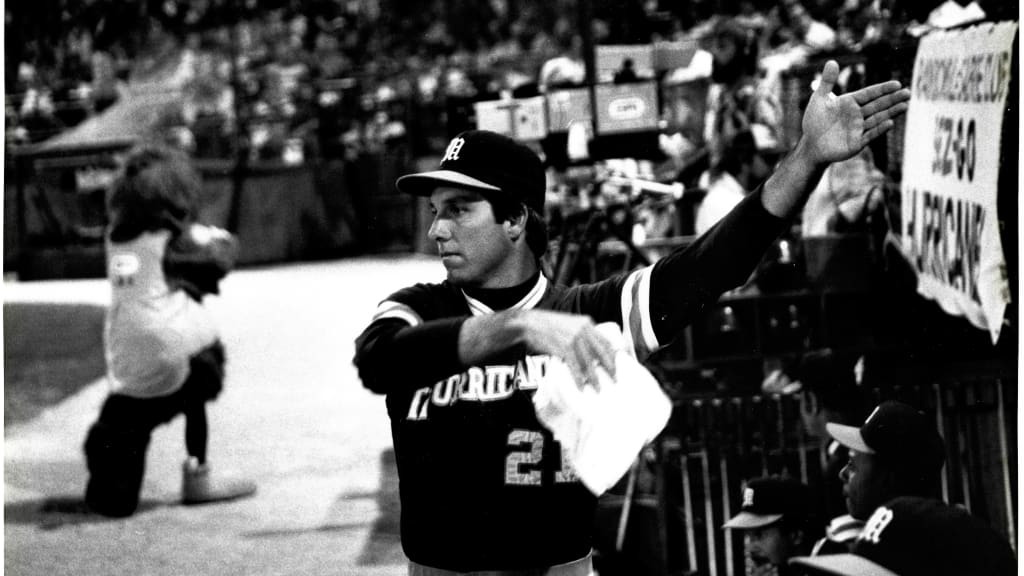
After Maine, Miami went on to beat Wichita State again, 9-3, to win the championship.
"Yeah, I think we kind of took the wind out of their sails," Scott said.
The two-time NCAA champion obviously notes the Grand Illusion as the highlight of his coaching career. Friends and family send him clips of the play every time it circulates on social media, usually in the springtime, and he can't get enough of it. The video has over one million views on YouTube.
"Behind me in my office, I have a big picture frame and it's got little photos, step by step of the play," Scott said. "And I have an Oscar. We gave out Oscars at a reunion. Best Acting was shared by Kasprzak the pitcher and Steve Lusby the first baseman. And, of course, mine was Best Screenplay."