
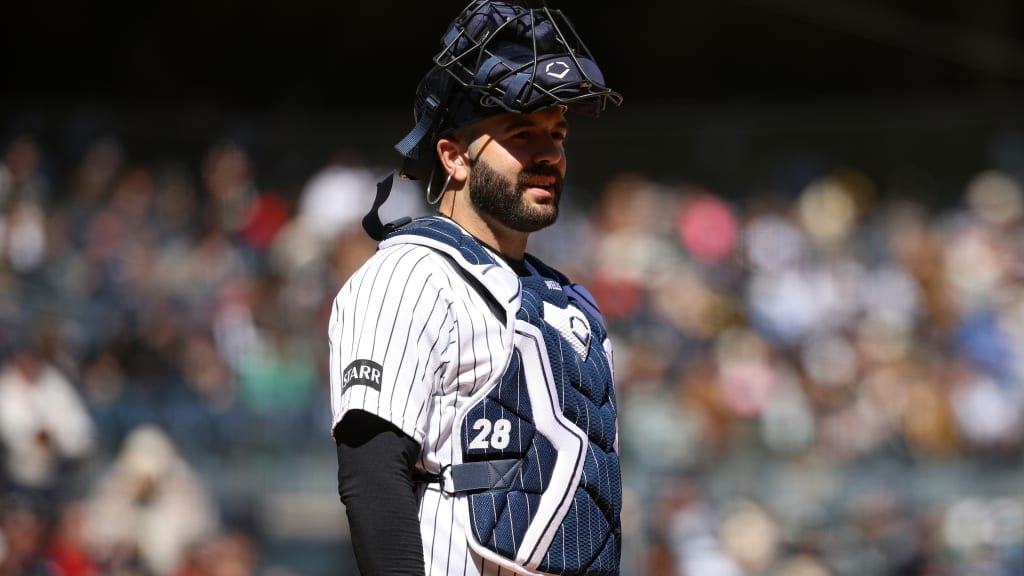
Austin Wells emerged from his second meeting of the afternoon and walked back toward his locker, iPad in hand. This is 2026, so for a baseball player, Apple’s tablet is almost as important as a bat or glove. The iPad has everything: videos, scouting reports, analysis. It also has the schedules.
Some of this data is publicly available. Any fan with a Wi-Fi connection can find the time of tonight’s game or the projected starting pitchers. But for a baseball player in the modern world, past the quarter pole of the 21st century, the schedule is essentially a list of meetings. Batters meet with hitting coaches. Pitching staffs get together to discuss scouting reports. Starting pitchers have an extra step, prepping for their day on the mound by going through it all, batter by batter, with their catcher. And on the first day of a series, it all ramps up, as the coaches prepare their charges for anything they might encounter over the next few days.
Wells — like his backstop-mates on the 2026 Yankees, J.C. Escarra and Ben Rice — might as well be a business consultant with all the meetings he takes. And on this afternoon, already two meetings deep three hours before first pitch, one thing was particularly notable: Wells wasn’t even in the lineup. They don’t make off-days like they used to.
“It’s a huge, disproportionate chunk of their day,” Yankees’ field coordinator and director of catching Tanner Swanson says of the never-ending run of meetings. “Their time and their energy is devoted to understanding the opposing lineup and how our starting pitcher can hopefully navigate it well and get deep and be the best version of themselves.”
Swanson’s job is to make sure that his catchers are ready for anything, the best to ensure that the pitchers are ready for everything. A baseball clubhouse maintains all the symbiotic characteristics of any part of the animal kingdom, and the 2 p.m. meeting on a Tuesday can help dictate the success of a pitch that a reliever throws at 9:15 p.m. on Thursday. In the pitch clock era, every decision is made in the blink of an eye, rooted in days spent studying film and data on an iPad and, of course, in any number of meetings.
It wasn’t too long ago, just a few years, that pitchers, themselves, were forced to step into the batter’s box, at least in the National League. Nobody expected much. If everything went well, you might see a good sacrifice bunt. If the stars aligned, maybe a hilarious Bartolo Colón home run. But mostly, you saw a pitcher stand there and stare at a few strikes before walking toward the dugout to get back to his real job. “I wasn’t doing a ton of scouting reports on the pitchers I faced,” says Max Fried, who actually put up a respectable .214 batting average in 149 career plate appearances from 2017 to 2021, with seven doubles among his 27 career hits. As a hitter, “I was expected to get out anyhow, so it didn’t matter.”
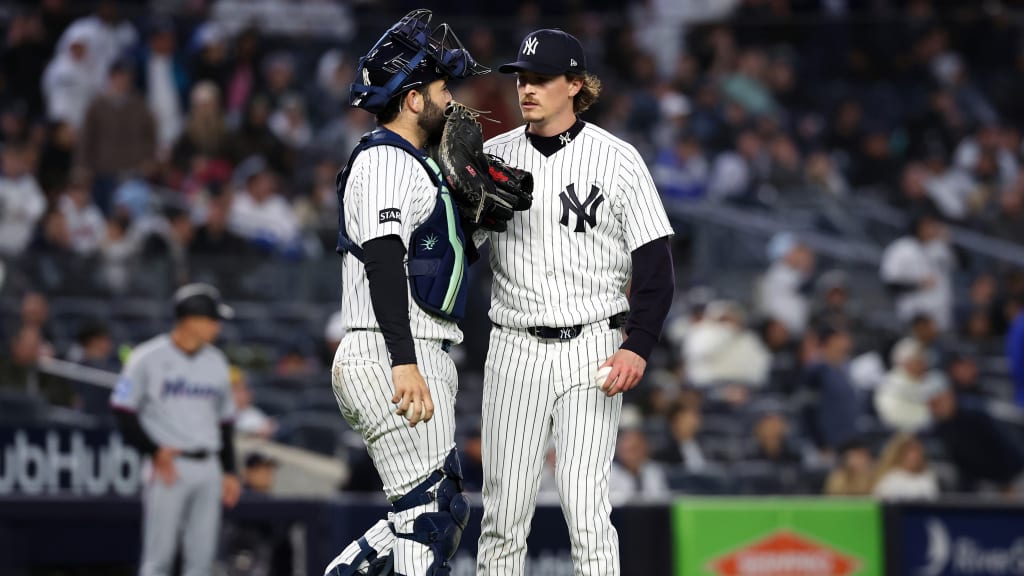
Wells isn’t expected to get out. When he was selected in the first round the 2020 Draft, he was spoken of as a bat-first climber with a questionable-at-best chance of staying behind the plate. And every minute that Wells is watching film of a Rays hitter to prepare for the next day’s game is time that he’s not doing what the other eight batters in the lineup can be doing, which is studying the Rays’ pitchers. While Yankees hitters are sneaking some extra swings in the batting cage before or even during a game, Wells is breaking down the other team’s swings.
Wells hit 21 homers in 2025, his second full big-league season. He was about league average as a hitter, a tick down from 2024, when he was just above the mean as a rookie. “I think there’s more offense in him,” says pitcher Carlos Rodón. “That’s not me diminishing what he’s done in the past. I’m just saying I expect more because I know there’s more. I know what kind of bat he is.”
The glove, though — the supposed weak link — has been a revelation. Wells has become one of the most reliable receivers in the league, an excellent framer (even notable in the ABS challenge era) and a trusted mind calling pitches behind the dish. Ask anyone with the Yankees, and they’ll say it’s a tribute to the work that Wells has put in over the years to master the most unforgiving part of his craft.
It’s also enough to make you wonder: What exactly was it we were seeing and reacting to in the first place?
***
Uncomfortable though it may be, it seems the only way for some people to discuss Wells’ current performance as a backstop is to volley some extremely tough criticism his way. After all, how better to explain the evolution than to establish a starting point?
“I think even Austin would admit that when he got drafted, and even the first couple years in the Minor Leagues, he’d probably tell you he wasn’t a very good catcher yet,” Yankees manager Aaron Boone says. Fried is a bit more generous in tone: “His growth the last couple of years — I know I only saw one, but hearing from a lot of people — it’s been really impressive.”
Even Cam Schlittler, whose resume features far more quality than quantity, knows Wells’ history. “From what I’ve heard,” Schlittler says, “he’s really started to understand the game more over the last two years.”
Who are these people Fried and Schlittler were hearing from? It’s not totally clear: Schlittler was climbing the Yankees’ ladder, and Fried was part of another organization entirely. But the critics weren’t particularly quiet with their assessments. The Athletic’s Keith Law, whose prospect analysis is read by fans throughout the league, was especially scathing in one August 2022 report, stating Wells “can hit some, but he cannot catch at all, and they’re going to have to make a decision on his position at some point in the near future. He’s close enough to the majors that I think continuing to catch him is a mistake — just put him in left or at first and tell him to worry about hitting.”
Wells has ears, and he heard what people were saying. Most people are both their own toughest critic and also their biggest cheerleader; you have to think that Wells could see the writing on the wall. Except, there was another side, one impossible to ignore if you knew where to look. From the time the Yankees drafted him out of the University of Arizona, they didn’t ever play him anywhere but catcher. Not a single experiment in left field. Not one inning at first base.
If it was “a mistake” to have Wells don the tools of ignorance, the Yankees were handling it in a strange way. “If, in the end, they believe that my bat is outpacing my catching, or they want my bat in the lineup more often, then we’ll have that discussion,” Wells told Yankees Magazine in November 2022, 10 months before he made his big-league debut as — you guessed it — a catcher. “But up until this day today, we have had no conversation about it.”
It’s obviously not enough to say that Wells just waited for the outsiders’ narrative to change. He sat in the meetings, and he put in the work. He toiled with the Yankees’ catching gurus to get comfortable with the one-knee-down catching stance that has helped maximize his framing and receiving ability, while also becoming a studious observer of the league around him.
Under Swanson, the Yankees prioritize improving the things that catchers do the most, while focusing less on those down the line. On a typical night, Wells will catch around 150 pitches, so he had to become elite at calling the right pitches and receiving them in the best way possible. A catcher blocks far fewer pitches than he receives cleanly, so it’s a bit less important than receiving, and Wells’ blocking is good if below superlative. His pop times and throwing game rank middle of the pack.
Like any catcher, Wells would love to be elite at everything, and Swanson, too, would like nothing more. But in mastering — truly mastering — the most basic and common aspects of the craft, Wells found a road to reversing his defensive trajectory, and to changing the narrative surrounding his shortcomings.
“I knew I wasn’t good, per se, but I knew that the work that I was doing was going to end up where I needed to be,” Wells says now. “And that I’d continue to do that work to get where I wanted to be in the end. I think the more experience that I’ve gotten, and the easier that it comes, the more that I realize that what I was doing before isn’t even close to the level that I am now.”
Swanson is proud to acknowledge that a video of Wells catching in college would look unrecognizable today. But he’s far from willing to accept full credit for the evolution. “From the day he showed up here, it was with intent to want to get better,” Swanson says. “I think he was honest with himself that he needed to improve on that side of the ball and that some of the criticism was fair.
“But ultimately, I don’t think he ever doubted his ability to play this position long term.”
***
Professional athletes evolve at light speed, with short careers and even shorter primes demanding quick adaptation. If you prove that you can make the necessary adjustments, you’ll survive; if you can’t, you won’t.
Wells debuted in the big leagues on Sept. 1, 2023, determined to show that he could cut it in a one-month sprint with one of the rare Yankees teams of the 21st century to miss the postseason. “It was with the caveat that there might be some uncomfortable moments in games, just because he wasn’t a finished or a polished product back there,” Boone says. “I thought he more than held his own in that audition.”
For Swanson, it’s all about a player who gives everything to the craft, and in the case of a catcher, that craft is, essentially, your teammates. When a pitcher celebrates a start for the ages, it’s the rare postgame report that dwells on the job the catcher did working the PitchCom remote or pulling edgy pitches back into the zone. Beyond the bruises that are part and parcel of life behind the plate, a catcher’s daily performance usually is best measured in the success or failure of someone standing 60 feet, six inches away.
That hasn’t proven to be a problem for Wells.
“His care level is through the roof,” Swanson says, a less-than-analytic scouting report that has nonetheless followed Wells since long before most Yankees fans knew his name. Jay Johnson, who has won two national championships as head baseball coach at LSU, previously coached Wells at Arizona. In 2022, as his former player was making his case in the Arizona Fall League and rising up the prospect rankings, Johnson told Yankees Magazine that Wells would succeed at anything because his mental effort always matched his physical output. “I think there’s people that play baseball and even pros that do it because they like baseball; Austin’s a love baseball guy,” Johnson said. “It’s in his DNA. He’s a high performer. If he wasn’t a baseball player, he could go run a company, and it would be wildly successful just because he’s got the right motor. He’s got the right intelligence. And in this case, he’s got the right athleticism.”
Just four years later, and less than 1,000 days after his 2023 debut, Wells is already something of a big-league veteran. He became a father for the first time this past offseason and will turn 27 in July. None of which is to say that Wells is looking toward the end of his playing days, just that he’s seen a few things. And learned more than a few.
Through all the meetings, whether formal or not, Wells is a bona fide leader. He shows up prepared, ready to drill down to the finest details in the reports. “He’s very involved,” Schlittler says. “For someone who’s young, that can really make an impact.” Adds the veteran Fried, “He puts so much effort into being able to manage a pitching staff and everything that goes into that.”
It helps, too, that Wells simply profiles as a good dude. He’s fun and funny, quick to laugh. And considering how much psychology is involved in managing 12 to 14 different pitchers at any given time, it’s no small thing to be able to reach them all.
“He has a good demeanor about him; you kind of have to,” Rodón says. “He has to know how to approach each guy a certain way. Something might work to get through to me. He can probably yell at me, and I’ll get big at him, but we’ll get the point across to each other. Someone else, that might not work.”
***
Like any player drafted out of college — particularly one coming off the 2020 season, when the NCAA schedule was abruptly canceled due to COVID — Wells was always going to be something of a project. As a catcher, even more so.
“With a guy like Austin,” Swanson says, “who profiled as a hitter but potentially a weak defender who needed to improve on that side, I think our vision was, ‘You have this guy who’s got a high ceiling as a hitter. If we can improve his floor as a defender, as a pitch framer, make him adequate, if not better, then that’s a really valuable player at the major league level.’”
Swanson, along with then-catching coordinator Aaron Gershenfeld and others in the organization, immediately sought to raise Wells’ level defensively. The most visible change was having him catch with one knee down to put him in better position to frame pitches low in the strike zone.
But behind the scenes, they broke down every part of Wells’ game: his set-up, his load position. They went step by step and molded the catcher to fit the organization’s philosophical model.
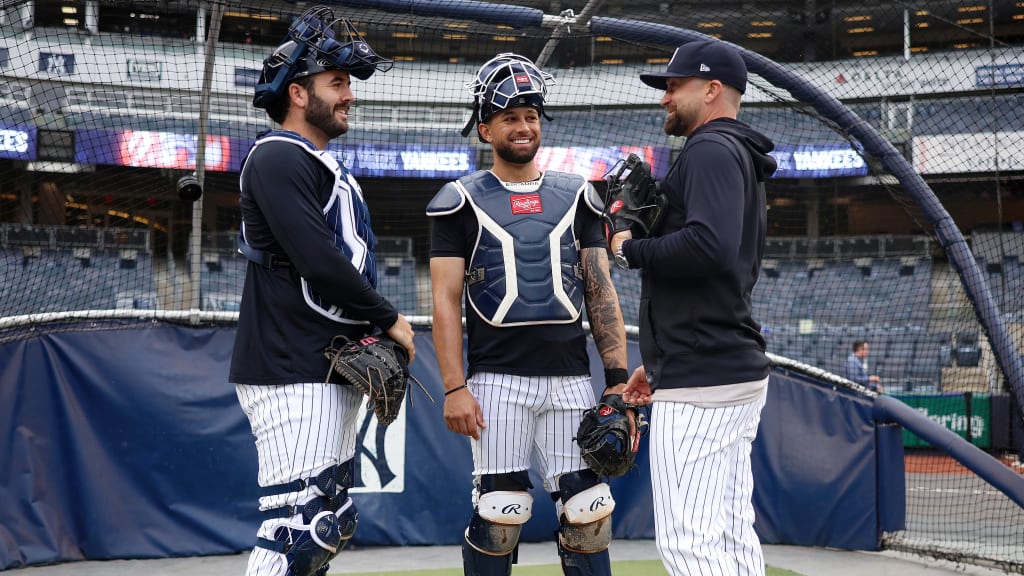
The results couldn’t be more obvious. Wells wasn’t a good defensive catcher in 2025; he was extraordinary. His receiving skills were plainly elite, good enough for his defense to rank in the 95th percentile of fielding runs value on the season, with his framing saving between 11 and 12 runs overall, according to Statcast.
“The improvements he was able to make really quickly,” Swanson says, “gave our entire group a lot of confidence that, All right, this narrative is false. He has the skill set. Maybe it just hadn’t been refined yet. But our scouts obviously saw something. They saw the ingredients that were there and believed that our system could help him in terms of his development.”
As for the rest, as Johnson said, no one ever doubted that Wells would put in the side work necessary to train his brain for the rigors of calling a big-league game. He had long since shown his ability to absorb and synthesize data. But any pitching expert will tell you that despite whatever the data might say, the best pitch in any situation is the one that the pitcher will throw with full conviction in that moment. Or, to put it in more active terms for a catcher, you have to make sure that you can get the pitcher to agree with whatever the data says you are supposed to call.
“You’ve got to have some chops and some presence as a catcher,” says Boone, the son of Bob Boone, a seven-time Gold Glove winner behind the dish. “And Austin has always had that.”
Even in 2026, with the new ABS challenge system, pitch framing is still hugely important. While catchers can no longer count on fooling an umpire and strutting back to the dugout having won a small victory, there are many ways in which a good receiver can make an impact. These days, there’s added emphasis on confusing the batters with quick and precise movements, maximizing a pitcher’s ability to get the benefit of the doubt on pitches in what’s known as the shadow zone.
With just two challenges per team, most hitters are only going to tap their helmet if they feel certain they’re right; a good receiver can make them question themselves just long enough.
And in a data-obsessed game that is seeing some teams choose to call pitches from the dugout, thereby taking the responsibility away from the catchers, Boone and Swanson know that they can leave the task in Wells’ hands, confident that he’s working off the playbook constructed during all those pregame meetings.
“He still remains extremely curious and open to the feedback channels we have in place to help drive him toward the smallest of adjustments potentially required for him to gain even this next level of consistency,” Swanson says. “We continue to raise the bar for him as he continues to raise the bar for himself.”
***
In all of baseball, there’s little that is more process-based than catching. So much of how you can succeed is based on strategy and decision-making. As a catcher, you’re not making the crucial pitch, just choosing what someone else should throw and where.
But the world is results-based, and catchers aren’t immune. Wells knows his stats from his two full years in the big leagues, knows that they show a well-above-average defensive catcher (and, like Rodón said, a hitter who might be leaving some meat on the bone).
“It’s rewarding, and it keeps me hungry to keep getting better,” Wells says. “The more experience that I’ve gotten, and the easier that it comes, the more I realize that what I was doing before isn’t even close to the level that I am now.”
Which isn’t to say that he doesn’t have questions about the way some people — even in his own organization — spoke about him when he was developing. “It’s definitely a frustrating narrative when it’s a position you’ve played since you were a kid, and people are saying that you’re bad at it, that you can’t do it,” Wells says. He’s not angry, and he’s not even particularly defensive, just confident that he was always moving in the right direction.
“Especially when random stuff comes up, and you’re like, ‘I know that guy wasn’t at my High-A game watching.’ One story comes out, and when you’re a prospect, that becomes a narrative across the board. And that was me, for sure.”
Now in his third full big-league season, Wells has changed the narrative. There’s a ton of games yet to be played this year, and what he hopes is a long career ahead of him. The new father has many goals, but if he wanted to prove that he could be a big-league catcher, he has done much more than that. He has proven that he can be a great one.
“He’s done everything we’ve asked him to do and more,” Swanson says of the player who has leveraged every meeting to more than meet this auspicious moment. “He’s been probably one of the most coachable players I’ve ever worked with. He’s super open to feedback, almost demands it, and you can be super honest, and so it just speeds up the process where you don’t have to sugarcoat things, you don’t have to dance around criticism or constructive feedback. You don’t have to wait for the right moment. He wants it, right? And he knows how to process it and deal with it.”
Jon Schwartz is the deputy editor of Yankees Magazine. This story appears in the May 2026 edition. Get more articles like this delivered to your doorstep by purchasing a subscription to Yankees Magazine at www.yankees.com/publications.