
As the last pitch is thrown at loanDepot park and fans begin to file out into the Miami night, most assume the work is done. Behind the scenes, another operation is just getting started, and this one has nothing to do with the scoreboard.
In the hours after each game, a different kind of team takes over, focused on something less visible but just as intentional: sorting, recovering, and diverting thousands of pounds of material generated during a single event. It is a process few ever see, but one that has quietly become a core part of how the Miami Marlins and loanDepot park approach sustainability.
As part of the Marlins’ broader environmental efforts, loanDepot park has built a comprehensive, operations-driven system designed to reduce waste, increase recycling, and extend its impact beyond the ballpark. Rather than relying on one-day activations, the work is embedded into the flow of every game.
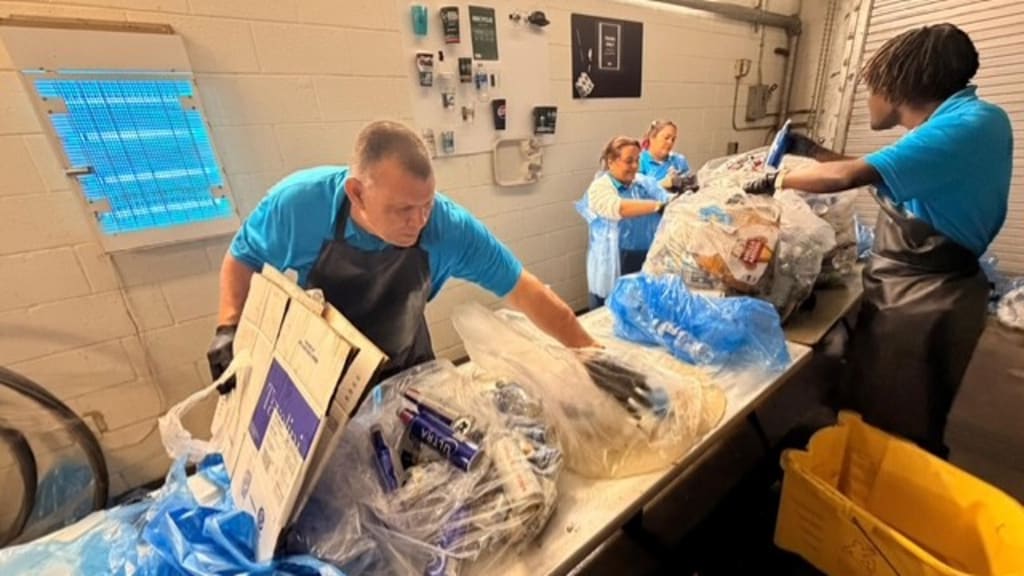
It starts with what fans experience on the concourse, where clearly marked recycling and waste receptacles are placed strategically throughout the ballpark. What happens next is what sets the operation apart. Every recycling bag collected during a game is transported to a centralized sorting room, where a dedicated team from Pritchard Industries manually separates its contents. Aluminum, plastics, and waste are sorted by hand, ensuring that recyclable materials are properly recovered and contamination is minimized.
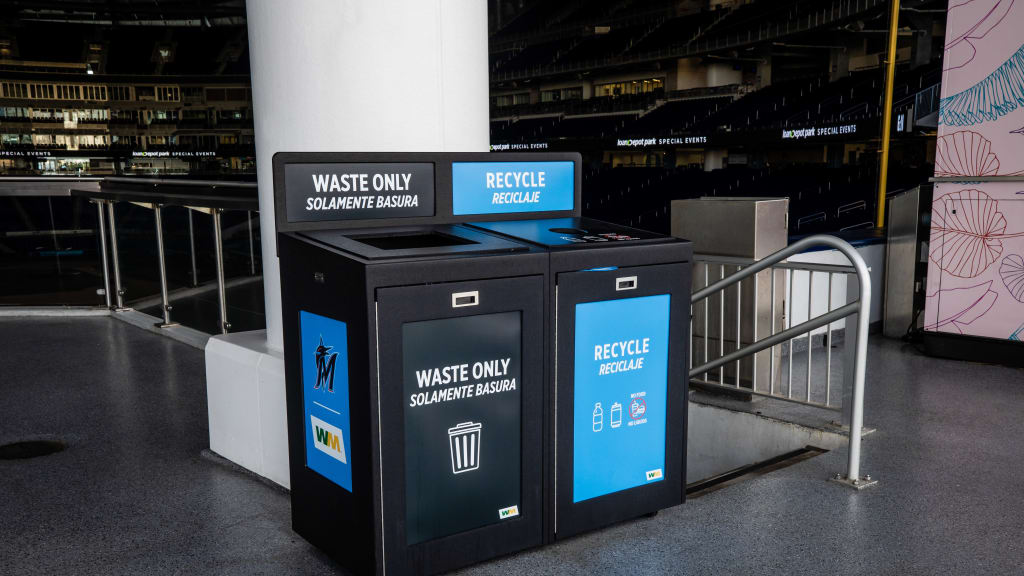
The process is deliberate and consistent, with every bag processed through the same system to maximize diversion and keep as much material as possible out of landfills. Over the course of the 2025 season, that effort resulted in more than 80 tons of recycled material, including cardboard, aluminum, and mixed recyclables.
“For us, sustainability isn’t about a single initiative or a one-day effort. It’s about building systems that work every single game,” said Tony Brasile, Senior Vice President of Facilities, Projects and Corporate Services. “From how we handle waste to how we conserve resources. Our goal is to create a process that is both operationally efficient and environmentally responsible.”
Elsewhere in the ballpark, cardboard and aluminum are separated and bundled on-site by Pritchard Industries before being collected for recycling, improving efficiency while reducing the volume of waste leaving the facility. It is a behind-the-scenes operation that blends logistics with environmental impact, turning potential waste into recoverable resources.
“WM is pleased to be a sustainability partner with the Miami Marlins,” said Laura Sivels, a WM Advisory Services team member who works closely with the Marlins. “The most meaningful change happens when there’s shared ownership. Together, we are working to maximize recycling, minimize and divert waste, and bring sustainable solutions to all phases of the Marlins’ operations.”
The effort extends beyond recycling. In partnership with Levy Restaurants and local organizations, loanDepot park has built a food recovery program that connects the ballpark directly to the South Florida community. Excess food from suites, catering areas, and media locations are carefully collected, packaged, and donated through Food Rescue South Florida, helping provide meals to those in need.
During the 2025 season, nearly three tons of food were donated, providing thousands of meals across South Florida. Food that cannot be donated is redirected through composting efforts, ensuring that organic waste is repurposed rather than sent to landfills. An additional 28.6 tons of organic waste were composted through Fertile Earth Worm Farm, turning it into nutrient-rich soil instead of landfill material.
Some of the most meaningful changes are the simplest ones. Postgame cleanup crews prioritize collecting and draining bottles and cans before disposal, preventing spills that once required extensive pressure washing. Over time, that adjustment has significantly reduced the need for water-intensive cleaning, cutting pressure washing from a full-season routine to only a handful of cleanings each year.

In the kitchens, sustainability continues in less visible ways. Cooking oil is filtered and reused to extend its life. When it can no longer be used, it is collected and recycled into biodiesel fuel. The process not only reduces waste but contributes to lower greenhouse gas emissions, reinforcing that even routine operations can support larger environmental goals.
All of this work is made possible through strong partnerships. The Marlins work closely with Major League Baseball, WM, Pritchard Industries, Levy Restaurants, and community partners to evaluate and improve these systems over time. The approach is ongoing, with a focus on refining operations, increasing efficiency, and identifying new opportunities to reduce environmental impact.
On Earth Day, many organizations pause to highlight their sustainability efforts. At loanDepot park, the work is already in motion. Every game presents another opportunity to recover materials, reduce waste, and support the local community long after the last pitch is thrown.
Because here, sustainability is not defined by a single day. It’s built into everything that happens after it.