


LOS ANGELES -- Here’s another rundown sure to get these writers in trouble. We’re selecting the best player in franchise history to wear each uniform number.
Granted, excluded are players who were active before uniforms had numbers. Nonetheless, the Dodgers have hundreds of candidates, running the gamut from 00 to 99. Here’s the list:
No. 00: Brian Wilson (2013-14)
Running unopposed with this number.
No. 0: Jack Flaherty (2024)
Acquired at the Trade Deadline, he helped his childhood team win a World Series championship.
No. 1 (retired): Pee Wee Reese (1940-42, '46-58)
HOF infielder and Boys of Summer captain, the Little Colonel could have been manager.
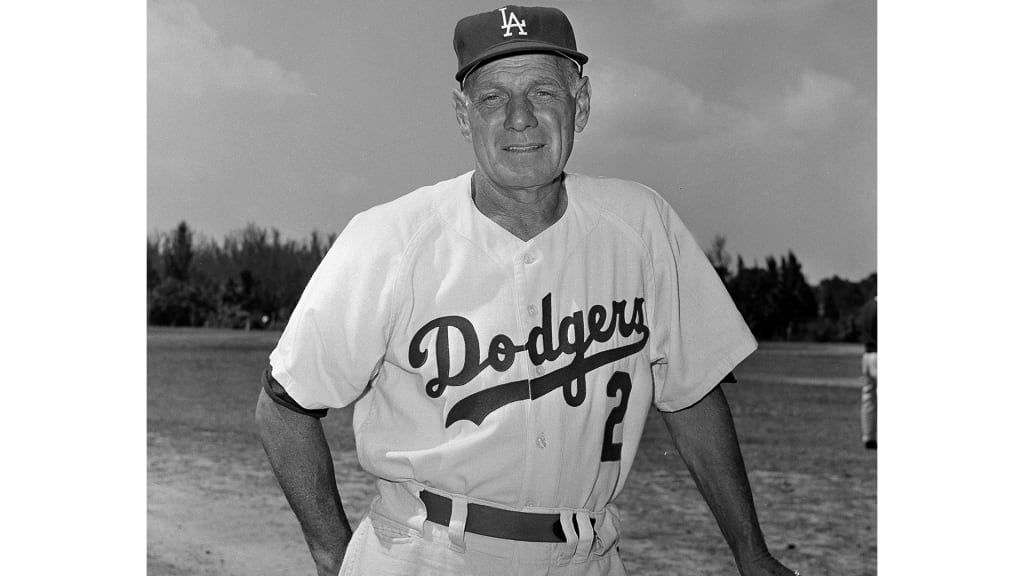
No. 2 (retired): Leo Durocher (1938-46, '48, '61-64)
Before Tommy Lasorda wore and retired it, Durocher was a two-time All-Star in it.
No. 3: Willie Davis (1961-73)
Babe Herman and Steve Sax had some strong seasons, but Davis is often overlooked despite being a fixture for 14 seasons.
No. 4 (retired): Duke Snider (1947-62)
A Hall of Famer who shares a song lyric with Willie Mays and Mickey Mantle.
No. 5: Freddie Freeman (2022-present)
His two rings in L.A. give him an edge over Corey Seager, who was the NL Rookie of the Year in 2016.
No. 6: Steve Garvey (1969-82)
A very narrow win over Carl Furillo, who received National League Most Valuable Player Award votes in eight seasons.
No. 7: Steve Yeager (1973-85)
A catching maestro and clutch hitter, he played in the shadow of Johnny Bench.
No. 8: John Roseboro (1957-58, '60-67)
He played in six All-Star Games as the starter who caught Sandy Koufax and Don Drysdale. Reggie Smith was next.
No. 9: Wally Moon (1959-65)
Adapted to the left-field screen at the Coliseum by creating the inside-out Moonshot. Mickey Hatcher is runner-up for his 1988 October heroics.
No. 10: Ron Cey (1971-82)
Reliable, tough, consistent, productive, clutch, durable.
No. 11: Dixie Walker (1939-47)
It’s been Manny Mota’s number for decades, but Walker finished in the Top 10 in NL MVP Award voting five times.
No. 12: Tommy Davis (1959-66) or Dusty Baker Jr. (1976-83)
It's a tie. You make the call.
No. 13: Max Muncy (2018-present)
The Dodgers took a flier on him, and he became their all-time postseason home run leader.
No. 14: Gil Hodges (1947-61)
Finally elected to the Hall of Fame, he gets the nod over Mike Scioscia.
No. 15: Davey Lopes (1972-81)
Four-time All-Star, two-time stolen-base champ, NL Gold Glove Award winner.
No. 16: Van Mungo (1932-41)
No shortage of runners-up with Hideo Nomo, Andre Ethier, Ron Perranoski and Rick Monday having worn it, but Mungo was a four-time All-Star before burning out.
No. 17: Shohei Ohtani (2024-present)
They call him a unicorn for a reason.
No. 18: Bill Russell (1969-91, 1994-98)
Dean of the Dodgers.
No. 19 (retired): Jim Gilliam (1953-78)
The number was retired after his sudden death as a coach, but as a player he was the 1953 Rookie of the Year, a two-time All-Star and a versatile defender.
No. 20 (retired): Don Sutton (1966-80, '88)
Still holds the franchise record for wins (233), starts (533) and shutouts (52).
No. 21: Jim Brewer (1964-75)
Zack Greinke was brilliant but opted out after three years. Walt Alston called Brewer the best reliever he ever had.
No. 22: Clayton Kershaw (2008-25)
He did it all.
No. 23: Claude Osteen (1965-73)
In a deep group (Kirk Gibson, Adrián González, Eric Karros), Osteen had nine consecutive seasons with double-digit wins.
No. 24: Augie Galan (1941-46)
The number is synonymous with manager Walt Alston, but Galan was a two-time All-Star.
No. 25: Tommy John (1972-78)
In addition to his namesake surgery, John made an impact with six double-digit win seasons in L.A.
No. 26: Alejandro Pena (1981-89)
He was a versatile workhorse who won an ERA title in 1984.
No. 27: Matt Kemp (2006-14, '18)
Robbed of an NL MVP Award when he nearly went 40-40, he was a five-tool star until injuries took over. Pete Reiser lost three years to WWII, or he would have made it close.
No. 28: Pedro Guerrero (1980-88)
Preacher Roe, Wes Parker and Mike Marshall (the reliever) were stars, but even with all the drama he created, Guerrero was one of the best hitters of his generation.
No. 29: Adrian Beltre (1998-2004)
A Hall of Famer, but the Dodgers preferred J.D. Drew.
No. 30: Maury Wills (1959-66, '69-72)
Snubbed by the HOF, he’s still a Dodgers legend.
No. 31: Mike Piazza (1993-98)
Went into the HOF as a Met, but won NL Rookie of the Year, made six All-Star teams and finished in the top 10 in NL MVP voting five times with the Dodgers.
No. 32 (retired): Sandy Koufax (1955-66)
He was good.
No. 33: Eddie Murray (1989-91, '97)
Past his prime as a Dodger, but there was nothing wrong with his three-plus-year stint in L.A.
No. 34: Fernando Valenzuela (1980-90)
Phenom.
No. 35: Cody Bellinger (2017-present)
It would take a Rookie of the Year and MVP to edge Bob Welch for this one.
No. 36: Don Newcombe (1949-51, '54-58)
The rotation ace on the Boys of Summer, even with a Korean War stint.
No. 37: Ed Roebuck (1955-58, '60-63)
Clem Labine’s setup man in Brooklyn won 10 games in relief in 1962.
No. 38: Eric Gagne (2001-06)
Game over.
No. 39 (retired): Roy Campanella (1948-57)
Three-time MVP.
No. 40: Bill Singer (1964-72)
In addition to a no-hitter, he had 52 complete games to edge Stan Williams.
No. 41: Clem Labine (1950-60)
Jerry Reuss was a mainstay of the Dodgers' rotation in the 1980s, but Labine was the closer for the Boys of Summer.
No. 42 (retired): Jackie Robinson (1947-56)
Icon.
No. 43: Raul Mondesi (1993-99)
He was a masher and a Gold Glove right fielder until being traded for Shawn Green.
No. 44: Takashi Saito (2006-08)
Al Downing, Ken Landreaux and Rich Hill were legit contributors, but an unsung Saito arrived from Japan to become an All-Star closer.
No. 45: Johnny Podres (1953-55, '57)
He blanked the Yankees in Game 7 for the first World Series championship in franchise history.
No. 46: Burt Hooton (1975-84)
He had double-digit wins in seven consecutive seasons and was a Cy Young runner-up.
No. 47: Andy Messersmith (1973-75, '79)
His claim to fame was free agency, but in four Dodgers seasons, he won 55 games and was an NL Cy Young Award runner-up in 1974.
No. 48: Ramon Martinez (1988-98)
Didn’t make the HOF like his younger brother, but he also was an NL Cy Young Award runner-up in 1990.
No. 49: Tim Belcher (1987-91)
He helped win a World Series to get the nod over reliever Tom Niedenfuer, whose six workhorse seasons are obscured by one bad postseason series.
No. 50: Mookie Betts (2020-present)
For obvious reasons, with apologies to 1988 closer Jay Howell.
No. 51: Jonathan Broxton (2005-11)
The two-time All-Star closer saved 84 games for the Dodgers.
No. 52: Pedro Báez (2014-20)
Wearing Lasorda’s original number, Báez was a workhorse setup man.
No. 53 (retired): Don Drysdale (1956-69)
Fierce on the mound, friendly off it. He left us way too soon.
No. 54: Tim Leary (1987-89)
A 17-game winner in the 1988 title year.
No. 55: Orel Hershiser (1983-94, 2000)
1988 NL Cy Young Award winner, scoreless-innings record holder, "Bulldog."
No. 56: Hung-Chih Kuo (2005-11)
Overcame injuries and the yips to be an All-Star.
No. 57: Steve Howe (1980-83, '85)
As tragic a figure as any Dodger. Before he spiraled, he was the NL Rookie of the Year in 1980, a World Series hero and an All-Star.
No. 58: Chad Billingsley (2006-13)
Six consecutive seasons of double-digit wins before injuries set in.
No. 59: Ismael Valdez (1994-00)
He never fulfilled unrealistic expectations, but he was a serviceable starter with 61 wins in six-plus seasons.
No. 60: Andrew Toles (2016-18)
Personal problems derailed his feel-good story.
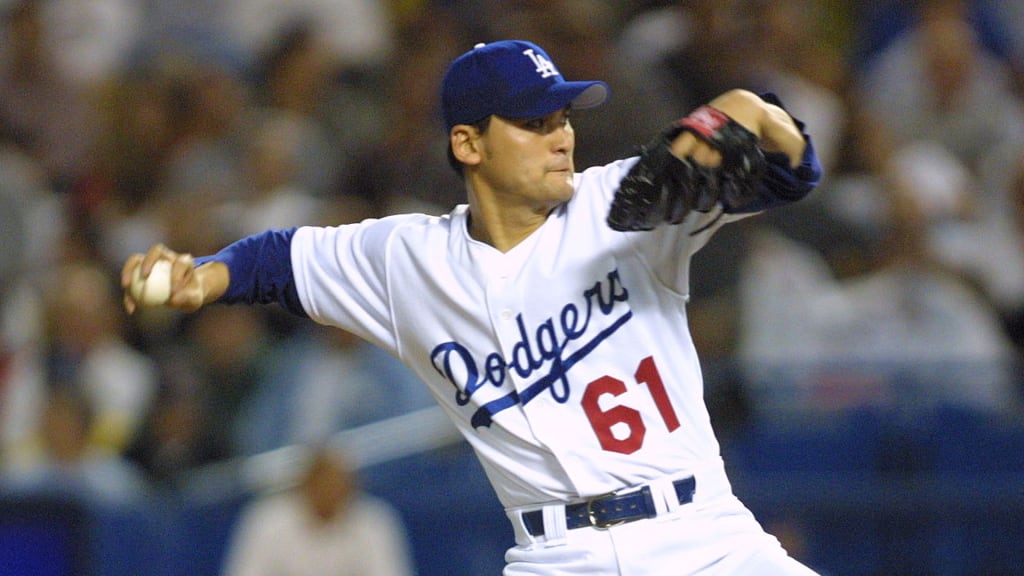
No. 61: Chan Ho Park (1994-2001, '08)
Opened the Major Leagues to Korean ballplayers.
No. 62: Joel Peralta (2015)
One of the first players Andrew Friedman acquired for the Dodgers.
No. 63: Yimi García (2014-16, '18-19)
Dogged by injuries in L.A., he had a breakout 2020 for Miami.
No. 64: Walker Buehler (2017-24)
He switched the number he debuted with for No. 21 from 2018 on, and he closed out the '24 World Series in his final outing as a Dodger.
No. 65: Casey Sadler (2019)
Posted a 2.33 ERA in 24 games, then was traded.
No. 66: Yasiel Puig (2013-18)
Paul Konerko went on to a great career elsewhere. Puig had as much talent as anyone and wasted most of it, but he was an All-Star in 2014.
No. 67: Louis Coleman (2016)
Made 61 appearances in his only Dodgers season.
No. 68: Ross Stripling (2016-20)
An All-Star in 2018, traded twice in '20 (the Angels backed out of the first one).
No. 70: Onan Masaoka (1999-2000)
Originally from Hawaii, he pitched in 83 games for the Dodgers.
No. 71: Gavin Stone (2023-present)
Switched to No. 35 after his rookie year and led the '24 team with 140 1/3 innings.
No. 72: Miguel Rojas (2014, '23-26)
His glove and arm saved Clayton Kershaw’s no-hitter, and 11 years later, he saved the Dodgers' season with a game-tying homer in Game 7 of the 2025 World Series.
No. 74: Kenley Jansen (2010-21)
All-time franchise saves leader (350).
No. 75: Paco Rodríguez (2012-15)
Pitched in parts of four seasons; 2013 was his best, with a 2.32 ERA in 76 games.
No. 76: Josh Sborz (2019-20)
His time in L.A. was brief, and he eventually won a World Series with the Rangers.
No. 77: Joe Medwick (1940-41)
Had two big seasons wearing this number en route to the Hall of Fame.
No. 78: Ben Casparius (2024-present)
His first MLB start came in Game 1 of the 2024 World Series.
No. 80: Emmet Sheehan (2023-present)
He twirled six hitless innings in his MLB debut.
No. 81: Victor González (2020-23)
A big part of the 2020 World Series title run.
No. 83: Michael Busch (2023)
Appeared in 27 games as a Dodger before breaking out with the Cubs.
No. 84: Andy Pages (2024-present)
He didn't wear this number for long, and he began his big league career with two rings in as many years.
No. 85: Dustin May (2019-25)
Made 65 appearances in an injury-ravaged six seasons with L.A.
No. 86: Jack Dreyer (2025-present)
A Rubik's Cube enthusiast, he received some down-ballot votes for NL Rookie of the Year.
No. 87: José De León (2016)
Traded for Logan Forsythe.
No. 88: John Axford (2018)
Not the best Trade Deadline pickup.
No. 89: Jonny DeLuca (2023)
Appeared in 24 games with L.A., then was part of the trade package for Tyler Glasnow.
No. 90: Michael Petersen (2024)
Born in the U.K., he made his MLB debut with the Dodgers at age 30.
No. 92: Edwin Uceta (2021)
Appeared in 14 games with the Dodgers.
No. 93: Kevin Kiermaier (2024)
Played his final big league game as a defensive replacement in center field in the 2024 NLCS.
No. 94: Andre Jackson (2021-23)
Spent parts of three big league seasons with the Dodgers and Pirates before departing for NPB.
No. 96: Landon Knack (2024-present)
Relieved Clayton Kershaw in his final regular-season appearance and picked up a 3 2/3-inning save.
No. 97: Joe Beimel (2006-08)
Cut his hand in a bar, and there went the 2006 postseason.
No. 98: Onelki Garcia (2013)
Faced nine batters.
No. 99: Hyun Jin Ryu (2013-14, '16-19)
The Korean lefty wins easily, but who can forget the original No. 99, Manny Ramirez?