




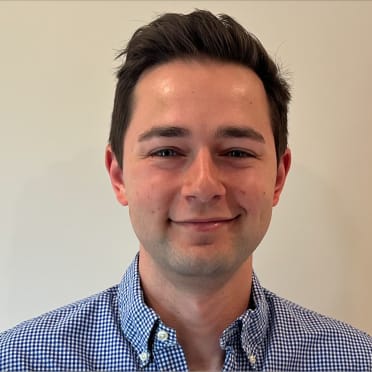
A week before making his Major League debut, Travis Bazzana was a guest on the MLB Pipeline Podcast. The Guardians' top prospect had actually come on the show previously, months before Cleveland drafted him first overall in 2024, and he was such a good interview that we had to bring him back.
In his return visit, MLB's No. 16 prospect took part in a wide-ranging conversation that touched on his adjustment to the pro game, his World Baseball Classic experience with Team Australia, Roch Cholowsky and more.
Here is a transcript of that interview, edited for length and clarity:
Jason Ratliff: I don't expect you to remember this, but when we had you on a little over two years ago, you were in the midst of maybe the hottest hitting streak of your life. You had homered in five straight games, including three two-homer games, and you had just homered in your fourth straight game to lead off the game. Was that in fact the hottest you have ever been?
Travis Bazzana: Yeah. It's so hard to explain. It's like seeing a beach ball. I remember that week.
More from MLB Pipeline:
• Top 100 prospects | Stats | Video | Podcast | Complete coverage
Ratliff: I noticed that, not just in that stint there, but in that season, you had six two-homer games. You also had a three-homer game. So between those seven games, you accounted for 15 out of your 28 home runs on the year. I also noticed that last year, when you were in Columbus, you hit four home runs, and they were all within a four-game span. Aside from the ball looks like a beach ball, is there anything that you ever identify in those streaks that allows you to tap into your power?
Bazzana: There's definitely a different feeling in the way I'm moving in it. When I'm moving well and freely, I'm able to have controlled aggression in my very controlled load, but then I'm moving the bat quickly behind me and keeping it out throughout in front. There's speed through the whole swing. Obviously, I want to do that all the time, and sometimes it's just not clicking. And when it is, I'm just able to get to better ball flights and my mishits have way more carry. And so for me, obviously, you want to be there at 100 percent of at-bats, 100 percent of games. Trying to get those A-swings off and be in a good place to hit is the goal every day, day in, day out. I have found it in stretches where it's just happening more efficiently and more often. And realistically, that's the grind. How can I be at my best skill set in 162 games? That's where I'm going to go out and be great. It's fine details, but it mainly comes down to ball flight. If I'm in a good position to hit, I can get to good ball flights and actually get to speed that's going to allow me to slug.
Jonathan Mayo: In general, it feels like you're feeling quite comfortable at the plate right now. Was there something within the last week and a half that you figured out or uncovered that has allowed you to lock in like you have for the stretch?
Bazzana: I feel like there's been some quality progress, but it's just trying to still be at my best. I think that I'm pretty close right now and I'm feeling good. I feel great up in the box. But I'm just going to keep doing it, and I think there's more success to come. I'm just going to keep working. Obviously some things have been clicking and feeling good.
Jim Callis: I was curious about your adjustment to pro ball. You got to Double-A and Triple-A very, very quickly. What has surprised you about pro ball? What was different that you didn't expect, and what was maybe what you expected? How has that transition been?
Bazzana: I think that the injuries last year kind of halted the progress I would have liked to see throughout ‘25. Because I feel like I was still getting my feet under me in pro ball and how I could be my best self in professional baseball because it's different. One of the things was secondary pitch strike zone rates in pro ball have to be higher, at least what I see. In college baseball, a lot of time it was like pitch around and get to a hitter's count and maybe you get something to hit when they miss a spot. I'm still trying to find this balance where I want to have great swing decisions, but is that very passive, very selective, hunting a tunnel, hunting pitch constantly? Or is it a little more aggressive earlier in a count, knowing that a guy's going to go to land in the zone to try and get ahead? I've been feeling through that. Where can I get to my best production? Because the way you're going to get pitched in professional baseball is different from college, different shapes and obviously firmer breaking stuff as well. The long season is obviously different, but I didn't feel different playing. I obviously had some hiccups with injuries, but it wasn't like I was feeling the fatigue of it. Just things happen, you know? But then my offensive approach, I slightly had to mold and still am.
Ratliff: We were all extremely impressed by what a student of the game you are and how thoughtful you are about your approach and how eloquently you're able to talk about all the mechanics behind it. When we talked to you back then, you told us that you were watching video on guys since you were 9, 10 years old. Once you got into pro ball, are you like a kid in the candy store in terms of having as much information and as many tools and resources as you do, or is there really not that big of a leap from like a major D1 program like you came from at Oregon State?
Bazzana: I'd say yes and no, a bit of both. The Guardians do a really good job with the background stuff. If I sit down in an exit meeting at the end of the year with the team, they do a really good job at breaking down where I'm at, where they think I can improve, and the information that I would be the kid in the candy store for, they have it and they do a really good job with it and help me understand it. That's been great. One of the biggest things is Hawk-Eye can track those things throughout Minor League Baseball and obviously in the Major Leagues, which is nice. When you can get into the finer details of a season, you can assess where you're good and where you're bad in movement, too, and what movement profiles in the box or swing paths lead to success in the Major Leagues. Everyone's going to have a different swing. Everyone's going to have a different move. But just taking away little details from that and seeing where I'm at my best and how I'm moving, I think that's been something in pro ball that I've loved, and it's helped me in different aspects so far.
COMPLETE GUARDIANS PROSPECT COVERAGE
Mayo: I don't want to harp on the [oblique] injury from last year, but obviously you were excited to get going. That injury is the kind of thing that, I'm sure as a hitter, must be really frustrating because you have to wait until it's really healed, otherwise the chance of re-injury is pretty common. How did you deal with the mental aspect, especially because you hadn't had to deal with something like that really before?
Bazzana: In the moment, it was really tough, but I felt like I was able to flip into ‘How can I make the most of this time' pretty quickly, which was good. And I had good people around me for that. The tough part, adding onto the ‘Damn, I just went down. I'm not going to be out for one day. It's going to be a couple of weeks or a month,' was I was swinging the bat well. I hit a couple of balls hard the day I got injured in Bowie in May. And then the week before I got injured in St. Paul at the end of the year, similar thing, I just had the week against Indianapolis at home where I was like, ‘Yep, this is me. This is what I do when I'm at my best. This is how I need to feel.' And so that was tough timing, but I think the eight-week stretch where I was out between May and June, I got a lot out of that. One of the biggest things was getting back and resetting in Arizona. If you look at my professional baseball splits, we broke down some things. I had almost better success against lefties in college. Obviously college baseball is not the same as professional baseball, but we broke down where I was lacking in approach and how I was moving in the box against lefties in professional baseball and Trajekt for multiple weeks with that approach, with the movement stuff in mind, while I'm rehabbing. And I came back and put that together and feel really back to where I was, where it doesn't matter what side of the pitcher's rubber the guy's throwing from. I had thought about that for the first time in my life, really, when I got to pro ball, but I didn't need to, so I got a lot out of that, and I feel like I was out of flip into ‘Develop to be better when I get back' mode pretty quickly, which was good.
Jim: We talked before about your journey from Australia and the pride you take in being from Australia and putting the focus on baseball in Australia. What was the World Baseball Classic experience like for you? You got to play for Australia, you hit a home run.
Bazzana: It was amazing. I'd looked forward to that experience for a very long time. I'll never pass up the opportunity to do that. It's so special, and playing in the Tokyo Dome is special. I feel like the last two WBCs, Australia's really the underdog of the group, and then bam, bam, surprise wins. But we feel like we can compete with anyone on any given day. We had some teams on the ropes and had a real opportunity to go to Miami, but we couldn't get it done. Hopefully, next WBC, we can move forward, and hopefully Brandan Bidois can make his way to close down some games because he's pretty nasty. So keep him on the radar and maybe bring up the WBC to him for next time.
Ratliff: You are facing someone that the baseball world is much more familiar with than your typical Triple-A pitcher, Trey Yesavage. Are you any more familiar with him than you would be with anyone you're going to face because he was a postseason hero and he's been in the big leagues?
Bazzana: I would say more familiar than most guys we face. I watched him pitch throughout the postseason. Obviously, I'd seen him pitch at ECU, too. I love the game. I pay attention to everyone. So when I was in college, I knew all the guys, and Trey obviously was one of those guys. I have seen the high release, the steep slider-split combo, get a lot of punchouts and obviously a riding heater. So I'm excited to see it, see what the tunnels look like.
Mayo: When you get a guy like Trey Yesavage, does that amp you up a little bit more? Maybe like when you're getting a Friday night starter back at Oregon State who is highly regarded, or is this another day at work for you?
Bazzana: For me, it honestly helps me get into a flow and helps me get to my best approach and compete mentality. Moments and different challenges help you get to your best self. It should be a good battle. I love the challenge of seeing guys who have punched out the best hitters in the world on the biggest stage.
Callis: I was curious how much you still keep up with what's going on at Oregon State. And specifically, I know you didn't play with him, but do you stay on top of what Dax Whitney's doing? Because Oregon State might have another No. 1 overall draft pick next year.
Bazzana: It is so crazy to think about. There was a real scenario where Aiva [Arquette] was somewhat in talks last year. He obviously wasn't going to be the No. 1 pick, but there was a world where he had a probability, and now Dax. It's kind of impressive, and it is a credit to what happens at Oregon State, just consistently. This year, they go to the College World Series and lose that whole core offense, Gavin Turley, Aiva Arquette, you know. And now they're a top-10-ranked team again in the country, being led by Dax, who's a sophomore. And at the start of the season, it's like, yeah, the pitching is going to be great, but we're not sure. Strength of schedule, da da da. And they're just winning over and over again and finding a way. It's really cool to see. I mean, what Dax is doing, he looks like he could just punch out big league hitters right now. Like it's 99, he throws his secondaries where he wants them. Sweeper at 88, curveball, changeup, mature. It's so cool to watch.
Ratliff: When we talked to you a couple of years ago, Jim asked you what you thought you needed to work on the most. You said you needed to work on going to your left more smoothly and often on defense and needed to work on turning the double play better. How do you feel like you improved there? And what would the answer to that question be now?
Bazzana: Yeah, the turning the double plays part, I definitely feel like I've improved since we spoke in college, no doubt. I feel pretty good about getting to different arm slots. The Guardians helped with that and carrying the ball over. Going to my left, I feel like I have improved my range, but I still feel like I can work on flipping my hips a little quicker and getting rid of some balls with some fast runners going left, but it's finer details. First step, staying low, getting to as much range as I can is going to be a big part of me being productive on the defensive side in the Major Leagues. A lot of what I can do offensively, I feel has been untapped so far in professional baseball, and I think I have the skill set and the speeds and the things that can create a lot of production at any level. I just need to keep finding a way to bring the best version of myself out. And I'm going to keep working. With a combination of my best confidence and my best work, I think I'm going to find the success I've had in previous times. In college, I felt like I had that stretch for a really long period of time and was able to put together those constant ABs and hard-hit balls. With the approach and trying to have my best stuff in professional baseball, I feel like it's here and there and I can hold myself to a high floor of production, but I'm hoping to consistently find more, and I think I'm not far off. I'm always going to be looking to get better on all sides of the ball. And I just love that journey. I'm not caught up in anything else other than just the process of getting better.
Mayo: Jim and I right now are neck deep in getting our Draft list together for this year's Draft. It's clear you're paying a lot of attention. We've got Roch Cholowsky at the top of the board. What are your thoughts on him? I'm wondering if you have any advice for him in terms of how to handle that attention in the process of being taken at the top.
Bazzana: I knew who Roch was when he was in high school. He was a really well-known high school player. He's, from all accounts and from what I've seen, it's pretty special up the middle. He can just make plays, get rid of balls that you don't really expect, and he makes them look routine. And then the offense has just come along and he's been incredible. I've seen him hit breaking balls out. I've seen him hit fastballs out to right-center. He's competing, and he's leading the best team in the country right now, which, to me, is valuable. He's leading a team of future Major Leaguers and future professional baseball players that are finding a way to win every day. That shows something about his character. He's legit. It's pretty special to watch. Advice, I'm not going to tell someone how to do things because if he keeps doing him, he'll be great. I think when you get to pro ball, it's just being yourself, being fully confident in what you do, continuing to be open-minded to keep moving forward and getting better and having the group of people you trust and love around you and keep them tight and keep communicating.
Callis: Along those lines, I want to pick your brain about a couple of your teammates. You have another Top 100 prospect on the Columbus Clippers in Cooper Ingle (MLB No. 87), who's been on fire with the bat recently. And then I have to ask you, how's Daniel Espino (CLE No. 17) looked? Have you gotten to hit off of him ever an intersquad or anything?
Bazzana: I haven't faced Espino, unfortunately, or maybe fortunately. Coop and I roomed together in Columbus. We've built a really good relationship. We moved up together from Akron to Columbus last year. Man, I don't think he's put together one bad plate appearance so far this season. It's sustainable, is the way I would put it. He swings at the strikes, he takes balls. In the zone, he's going to hit it hard. He's hit balls hard backside, pullside. Generally, he's had a lot of success getting the ball into the air and to the pullside too. There's more speed than you might think, but he's just constantly on the barrel. And if you're constantly on the barrel swinging at good pitches, you're going to have success wherever you're doing it. Coop's legit, and he's going to impact the Guardians for a long time. And Espino, I mean, he was ripping 94 mph sliders last week. People freak out when [Jacob] Misiorowski throws the 94 mph slider, and it's like, is it a slider or a cutter? In my opinion, when you're throwing ones below like three, four [inches of] vert, guys call that a slider. It's a gyro, it's a bullet ball. He was 91-94 on sliders. Some may be pushing cutter and touching 100 with this true carry. It was so fun to watch. I'm out there, he throws a pitch, I look at the board and see a 100 and I smile like ‘Oh my gosh.' Literally everyone is rooting for that guy. Incredible work ethic, incredible teammate, very intelligent player. He deserves everything, and he's worked his absolute butt off. Two shoulder surgeries, I think, and he's back pitching at the highest level, throwing 100 mph. It's special. You see him move around in the weight room and stuff, and it's special. He's like the most flexible, the strongest, looks the most like a bodybuilder. He's kind of superhuman. The fact he's still like that after the tough injuries he's had is amazing. Everyone in the org wants nothing but the best for Daniel. And if he is doing what he's doing, it's going to be electric at any level.