




ARLINGTON -- ¡Viva Tejas!
There’s a sort of storytelling that goes along with all uniforms that represent a city or state, none more so than Nike’s City Connect series. As the Rangers retire the “Peagle” uniforms that celebrated the baseball history of the entire Metroplex, the City Connect 2.0 celebrates the Mexican influences across the entire state of Texas.
“For the last several years, we’ve worked really hard to build what we think is an authentic and reciprocal relationship with our Hispanic fans,” said Rangers senior vice president of marketing Travis Dillon. “We feel like this jersey is another step in that journey, together with that part of the fanbase. … In 2022, we launched the Mariachis de los Texas Rangers. We also launched our ¡Viva Tejas! concert series. For the All-Star Game, we were very intentional about celebrating everything that represents Texas culture.
“We felt like we've taken these steps together with our Hispanic fans and the community to lead us to this point. This feels like a great next step for us to celebrate this as part of the Nike City Connect series.”
The Rangers will debut the new City Connects on Friday night against the A’s at Globe Life Field.
“I like them, I think they're cool,” said starting pitcher Jack Leiter. “They definitely put a lot of effort into them. The pants, I think, kind of complete it. And there’s cool belts with them. They’ve got a little design on them. I think having a red jersey is cool, too.”
Here’s the City Connect 2.0 breakdown:
Tejas
The word Tejas is rooted in the Caddo language, which has historically been spoken by Native American groups across Texas and Oklahoma
“It’s self-explanatory, yes, it’s Texas in Spanish,” said Daisy Rincón, the Rangers manager of multicultural marketing. “It’s also in homage to the Tejano culture as we know it. There’s a large mix of Mexican-Americans here in Texas. It’s in the spirit of celebrating Texas culture.”
The color red
The Rangers wore red uniforms sparingly throughout the 1980s before it became a staple of the uniform rotation in the 1990s. The club had not worn red jerseys since 2022. Most Rangers, like Kumar Rocker and Josh Smith, are more than happy to have the color back in the rotation.
The shade of red for the City Connects comes from cochineal red, a crimson dye that comes from a crushed-up cochineal insect, which is historically and symbolically significant in Mexican culture.
“If you squeeze the [cochineal] insect, it does make this crimson, rich, royal color,” Rincón said. “It was used in Mexican artistry, traditions and the clothes of nobles and royalty. It has a lot of that royal significance.”
The typeface
Both the block T on the cap and the block lettering on the front of the jersey are inspired by various uniforms throughout the Rangers’ history.
“I like the hats,” reliever Jacob Latz said bluntly when asked about the uniforms.
The block T is identical to the original Texas Rangers uniforms throughout the 1970s and is reimagined with a raised weave that honors the “rich motifs and craftsmanship of Mexican artistry.” The block lettering in Tejas is inspired by the road grey uniforms of the 1980s and early 1990s.
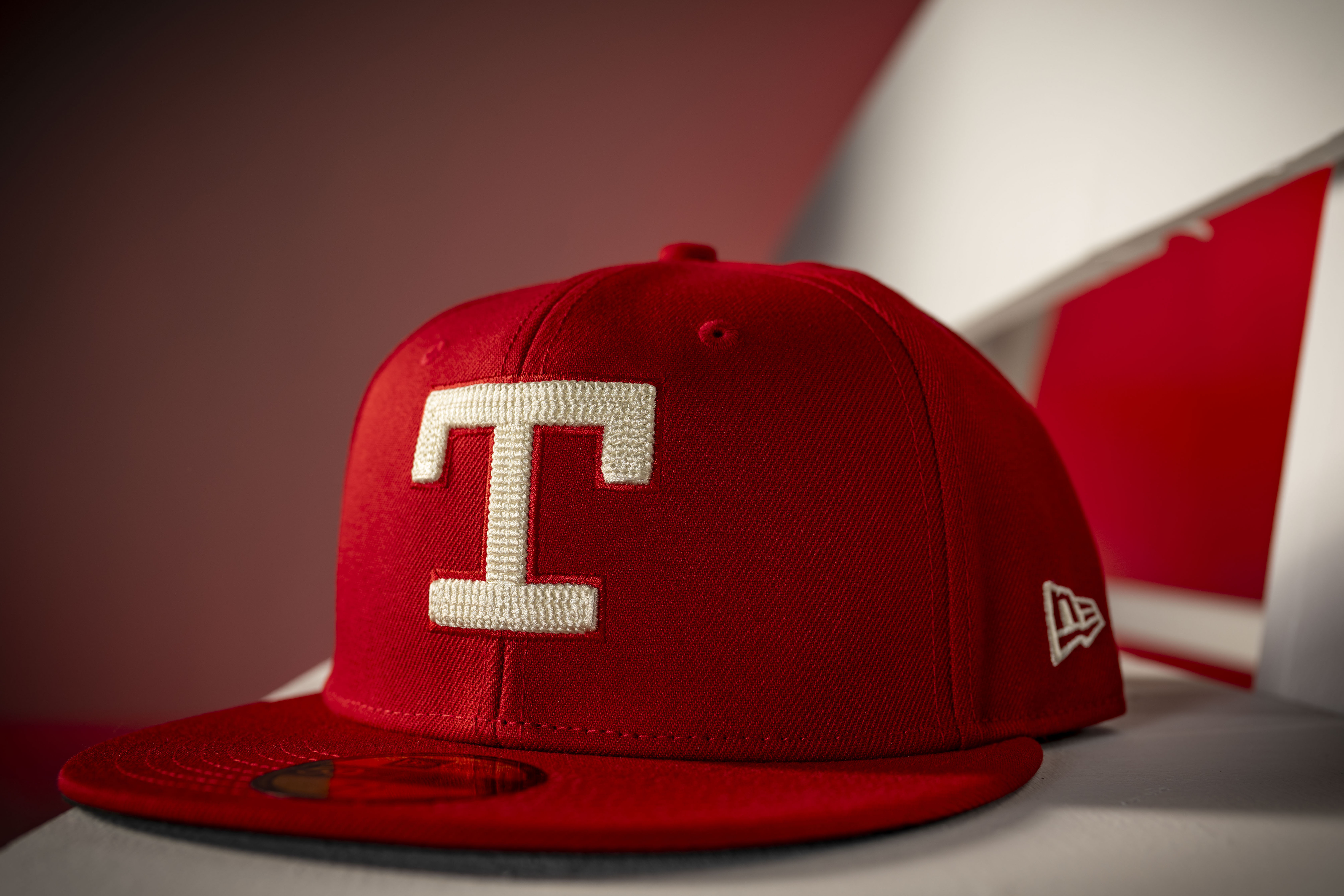
“Nike’s theme for us was reimagining tradition,” Dillion said. “The reimagined tradition, with the red obviously, goes back to ‘84-85. We had the reds for a brief period of time, but really, it was in the '90s. The 30th anniversary of our first postseason victory is this year. So there's a bit of a nice nod there. The lettering comes from the old '80s uniforms, the T block from the '70s. So in terms of tradition, we think it was a way to bring those back, but just in a different context, and execute it a little bit differently.”
Charro pattern
The Charro-inspired pattern lines the sleeve piping as well as the pant piping. It is also inside the collar of the jersey, on the belt and socks and inside the cap. The Charro is a Mexican horseman suit pattern, though it commonly appears on the mariachi trajes, even those worn by the Mariachis de los Texas Rangers.
Papel picado
The papel picado on the left sleeve is an homage to the traditional Mexican folk art of cutting designs into colorful tissue paper, representing celebration and joy. The logo includes an outline of the state of Texas with a reinvented papal picado where the Texas flag is normally place.
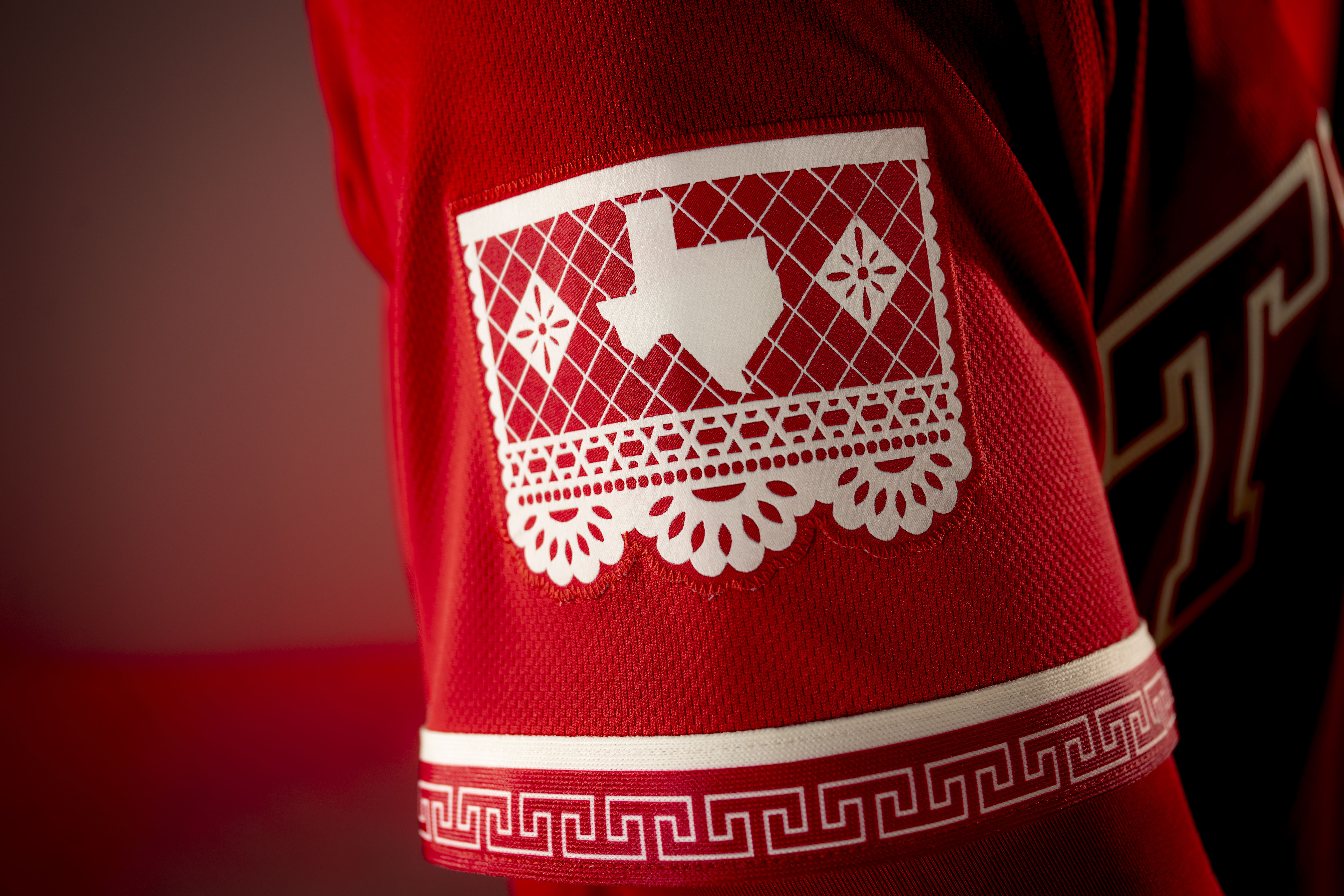
The papel picado can be found at weddings, Dia de los Muertos events and other significant celebrations in Mexican culture. It typically appears as a colorful tissue paper hung along the walls.
“It's a very significant form of intricate art design that we carry in Mexican culture,” Rincón said. “You see a lot of it in Mexico, and you see how it’s been referenced here with Tex-Mex culture. It embodies that spirit of celebration, but also joy. We wanted to bring it to life on the sleeve.”