



Baseball is the national pastime for a reason, and each pocket of the country has its own unique connection to the sport. To celebrate the 250th anniversary of this nation, we’re taking you on a summer road trip across the U.S. with Baseball in America, presented by Booking.com, 50 stories from all 50 states. Follow along here.
A version of this article was originally published in July of 2021.
Since it opened in 1995, Denver's Coors Field has seen countless baseball giants pass through it, mashing dingers through the thin Rocky Mountain air.
Flash back 68 million years ago, though, and there were some other giants gathered in the same exact area. Even bigger giants. The greatest giants of all.
Dinosaurs.
"[Denver] probably has the best record of dinosaurs of any Metropolitan area," Dr. Joe Sertich, Dinosaur Curator at the Denver Museum of Nature and Science, said in a Zoom call. "The very first T-Rex tooth was found in the late-1800s just west of Denver. The very first triceratops partial skull, before we even knew what a triceratops was, was found just west of Denver across the river from Coors Field."
So it's not much of a surprise that when Coors Field was being built back in 1993, workers discovered the remnants of some prehistoric creatures.
"Yeah, any time you dig into the sediment around Denver, you hit bones," Sertich said. "It can be Ice Age bones on the upper layer of young rock or young mud. But once you get into the old rock that Denver sits on, you hit dinosaur bones."
Rumors swirled about the newfound fossils. Some claimed it was a 7-foot triceratops skull under the home-plate area. Others thought it might've been a dinosaur egg that somehow survived millions of years. Even though Coors Brewing Company already had a naming rights deal with the stadium, people pushed for it to be renamed Jurassic Park.
Just imagine: The famous wooden doors as the main entrance, the wonderful theme song on loop throughout the game, maybe John Hammond as head usher?
But the actual bones that were dug up didn't quite align with people's fantasies.
They're currently located in the Denver Museum of Nature and Science and they're small enough to fit inside a shoe box.
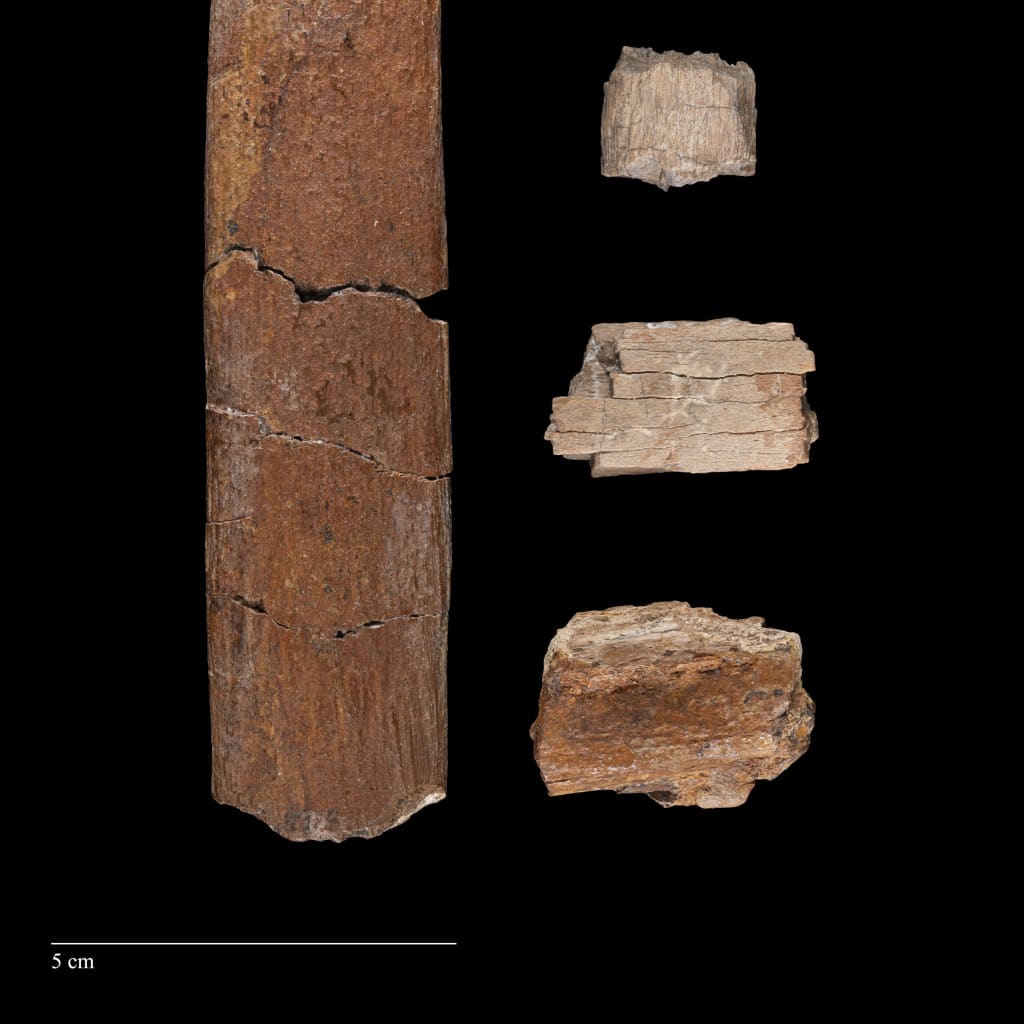
"That's it," Sertich laughed. "It's a chunk of a rib and some other little fragments."
Based on how the rib looked, Sertich and his team determined it belonged to a plant-eating dinosaur. That meant it could've been a torosaurus, triceratops or duck-billed dinosaur. The Rockies decided to honor the discovery by making their mascot a dinosaur, and they chose a triceratops (it was a species found in abundance in the region and, well, it just looked a lot better than a duck-billed dinosaur).
"It made sense," Sertich told me. "If it was a duck-billed dinosaur, it would look just like the Phillie Phanatic or something."
"Dinger" had a famous on-field hatching in April of 1994.
Even though it was such a small finding, Sertich left the possibility open that there might be other fossils somewhere underneath the park. The whole city was once teeming with members of the cretaceous period, more than any other place on earth.
"Yeah, if we hadn't paved over Denver and just allowed it to naturally erode, it would be one of the best dinosaur hunting sites in the world," Sertich told me. "They are here. They are around. There are big skulls, they just weren't at Coors Field. Or they may have been and they didn't realize it and this [rib] is all they were able to recover. There could've been more."
So, whenever you hear the roar of the crowd at Coors Field, think about how the echo might be rattling centuries-old dinosaur bones deep underneath the diamond. Or picture the area as a giant swamp-filled forest with T-Rexes hunting triceratops, pterodactyls swooping overhead and a torosaurus munching on some trees.