



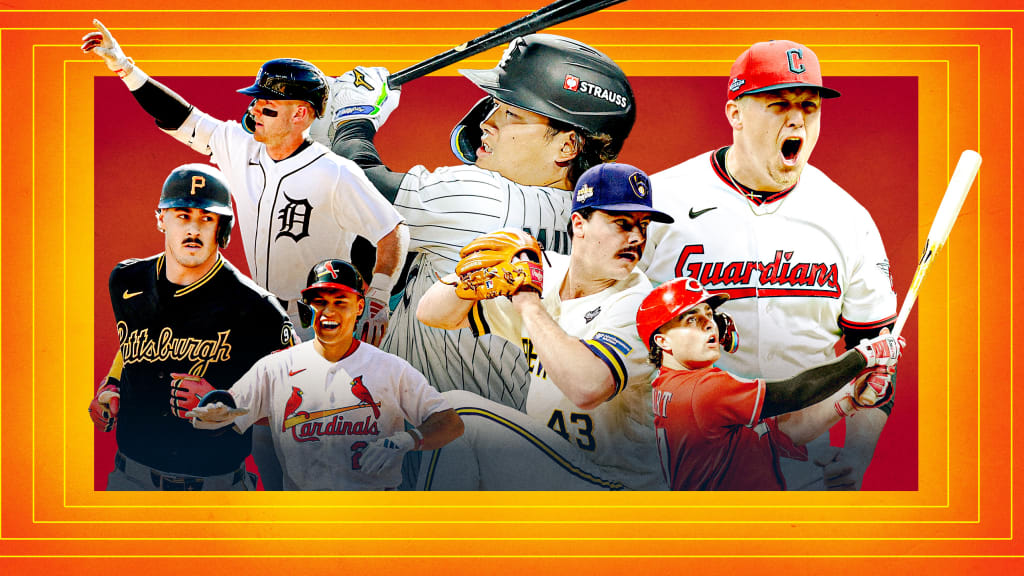
The 2026 Major League season was, by a lot of measures, the “Year of the Rookie.” Giving this rookie class a 360-degree examination, it’s pretty clear this was the best cumulative rookie season ever. Does that mean it will go down as the greatest rookie class of all time?
Here are a number of reasons why the answer to that question should be yes.
More from MLB Pipeline:
• Top 100 prospects | Stats | Video | Podcast | Complete coverage
1. The clear leader in WAR
MLB.com's Andrew Simon did a terrific job of breaking down the best rookie classes since the Rookie of the Year Award was first given out in 1947. He used FanGraphs’ Wins Above Replacement (WAR) and the Class of 2026 beat all rookie groups in total fWAR (128.6) and percentage of all WAR accrued in Major League Baseball for the year (12.9). This season also saw the most rookies with at least 2 WAR (31).
To go a step further, the 2026 rookie class had more players with 4.0 WAR or more (6) than any other group, edging the 2022 class by one player. Taking a look at MLB Pipeline colleague Jim Callis’ oft-debated long-term rookie rankings through a WAR lens, you can see just how dominant the 2026 class was. His top 40 from this year accrued 81.3 total WAR. That’s a whopping 54.8 more than his 2025 list.
2. PPI having huge impact
Teams did not shy away from putting rookies on their Opening Day rosters to give them a chance of earning an extra Draft pick as the Prospect Promotion Incentive seems to be having its desired impact.
Three PPI picks will be awarded based on teams putting rookies on Opening Day rosters. The Tigers and Reds each get one thanks to Kevin McGonigle and Sal Stewart winning Rookie of the Year honors. The Guardians also get one because Parker Messick finished third in Cy Young Award voting. That’s the most picks awarded since the new system was added in 2022.
There were a record 20 Top 100 prospects on Opening Day rosters, a number that doesn’t include Pirates phenom Konnor Griffin, who did accrue enough service time to qualify for a PPI pick in the future. He and the three above were part of a record 15 prospects who qualified for the extra Draft selection, including five of the six Rookie of the Year finalists. If any of them finish in the top three in MVP or Cy Young voting before they reach arbitration (in 2027 or 2028), they’ll earn their organization that extra pick. It’s an impressive list:
Blue Jays: Trey Yesavage
Cardinals: JJ Wetherholt
Guardians: Chase DeLauter
Marlins: Owen Caissie
Mets: Carson Benge, Nolan McLean
Orioles: Samuel Basallo, Dylan Beavers
Phillies: Justin Crawford
Pirates: Konnor Griffin, Bubba Chandler
Royals: Carter Jensen
McGonigle, Wetherholt, Benge and Jensen finished top four among all rookies in WAR; DeLauter was sixth. Messick and McLean finished first and third in WAR among rookie pitchers.
3. All-Stars and awards aplenty
The push to get players on Opening Day rosters because of the PPI picks might have had an impact on how many rookies made the All-Star Game in Philadelphia in July. There were seven at the Midsummer Classic this year, the most since eight rookies dotted the rosters in 2001 (a banner year with two legends starting as rookies in Hall of Famer Ichiro Suzuki and likely future Hall of Famer Albert Pujols).
All-Star nods weren’t the only recognition this class got. This marked just the third time two rookies earned Silver Slugger Awards. McGonigle and DeLauter were the winners this year, the first time since the aforementioned Ichiro and Pujols won. The only other time it happened was in 1987 (Matt Nokes, Benito Santiago).
While he didn’t win the Cy Young (though finishing third did get that PPI pick for the Guardians), Messick is only the sixth rookie to finish in the top three in voting for the award. It’s a pretty good list he joins:
2024 Paul Skenes, 3rd NL
2013 José Fernández, 3rd NL
1984 Dwight Gooden, 2nd NL
1981 Fernando Valenzuela, 1st NL
1976 Mark Fidrych, 2nd AL
4. Rookies staying (surprisingly) healthy
Several rookies this year who added to the depth and quality of the class overcame injuries to make major contributions. DeLauter had never played more than 60 games in the Minors since being a first-round pick in 2022 before logging 133 regular-season games for Cleveland this year, which helped him earn both that Silver Slugger Award and Rookie of the Year votes.
Logan Henderson hadn’t thrown more than 81 1/3 innings in any of his three full Minor League seasons before helping the Brewers win the World Series this year. He ended up getting ROY votes as well and finished with 2.4 fWAR.
Down the list a little further is a guy like Connor Prielipp of the Twins. He threw 30 innings total over his first two years of pro ball before managing to get through 82 2/3 IP in 2025. This year he amassed 125 2/3 in the big league rotation which resulted in 2.0 WAR.
5. Impact players from Japan
Kazuma Okamoto and Munetaka Murakami don’t qualify for PPI consideration as foreign professionals who signed to come over from Japan for the 2026 season. But both did receive AL Rookie of the Year votes while accruing a combined 5.9 WAR (Okamoto had 3.0 WAR for the Blue Jays; Murakami 2.9 for the White Sox). Add in Foster Griffin, who figured things out over three years pitching for the Yomiuri Giants before coming back and becoming a surprising rookie All-Star with the Nationals (joining Murakami among that rookie All-Star set), before getting traded to Cleveland for its playoff run. Sure, you don’t see many 30-year old official rookies, but Griffin finished fourth among all rookie pitchers with his 2.6 WAR.
6. Contributions from everywhere
Impact from Top 100 guys didn’t stop with the influx of that talent on Opening Day rosters. A grand total of 53 Top 100 prospects played in the big leagues this past season, the second-highest total since we started putting out the list of 100 in 2012. Along with the elite-level prospects, there was a substantial quality of non-top 100 guys who arguably performed above expectations. This year’s long-term rookie rankings included eight players who weren’t on the preseason Top 100 list, and that group accrued 17.3 bWAR (Baseball-Reference’s version of the stat). That accounted for 21 percent of the WAR on the top 40 rookies listed in the story, a sign that this class has quality and quantity.
7. There’s ceiling that’s yet to be reached
We obviously won’t know just how good this class is career-wise for some time, but as impressive as the collective presence was in year one, there are reasons to be even more bullish about what’s to come. Keep in mind that Konnor Griffin, who was the No. 1 prospect in baseball at the start of the season, only played 80 games because of injury in 2026. When he was healthy, he looked every bit like the future superstar he’s been projected to be, and having him join his class for full seasons in the future will be exciting.
And not every rookie had a great season, but there’s reason to believe that top 10 overall prospects like Samuel Basallo of the Orioles and Colt Emerson of the Mariners will figure things out after combining for just 0.5 fWAR in 2026. On the mound, both Bubba Chandler (No. 11 on the preseason Top 100, 2.0 WAR) and Trey Yesavage (No. 12, 1.3) have huge upsides they haven’t reached ... yet.