Every marquee free-agent signing comes with risk, but some players carry far more uncertainty than others.
Clubs broadly know what they can expect from proven stars like Tarik Skubal, Seiya Suzuki and Randy Arozarena, three of the steadiest stars in this current free-agent crop.
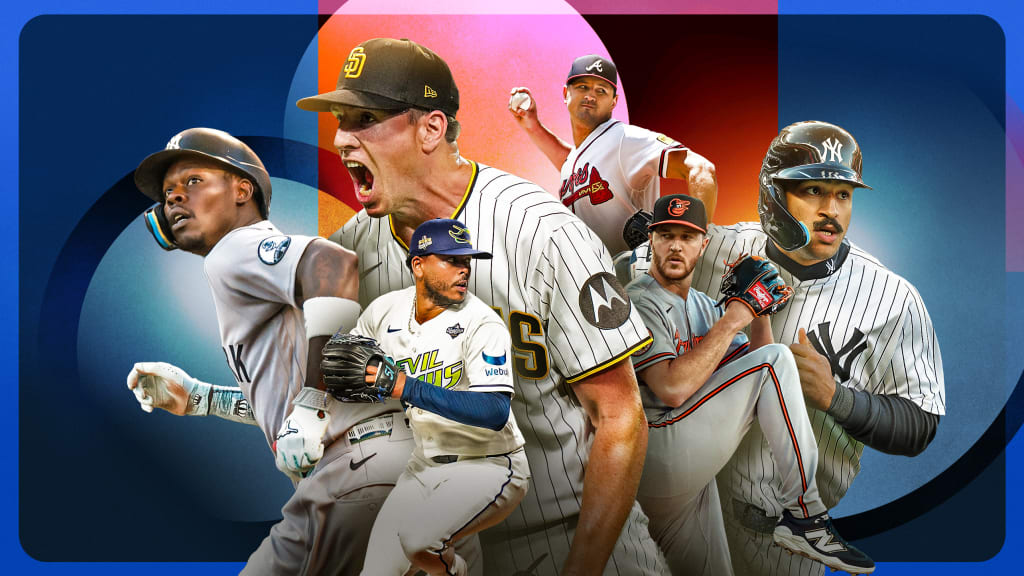
Then there are the players below, whose recent track records don't point in a single direction. Each of these 10 has shown real upside, but it's hard for teams to know what they're buying.
Jazz Chisholm Jr., 2B
Chisholm's outspoken personality, inconsistent production and persistent injury problems are part of what make him one of the more polarizing players in this year's free-agent class. His lifetime 106 OPS+ is barely above league average, and it was even lower in 2026 (97). He has topped 137 games in a season only once (147 in 2024).
At the same time, he offers a skill set few others can match. Chisholm is one of eight players with at least 125 homers and 125 steals over the past six seasons. He's an excellent defender at second base, capably handled center field earlier in his career and even showed the aptitude to adjust to third base on the fly in 2024. His bat peaked in 2025, a season that saw him finish in the 91st percentile in barrel rate en route to 31 homers and a 122 OPS+ over 130 games. If it all comes together for a full season, he has 5-WAR potential.
Trent Grisham, OF
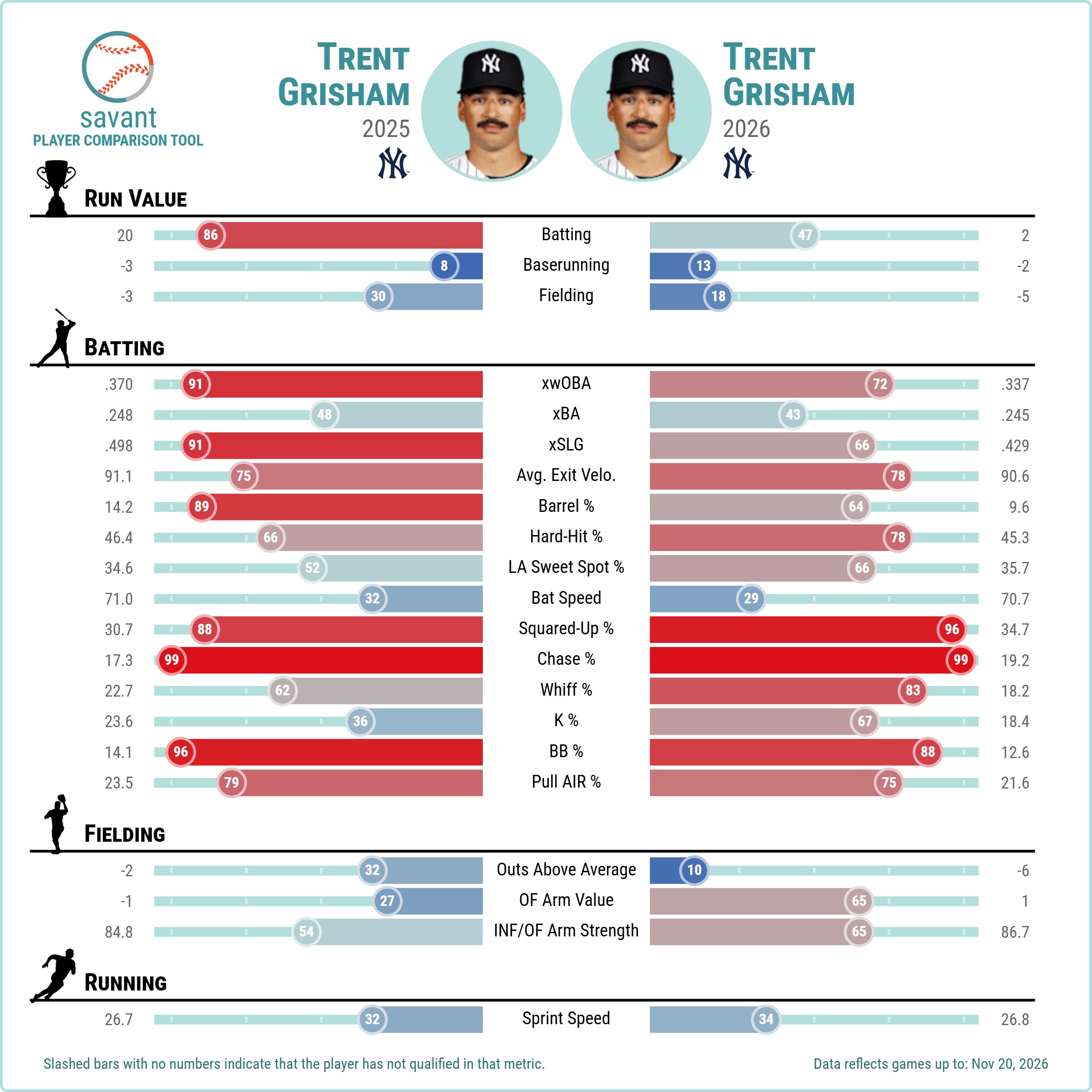
A .213/.313/.384 hitter with a 94 OPS+ from 2019-24, Grisham came out of nowhere to hit 34 homers with a 123 OPS+ for the Yankees in 2025. His production returned to its previous level during an injury-plagued 2026 (95 OPS+), but poor luck was perhaps the biggest reason. Grisham's .367 batting average on hard-hit balls was not only 123 points below the MLB average, it was also the second-worst mark (min. 150 hard-hit balls) any hitter has posted in a single season under Statcast tracking (since 2015).
Beyond that, his profile looked much like it did in 2025, with strong plate discipline, hard contact and a lot of pulled fly balls. Grisham's center-field range probably isn't coming back at this stage of his career, but his bat may be more valuable than it seemed in 2026.
Ty France, 1B
Few free-agent additions from last offseason provided as much value as France did after signing a Minor League deal with the Padres in February. The veteran had a career year at age 31, producing 21 homers and a .295/.363/.502 slash (139 OPS+) over 133 games. Add in his stellar defense at first base and he was worth 3.6 WAR (per FanGraphs), well above what he produced for four teams across 2023-25 (98 OPS+, 1.4 fWAR).
The biggest question is whether he'll be able to sustain that offensive production, and an interested team is probably going to have to pay up to get the answer. Fellow first baseman Jake Bauers, who broke out at age 30 after entering 2026 with a lifetime 87 OPS+, is a reasonable comp. He just signed with the Red Sox for $58 million over four years.
Tyler Mahle, SP
Mahle's lifetime 108 ERA+ suggests he is a perfectly steady mid-rotation starter, but he's been far more volatile in reality, dealing with frequent injuries and wild swings in performance. The right-hander's past two seasons are a case in point.
While he posted a 2.18 ERA for the Rangers in 2025, a right rotator cuff strain limited him to 16 starts. After signing with the Giants last offseason, he pitched to a 5.13 ERA over 18 starts for San Francisco, missing nearly a month along the way with a left hamstring strain. A midseason trade to Atlanta flipped the script again, as he recorded a 1.99 ERA over nine starts for the Braves in the regular season and delivered two strong outings as Atlanta's No. 2 starter in the playoffs.
Freddy Peralta, SP
The common narrative is that Peralta was a reliable frontline starter for years with the Brewers before stumbling with the Mets (81 ERA+) in 2026. But while Peralta did turn in an ace's workload over his final three seasons with Milwaukee (95 starts), 2025 (155 ERA+) was really the first time he pitched like one over a full season. In the two years before that, he had a good-but-not-great 112 ERA+.
The right-hander's rebound after a trade to the Rays (131 ERA+) this past summer suggests his Mets struggles can be largely ignored. But if a team is paying Peralta to be a surefire No. 1 starter, it might end up slightly disappointed.
Nick Pivetta, SP
Durability is the biggest question mark for Pivetta, who made just eight starts due to a right elbow flexor strain in 2026. Lingering concerns about his arm likely played a part in the Padres' decision to decline his $14 million club option for 2027. Had they exercised it, Pivetta would have had an $18 million player option for 2028, compounding the risk.
But it's also fair to wonder what to expect from Pivetta on a performance basis going forward. The upside is obvious; he looked like a frontline starter on a per-inning basis over the past two years, posting a 2.87 ERA with a 0.99 WHIP and a 4.0 K/BB ratio in 39 starts. But that came on the heels of a 4.76 ERA over his first eight seasons, and he'll be 34 in February.
Trevor Rogers, SP
Rogers' career has been all over the place. He was brilliant as a rookie in 2021 (2.64 ERA, 2.55 FIP in 25 starts) and again in '25 (1.81 ERA, 2.82 FIP in 18 starts), but in between he struggled to a 5.09 ERA and 4.42 FIP over 52 starts from '22-24.
The 2026 season featured both sides of the left-hander. He opened with a 6.84 ERA and a 4.85 FIP over his first 10 starts, then settled in for a 2.90 ERA and a 2.89 FIP the rest of the way. Add in the fact that he's made more than 25 starts in a season only once (30 starts in 2026), and you have one of the biggest boom-or-bust options in this year's starting pitching market.
Luis Robert Jr., OF
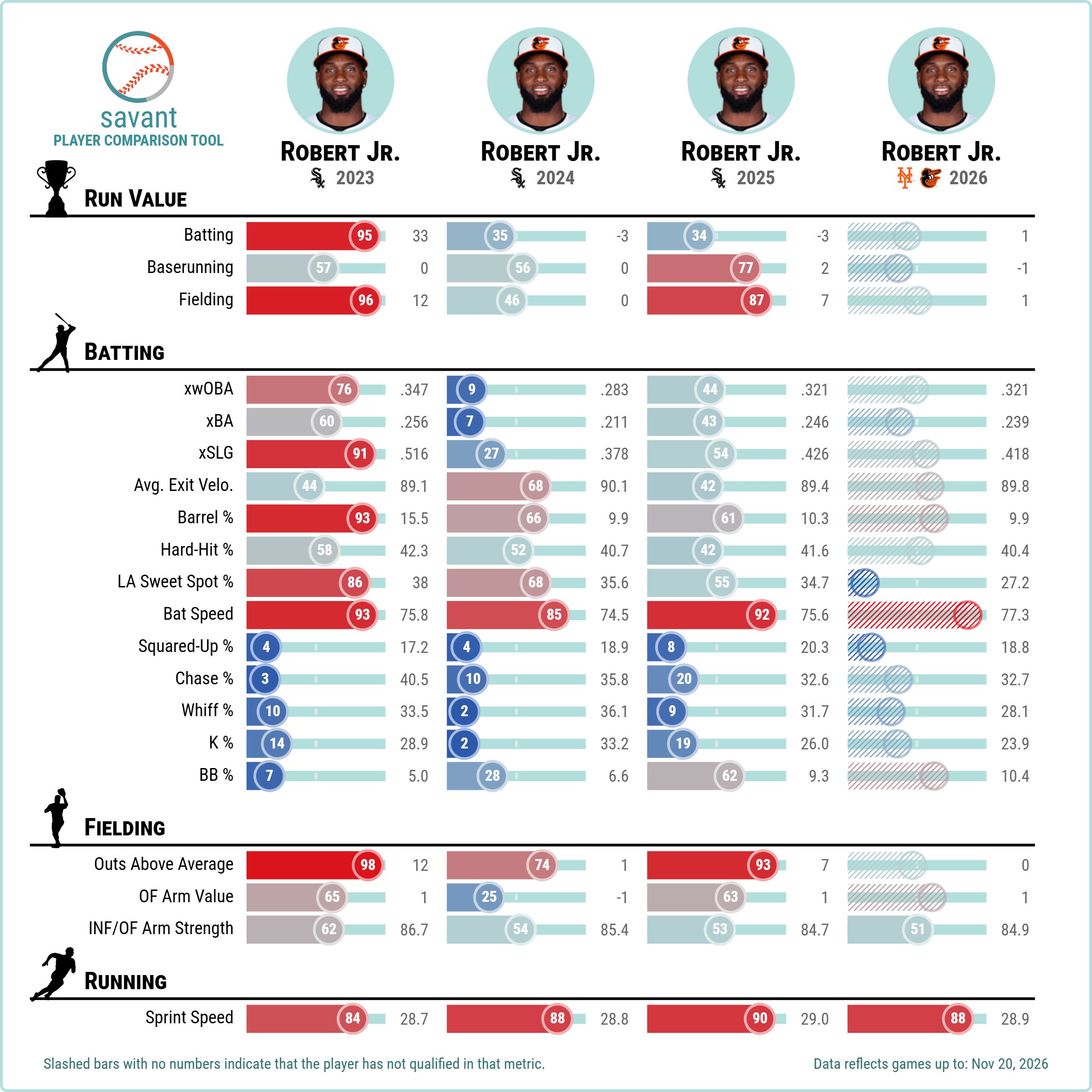
The only consistent thing about Robert's career has been the injuries. From 2021-26, he missed nearly 400 games. He's also been a below-average hitter for some time now, slashing .223/.290/.379 (88 OPS+) since the beginning of 2024.
That said, he's still only 29 years old, and it's tough to forget what he did in his healthiest season: 38 homers, 20 steals, a 130 OPS+ and 5.0 fWAR over 145 games in 2023. Whether that version of Robert is still in there, and whether he can ever stay healthy long enough to show it, remains to be seen. At the very least, both his bat speed and his foot speed have held up.
Daulton Varsho, OF
Thanks to his elite outfield defense, Varsho doesn't need to be much more than a league-average hitter to provide a ton of value. He showed as much in 2022, when he produced 4.3 fWAR despite a modest 108 OPS+.
He also hit 20 homers with a 121 OPS+ and 2.2 fWAR over just 71 games in 2025, a pace that would have been worth close to 5.0 fWAR over a full season. That's something for his next team to dream on, but there are also clear questions about his offensive profile moving forward. Varsho produced a 76 OPS+ over 140 games between the Blue Jays and Astros in 2026, marking the third time in four years he finished south of 100.
Taylor Ward, OF
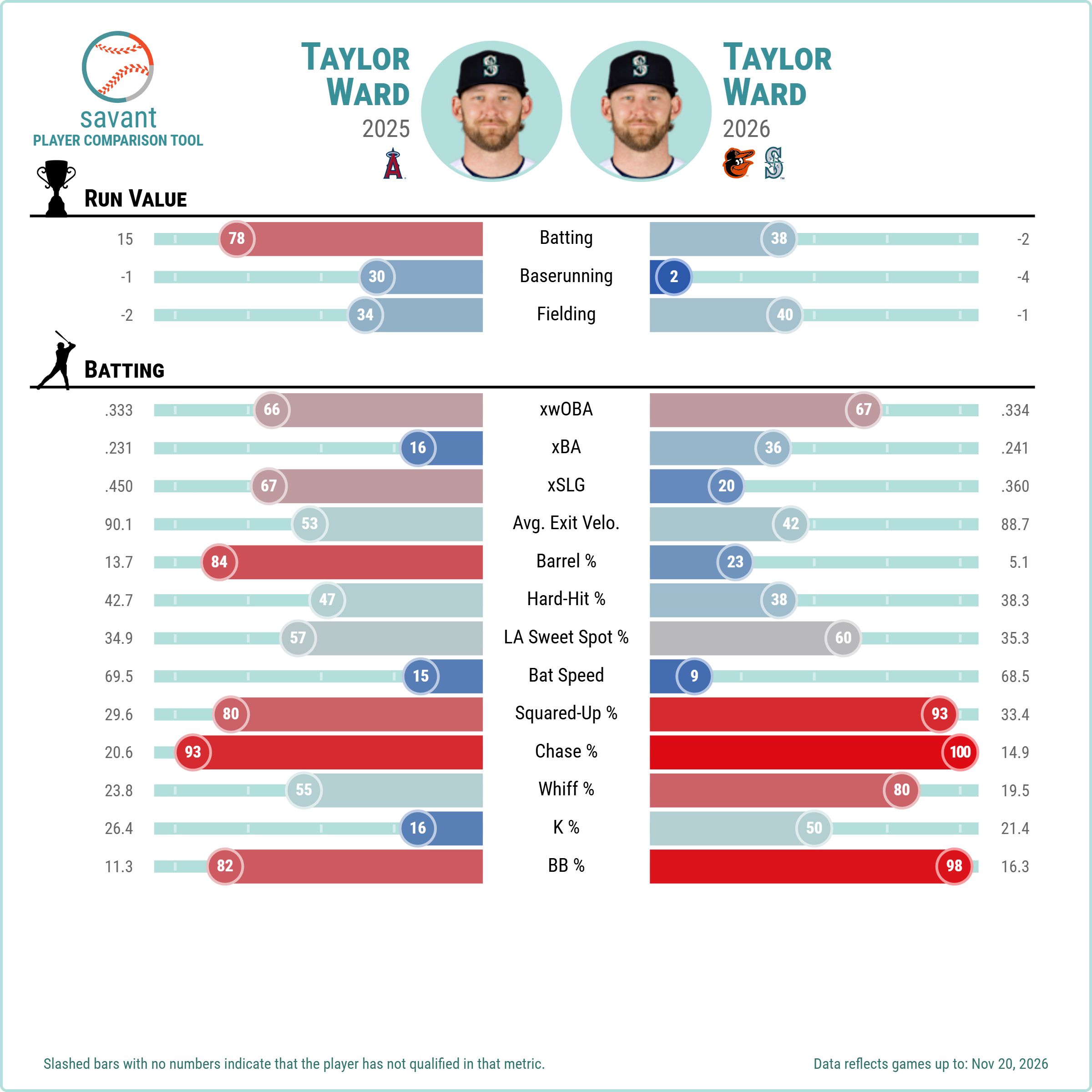
Ward is one of the most confounding players on this list. After putting up 36 homers with a .228/.317/.475 slash for the Angels in 2025, the outfielder reinvented himself as a low-power, high-OBP hitter for the Orioles last season. Over 111 games for Baltimore, Ward drew 87 walks and reached at a .383 clip but hit just seven homers with a .346 slugging percentage. Then came a trade to the Mariners in August, after which he didn't do much of anything well (.125/.238/.148).
The hope for any team interested in Ward is that his 32-game Seattle tenure was an outlier and that he can find a blend of the power he showed with the Angels and the on-base skills he displayed in Baltimore.