


Baseball is the national pastime for a reason, and each pocket of the country has its own unique connection to the sport. To celebrate the 250th anniversary of this nation, we’re taking you on a summer road trip across the U.S. with Baseball in America, presented by Booking.com, 50 stories from all 50 states. Follow along here.
WALDOBORO, Maine – Drive along the undulating two-lane roads of the Pine Tree State, and every few miles, it seems, you’ll pass another cemetery. Granite stones and white slabs fly by out the window, from large burial grounds on the outskirts of town and behind churches in the village center to small family plots nestled in a copse of trees by a farmhouse. There’s even one on the shoulder of northbound I-95, just before Kennebunkport.
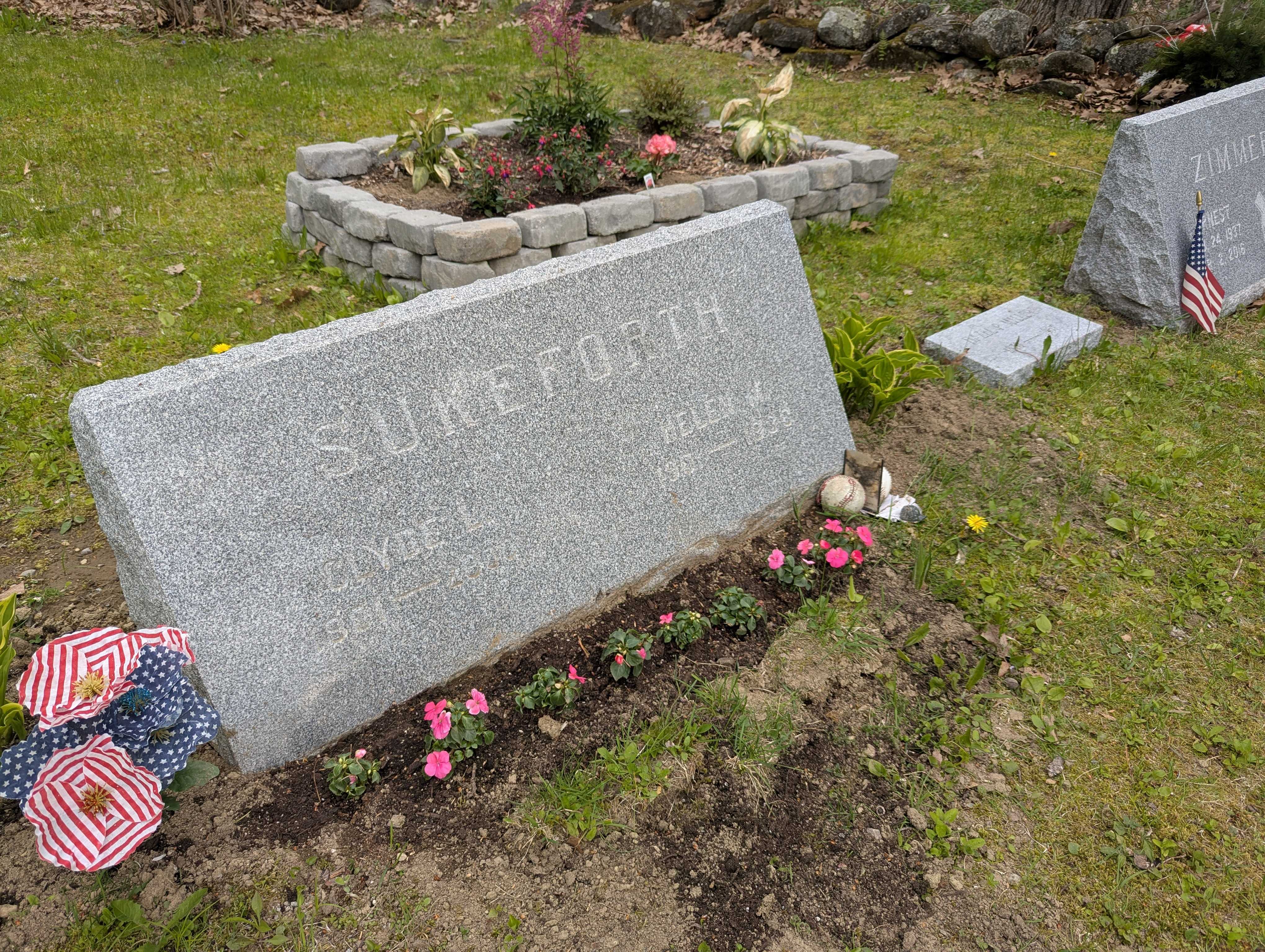
A little more than an hour north of Portland, on Maine Route 220 – also known as Friendship Road – a gravel drive through a grove of oak trees in this land of pines leads to a burial ground marked only by a small white sign no larger than a real estate agent’s: “Brookland Cemetery – Closed Dusk ’til Dawn.” Inside the stone wall and off to the right, a marker bears a faded name. It’s hard to see until you walk up to it, but you’ll know it by the mementos left by visitors. There is often a baseball or two, maybe a figurine or a Jackie Robinson baseball card (a reprint, of course).
Here lies Clyde Leroy Sukeforth, the scout Branch Rickey dispatched to Chicago to report back on the player he deemed to be the best candidate to realize his “Great Experiment” and integrate the National League. The tokens left by pilgrims are the only indication that “Sukey” was known outside MidCoast Maine, or that he played such a big role in the integration of the game and in the legend of two pioneers. Etched in the gravestone are only the names Clyde and Helen, his first wife, and the years they were born and died.
Sukeforth is one of only 80 Major Leaguers in Baseball-Reference’s database who was born in Maine and one of just eight who played 10 or more seasons. He was a backup catcher for the Reds and Dodgers, and only once in those 10 seasons (1931, his last season with the Reds) did Sukeforth play in as many as 100 games. It was after his playing career that he left a mark on the game.
By 1945, Sukeforth was scouting for Rickey after having spent a few seasons as a coach with the Dodgers. That August, Rickey dispatched Sukeforth to Chicago to watch Robinson play for the Kansas City Monarchs. A sore arm kept Robinson out of the lineup, but the scout and the prospect met and Sukeforth invited Robinson to travel with him back to Brooklyn.
“He grows on you, the whole time,” Sukeforth said when asked his impressions of Robinson in a 1996 interview with the Hall of Fame. “He’s an intelligent fellow and [has] determination written all over him. I knew Robinson would make a terrific impression on [Rickey].”
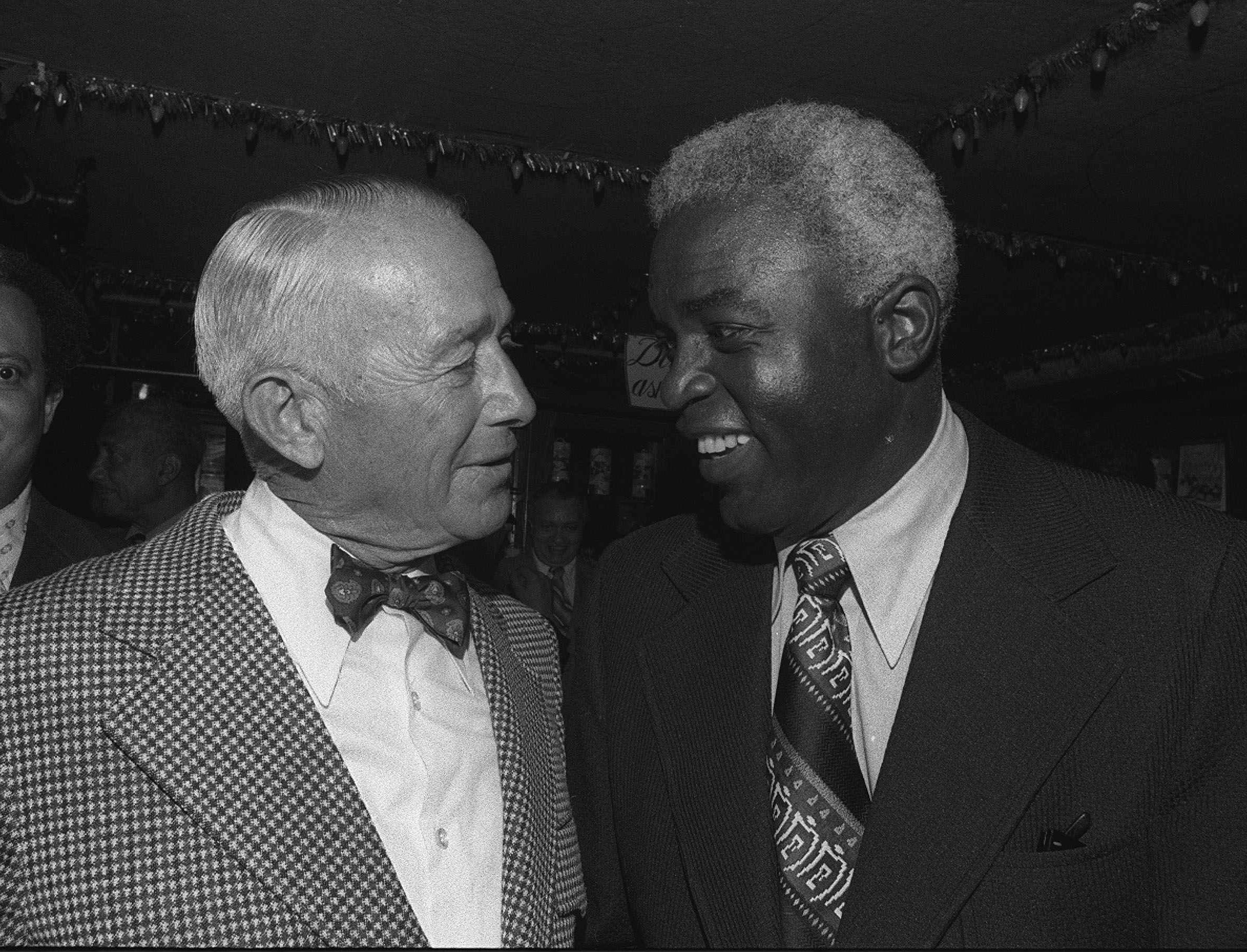
When they got to Brooklyn, Sukeforth brought Robinson to Rickey’s office for their first meeting – the one on Aug. 28, 1945, when the Dodgers’ president told his new prospect that he was looking for a ballplayer “with guts enough not to fight back” when provoked by abuse and racial epithets.
“I introduce him to Mr. Rickey,” Sukeforth said, “[and] Mr. Rickey opened the conversation: ‘All my life, I’ve been looking for a great colored ballplayer. … I have reason to think that you may be that man.’ He said, ‘I need more than a great ballplayer. … I need a man that will turn the other cheek, take the worst kind of abuse that a person can be exposed to.’ He wasn’t exaggerating, because he knew what was waiting.”
After Robinson’s year with the Triple-A Montreal Royals, he made his debut with the Dodgers – and it was Sukeforth who wrote out his name on the lineup card. Manager Leo Durocher had been suspended just days before the season was to begin, so Sukeforth stepped in at Rickey’s request and guided the club for the first two games of Robinson’s career. (Rickey wanted him to take on the job permanently, but Sukeforth had no interest in it. He instead recommended Burt Shotton, who was lured out of retirement.)
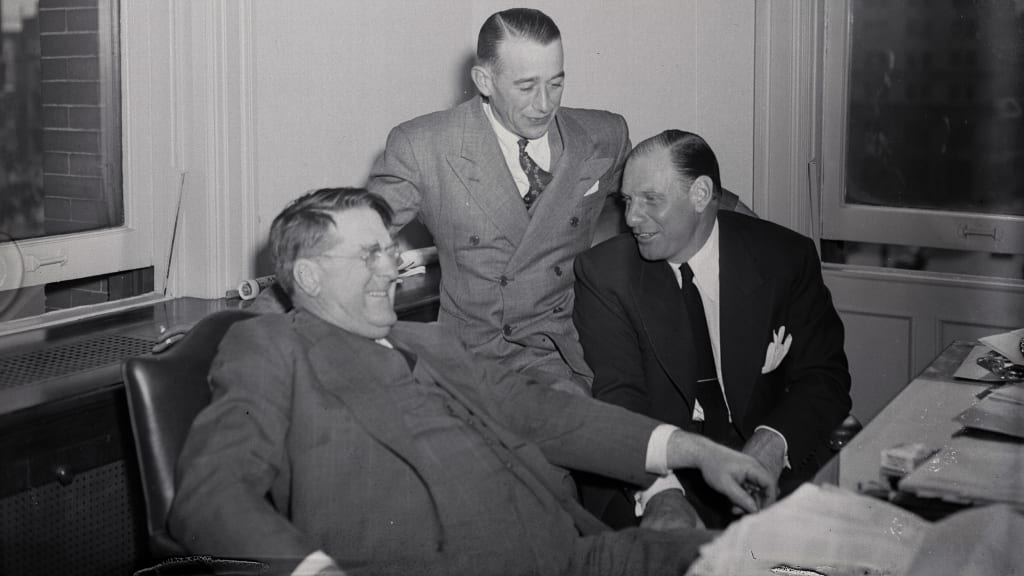
Sukeforth also played an unfortunate part in the Dodgers’ loss to the Giants on Bobby Thomson’s “Shot Heard ’Round the World” in 1951. When manager Chuck Dressen called down to the bullpen to ask which pitcher, Ralph Branca or Carl Erskine, was ready to come into the game, Sukeforth – who had caught both of them as they got ready – told him that Branca was the better choice. After Branca allowed the walk-off homer, Sukeforth took the fall based on his recommendation from the bullpen. He resigned early in 1952 and joined Rickey in Pittsburgh, where his former boss had taken over general manager duties a year earlier.
Sent to Montreal in 1954 to scout Dodgers pitcher Joe Black, Sukeforth instead focused on an outfielder who played sparingly.
“The moment I saw [Roberto] Clemente I couldn’t take my eyes off him,” Sukeforth said in an article in the Pittsburgh Press in 1963. “I recommended we draft Clemente and he cost us only $4,000 at the time.”
So that’s two pioneers, two iconic Hall of Famers whose legacies Sukeforth played a small part in – though he’d have been the first one to say that it was their talent and character that made them legendary, not his scouting.
After the 1957 season, Sukeforth left the Pirates and returned to his Maine farm, where among other things he grew Christmas trees. Though he would spend some time coaching and managing in the Southeast in the early 1960s, his time at the Major League level was finished. He preferred working with younger players, and he’d continue to search for future stars as a scout for the Braves in northern New England and the Canadian Maritimes from 1964-72, finally retiring at the age of 72.
And what did he do in retirement? Watch more baseball.
“He was just such a sweet, caring, humble man,” said Bill Maxwell, the president of the Waldoboro Historical Society, which maintains a small baseball exhibit featuring Sukeforth in the barn at its modest three-building outpost. “He loved watching baseball, especially in his later years. Some family friends would go down and pick him up and take him to the high school games, the legion baseball games, the Little League games. He watched it all.”
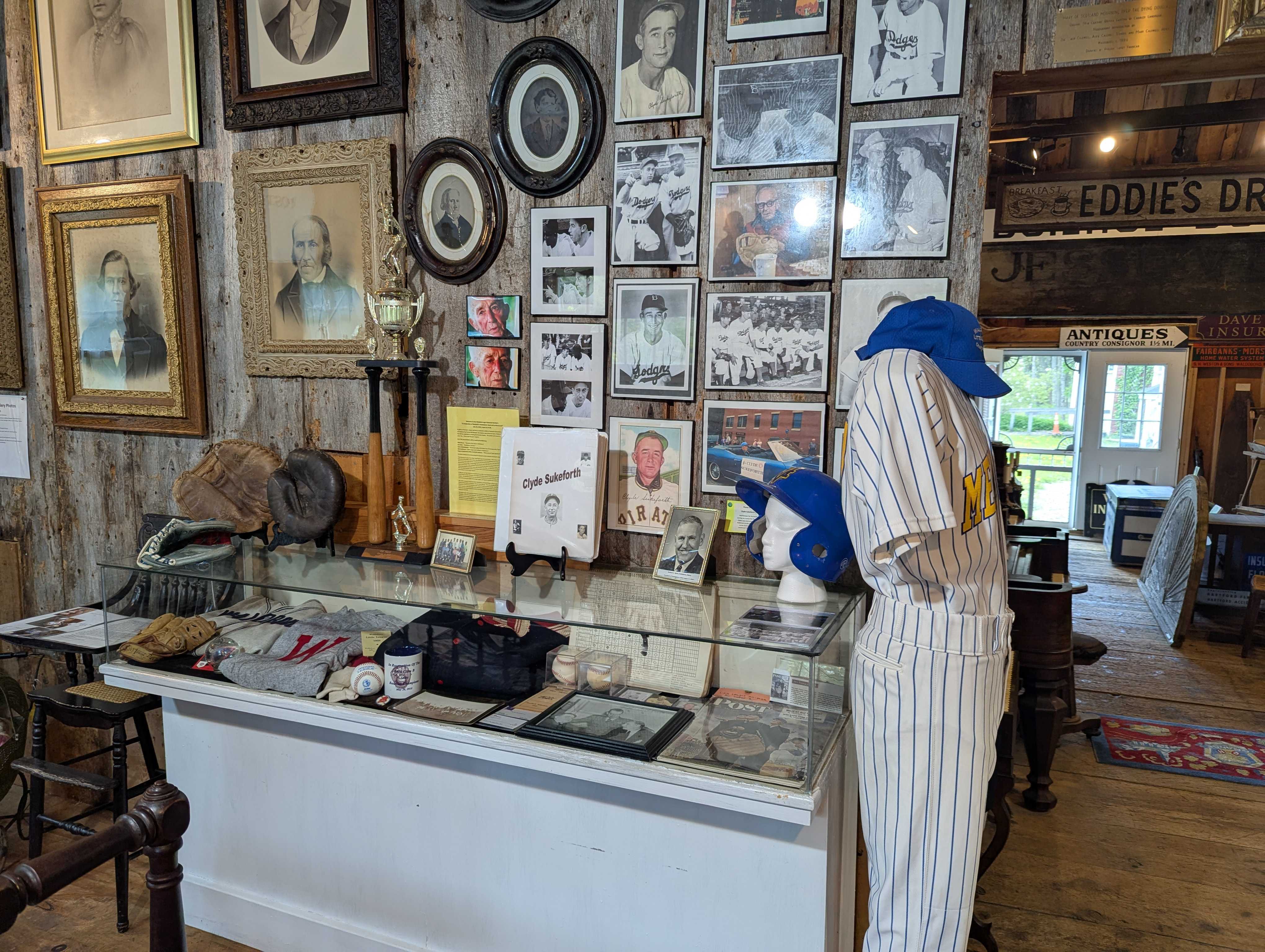
Maxwell has a lot of stories about Sukeforth. Much of the display at the historical society is his handiwork, including a 1952 Bowman card he donated, showing Sukey as a Pirates coach.
For a time, Maxwell served as president of the Waldoboro Little League, and Sukeforth would often call when he had baseballs to donate. Rather than taking money from the autograph dealers who would send Sukeforth a dozen balls at a time, he just asked that they send two dozen as a donation.
After one trip to Sukeforth’s house to pick up some baseballs, Maxwell was distributing them among the team lockers at the Little League field.
“I’m rolling the balls over,” Maxwell said, standing in front of the wall of Sukeforth photos in the historical society’s barn, “and I turned one over and I said, ‘Hooooly cooow, that’s Reggie Jackson.’ I think Clyde gave me the wrong box.”
Maxwell surmised that Sukeforth had accidentally given him a box of signed balls to which Sukeforth was meant to add his autograph and return to one of the dealers.
“So I called up Clyde. I said, ‘Clyde, I think you gave me the wrong box of balls,’” Maxwell recalled. “‘One whole dozen’s got nothing but autographs all over them.’ He said, ‘Give ’em to the kids.’ He didn’t care if these dealers got ’em back. ‘Give ’em to the kids.’”
Sukey passed away in September 2000, so a generation of Waldoboro Little Leaguers now only knows him because of Maxwell and the historical society’s efforts to keep local history alive. He hopes that one day, they can add another piece to the grounds: a sculpture of Sukeforth.
“I can envision, out here on our lawn or in our garden,” he said, “Clyde and young Clyde in uniform, settin’ beside the older Clyde. And they’re just looking at each other, like talking. I always thought that’d be a pretty cool one.”